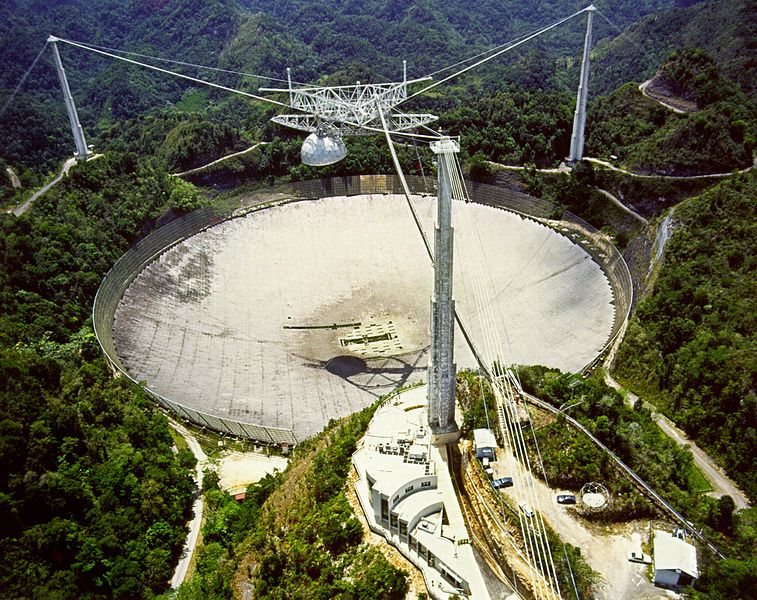
We almost never see an exoplanet in the way we see Mars or Jupiter. We measure a dip in light, a spectral shift, a stellar wobble, a gravitational perturbation, or a handful of photons separated from starlight billions of times brighter. Interstellar space is not empty either: it contains ionised gas, atomic and molecular hydrogen, dust, ice, magnetic fields, cosmic rays and organic molecules. Contemporary astronomy is the art of building instruments capable of turning these faint traces into testable knowledge.
For A.L.I, these instruments are not merely enlarged eyes. They are organs of translation. An antenna converts a radio wave into an electrical voltage; a spectrograph separates light into lines; a processing pipeline removes noise, calibrates the detector and compares the signal with physical models. Between the cosmos and us lies an entire chain of language: phenomenon, photon, sensor, number, image, hypothesis.
1. What “sensing” means
A telescope does not collect objects but messengers. The main messenger is electromagnetic radiation, from radio waves to gamma rays. Each band reveals different physics. Visible light shows stars; infrared penetrates dust and reveals colder bodies; millimetre radiation detects gas and molecules; ultraviolet follows hot stars and atmospheric escape; X-rays reveal violent plasmas. Photons are now joined by gravitational waves, neutrinos and cosmic particles.
Sensing relies on four complementary operations:
- collecting more photons with a large mirror or multiple antennas;
- separating wavelengths through spectroscopy to identify elements and molecules;
- resolving fine detail with adaptive optics, interferometry or observations from space;
- repeating measurements to distinguish a real phenomenon from noise, stellar activity or instrumental artefacts.
Sensitivity describes the faintest detectable signal; angular resolution separates close objects; spectral resolution distinguishes neighbouring wavelengths; cadence measures how rapidly the sky is revisited. No instrument maximises all four. Astronomy therefore advances through networks of complementary observatories.
2. Reading matter between the stars
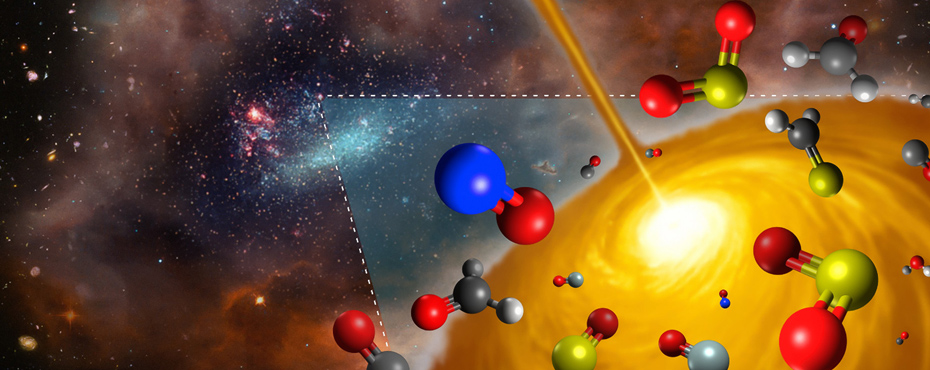
Cold interstellar clouds are opaque in visible light, but their atoms and molecules emit radio, millimetre and infrared signatures. The Atacama Large Millimeter/submillimeter Array combines up to 66 antennas on the Chajnantor plateau. Through interferometry, signals received by distant antennas are correlated as if they came from a virtual instrument several kilometres wide. ALMA maps the temperature, density, velocity and composition of molecular clouds and protoplanetary discs.
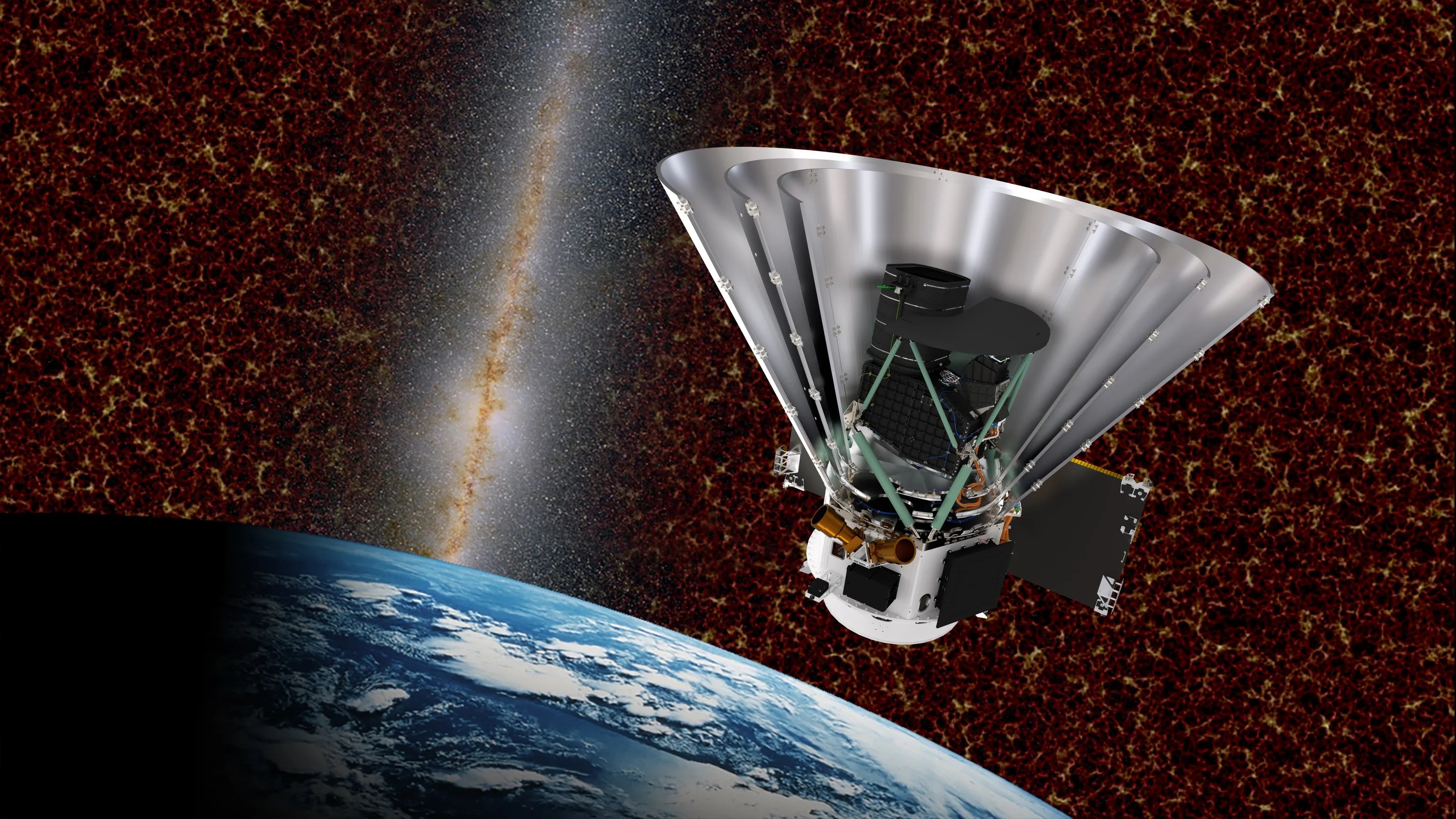
The SPHEREx space telescope, launched in March 2025, is conducting an optical and near-infrared spectral survey of the entire sky. During its planned two-year mission it will measure more than 450 million galaxies and over 100 million Milky Way stars. For astrobiology, a central contribution is its mapping of interstellar ices — water, carbon dioxide and other compounds frozen on dust grains — a chemical memory that predates planet formation.
The Square Kilometre Array Observatory, under construction in Australia and South Africa, will extend radio listening to an unprecedented scale. SKA-Low will target low frequencies with antenna stations in Australia; SKA-Mid will use dishes in South Africa. In January 2026, SKA-Mid achieved its first fringes, demonstrating that two dishes could already operate as an interferometer. SKA will eventually study neutral hydrogen, magnetic fields, pulsars, radio transients and may also contribute to technosignature searches.
3. Detecting a planet without seeing it
Most exoplanets have been discovered indirectly. The transit method measures the periodic dimming that occurs when a planet crosses its star, giving mainly its radius and orbital period. Radial velocity measures the star's Doppler wobble and yields a minimum mass. Combining radius and mass produces average density and a first indication of composition.
ESO's HARPS and ESPRESSO spectrographs search for velocity variations near one metre per second and, for the best targets, below that level. But starspots, faculae and oscillations can mimic planets. The instrument must be extremely stable, carefully calibrated and used alongside models of stellar activity.
Other methods complete the picture. Gravitational microlensing reveals a planet when its gravity briefly magnifies a background star. Astrometry measures the star's tiny path across the sky. Direct imaging suppresses starlight with a coronagraph and isolates some young, hot worlds far from their stars. Every method selects a different population; combining them corrects observational biases.
4. Instruments operating in 2026
| Instrument | What it senses | Main contribution | Main limitation |
|---|---|---|---|
| TESS | Transits of bright nearby stars | Provides accessible follow-up targets | Radius without a full mass or atmosphere |
| CHEOPS | Precise photometry of known planets | Refines radii and densities | Targeted characterisation mission |
| JWST | Infrared spectra, transits, eclipses and imaging | Molecules, temperatures, clouds and atmospheric chemistry | Scarce observing time; stars and clouds complicate interpretation |
| ALMA | Millimetre and submillimetre waves | Gas, dust, molecules and planet-forming discs | Does not directly observe a surface biosphere |
| SPHEREx | All-sky infrared spectra | Interstellar ices and galactic chemical context | Less detail than a targeted observatory |
| Rubin | Changes and motion in visible light | Transients, small bodies and interstellar objects | Alerts need confirmation by other instruments |
The James Webb Space Telescope represents a step change in atmospheric spectroscopy. During a transit, a small fraction of starlight passes through a planet's atmosphere; selected wavelengths are absorbed by water, carbon dioxide, methane and other species. During secondary eclipse, subtracting the star alone from the star-planet system estimates the planet's thermal emission.
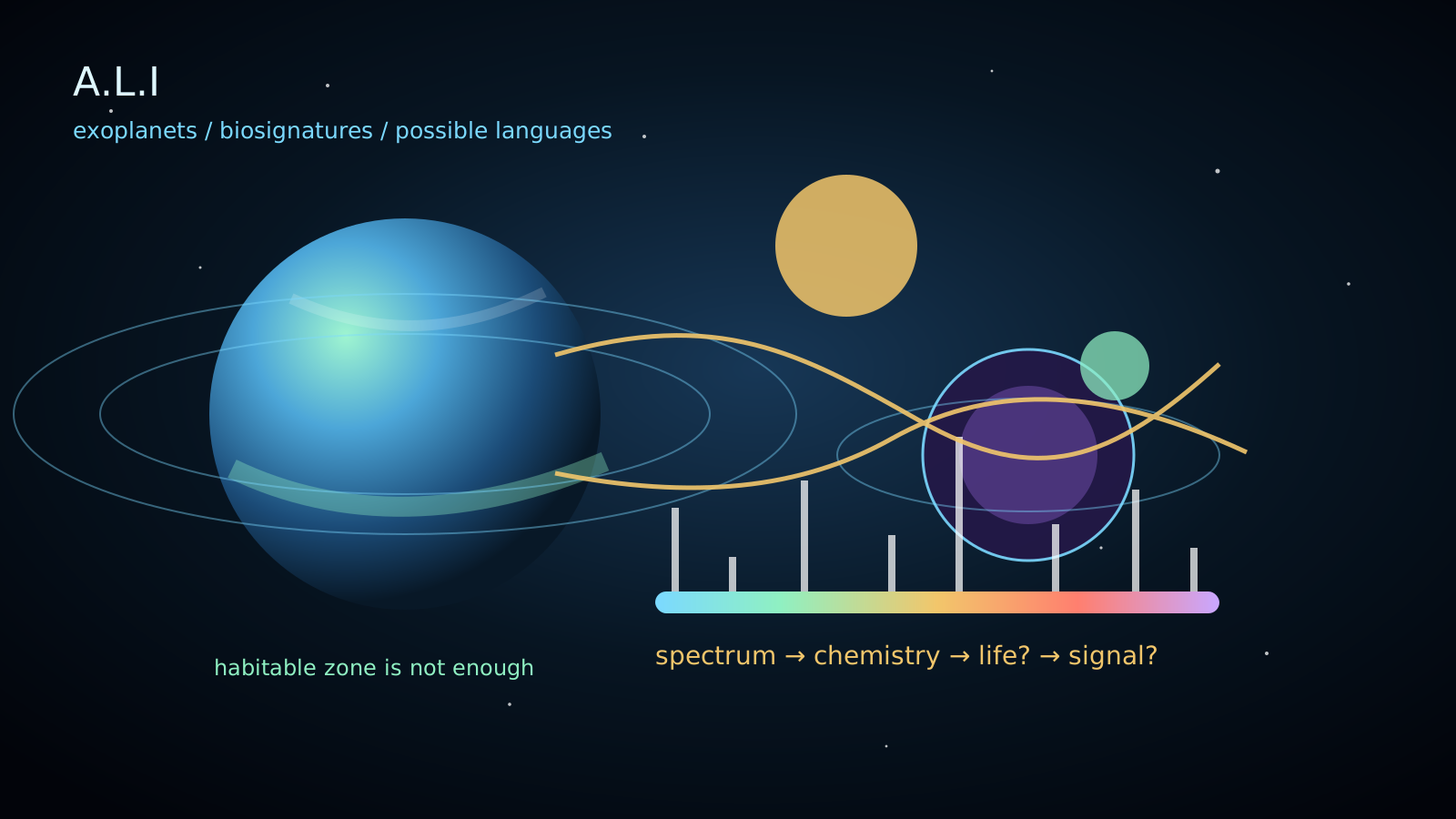
These signatures are not automatically evidence of life. A molecule may have geological, photochemical or biological origins. A credible biosignature needs a coherent body of evidence: several gases, their abundances, the stellar type, temperature, clouds, planetary history and the exclusion of false positives. Searching for life is less like detecting a word than reading a complete chemical sentence.
5. Rubin: the sky becomes a real-time stream
Vera C. Rubin Observatory photographs a new region of sky about every forty seconds and automatically compares each image with earlier ones. On 24 February 2026 it distributed 800,000 initial scientific alerts in one night; the system is designed to reach roughly seven million nightly alerts, each published in under two minutes.
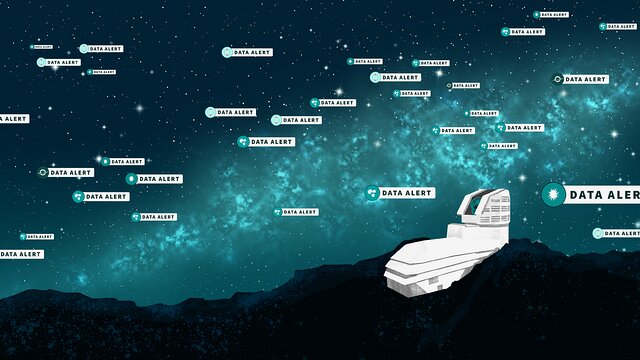
For exoplanets, Rubin is not primarily a transit machine like TESS. Its value lies in microlensing, variable stars, rare events and interstellar bodies crossing the Solar System. It turns observation into coordination: an algorithm signals, a broker prioritises, another observatory points. The relevant instrument is no longer a single telescope but the network that knows how to react in time.
6. Roman: statistical census and coronagraphy
The Nancy Grace Roman Space Telescope is scheduled for launch on 30 August 2026 according to NASA's announced calendar. Its field of view will be at least one hundred times wider than Hubble's at comparable resolution. Surveys of the galactic bulge should monitor around one hundred million stars and detect tens of thousands of microlensing events. NASA estimates that Roman could reveal roughly 100,000 worlds, including bound and free-floating planets.
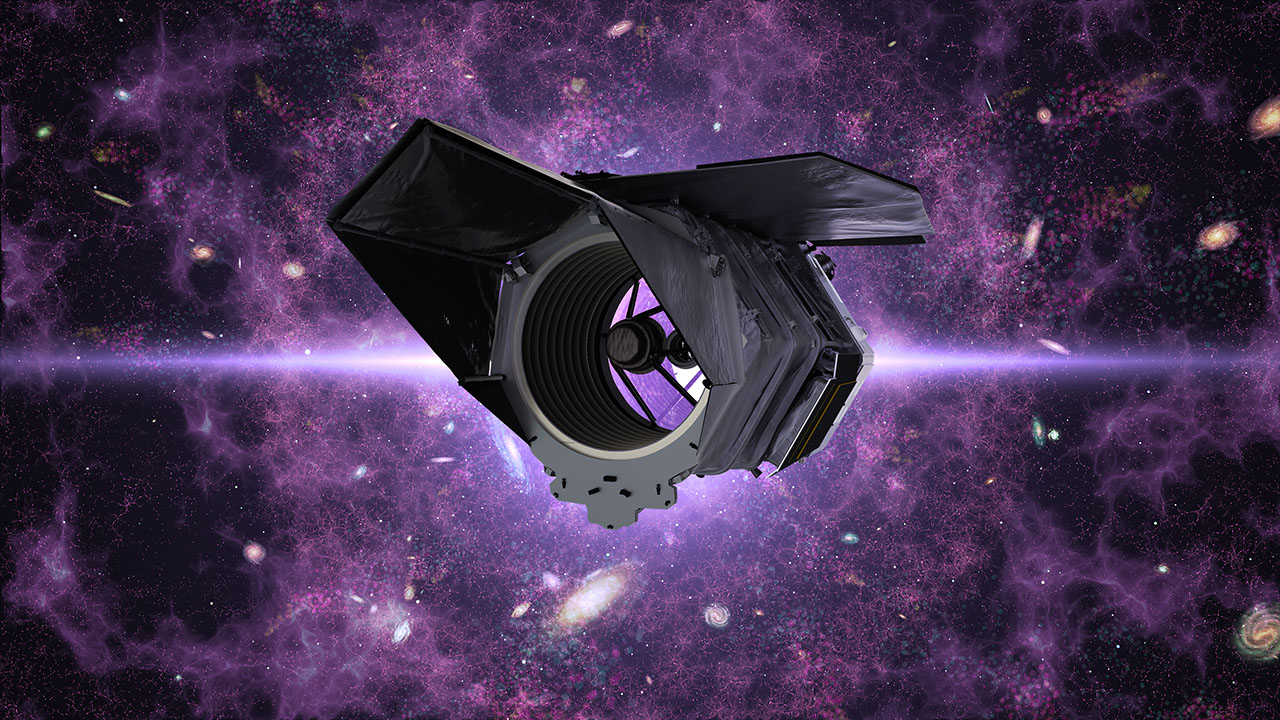
Its Coronagraph Instrument is not yet the final tool for an Earth twin: it is an in-flight demonstration of wavefront control, masks and deformable mirrors. The challenge is to maintain a sufficiently stable artificial darkness around a star for faint reflected planetary light to emerge.
7. PLATO: finding Earths around nearby suns
Planned for early 2027 aboard Ariane 6, PLATO will use 26 cameras and observe more than 200,000 stars. It aims to detect terrestrial planets out to the habitable zones of Sun-like stars. Its distinctive feature is the combination of transits with asteroseismology: stellar oscillations reveal a star's radius, mass and age, providing much better planetary context.
PLATO should supply nearby and accurately dated worlds to major ground-based spectrographs and atmospheric missions. It will not necessarily “see” life; it will build the target list where searching for it becomes physically plausible.
8. The ELT: resolving atmospheres from the ground
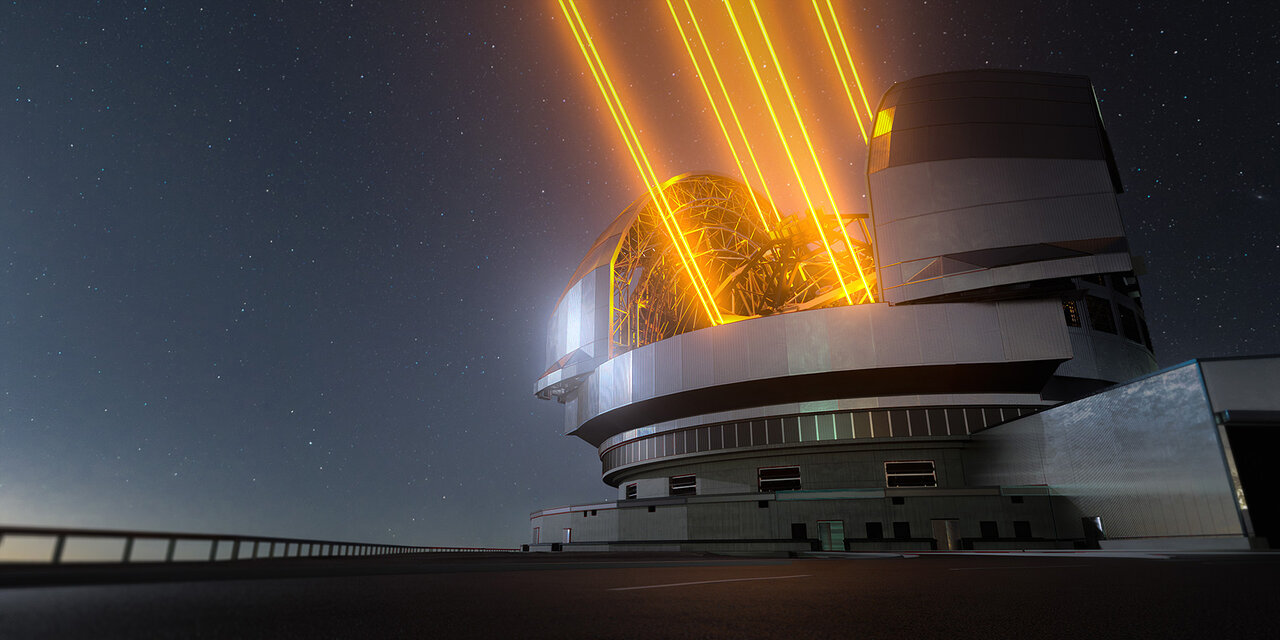
With its segmented 39-metre primary mirror, ESO's Extremely Large Telescope is expected to enter operation near the end of the decade. Adaptive optics will measure atmospheric turbulence and deform mirrors hundreds or thousands of times each second to recover an image close to the telescope's physical limit.
Its first instruments form a complementary set: HARMONI will produce visible and near-infrared spectral cubes; MICADO will make extremely high-resolution images; METIS will combine high-contrast imaging and mid-infrared spectroscopy. Later, ANDES will offer ultra-high-resolution spectroscopy. One ambition is to isolate Doppler-shifted lines in rocky-planet atmospheres and search for oxygen, water, methane and carbon dioxide.
The ELT will not remove ambiguity. It will move it into finer measurements: winds, rotation, vertical atmospheric structure, temporal changes and star-planet interaction. The important future instrument is not merely larger; it produces multidimensional context.
9. Ariel: comparative atmospheric chemistry
ESA's Ariel mission, planned for 2031, will study around one thousand exoplanets. Its AIRS infrared spectrometer will cover approximately 1.95 to 7.8 micrometres. Ariel will measure composition, temperature profiles, clouds and weather changes on worlds ranging from hot super-Earths to gas giants.
Its main goal is not to discover an Earth twin but to move from isolated biographies to a population science of atmospheres. Why do some planets retain atmospheres? How does the host star alter their chemistry? How are formation, mass, irradiation and weather connected? Those patterns will be essential when we eventually encounter a truly anomalous atmosphere.
10. Habitable Worlds Observatory: designing the observation of an exo-Earth
The Habitable Worlds Observatory remains a major mission concept in technology maturation, without a fixed launch date. Its guiding objective is bold: directly image at least 25 potentially habitable worlds around nearby Sun-like stars and analyse their reflected light for biosignatures.
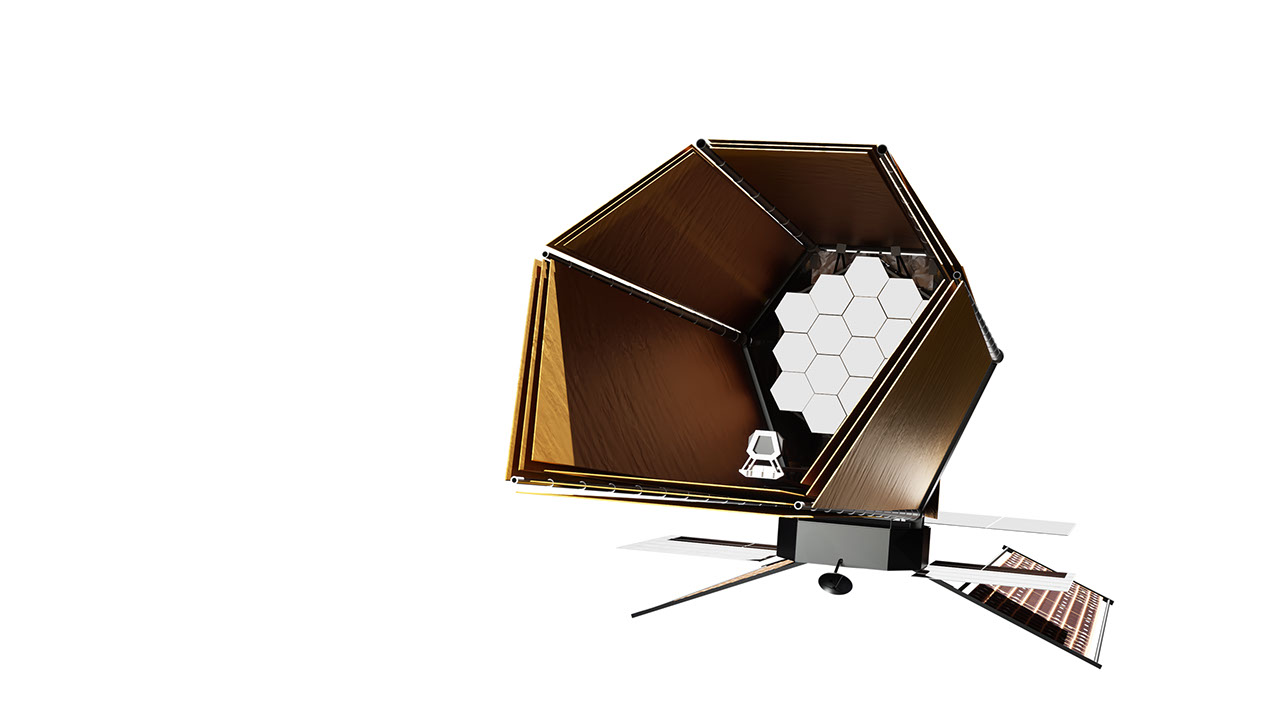
In 2026 NASA is funding studies of critical technologies: ultra-high-contrast coronagraphs, ultra-stable mirrors, visible and near-infrared photon-counting detectors, ultraviolet detectors and a serviceable space architecture. The challenge can be summarised simply: maintain optical precision on the scale of an atom while blocking a star to measure a handful of planetary photons.
11. What counts as a trace of life?
A habitable planet is not an inhabited planet. The habitable zone only marks distances where liquid water could exist under certain conditions. An oxygen-bearing atmosphere is not definitive evidence: oxygen may be produced abiotically. Methane may be biological or geological. Even their coexistence must be interpreted through temperature, stellar ultraviolet flux and expected reactions.
Current research distinguishes several families of traces:
- gaseous biosignatures: chemical combinations difficult to sustain without renewal;
- surface signatures: reflectance changes compatible with pigments, requiring confirmation;
- temporal signatures: seasons, cycles or persistent disequilibria;
- technosignatures: narrow-band radio emission, laser pulses, industrial pollutants, waste heat or hypothetical artificial structures.
The sound method is not to seek a magic symbol but to build an adversarial case. We need multiple transits, wavelengths, seasons and ideally multiple instruments. Detecting life will probably be a process of accumulation, refutation and public revision.
12. The current role of artificial intelligence
AI already intervenes at nearly every stage without replacing scientific method. ExoMiner++, trained on Kepler and TESS data, identified roughly 7,000 targets as candidates during an initial TESS run. It separates planetary transits from binary eclipses and other false positives; candidates still require verification.
At Rubin, software brokers use machine learning to filter, classify and enrich up to seven million alerts each night. For atmospheres, neural networks can accelerate atmospheric retrieval: inferring temperatures, molecular abundances and clouds from spectra. Other models remove stellar activity from radial-velocity data, detect anomalies and optimise follow-up schedules.
Three risks must remain visible. A model learns biases from its simulations; a statistical anomaly is not a physical discovery; and a very precise output may conceal badly calibrated uncertainty. Useful scientific AI must expose error bars, be tested on synthetic and real observations, preserve raw data and allow the analysis chain to be reproduced.
13. Future AI: from analyst to conductor
In the next generation, AI may coordinate an ecosystem of instruments. It could receive a Rubin alert, check catalogues, estimate the value of follow-up, propose radio observations with SKA, infrared observations from space and spectroscopy with the ELT. It may adapt exposures in real time, detect instrument drift and decide which data to compress onboard when bandwidth is scarce.
Longer-term astronomical foundation models could learn jointly from images, spectra, light curves, radio data and physical simulations. Their value would not only be recognising known classes but identifying disagreement between modalities: an object whose chemistry, motion and variability cannot be explained by the same model.
Yet the system must not normalise the unknown. AI trained to classify the sky according to our categories may discard as noise exactly what has no category yet. A future observatory must preserve dedicated paths for anomalies, uncompressed data and competing interpretations.
14. Beyond 2040: what might instruments become?
The most plausible projects extend techniques already tested. A starshade, flying far from a telescope, could block starlight before it enters the optics. Constellations of small satellites could form a space interferometer with a baseline far exceeding any single mirror. The lunar far side could provide protection from terrestrial radio emissions at very low frequencies.
Still more stable spectrographs might follow exoplanet winds and seasons for years. Multi-messenger networks would combine photons, neutrinos, gravitational waves and particles. Fast probes sent toward the Sun's gravitational focus could in theory use it as a lens to reconstruct a detailed exoplanet image, at the cost of travelling hundreds of astronomical units.
More speculatively, an observatory could become a self-repairing swarm: thousands of distributed sensors, individually modest but synchronised by atomic clocks and correlated by AI. Its form would no longer be a building but a spatial protocol. The instrument would begin to resemble the medium it observes: distributed, dynamic and without a single centre.
15. An A.L.I hypothesis: the observatory as interlocutor
A classical instrument receives a signal and passes it to a human. A future observatory could perform one additional operation: gradually construct the form in which an unknown signal becomes interpretable. It would compare the phenomenon against several physical theories, generate control observations, change temporal scale, call on other sensors and preserve contradictions.
For A.L.I, contact would therefore depend on more than a more sensitive antenna. It would require a system able to recognise that a pattern is not noise without immediately forcing it into a human grammar. This observatory-interlocutor would maintain three memories: the raw signal, the transformations applied to it, and the rejected hypotheses.
One could imagine an art installation titled “Organs for a sky that does not yet speak”. Public streams from Rubin, SPHEREx, ALMA and exoplanet archives feed a room. Each instrument is translated into a different material — light, vibration, breath, sound frequency. An AI does not produce one answer; it displays several translations at once and states what each loses. The visitor no longer observes an image of the cosmos but crosses the very process by which it becomes legible.
16. A readable roadmap
| Period | Instrumental stage | What it enables |
|---|---|---|
| 2025–2026 | SPHEREx, Rubin, JWST, ALMA, TESS, CHEOPS | Map interstellar ices, follow the changing sky, detail selected atmospheres and planet-forming environments |
| 2026–2027 | Roman, then PLATO | Galactic census, microlensing, terrestrial planets around bright stars and precise stellar ages |
| Late 2020s | ELT and first-generation instruments | Extremely high-resolution imaging and spectroscopy from the ground |
| Early 2030s | Ariel, SKA ramp-up, later ELT instruments | Comparative chemistry of one thousand atmospheres, massive radio astronomy and faint-signature searches |
| Beyond | HWO and distributed architectures | Direct images of temperate worlds and contextual biosignature searches |
Conclusion: learning to receive
The recent history of astronomical instruments does not simply move from small to large. It moves from isolated sight to coordinated measurement, from photograph to spectrum, from catalogue to real-time stream, and from a single signal to context. ALMA reads cold chemistry; SPHEREx maps ices; Rubin detects change; Roman and PLATO will build populations; the ELT and Ariel will detail atmospheres; HWO aims at reflected light from worlds comparable to ours.
Their shared limitation is productive: none directly speaks the language of life. They produce traces that must be connected, challenged and interpreted. The next revolution may therefore be as epistemological as technical. The most powerful instrument might be the one capable of preserving the strangeness of a signal long enough for us to learn a new way of hearing it.
Scientific and institutional sources
- NASA, SPHEREx mission and all-sky spectral mapping.
- ALMA Observatory, dust and molecules in space.
- Rubin Observatory, first scientific alerts, February 2026.
- NASA, Nancy Grace Roman Space Telescope.
- NASA, exoplanet populations expected from Roman, May 2026.
- ESA, PLATO mission.
- ESO, ELT instruments.
- ESO, ANDES and exoplanet atmospheres.
- ESA, Ariel mission.
- NASA, Habitable Worlds Observatory.
- NASA, HWO technology maturation, January 2026.
- NASA, ExoMiner++ and deep-learning analysis of TESS, January 2026.
- SKAO, construction of SKA-Low and SKA-Mid.