Summary
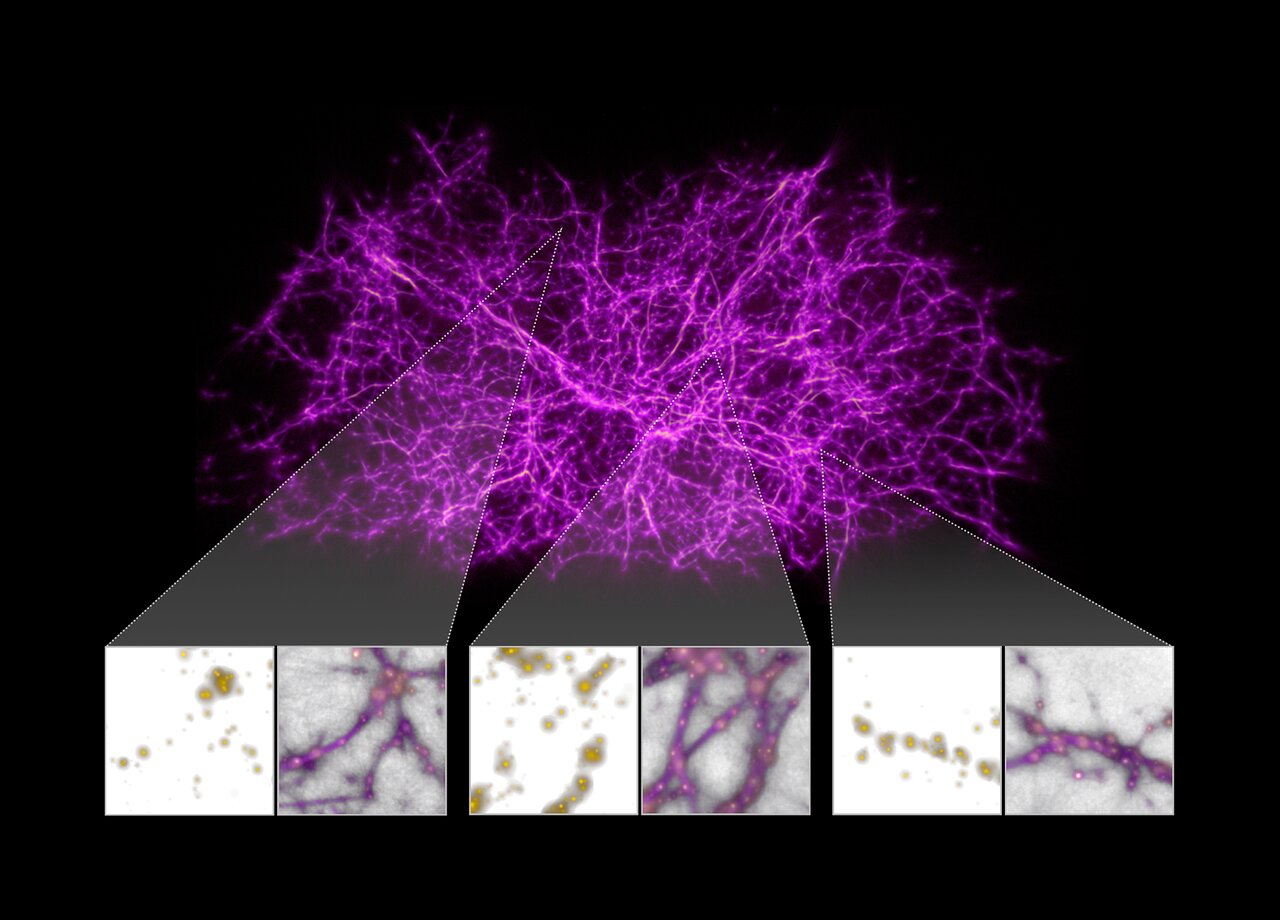
A language is not always produced by an individual. It can emerge from a network: roots, mycelium, swarms, colonies, chemical signals, electrical flows, information distributed through a medium. At cosmic scale, dark matter and galaxies also draw a web of filaments: the cosmic web. This article proposes an A.L.I hypothesis: what if extraterrestrial intelligence were not a voice, but a network? What if the first interlocutor were not an “I”, but a distributed “we”?
1. Trees do not speak like us, but they exchange
Suzanne Simard’s research showed that trees can be linked by mycorrhizal networks: associations between roots and fungi able to move carbon, nitrogen, phosphorus and stress-related signals. These studies strongly fed the popular idea of a “wood wide web”. But precision matters: not all scientists accept the image of an intentional forest internet. Transfers exist, but their interpretation as organized communication remains debated depending on context, species and methods.
For A.L.I, this controversy is useful. It forces us to distinguish three levels: matter transfer, biological signal, and message. Does a flow become language because it carries information? Or does it require intention, syntax, response? Forests teach us that communication can be slow, diffuse, chemical, local, and still structurally decisive.
2. Fungi: networks, impulses, interpretations
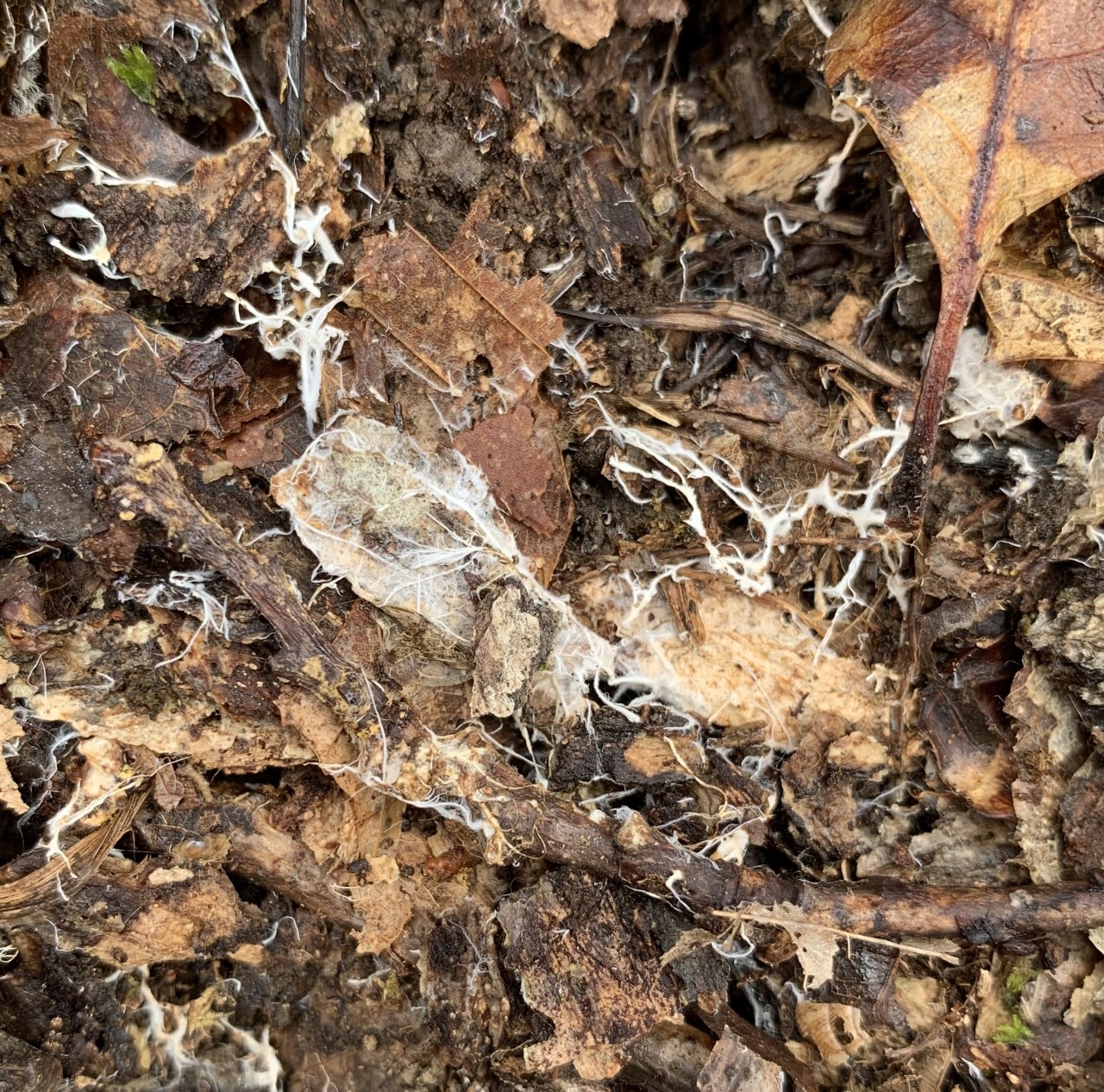
The fungus is a radical model for thinking non-human intelligence. It has no central brain, yet it explores, connects, digests, remembers chemical gradients and redistributes matter. Research on fungal electrical impulses, especially by Andrew Adamatzky, has even proposed comparing some spike trains to lexical structures. This is stimulating, but it should be read as a hypothesis, not as proof that fungi “speak” in the human sense.
This shift matters: extraterrestrial language may resemble neither voice, nor writing, nor binary code. It could be network behavior: density changes, growth orientation, impulse rhythms, color shifts, resource distribution, emergence of a large-scale pattern.
3. In the air: swarms, flights, colonies
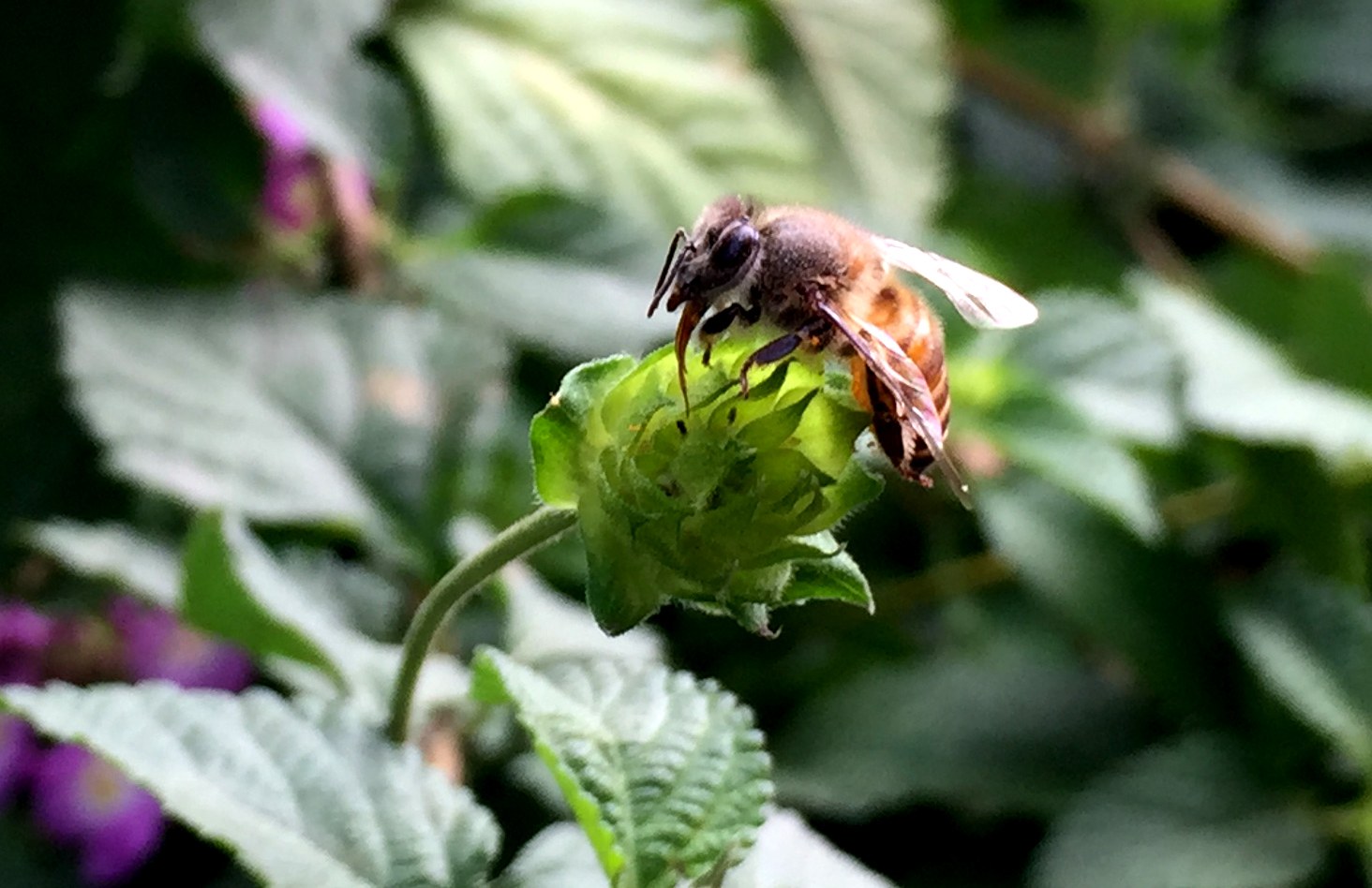
Collective communication is not only underground. Bird murmurations, fish schools, bees, termites and ants produce global forms without a single leader. Each individual follows simple rules: distance, alignment, avoidance, attraction, response to gradients. The result becomes a form larger than each element.
In air, water or colony architectures, the message is not always “sent”: sometimes it is embodied by collective behavior itself. A wave in a fish school, a bee dance, a pheromone trail or a flight variation can be read as a spatial sentence.
4. The “we” before the “I”
Our culture often imagines the extraterrestrial as an individual: a face, a voice, a body, an interlocutor. Yet many terrestrial intelligences are distributed. An ant colony solves problems without a central brain. A fungal network explores territory without a single subject. Slime mould can find efficient paths and remember situations without a nervous system.
Contact may therefore not be a meeting between two individual consciousnesses, but between two regimes of collectivity. In that case, the question “who is speaking?” becomes harder. Are we addressing a species, a colony, a network, a planet, an atmosphere, a biosphere, an infrastructure?
5. From mycelium to the cosmic web
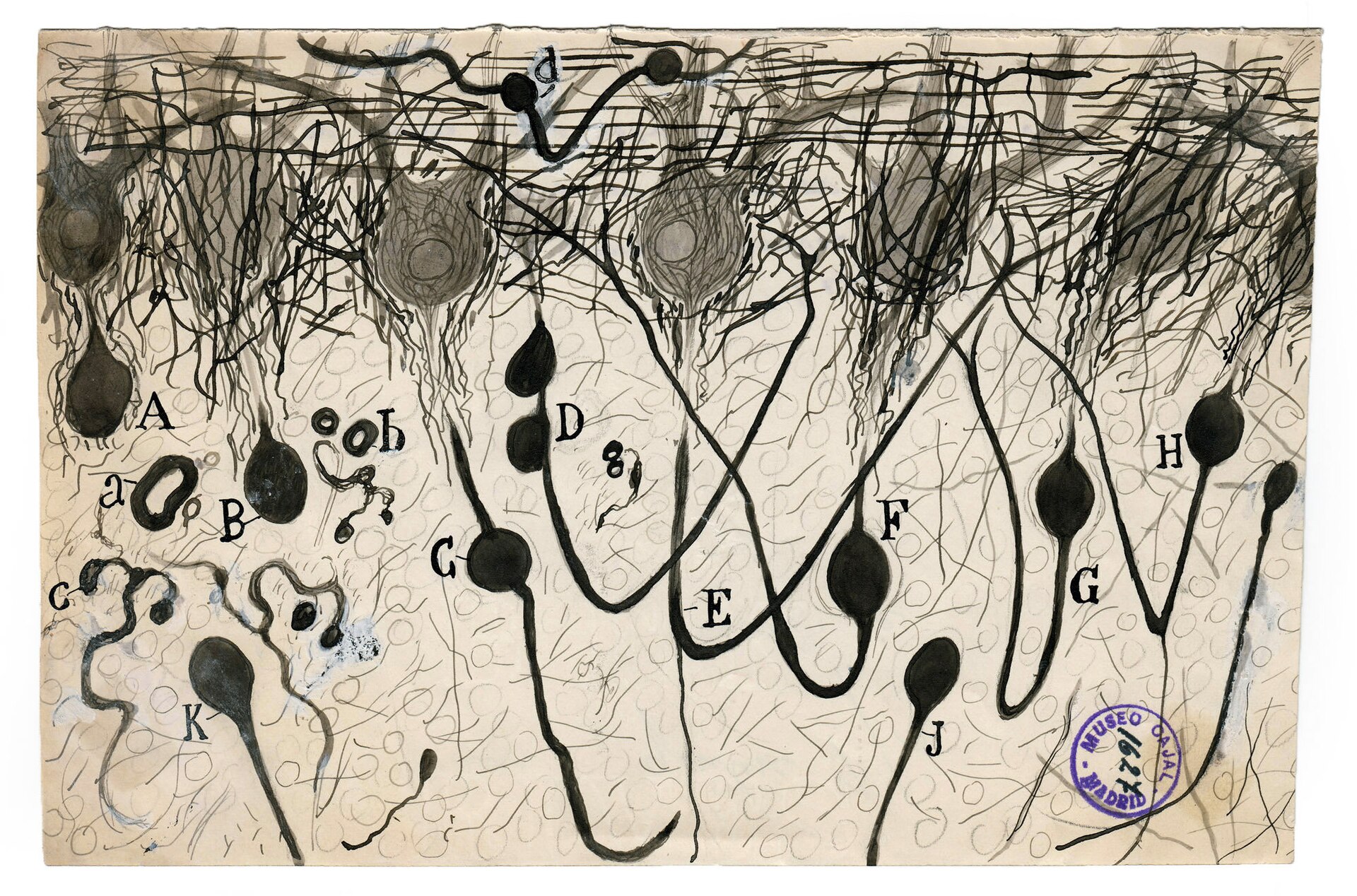
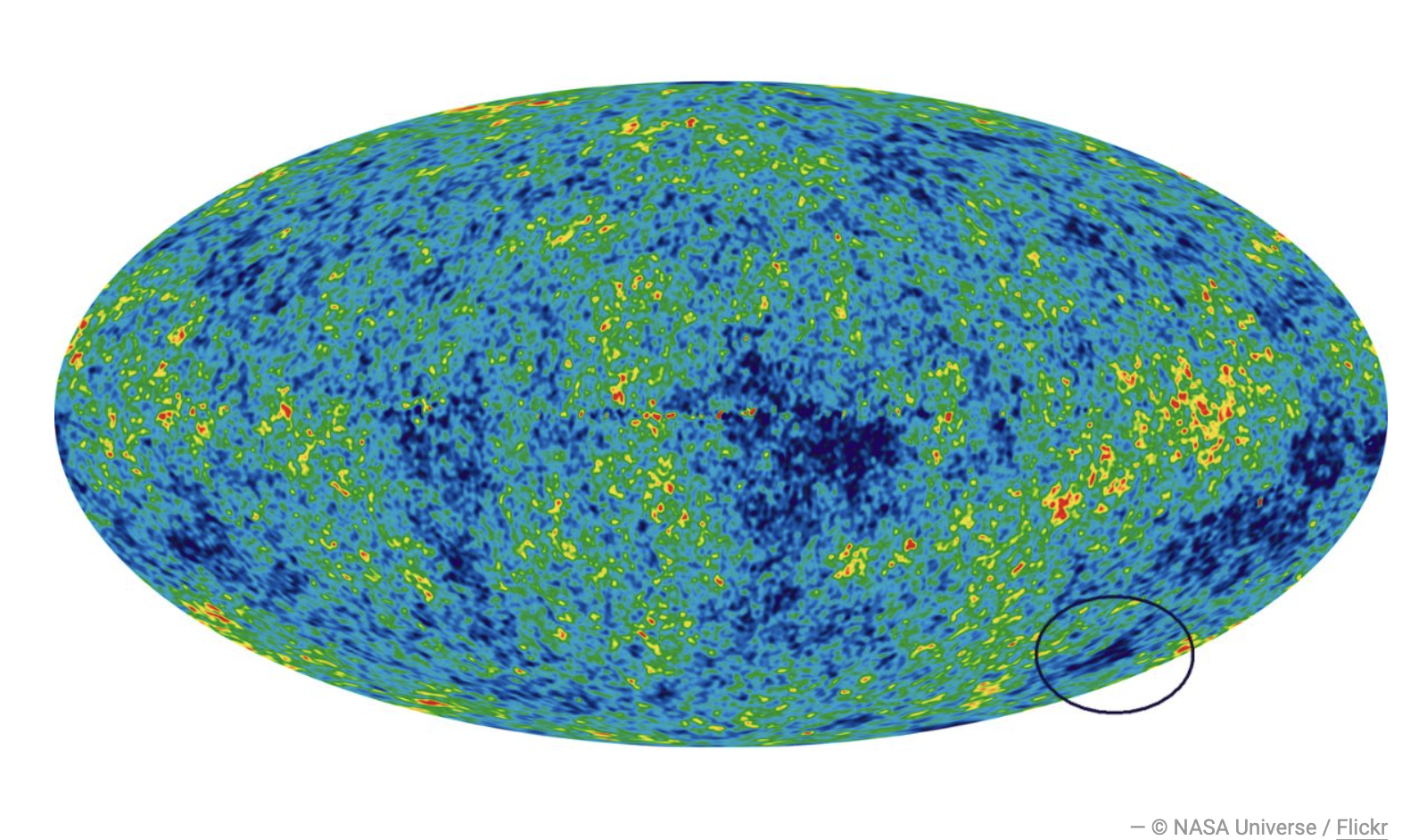
The comparison between mycelium and the cosmic web is visually striking: filaments, nodes, voids, densities, circulation. Scientifically, the mechanisms must not be confused: a fungal network is biological, metabolic and evolutionary; the cosmic web is structured by gravity, dark matter, cosmic expansion and the history of the Universe. But the analogy is fertile for A.L.I: it lets us imagine messages that are not localized in one point, but distributed through an architecture.
If dark matter forms a web where galaxies condense along nodes and filaments, then the visible Universe itself appears as a writing of density. It is not an intentional message in the classical sense. But it is a readable structure: a physical grammar in which forms arise from constraints.
6. Pluribus: when the collective becomes civilization

Vince Gilligan’s Pluribus stages a world in which the collective becomes central. Its interest for A.L.I lies in the ambiguity of the “we”: can a shared intelligence be a higher form of peace, or the disappearance of alterity? If everyone thinks together, what happens to contradiction, secrecy, solitude, poetry, error?
For an interstellar language, this question is decisive. A very advanced extraterrestrial civilization might not present itself as a sum of individuals, but as a collective field. We would look for a sender; it might be a distributed state. We would expect a sentence; it might produce a cognitive climate.
7. We Come in Peace: the extraterrestrial as fungus

We Come in Peace extends a strong intuition: what if the extraterrestrial did not arrive as a metal machine, but as a fungal form, a spore, a contamination, a growth? The fungus is an ideal figure of alterity: neither animal nor plant, living through relations, transforming environments, operating in the invisible, sometimes appearing only through fruiting bodies while its real body is elsewhere, underground.
This matches an A.L.I hypothesis: an extraterrestrial intelligence might not try to “speak”, but to colonize a channel, modify a medium, make a territory more readable for itself. Contact would become ecological before becoming linguistic.
8. A.L.I hypothesis: a rhizomatic language
We can therefore imagine a non-centralized communication protocol. Instead of sending one message from one transmitter to one receiver, we would create a network of distributed micro-signals: lights, sounds, vibrations, data, humidity, temperature, electrical impulses, chemical traces. Meaning would not lie in one isolated sign, but in the way signs synchronize, propagate and transform.
Such a language could take the form of a rhizome: no absolute beginning, no center, but nodes, returns, bifurcations. Reading it would mean observing a dynamic ecology rather than translating a sentence.
9. Possible prototype: a signal garden
An A.L.I device could be built as a living installation: humidity sensors in substrate, electrodes in a mycelial network, microphones, thermal camera, LEDs, speakers, real-time visualization. The public would see a network respond to stimulations: light, sound, breath, presence, vibration. The data would be transformed into sound and light patterns.
The aim would not be to claim that the fungus speaks English, but to test a threshold: when does a set of variations become readable as intention? When does a medium become an interlocutor?
10. From ecosophy to an ecology of reception
Describing living networks is not enough. As soon as human beings observe, measure, exploit or attempt to translate a forest, a soil or an animal community, they already adopt a moral position. The question is therefore not only what nature communicates, but under which conditions we can listen without reducing its forms of existence to resources, data or metaphors useful to our species alone. Before imagining contact with extraterrestrial intelligence, A.L.I must examine the quality of contact we know how to establish with terrestrial intelligences, their environments and their temporalities.
10.1. Extending the moral community
In A Sand County Almanac, Aldo Leopold formulates a “land ethic”: soils, waters, plants and animals are no longer an external setting for humanity, but members of a biotic community on which we depend. This extension does not mean that all beings have identical rights or that every intervention should be prohibited. It asks us to judge an action by its effects on the integrity, stability and capacity for renewal of the living collective. Humans cease to be owners of the system and become responsible participants within it.
This attitude also transforms knowledge. Scientific measurement is never entirely external to what it measures: placing a sensor, isolating a species, sampling soil or training artificial intelligence on animal sounds modifies the relations being studied. An ethics of attention therefore requires protocols to document their own effects, avoid irreversible extraction and recognize the value of what cannot immediately be converted into usable information.
10.2. Ecosophy: environment, society and subjectivity
Arne Næss’s ecosophy invites each person to build a lived philosophy of their relations with the world. It engages our ways of dwelling, our needs, our definition of fulfilment and the extension of the self to the relations that make it possible. So-called “deep” ecology challenges the idea that nature has value only through the services it provides to humanity.
Félix Guattari shifts the concept further in The Three Ecologies, linking environmental, social and mental ecologies. Destroying an environment, standardizing forms of life and impoverishing subjectivities belong to the same process. For A.L.I, a receiving device can therefore never be reduced to an antenna or algorithm. It also includes a community of interpreters, narratives, expectations and power relations that determine what may be heard as a message.
Ecosophy must not, however, become a vague spiritualization of biological networks. Trees, fungi and animals do not necessarily form a global harmony; cooperation coexists with predation, competition and rupture. Its contribution is methodological: it connects ecological facts to the social and sensory forms through which we receive them, while keeping scientific results, philosophical interpretations and artistic proposals distinct.
10.3. Diplomacy with the living
The work of Philippe Descola reminds us that the modern separation between objective “nature” and humans as the sole bearers of culture is not universal. Other societies organize continuities and differences among humans, animals, plants, spirits and places differently. This plurality prepares a fundamental question of contact: an alien intelligence may share neither our division of beings nor our distinction between subject, object, organism and environment.
Through interspecies diplomacy, Baptiste Morizot proposes beginning with concrete signs, territories and conflicts of use in order to compose coexistence rather than impose an abstract peace. Vinciane Despret shows that the quality of an animal’s response often depends on the quality of the question and experimental setting. This diplomacy echoes Donna Haraway’s invitation to stay with the trouble: remaining within imperfect, interdependent relations without waiting for a total solution that would erase conflict.
10.4. From ecological reception to an ecology of reception
In “La réception écologique de la Nature chez Serge Moscovici”, sociologist Hélène Houdayer analyzes a body of thought in which nature and society can no longer be separated. For Serge Moscovici, nature is not an untouched outside opposed to culture: it is a historical reality transformed and inhabited by societies, while natural elements participate in shaping our practices, sensitivities and conflicts. Ecology becomes both a critique of production and consumption and a force for social experimentation, autonomy and collective participation.
“Ecological reception” describes how a place becomes a lived environment. People are no longer mere spectators of an external environment: they incorporate environmental values, act upon their living conditions and become responsible for the relations that compose them. This reception combines objective dimensions — soil, biodiversity, climate and resources — with subjective dimensions — attachments, representations, memory, fear, pleasure and protection. To inhabit an environment is to receive it from within through everyday practices that make a complete separation between human activity and physical elements impossible.
This reading directly extends Serge Moscovici’s De la nature: pour penser l’écologie. Reception is not the final stage of transmission: it is the process through which an environment becomes perceptible, shared and politically transformable.
From this lineage, A.L.I proposes extending ecological reception toward an “ecology of reception” for non-human signals. Just as natural space becomes an environment only through physical, social and sensory relations, a signal becomes a message only within a receiving environment. Antenna, organism, algorithm, memory, institution, narrative and community of interpreters form that environment together. Receiving is never passive: the receiver selects a frequency, constructs a threshold, compares patterns and is itself transformed through the relation.
Attention before interpretation. A phenomenon should first be observed through its duration, variations and context before being declared a message.
Reciprocity before extraction. A protocol should ask not only what an environment can teach us, but what our presence does to it and what we can return.
Reversible devices. Whenever possible, sensors, transmissions and experiments should be stoppable without leaving lasting degradation.
Plurality of interpreters. No single discipline should own the meaning of a signal. Documented disagreement protects against premature certainty.
10.5. Before interstellar contact
Our relation to terrestrial non-humans is a moral laboratory for interstellar contact. A civilization that can listen to a forest, an animal or a soil only by turning them into commodities risks reproducing the same violence when faced with cosmic alterity. Conversely, learning to recognize agents whose signs are slow, distributed, collective or ambiguous trains us not to confuse intelligence with resemblance to ourselves.
The first act of communication may not be sending a message, but preparing a world capable of receiving without capturing. A.L.I can then be understood as a school of attention: inventing instruments that listen across scales, protocols that leave room for silence, and narratives that make a response conceivable without deciding its form in advance. Contact would mean less the conquest of information than becoming responsible for the relation opened by that information.
11. Conclusion: learning to listen to the network
This path deeply shifts A.L.I. Interstellar contact may not only be a question of antenna, message, translation or mathematics. It could be a question of reception ecology. To hear a collective intelligence, we may need to build a collective receiver: humans, machines, plants, fungi, sensors, AI models, archives, artists and scientists.
The language of the future may not be a language. It may be an organized form of coexistence, a mesh, a forest, a constellation of signals.
Sources and paths
Suzanne Simard, Finding the Mother Tree; Merlin Sheldrake, Entangled Life; Peter Wohlleben, The Hidden Life of Trees; Richard Powers, The Overstory; scientific articles on mycorrhizal networks and their controversies; Andrew Adamatzky’s work on fungal electrical impulses; research on swarm intelligence; NASA / ESA visualizations of the cosmic web; Pluribus, Apple TV; We Come in Peace / Vi kommer i fred.
Hélène Houdayer, “La réception écologique de la Nature chez Serge Moscovici,” Sociétés, 2015/4, no. 130, pp. 63–71; Serge Moscovici, De la nature: pour penser l’écologie; Aldo Leopold, A Sand County Almanac; Arne Næss, Ecology, Community and Lifestyle; Félix Guattari, The Three Ecologies; Philippe Descola, Beyond Nature and Culture; Baptiste Morizot, Ways of Being Alive; Vinciane Despret, What Would Animals Say If We Asked the Right Questions?; Donna Haraway, Staying with the Trouble.