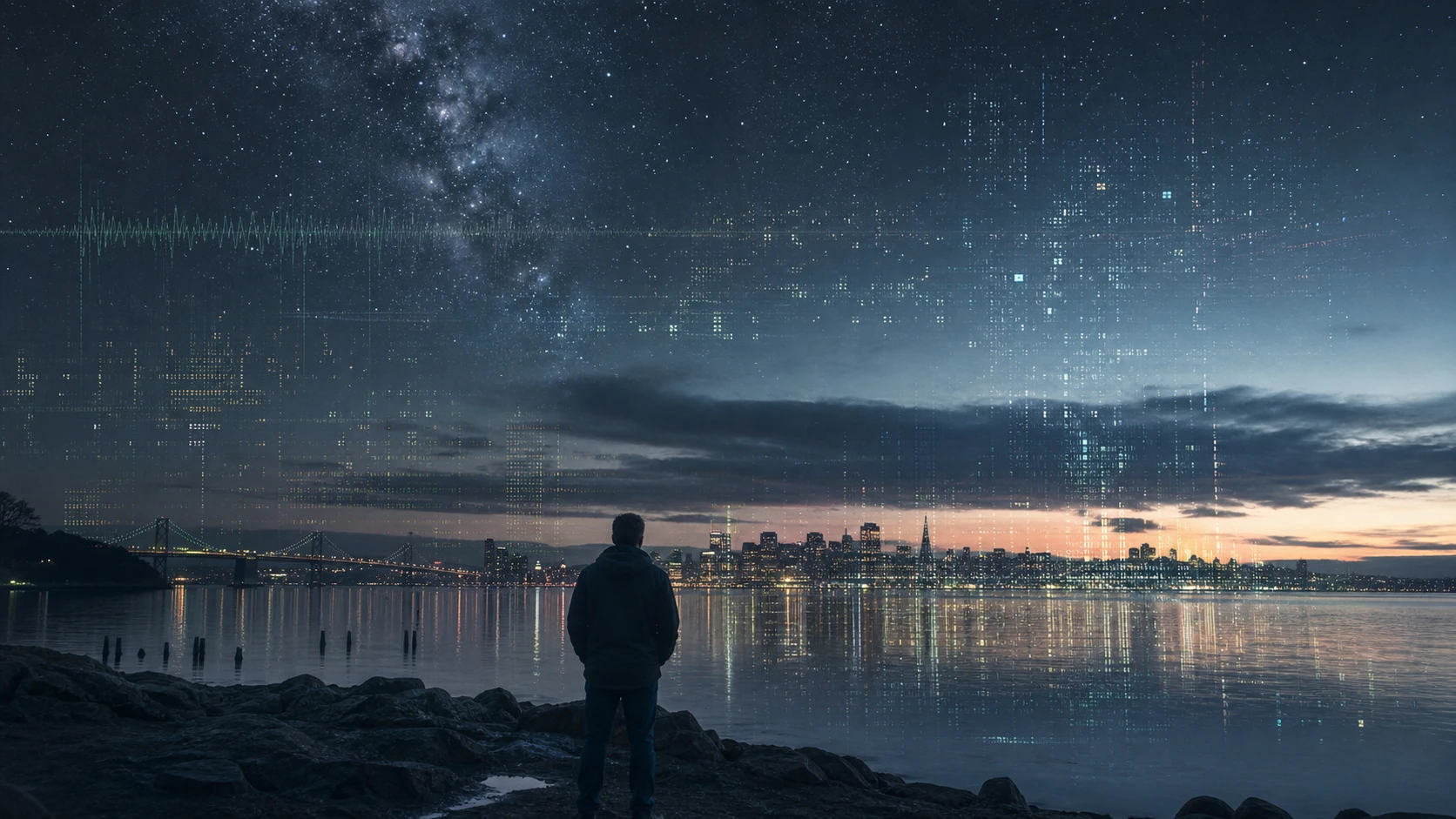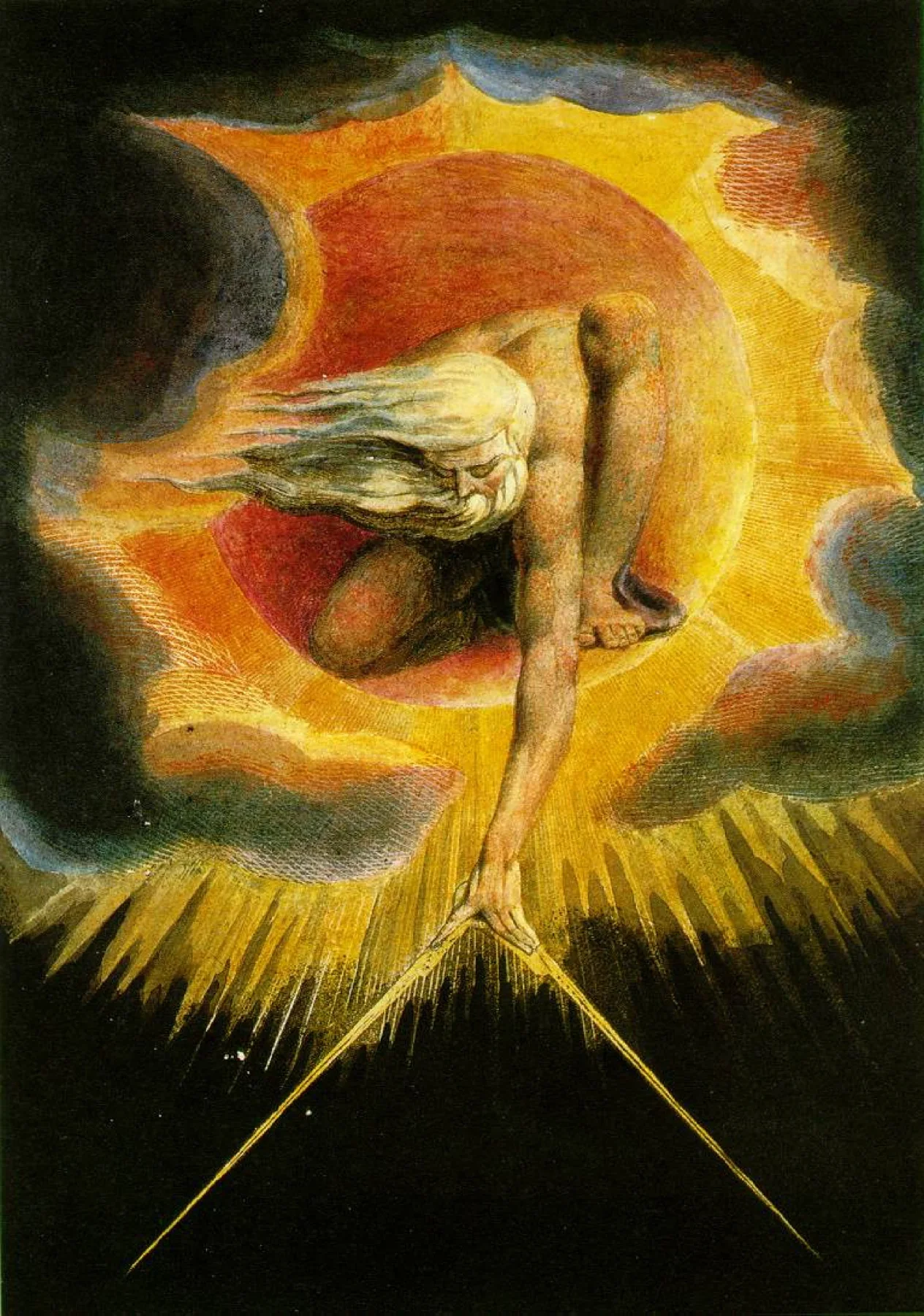
The Boltzmann brain is one of the most vertiginous hypotheses in contemporary cosmology. It imagines that a conscious observer might appear not through biological, planetary and evolutionary history, but as an extremely rare statistical fluctuation in a vast, ancient, perhaps eternal universe.
For A.L.I, the idea is fertile because it shifts the question of contact. What if an extraterrestrial message did not come from a civilization with antennas, spacecraft or planets, but from a consciousness briefly emerging inside cosmic noise itself? What if the sender had no world, no people, no duration, only an instant of thought produced by entropy?
1. Boltzmann, entropy and the scandal of order
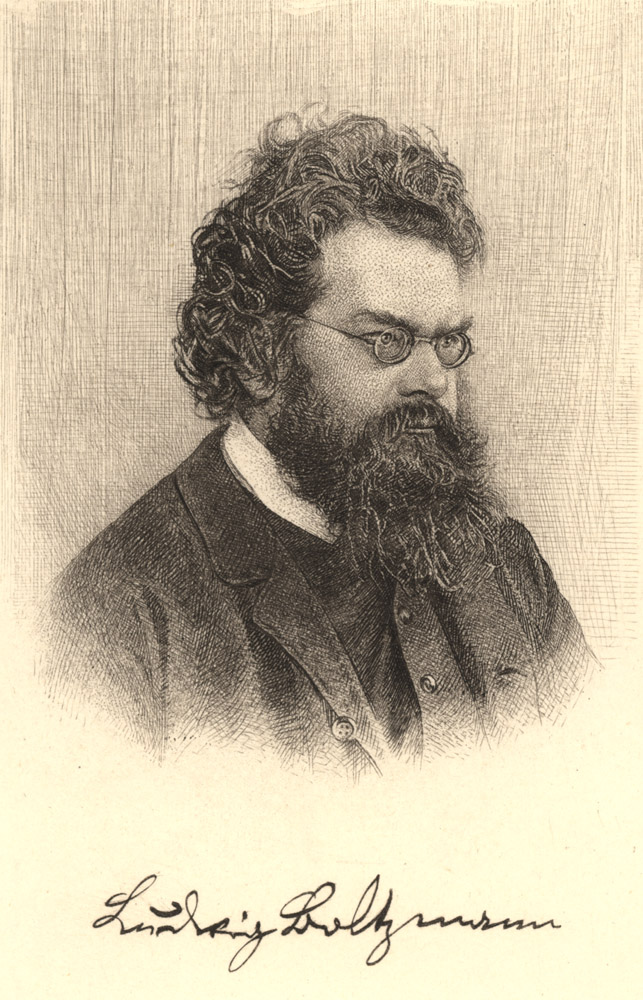
Ludwig Boltzmann tried to understand how the laws of thermodynamics could emerge from the statistical behavior of enormous numbers of particles. Entropy measures, in simplified terms, the number of microscopic configurations compatible with a macroscopic state. Disorder is more probable because there are vastly more ways to be disordered.
The problem begins when this logic is applied to the universe as a whole. Our world is locally structured: galaxies, stars, planets, chemistry, DNA, brains, languages, archives, telescopes. Why is there so much order if entropy tends to increase? One answer is that we inhabit an extraordinarily rare fluctuation: an island of order in an ocean of disorder.
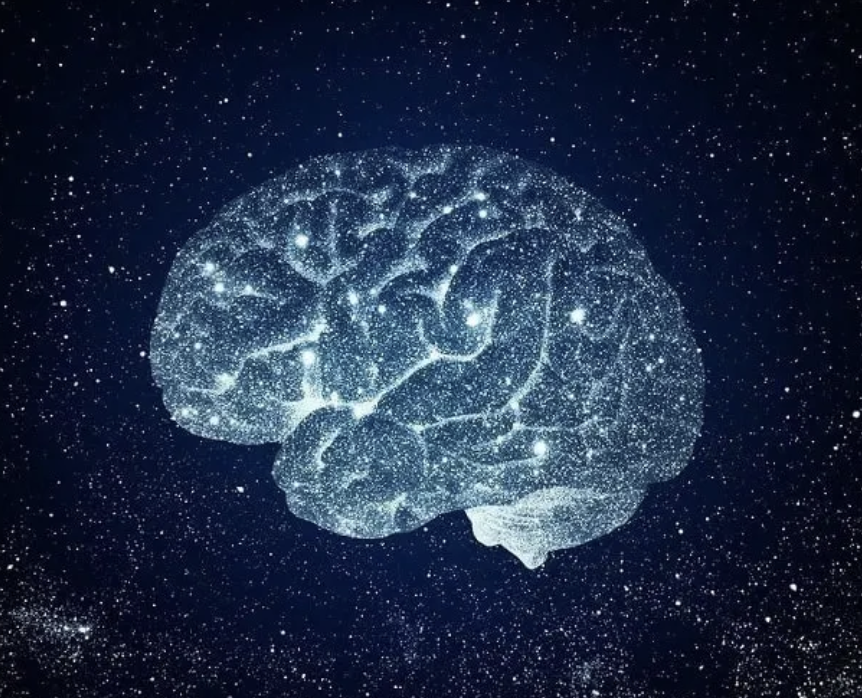
But if this idea is pushed to its limit, an absurd consequence appears. It seems statistically easier to produce a conscious brain directly, complete with false memories and the impression of a world, than to produce an entire ordered universe capable of slowly generating that brain. This hypothetical observer is called a Boltzmann brain.
2. The observer without history
A Boltzmann brain would be a minimal observer: organized enough to have an experience, perhaps a memory, perhaps the feeling of being a person, but without a real past. Its memories would be internal traces, not historical evidence. It might believe it is sitting in front of a screen reading an article, while its environment is only a fluctuating mental structure.
The philosophical horror of the hypothesis is simple: if a cosmology predicts far more Boltzmann brains than ordinary observers, then statistically we should expect to be such brains. Yet our experience seems stable, coherent, shared and resistant to verification. Physicists such as Sean Carroll therefore use the Boltzmann brain as a critical test: a good cosmology should not produce more ghost observers than historical observers.
3. Can a thought born from noise send a message?
Within A.L.I, the question becomes speculative but fertile. Could a Boltzmann brain communicate? If its existence is brief, it may not have time to build an antenna, learn a language or encode an archive. But it might itself be a pattern: an information structure in the void, a local signature of order, an anomaly detectable only as an inconsistency inside noise.
We can imagine three levels of communication:
- Message as thought: an instantaneous consciousness produces an image, a sentence or a dream, but has no durable medium.
- Message as structure: the fluctuation that produces the observer leaves an identifiable mathematical or energetic pattern.
- Message as impossible proof: the observer contains information too ordered, compressed or relevant to be mere chance.
4. Star Trek: Strange New Worlds, season 1 episode 8
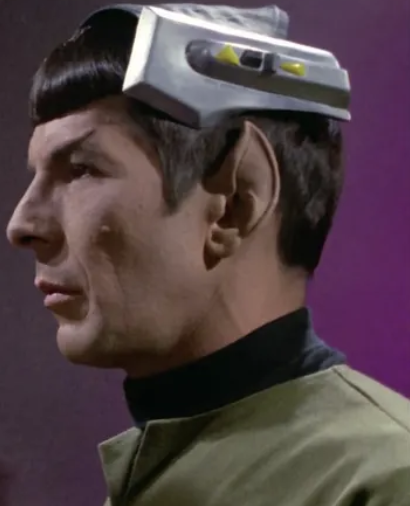
In Star Trek: Strange New Worlds, season 1, episode 8, The Elysian Kingdom, the USS Enterprise enters a nebula where the crew is transformed into characters from a storybook. The episode, tied to Doctor M'Benga and his daughter Rukiya, introduces a cosmic entity associated with the nebula, often described in Star Trek summaries and commentary as a Boltzmann brain.
This is a fascinating choice. The series does not simply show a classical extraterrestrial creature. It stages a nebula-intelligence able to manipulate perception, identity, narrative and memory. Contact does not pass through articulated language, but through a fiction imposed on the crew. The message becomes theater. The ship becomes a brain. The crew becomes an alphabet.
In this reading, the Boltzmann brain is not only a cosmological problem: it becomes a narrative machine. A cosmic consciousness, instead of sending a radio signal, temporarily rewrites the perceptual world of humans so that they enter its own regime of meaning.
5. Why this matters for A.L.I
A.L.I searches for forms of interstellar language. The Boltzmann brain introduces an extreme hypothesis: language might not come from a species, but from an event. Intelligence could be a thermodynamic accident, a local condensation of information, a brief consciousness owning nothing except its own appearance.
This hypothesis expands the criteria of contact. To search for a civilization is to search for duration, technique and repetition. To search for a Boltzmann brain would be to search for a cognitive singularity: a pattern that thinks, but may never have had time to become a culture.
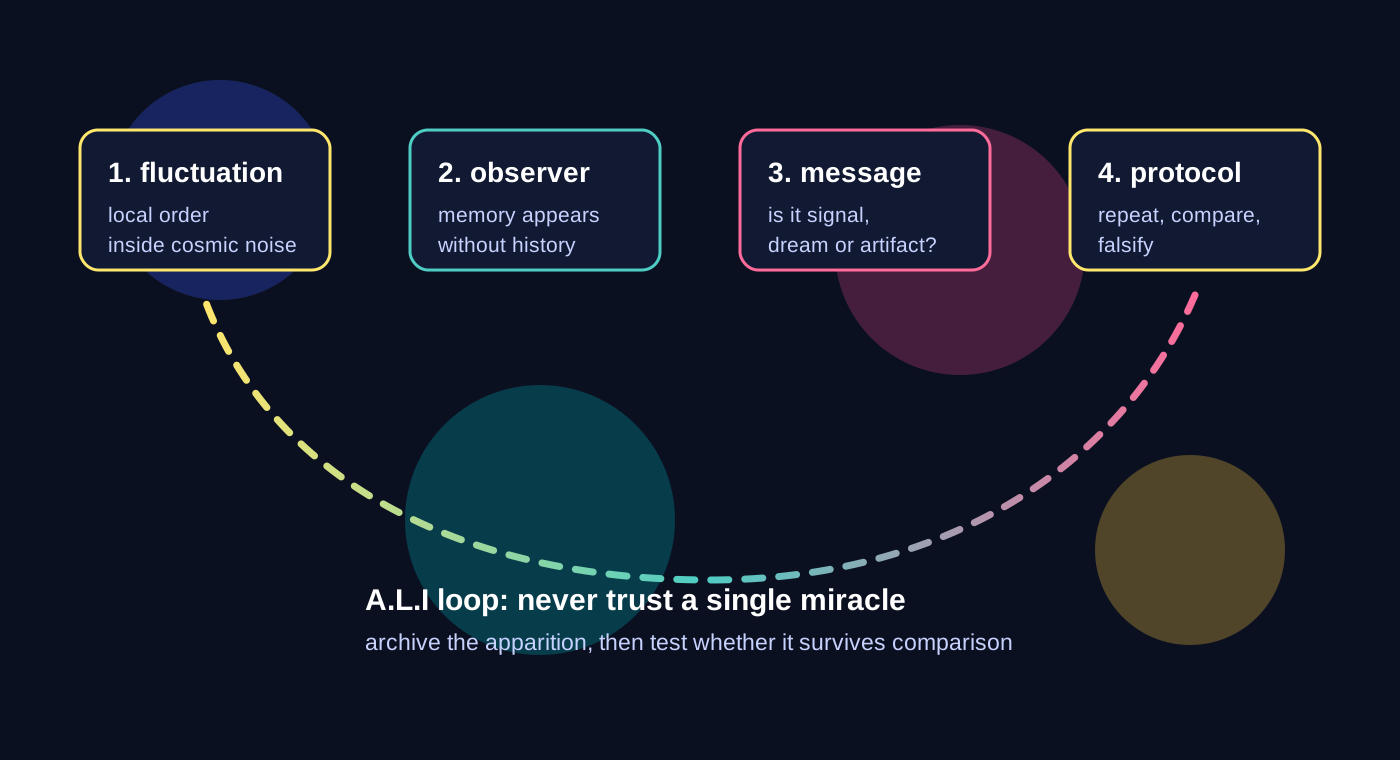
6. Thought experiment: receiving a memory without a world
Imagine that a radio telescope, an AI model or an artistic apparatus captures a sequence resembling a memory: a city, a smell, a fear, an equation, a face, but no stable astronomical context. The message is internally coherent, yet points to no known planet. Is it a hallucination of our system? A statistical artifact? A fiction produced by our algorithms? Or the trace of an observer without a world?
An A.L.I protocol could ask:
- does the sequence contain non-trivial compression?
- can it be reconstructed by several independent methods?
- does it produce predictions verifiable outside the receiving system?
- does it survive the hypotheses of noise, human bias and algorithmic hallucination?
7. Possible installation: Fluctuation Chamber
An artistic installation could simulate this hypothesis. In a dark room, a stream of cosmic noise, radio data, generated texts and unstable images would be analyzed in real time. An AI would search for local pockets of order: emerging phrases, recurring forms, visual motifs, fragments of memory. The visitor would not see a clear message, but a struggle between chance and meaning.
The system could include:
- a cosmological or radio noise generator;
- a pattern-detection model;
- a narrative engine turning anomalies into fragments of memory;
- a critical dashboard showing chance probability;
- an archive of false positives, because the protocol must learn to doubt.
8. The danger: confusing contact with apophenia
The Boltzmann brain is also a warning. Human minds see forms everywhere: faces in clouds, signs in noise, intentions in coincidences. A project such as A.L.I must therefore remain double: open to strange forms, but demanding about evidence. The poetry of the signal is not enough. Protocols, comparisons and adversarial tests are necessary.
The most interesting question may not be whether a Boltzmann brain really exists. It is what the hypothesis does to our conception of language: it imagines a message without society, a memory without history, a consciousness without body, an intelligence without planet.
Sources and paths
- Boltzmann brain - overview
- Portrait of Ludwig Boltzmann - Wikimedia Commons
- Anson Mount - Wikimedia Commons / Gage Skidmore
- Sean M. Carroll, Why Boltzmann Brains Are Bad
- Dyson, Kleban, Susskind, Disturbing Implications of a Cosmological Constant
- Star Trek: Strange New Worlds, S1E8, The Elysian Kingdom
- Star Trek: Strange New Worlds - series page