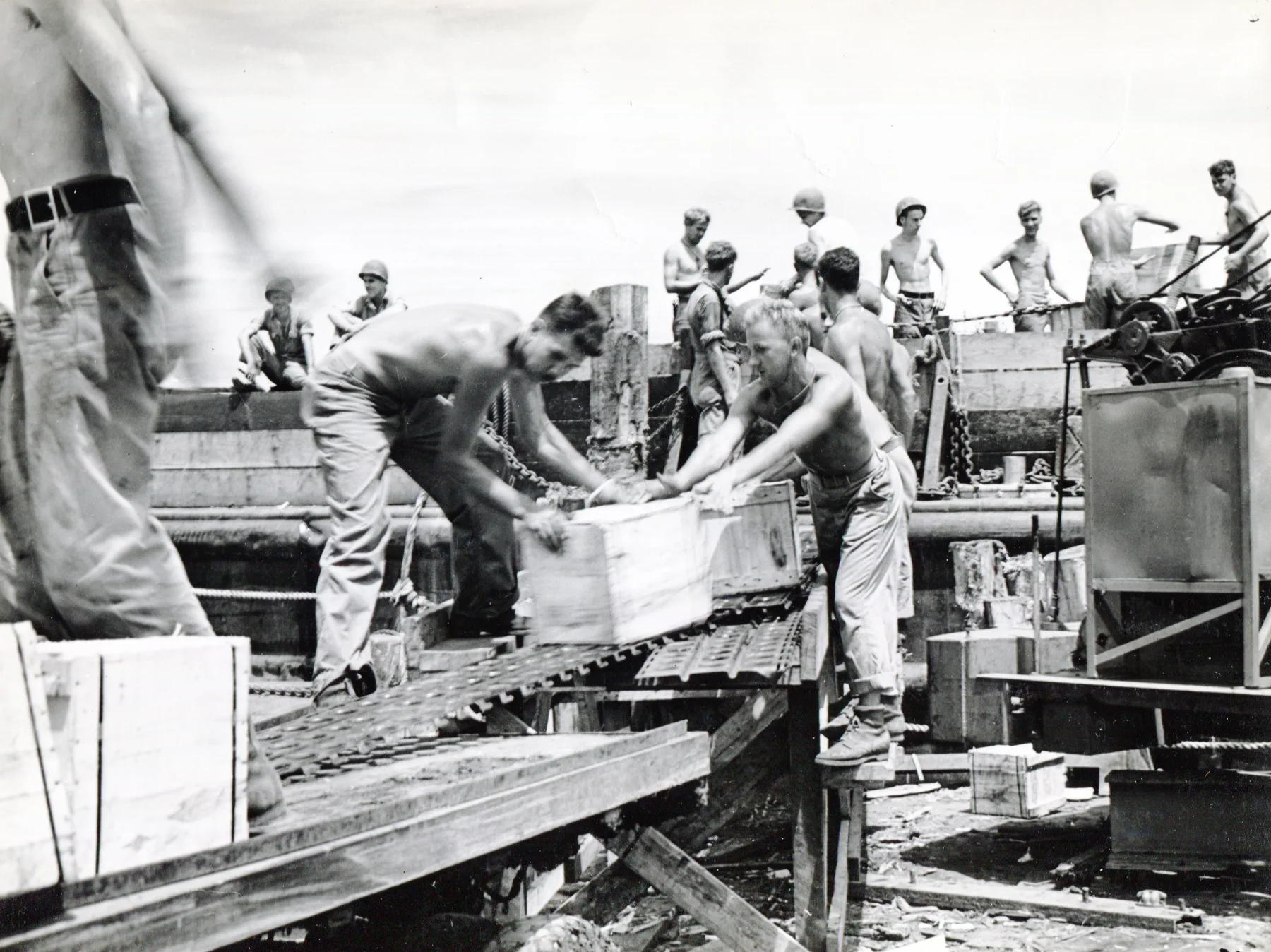
A man speaks into a box. A few hours later, an aircraft descends from the sky and unloads crates, medicine, clothing and machines. Other men draw lines on the ground, raise flags and repeat precise gestures. The aircraft return.
For someone who cannot see the factories, ports or command centres connecting several continents, the most reasonable explanation begins with what is visible: gestures, objects, sounds and their sequence. The radio seems to summon the aircraft. The runway seems to bring the goods. The uniform appears to provide access to an invisible power.
This scene became the popular image of Pacific “cargo cults”. Yet it tells us as much about the Western gaze as it does about what Melanesian people actually thought.
1. Technology falling from the sky
During the Second World War, Japanese and American forces built bases, runways, radio towers, depots and ports across the Pacific. Melanesian populations saw industrial power and material abundance appear on an unprecedented scale within months.
This was not always an absolute first contact. Missionaries, traders and colonial administrations had often been present for decades. The war nevertheless produced a violent acceleration: an industrial civilisation exposed part of its power to societies kept outside its economic and political mechanisms.
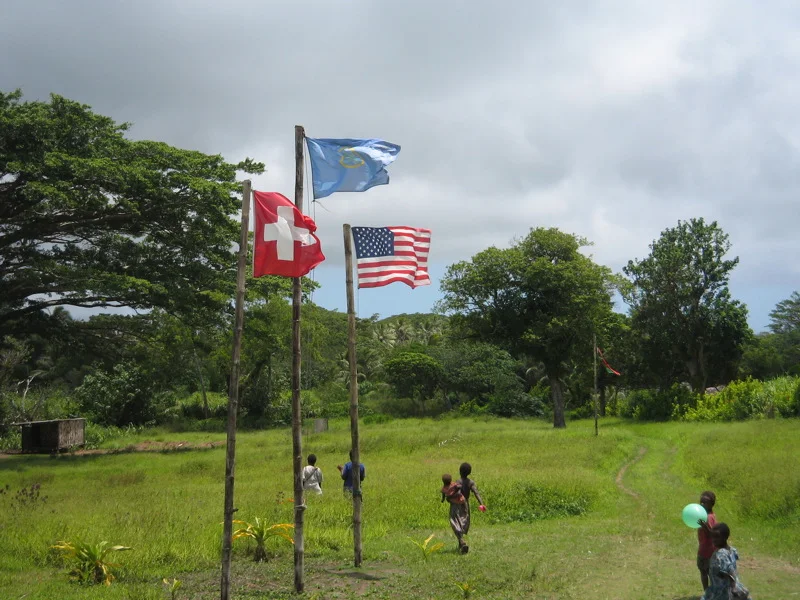
After military forces departed, some Melanesian movements incorporated ceremonies, marching, poles, flags or objects recalling what had been observed. The John Frum movement on Tanna Island in Vanuatu became the best-known case. Other movements, including the one associated with Yali in Papua New Guinea, combined religious transformation, resistance to colonial authority and the search for a new social order.
2. “Cargo cult” as a manufactured category
The term “cargo cult” appeared in the colonial press in 1945 before administrators, journalists and anthropologists adopted it. It came to group very different movements under the convenient image of islanders seeking goods through ritual. The Open Encyclopedia of Anthropology notes that most anthropologists have since abandoned or strongly criticised the category as misleading and sometimes demeaning.
Anthropologist Lamont Lindstrom argues that talk about “cargo” often reveals Western obsessions as much as Melanesian understandings. By exoticising local practices, colonial authorities could turn demands for autonomy and anti-colonial action into irrational belief. His study of the stories built around cargo cults asks whether European cargo was even the central object of desire, and whether these movements were “cults” at all.
Cargo was not simply a collection of desirable objects. It could represent ancestral wealth diverted elsewhere, evidence of a broken moral order, or the promise of emancipation. Peter Worsley situated these movements within a system in which Indigenous labour supported plantations and mines while profits left the territory. Where political expression was suppressed, religious expectation could become a language of protest.

3. Not imitation, but reconstruction
The most condescending interpretation claims that these populations mistook ritual imitation for the real operation of technology. Their situation instead raises a universal problem: how can causes be reconstructed when only an interface is visible?
For island inhabitants, the global industrial chain remained invisible. They saw an operator speak into a radio, followed by an arriving aircraft. It was reasonable to suppose that the visible gestures, sounds and objects formed an access protocol.
We still behave this way when facing an unknown machine. We operate its controls, observe reactions, repeat successful sequences and gradually build a causal model. This reasoning from clues is a form of abduction: producing the most plausible explanation from partial effects. The boundaries among experiment, learning and ritual are less stable than we imagine.
The true asymmetry is therefore not reason against superstition. It separates those who know the infrastructure from those who receive only its manifestations.
4. We could become the cargo cult
Imagine an interstellar artefact discovered on the Moon, in orbit or at the bottom of an ocean. It produces light after particular manipulations, alters a magnetic field, emits a sequence of numbers or transforms matter placed nearby.
We would repeat the observed sequences. Laboratories would build copies. States would classify the results. Companies would promise to exploit the object. Religious groups would see revelation. Social networks would circulate imaginary instructions.
We might activate a function without understanding its meaning. What we call a message could be an automatic diagnostic. What we call an engine might be a cooling system. A shape reproduced as a sacred symbol might be nothing more than a hinge.
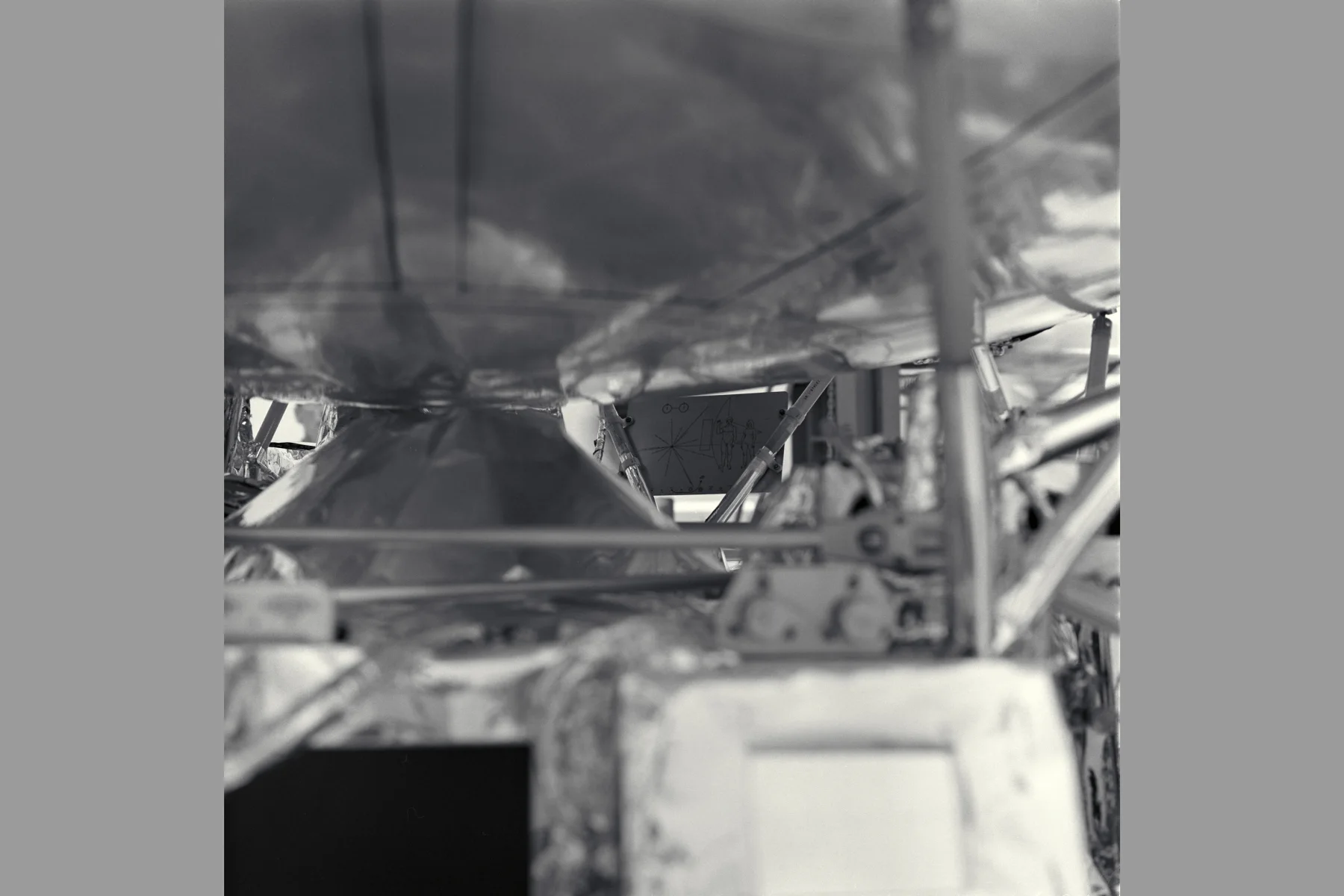
Like readers of an undeciphered script, we would possess signs without a Rosetta Stone. As with the contemporary Pioneer plaque hypothesis, we would reconstruct the recipient imagined by its maker. As with binary steles, material endurance might outlast every possibility of translation.
5. Why might an extraterrestrial civilisation hide?
In 1973, radio astronomer John A. Ball proposed the zoo hypothesis: advanced civilisations might know that we exist and choose not to interfere, allowing humanity to develop independently. The proposal addresses one version of the Fermi paradox, but remains speculative and difficult to falsify.
Non-interference could answer two separate risks.
The first is contact shock. A sufficiently advanced technology might destabilise religious, scientific, political and economic systems. We could turn its makers into gods, enemies or expected suppliers. Contact need not destroy humanity physically to damage its representations and its capacity for independent decision.
The second risk is reverse engineering. A civilisation would not need to regard us as an equal to consider us dangerous. It would be enough for us to extract a new energy source, propulsion system, surveillance method or weapon from one technological fragment.
An object intended to inform could then alter Earth's balance of power irreversibly. Even without understanding its principles, we might reproduce some effects, just as one can learn to operate a control without knowing the whole machine.
6. Informational quarantine
A cautious civilisation might impose an informational quarantine: observe without appearing, transmit only information with little transformative power, conceal dangerous principles, and wait for the observed species to cross particular ethical thresholds.
It might leave ambiguous signals, structured enough to be noticed but insufficient to deliver technology. It might place observers beyond our instrumental reach, or make its machines inert when manipulation is detected. Cosmic silence would no longer mean “nobody is there”, but “nobody wants to give us the means to become more dangerous than we already are”.
The hypothesis has a major weakness. If several independent civilisations exist, why would all respect the same rule? One dissenter would be enough to make contact visible. The zoo hypothesis is therefore not scientific evidence explaining silence; it is a thought experiment about the ethics and strategy of asymmetric encounter.
7. A progressive contact protocol
This projection intersects with first contact understood as a rite of passage. A responsible encounter might cross several thresholds: make a regularity perceptible, verify that the other recognises it, establish minimal reciprocity, test the ability not to divert the exchange, and only then increase the amount of information.
The recipient must always be able to withdraw. Silence would not be failure, but a right. Technological progress would not be the only criterion: a civilisation might be judged by how it protects vulnerable life, distributes power and limits violence produced by discovery.
The most advanced rule of an interstellar civilisation may not be knowing how to reach another world, but knowing how not to enter it.
8. A.L.I LAB: an atlas of contact asymmetries
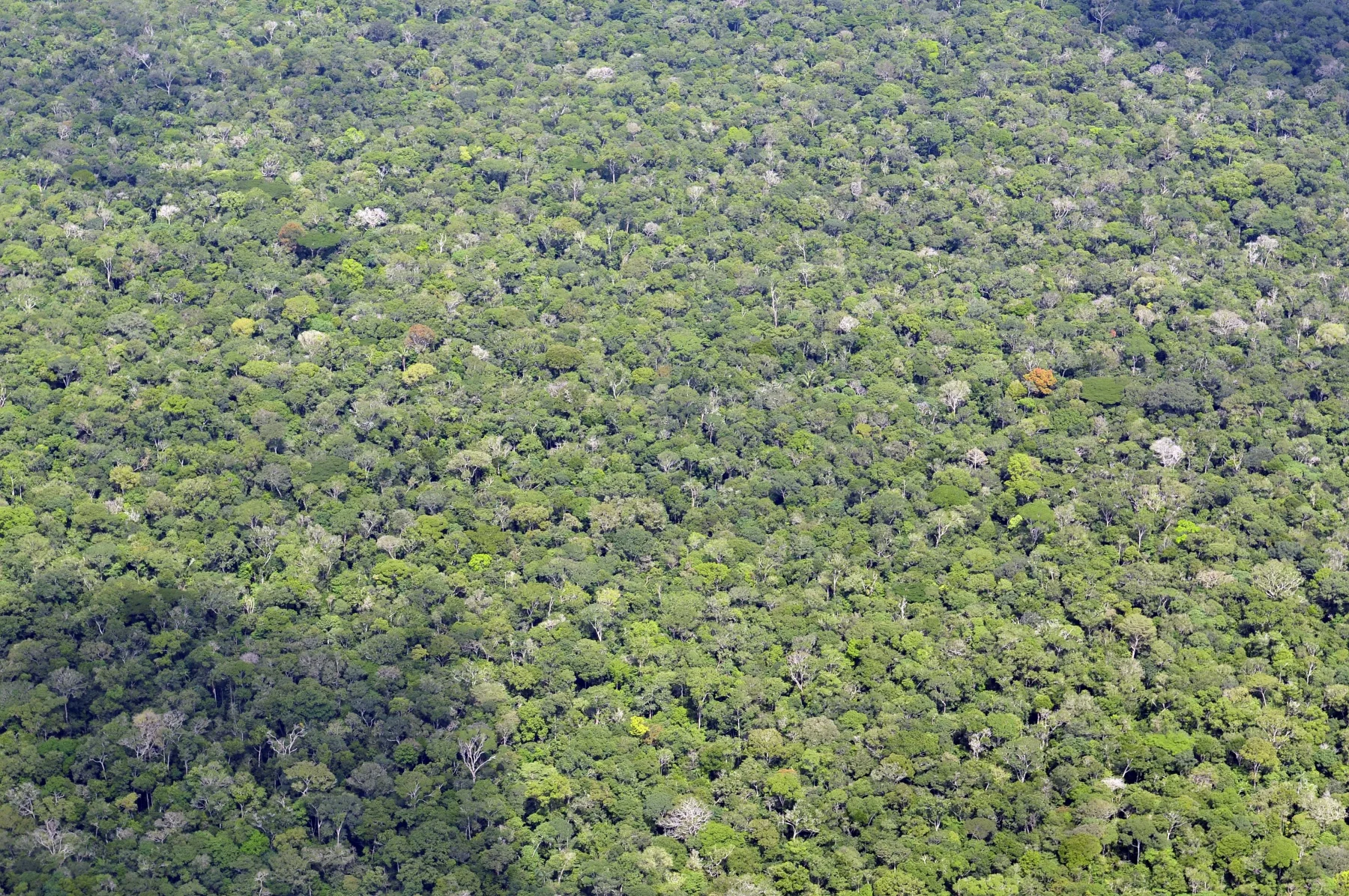
The idea of listing populations “untouched by technology” must be reformulated. No human population is untouched by history, technique or knowledge. Peoples described as uncontacted may know that the outside world exists and choose to avoid it after experiences of violence, epidemics or dispossession.
In 2024, the United Nations estimated that around 200 groups live in voluntary isolation and initial contact, notably in Bolivia, Brazil, Colombia, Ecuador, India, Indonesia, Papua New Guinea, Peru and Venezuela. They are not remnants of the past, but contemporary societies whose autonomy and territories are threatened.
The LAB would publish no precise locations, routes or information that could facilitate intrusion. It would build an Atlas of Contact Asymmetries using only broad institutional data. Its purpose would not be to prepare a real encounter, but to study the conditions that require us not to make contact.
The A.L.I protocol would follow seven principles: abstention by default, territorial protection, no intrusive observation, consent, health security, minimal and reversible information, and a permanent right to silence. Brazilian policy already recognises that evidence of an isolated group creates no obligation to contact it. FUNAI describes this policy of protection and self-determination. The Inter-American Commission on Human Rights similarly connects self-determination to land and resource rights.
9. An experiment that exposes no population
The artistic experiment would involve only informed, consenting participants. Two groups would be separated. The first would control a complex machine; the second would see only its manifestations and could send it very limited responses.
The LAB would observe the emergence of hypotheses, causal errors, narratives and rituals. It would compare abrupt contact with a progressive protocol based on regularity, reciprocity and withdrawal. Every participant could end the experiment, and the debrief would reveal the hidden infrastructure.
A second version would reverse the roles: the technically informed group would have to design a signal that offers neither excessive power nor irreversible instruction. The question would no longer be only “how can we be understood?”, but “how can we be understood without dominating?”
10. The incomprehensible resembles us
Cargo cults do not demonstrate the irrationality of another people. They reveal a condition any of us might face: receiving effects from a world whose causes remain inaccessible.
Extraterrestrial technology would not automatically become understandable because we possess particle accelerators, quantum computers and artificial intelligence. We might perceive only its external theatre. We would then build our conceptual runways, scientific rituals and stories around a silent machine.
The true intelligence of contact may not consist in knowing how to open the object, but in understanding why its maker chose not to give it to us.
References
- Lamont Lindstrom, “Cargo cults”, Open Encyclopedia of Anthropology.
- Lamont Lindstrom, Cargo Cult: Strange Stories of Desire from Melanesia and Beyond.
- Elfriede Hermann, “The Yali Movement in Retrospect”.
- John A. Ball, “The Zoo Hypothesis”, Icarus, 1973.
- United Nations, protecting Indigenous Peoples in voluntary isolation and initial contact.
- Inter-American Commission on Human Rights, Indigenous Peoples in Voluntary Isolation and Initial Contact.