Hypothesis: each language does not only speak about time; it produces a way of inhabiting time. Past, present, future, aspect, duration, repetition, memory, promise, anticipation: these forms are not distributed in the same way across languages. Some languages strongly mark the future, others express it through context. Some emphasize completed or ongoing action, others evidence, source of information, distance, cycle or spatial orientation.
1. Physical Time, Lived Time, Grammatical Time
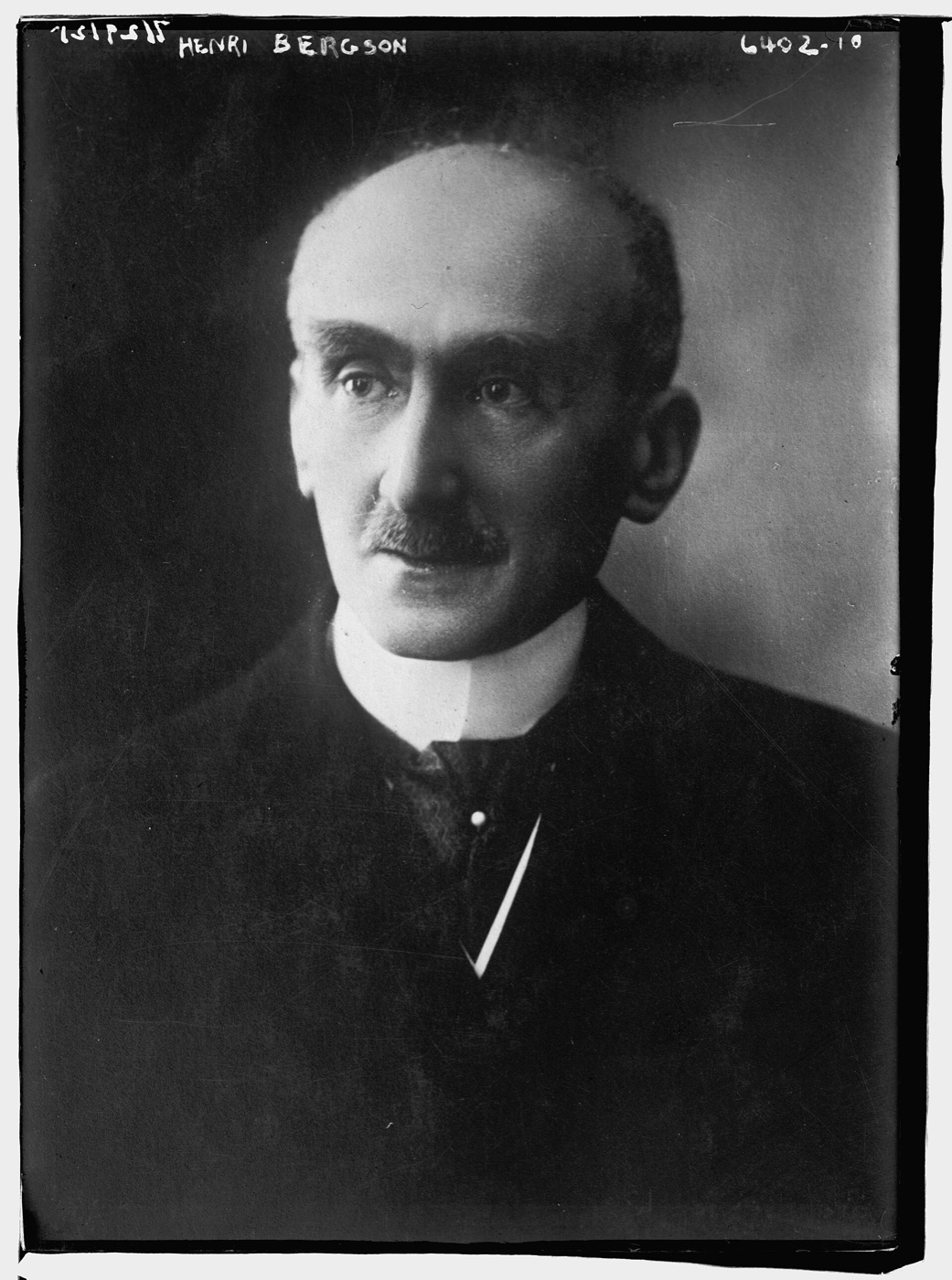
Physical time is measurable: duration, succession, frequency, speed, clock, entropy. Lived time is phenomenological: expectation, memory, urgency, boredom, inner rhythm. Grammatical time is a linguistic construction: it indicates how a language requires, or does not require, an action to be situated temporally.
These three levels never fully overlap. A clock may indicate 10 a.m., a body may experience a minute as long or short, and a language may ask the speaker to specify whether an event is completed, ongoing, habitual, future, probable, reported or contextual. Time is therefore not only a fact of the world; it is also a form of coding.
2. Major Language Families as Temporal Architectures
Indo-European, Semitic, Sino-Tibetan, Austronesian, Niger-Congo, Uralic, debated Altaic groupings, Indigenous American or Australian languages do not all treat time in the same way. Even within one family, systems vary greatly.
Indo-European languages such as French and English often oppose past, present and future, but differently. French strongly grammaticalizes verbal tenses. English articulates tense and aspect through forms such as I have done, I am doing, I will do. German often relies more on context or auxiliaries for certain future uses.
Semitic languages such as Arabic and Hebrew have historically given great importance to completed/incompleted aspect, even though modern usage combines aspect, tense and modality. The question is not only when the action takes place, but how it presents itself: completed, ongoing, repeated, projected.
Mandarin does not mark verbal tense like French. It situates time through adverbs, context or aspectual particles such as le, zai, guo. This does not mean speakers do not think past or future, but that grammar does not force the same distinctions in every sentence.
In many languages, aspect, evidentiality or modality are as important as tense. Some languages require speakers to indicate how they know what they say: seen directly, heard, inferred, reported. This turns time into situated memory: the past is not only a date, but a source.
3. The Future Is Not Grammatically Universal in the Same Way
A strongly marked grammatical future is not universal. Some languages have an obligatory or highly marked future; others use the present, adverbs, particles, modals, or leave the interpretation to context. The future may be certainty, intention, probability, obligation, prediction or promise.
Östen Dahl and Bernard Comrie showed that tense-aspect systems do not follow a single universal grid. The future is not a simple universal slot; it is an unstable grammatical zone tied to modality and uncertainty.

This diversity has fueled debates on linguistic relativity. Keith Chen proposed that languages strongly separating future from present might influence saving or future-oriented behavior. The hypothesis has been debated and criticized, but it asks a useful A.L.I question: can temporal structures in language orient the way a society handles the future?
4. Aspect: Not Only When, But How
Aspect describes the temporal texture of an action: completed, ongoing, repeated, habitual, begun, interrupted, accomplished, progressive. In some Slavic languages, the perfective/imperfective opposition is central. In French, distinctions such as je mangeais, j'ai mangé, je mange, je vais manger do not exactly map onto other languages.
Aspect is essential for contact theory. A non-human intelligence might classify events not by past/present/future, but by stability, transformation, reversibility, cycle, probability, intensity or degree of completion.
5. Spatial Languages, Oriented Time
Research in cognition suggests that some languages organize time through space. Lera Boroditsky and other researchers have studied cases where temporal metaphors vary: horizontal time, vertical time, east-west orientation, body-indexed or cardinal-direction-based time. Among the Kuuk Thaayorre of Australia, the strong use of cardinal directions has been linked to spatial representations of time different from left/right-centered languages.
These differences suggest that time is not only an abstract line. It can be landscape, orientation, return, cosmological axis, rotation, situated memory. For A.L.I, this opens a path: an extraterrestrial language could code time through orbital trajectories, luminous gradients, magnetic fields, biological cycles or topological structures rather than verbs.
6. Historical Evolution: Gesture, Narrative, Archive
Human temporal forms developed with collective memory: oral narrative, calendar, agricultural cycle, genealogy, debt, promise, ritual, writing, accounting, history, scientific chronology. A language does not treat time in isolation; it articulates it with social practices.
The past becomes archive when it can be inscribed. The future becomes contract when it can be promised. The cycle becomes calendar when it can be shared. Temporal grammar is linked to how a society remembers, anticipates, transmits and governs.
7. Influence on Thought: Caution and Power
It would be simplistic to say that a language mechanically determines thought. Speakers of languages without obligatory grammatical future can anticipate perfectly well. Speakers of strongly tense-marked languages can think beyond their grammar. The relation between language and thought is an influence, habit or affordance, not a prison.
Yet this influence matters. If a language constantly requires speakers to specify source of information, completion of action or temporal distance, it trains attention toward certain aspects of reality. Grammar is a discreet discipline of perception.
8. Chronemes: Minimal Units of Temporality
Let us call a chroneme a minimal temporal unit of meaning. It is not only a verbal tense. A chroneme may be a past marker, an aspectual particle, a cycle indicator, a promise, a delay, a repetition, a rhythm, a memory, a spatial orientation, a future probability.
The chroneme would be to time what the phoneme is to sound: a minimal difference that changes the structure of the message. Saying "has happened", "will happen", "is happening", "repeats", "returns", "could have happened" transforms the relation to the world.
An interstellar language may require a science of chronemes: identifying which temporal units matter to the other. A thousand-year organism, a collective organism, a distributed AI or an intelligence living through orbital cycles may not share our chronemes.
9. Temporal Meta-Structures
Beyond particular languages, we can imagine temporal meta-structures: linear, cyclic, spiral, branching, probabilistic, reversible, fractal, simultaneous, stratified. These are not only metaphors; they could become matrices for constructing messages.
Human civilizations often write history as a line. Some traditions think time as a cycle. Contemporary physics introduces proper times, observer relativity, thermodynamic arrows and, in some interpretations, quantum superpositions. An extraterrestrial intelligence might use a temporal meta-structure we do not yet possess.
10. Invented Languages: Disrupting Reading, Disrupting Time
Constructed languages do more than name imaginary worlds. For several writers and artists, they become temporal machines: they erase a history, slow down reading, make several moments simultaneous, or entrust a text to a duration that exceeds its author’s lifetime.
Borges: a language that contaminates history
In Jorge Luis Borges’s Tlön, Uqbar, Orbis Tertius, the languages of a fictional world do not merely describe another reality: they help bring it into existence. Tlön’s grammar, encyclopedia, and objects gradually enter our world until they replace its knowledge and languages. Language operates here as a retroactive future: a fiction written in the present reorganizes the past from which it claims to originate.
Orwell: removing words to close off futures
George Orwell’s Newspeak in Nineteen Eighty-Four methodically reduces vocabulary in order to make certain thoughts impossible. By destroying the words needed to compare, dissent, and remember, power alters more than present speech: it closes political futures and makes the past revisable. Language becomes a technology for contracting historical time.
Khlebnikov and Kruchenykh: zaum against ordinary time
Invented by Velimir Khlebnikov and Aleksei Kruchenykh, zaum frees sounds, letters, and rhythms from their descriptive function. This “transrational” language seeks a form of speech both prior to convention and belonging to the future. By disarticulating syntax and chronology, it produces a reading made of shocks, returns, and intuitions rather than a stable narrative sequence.
Xu Bing: suspending the time of decipherment
For Book from the Sky (1987-1991), Xu Bing carved thousands of characters that resemble Chinese signs but mean nothing. The reader recognizes the promise of a text, yet no decoding can be completed. The work turns reading into unresolved waiting: an extended present in which meaning always seems about to appear.
Christian Bök: writing for deep time
With The Xenotext, Christian Bök devised a chemical alphabet that translates a poem into DNA and prompts a bacterium to produce a protein encoding a second poem. The organism becomes both archive and author. Writing is no longer calibrated to a human lifetime, but to biological time, evolution, and possible survival in extreme environments.
Ted Chiang: a script that already contains its future
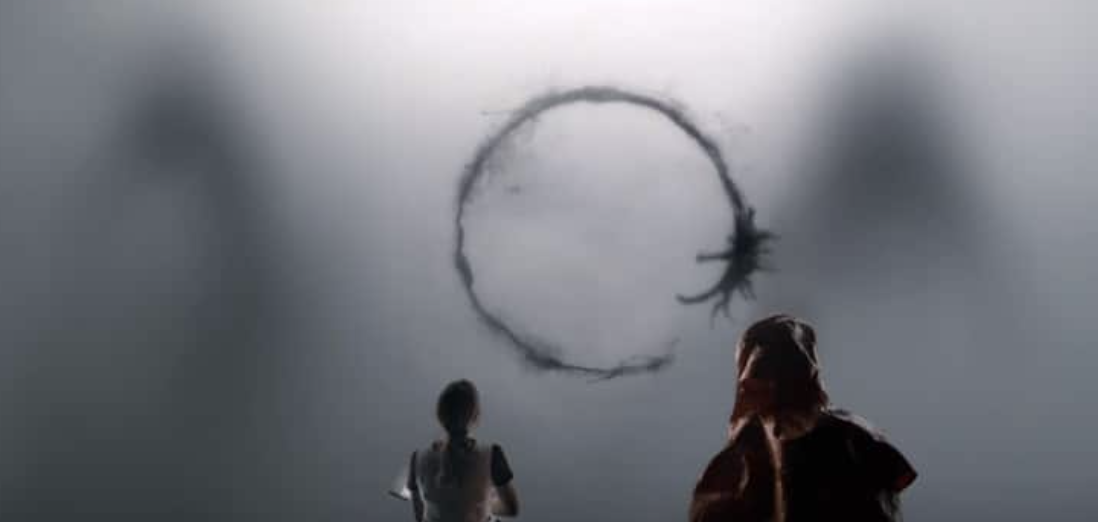
In Ted Chiang’s Story of Your Life, adapted by Denis Villeneuve as Arrival, Heptapod writing is produced as a whole: the writer must know the end of the sentence before tracing its beginning. Learning the language consequently transforms the experience of time itself. The alphabet no longer represents a succession; it organizes a consciousness in which past, present, and future coexist.
These works suggest a decisive extension of the chroneme hypothesis. A language can alter time through grammar, but also through its medium, illegibility, visual architecture, preservation span, or political effects. For A.L.I, decoding an extraterrestrial language might therefore mean undergoing a temporal transformation: learning not only what the message says, but the regime of duration it installs within its recipient.
11. Dealing with the Other: Negotiating Times
In an encounter, one does not negotiate only words. One negotiates expectations. How long should one wait for an answer? What is a polite delay? What is a promise? What is an ancient event? What is a reliable archive? What is a possible future?
Interstellar communication makes this problem extreme: transmission delays, different life spans, planetary cycles, historical inertia, technological memory. Misunderstanding may come not only from vocabulary, but from the temporal regime of the other.
A.L.I could therefore develop a grammar of temporal negotiation: messages indicating validity duration, repetition cycle, expectation horizon, urgency, status as memory or promise. Contact would become a diplomacy of chronemes.
12. A.L.I Prototypes
Atlas of Chronemes. An interface comparing how languages mark past, future, aspect, evidence, cycle and duration, then translating them into visual forms.
Temporal Translator. A program that translates not only words but temporal structures: a linear phrase becomes cycle, probability, promise, memory, archive.
Grammatical Clock. A sound installation where each language triggers a different form of time: repetition, anticipation, suspension, return, bifurcation.
Slow Reply Message. A contact protocol explicitly encoding expected delay, repetition, expiration and status of each message.
13. Conclusion: Learning the Other's Time
The language of time is one of the deepest sites of difference. It touches memory, responsibility, desire, fear, promise and death. Understanding a language is not only understanding what it names, but how it places events into existence.
The chroneme hypothesis proposes to search for temporal units deeper than ordinary grammatical tenses. For A.L.I, it opens an essential question: before speaking with the alien, we may have to learn to share a time.
Sources and References
Östen Dahl, Tense and Aspect Systems, 1985, and typological work on tense/aspect.
World Atlas of Language Structures, overview of tense and aspect, and its chapter on evidentiality.
Lera Boroditsky, Alice Gaby and Asifa Majid on language, space and time; studies of Kuuk Thaayorre temporal representations.
M. Keith Chen on grammatical future and economic behavior, along with subsequent critiques and debates.
Benjamin Lee Whorf, Language, Thought, and Reality, and debates on linguistic relativity.
Henri Bergson, Time and Free Will and Duration and Simultaneity, for lived duration and measured time.