Hypothesis: part of pop culture has already imagined a form of contact stranger than the exchange of sentences, radio signals, or mathematical symbols. In these works, extraterrestrial intelligence does not speak: it becomes a place, an ocean, a zone, a planet, a vibration, a music, a modification of reality. The message is no longer a transmitted object. The message is an environment that transforms us.
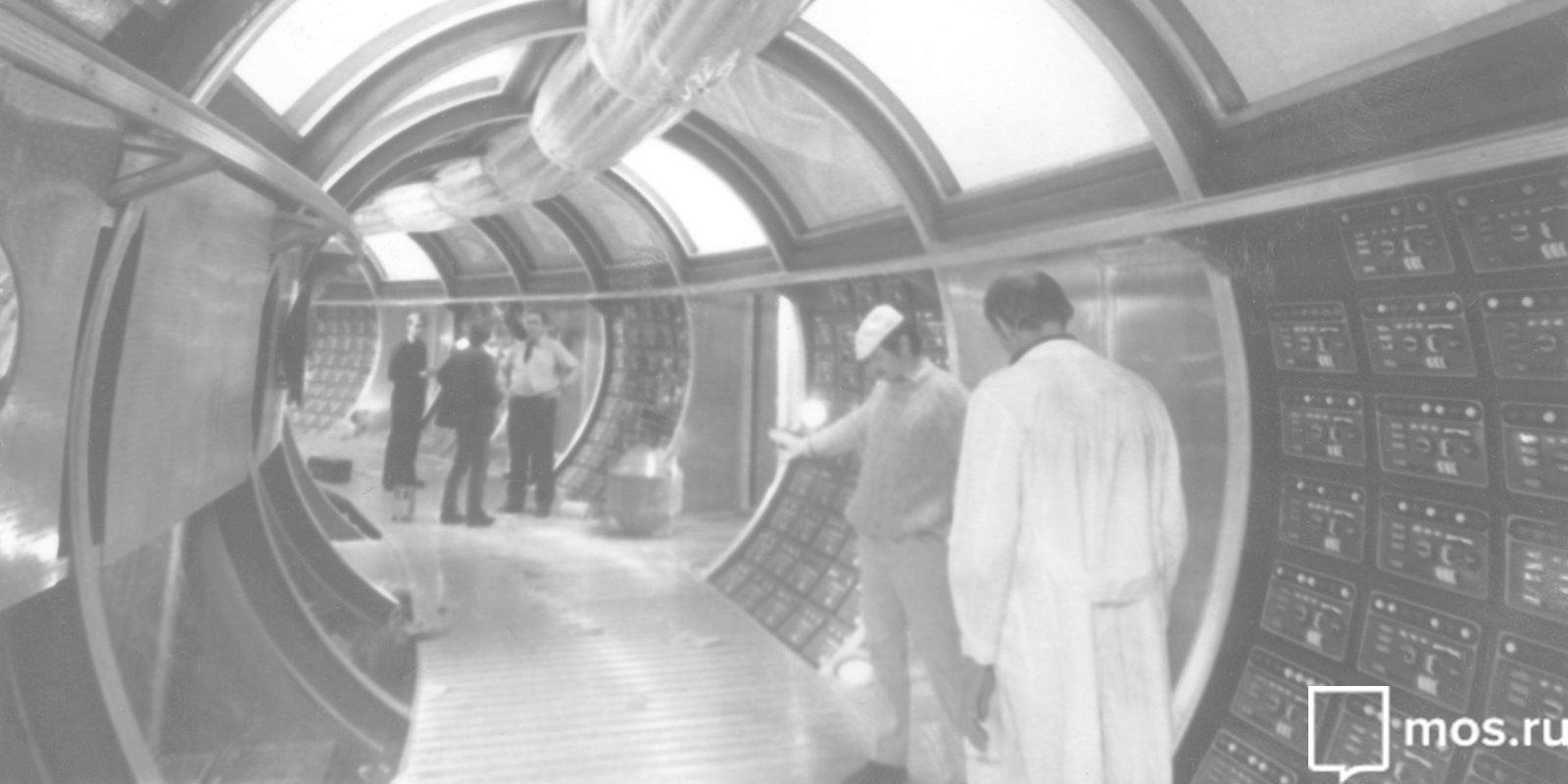
1. Solaris: When a Planet Reads Our Memories
Stanisław Lem's novel Solaris, published in 1961, is one of the great works about the impossibility of contact. Humans study a planet covered by a living ocean. For decades they classify its forms, measure its movements, build an entire science, Solaristics. But Solaris remains opaque. It does not respond like a human civilization. It does not build a common grammar. It acts.

Solaris' answer is unsettling: it materializes figures drawn from the researchers' unconscious and memories. It is neither a language, nor a weapon, nor a simple hallucination. It is an operation on memory. Solaris does not translate its world into ours; it forces humans to face what they carry within themselves.
For A.L.I, Solaris asks an essential question: what if extraterrestrial intelligence did not seek to transmit content, but to produce a situation of knowledge? Contact would then be not a message to decode, but a device that reveals the receiver.
2. Tarkovsky and Artemyev: Listening to an Intelligence Without Speech
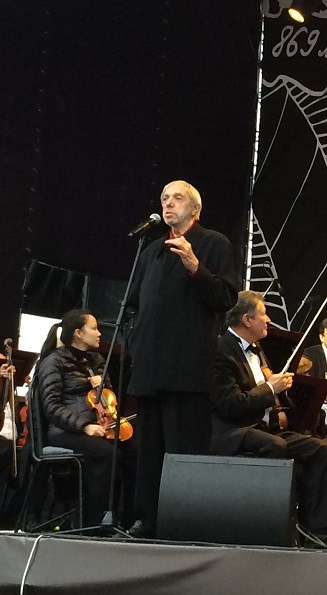
In Tarkovsky's film, the question of language also passes through sound. Eduard Artemyev's music, combining electronic texture, organic depth, and an almost liturgical presence, does not describe Solaris: it makes a voiceless thought audible. The film also uses Bach as a terrestrial memory, a human remainder projected into space.
This dimension matters: some forms of otherness may not be understood through semantics, but through immersion. A long sound, a vibration, a slow modulation can become forms of environmental thought. Experimental music, from analog electronics to contemporary drones, offers a model of non-verbal contact: one does not explain the signal, one enters its regime.
3. Stalker and the Zone: A Place That Answers Differently
With Stalker, Tarkovsky extends the idea in another direction. The Zone is not merely a post-extraterrestrial setting. It is a space where ordinary laws seem displaced, where human intention turns back on itself, where the straight path is not the right path. Contact is topological: it takes place through paths, waiting, prohibitions, detours, thresholds.

In this logic, an advanced extraterrestrial civilization might not send a sentence. It might create a zone of experience: a field of constraints, a reactive environment, an architecture where our behavior becomes the alphabet. A.L.I could then study not only messages, but place-messages.
4. Annihilation: The Shimmer as Biological Translation
In Annihilation, Jeff VanderMeer's novel and Alex Garland's film, contact takes the form of a refracting zone. The Shimmer transforms organisms, mixes biological identities, alters forms, voices, memories. The extraterrestrial is not presented as a species declaring an intention. It acts as a principle of mutation.
This work is especially useful for A.L.I because it moves language toward the living. The message is no longer written in an alphabet: it is inscribed in tissues, symbioses, deformations, copies. Communication could be biology in the process of rewriting itself.
5. Sun Ra: Cosmic Music and Fiction of Origin
With Sun Ra, the extraterrestrial becomes a poetic, political, and sonic strategy. In the Afrofuturism of Space Is the Place, space is not merely a science-fiction backdrop: it is a possibility of emancipation, identity displacement, and active mythology. Sun Ra does not try to prove contact; he creates a world where music serves as a cosmic vehicle.

For A.L.I, this path is decisive: an interstellar language could be performative. It does not describe a world; it makes one appear. Experimental music, cosmic jazz, noise, modular synthesizers, ritual singing, and sonic architecture can become laboratories for non-human signals.
6. Toward a Pop Typology of Non-Verbal Contact
These references draw a family of contacts where the extraterrestrial does not appear as a classical interlocutor:
- Memory-contact: Solaris produces presences from the human past.
- Zone-contact: Stalker imagines a place that transforms the rules of action.
- Biology-contact: Annihilation thinks otherness as mutation and recombination.
- Music-contact: Sun Ra makes sound a mythological and political spacecraft.
- Atmosphere-contact: Artemyev's electronic layers turn sonic space into diffuse intelligence.
This typology is useful because it avoids reducing contact to emission and reception. It requires us to consider indirect forms of communication: atmosphere, memory, landscape, biology, ritual, vibration.
7. Possible Experiments for A.L.I
Installation: The Environment That Answers
Create a room where visitors receive no explicit message. The device captures their movements, voice, heartbeat, or visual choices, then gradually modifies light, sound, and images. The public does not know whether the room responds, observes, or influences them. Language emerges from relation to the environment.
Program: Inverted Solaris
A piece of software collects memory fragments provided by several people: sentences, sounds, images, regrets, dreams. It never displays them directly. It transforms them into generative landscapes, sonic textures, slow forms. The visitor must recognize what comes from them and what comes from the system. The question becomes: where does the other begin?
Sonic Protocol: Contact by Drone
Develop a very long composition made of slow frequencies, pulses, micro-variations, and recurring motifs. Isolated listeners describe what they perceive. The invariants are then searched for: shared mental images, bodily effects, recognized structures. Sound becomes a test of intersubjectivity.
8. Conclusion: The Extraterrestrial as Medium
Pop culture gives us a powerful idea: an extraterrestrial intelligence very different from us might not speak at all. It might envelop us, reflect us, transform us, make us cross a zone, alter us through sound or biology. Contact would no longer be a conversation. It would be an environmental experience.
A.L.I can therefore expand its field: looking for messages, yes, but also imagining environments that think. Because a truly foreign civilization might not send a sentence to Earth. It might create a condition in which we finally become able to perceive that someone, or something, is already answering.