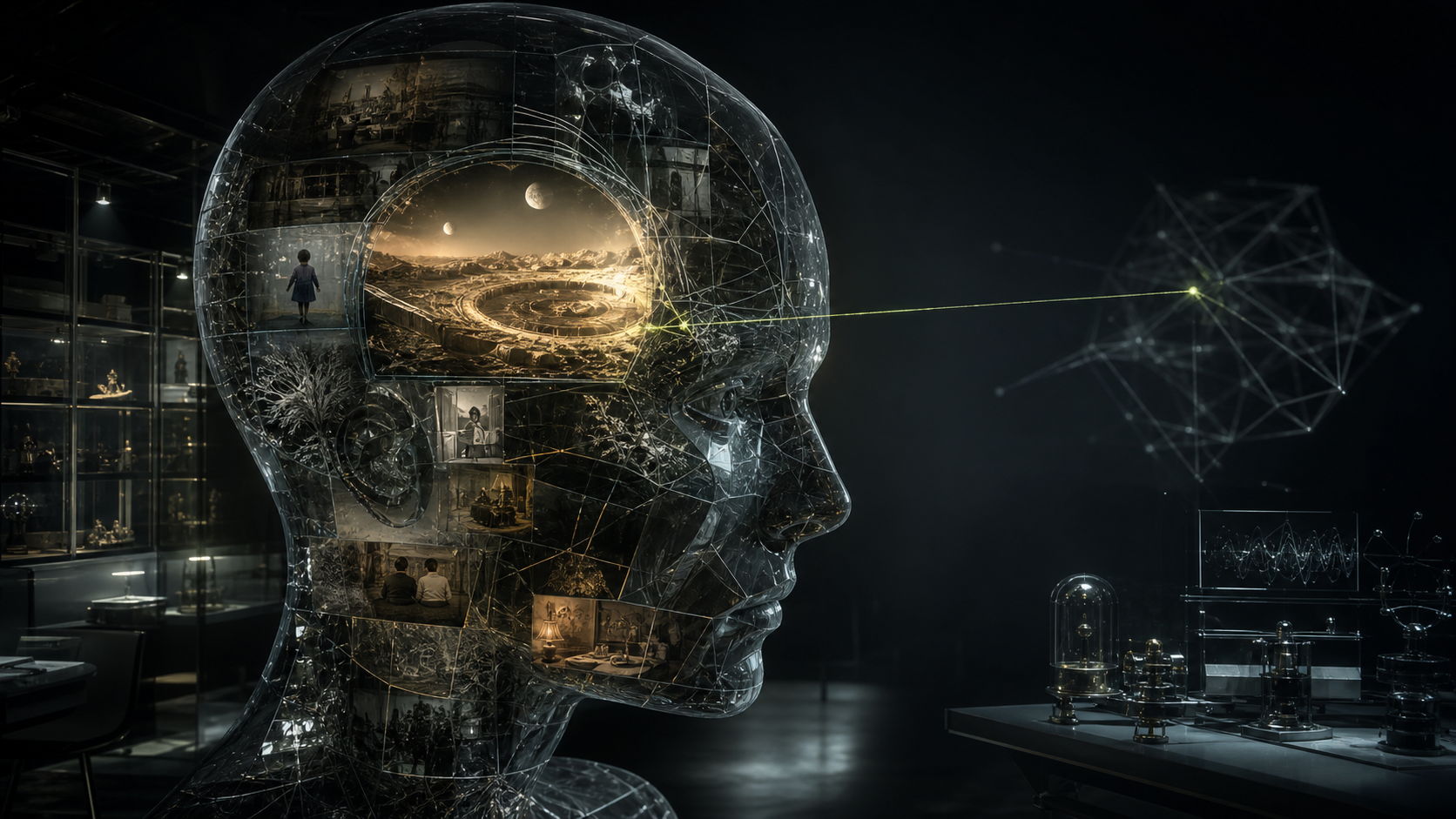
What if an extraterrestrial message showed us nothing, yet gave us the ability to imagine the same thing? Contact is usually sought as an external object: a radio wave, a number sequence, an image or an artefact. This expectation assumes that the message is already complete before it enters a mind. A radically different intelligence might transmit otherwise: not a representation but a constraint; not a landscape but a way of making one appear; not a dictionary but an operation that transforms the receiver's mental space.
A.L.I proposes an art-science hypothesis: imagination could become a language of contact. A pattern of light, sound, magnetism or an as-yet unknown medium might act as a cognitive seed. Beings exposed separately would then produce images, relations or worlds convergent enough to establish the beginning of a shared convention.
This proposal is speculative. No scientific result demonstrates that imagination is an extraterrestrial, telepathic or paranormal channel. Its value lies in turning an intuition into a testable question, distinguishing induced imagery from suggestion, and designing a protocol in which art creates forms while science organises doubt.
1. Imagination, the imaginary and mental imagery
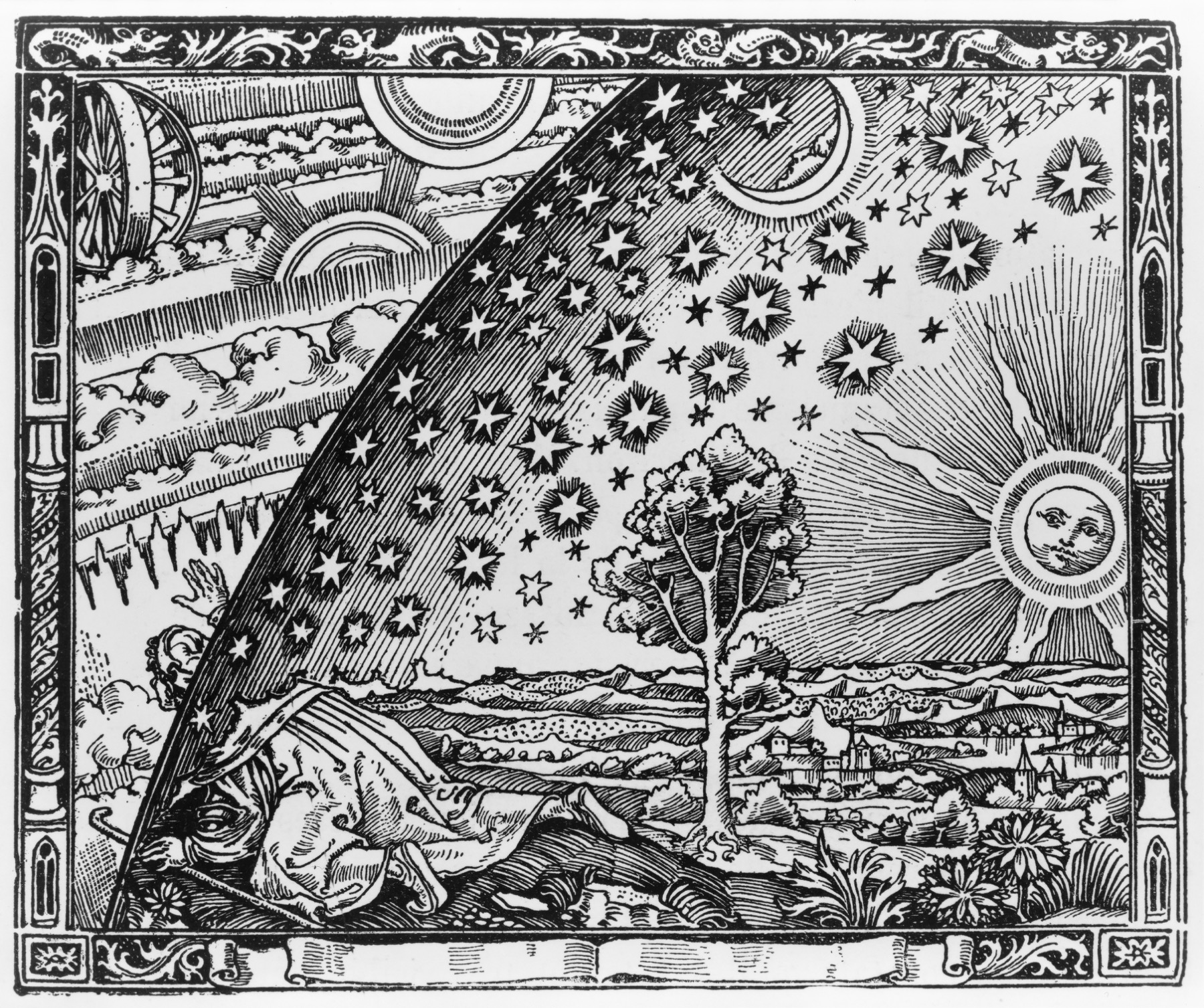
Imagination covers several operations: recalling an absent perception, recombining memories, simulating an action, inventing an impossible scene, anticipating the future or constructing a hypothesis. Mental imagery is only one modality. Some people imagine primarily through words, sounds, gestures, spatial relations or feelings.
The imaginary is broader. It includes the forms, stories, symbols and worlds made available by an individual or society. We never imagine from nowhere. Images are shaped by language, historical period, technology, myth and bodily experience. The Stanford Encyclopedia of Philosophy surveys this diversity, from sensory imagery and supposition to creativity, empathy and scientific practice.
This distinction matters for A.L.I. A common mental form would not prove an external origin; it might come from a shared cultural repertoire. A contact protocol must therefore measure not only resemblance, but the possible terrestrial sources of resemblance.
2. A faculty long kept under suspicion
In ancient philosophy, imagination already occupied the interval between sensation and thought. Plato distrusted images when they multiplied appearances and moved away from truth. Aristotle's phantasia had a more precise role: it was neither present sensation nor judgement, yet many forms of thought and action could not occur without it.
Medieval European and Arabic traditions developed theories of the “internal senses”. In Avicenna, perceived forms could be retained, combined and evaluated inwardly. Imagination became a workshop where sensory material was transformed into thought. Renaissance arts of memory, emblems and Giordano Bruno's mental architectures linked images, places and knowledge so that thought could be manipulated.
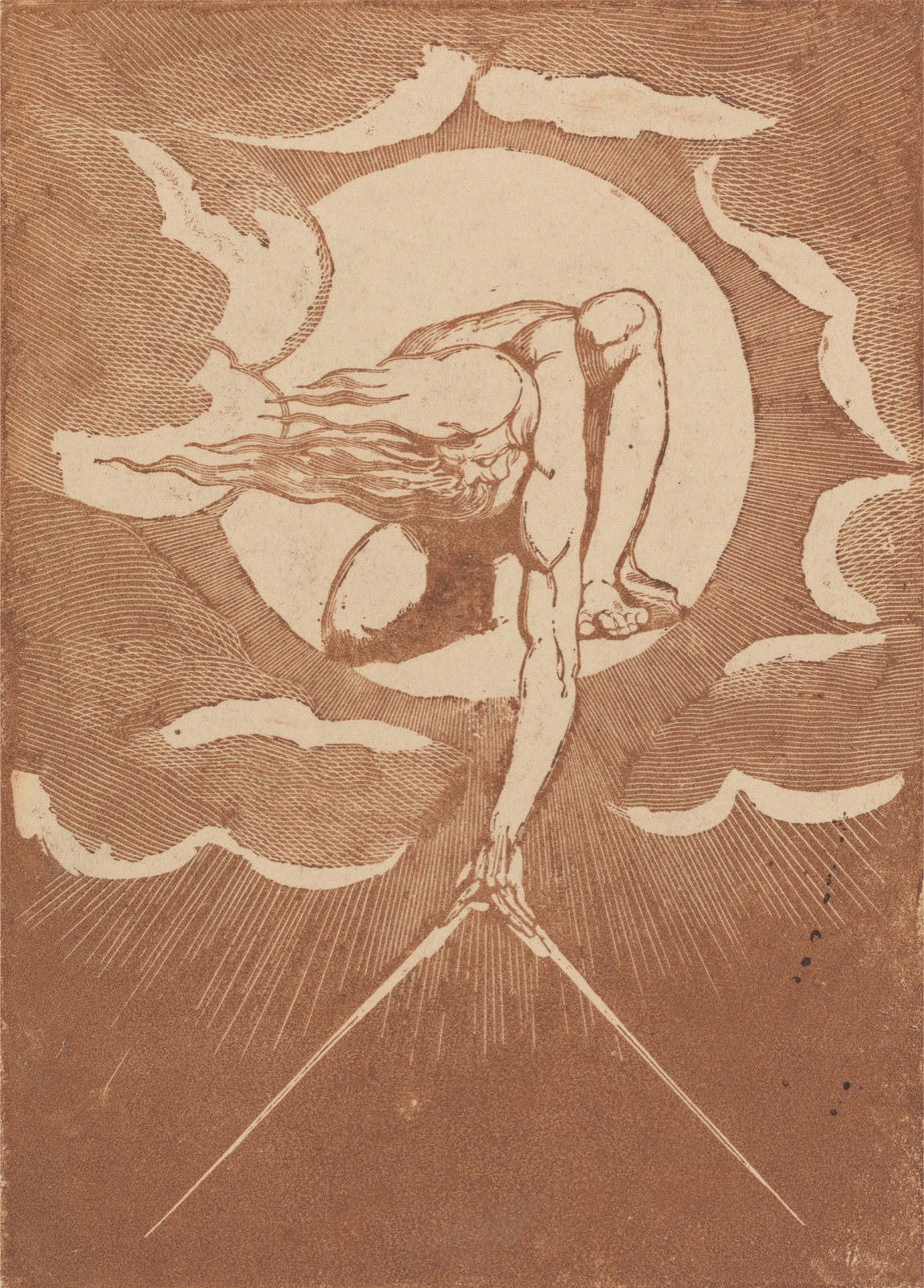
Kant later made imagination a power of synthesis rather than decoration. It joins sensory multiplicity to structures that make experience intelligible. Romantic writers expanded its creative status. Coleridge distinguished an imagination that unifies from a fancy that merely juxtaposes, while Novalis and William Blake refused to limit reality to what could be immediately measured.
3. The imaginary as freedom and institution
In the twentieth century imagination ceased to be treated as a box containing little pictures. In The Imaginary, Sartre described it as an act of consciousness directed at an absent object. To imagine is to take a distance from the given world, and this capacity is linked to freedom.
Gaston Bachelard investigated material imagination: water, fire, air and earth are not just topics but forces orienting reverie. Gilbert Durand studied anthropological structures of the imaginary. Cornelius Castoriadis expanded the question to society: communities do not simply represent a ready-made world; they institute meanings, values and ways of life. The imaginary therefore acts in reality.
An interstellar message would not meet an isolated private imagination. It would encounter collective infrastructure: museums, films, religions, image banks and now generative models. Contact might alter less a sentence than an entire regime of possibility.
4. Art, literature and poetry: making inhabitable worlds
Art does not merely illustrate what exists. Cave images, myths, cosmologies, theatre and poetry construct absent presences. Metaphor joins domains that did not previously touch; poetry compresses experience; science fiction allows a reader to inhabit a non-existent law of physics, body or society.
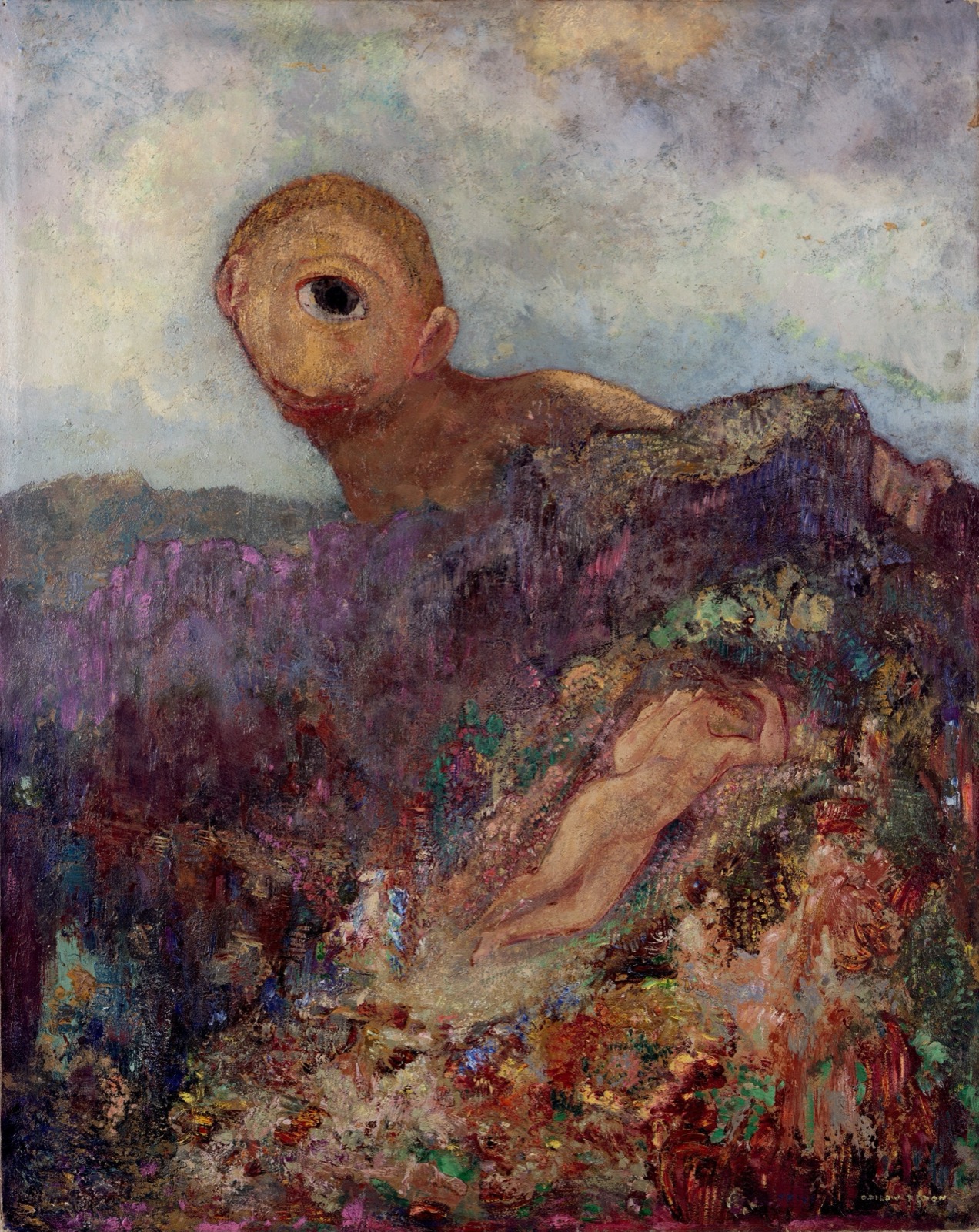
Odilon Redon sought to place “the logic of the visible at the service of the invisible”. Borges turned libraries, labyrinths and mirrors into metaphysical machines. Ursula K. Le Guin invented societies whose languages and institutions displace our ideas of gender, power and the foreign. In Solaris, Stanisław Lem imagined an ocean that responds by materialising human memories instead of speaking a human language.
Surrealism systematised this opening through dreams, collage, exquisite corpse and automatic writing. Such methods do not prove that outside forces speak through the artist. They suspend deliberate control long enough for unexpected associations to appear. For A.L.I they are early laboratories of reception, provided that openness is joined to documentation and comparison.
5. Scientific imagination: seeing before observation
Science also relies on imagination under constraint. A thought experiment isolates a consequence; a model makes relations visible; a simulation explores a parameter space. Galileo imagined falling bodies, Einstein pursued light rays, trains and elevators, and non-Euclidean geometries were conceived before becoming indispensable to physics.
Scientific imagination cannot produce anything whatsoever. It must return to measurement, accept contradiction and make hypotheses shareable. Its strength lies in a loop: invent a form that reality can later confirm, correct or destroy.
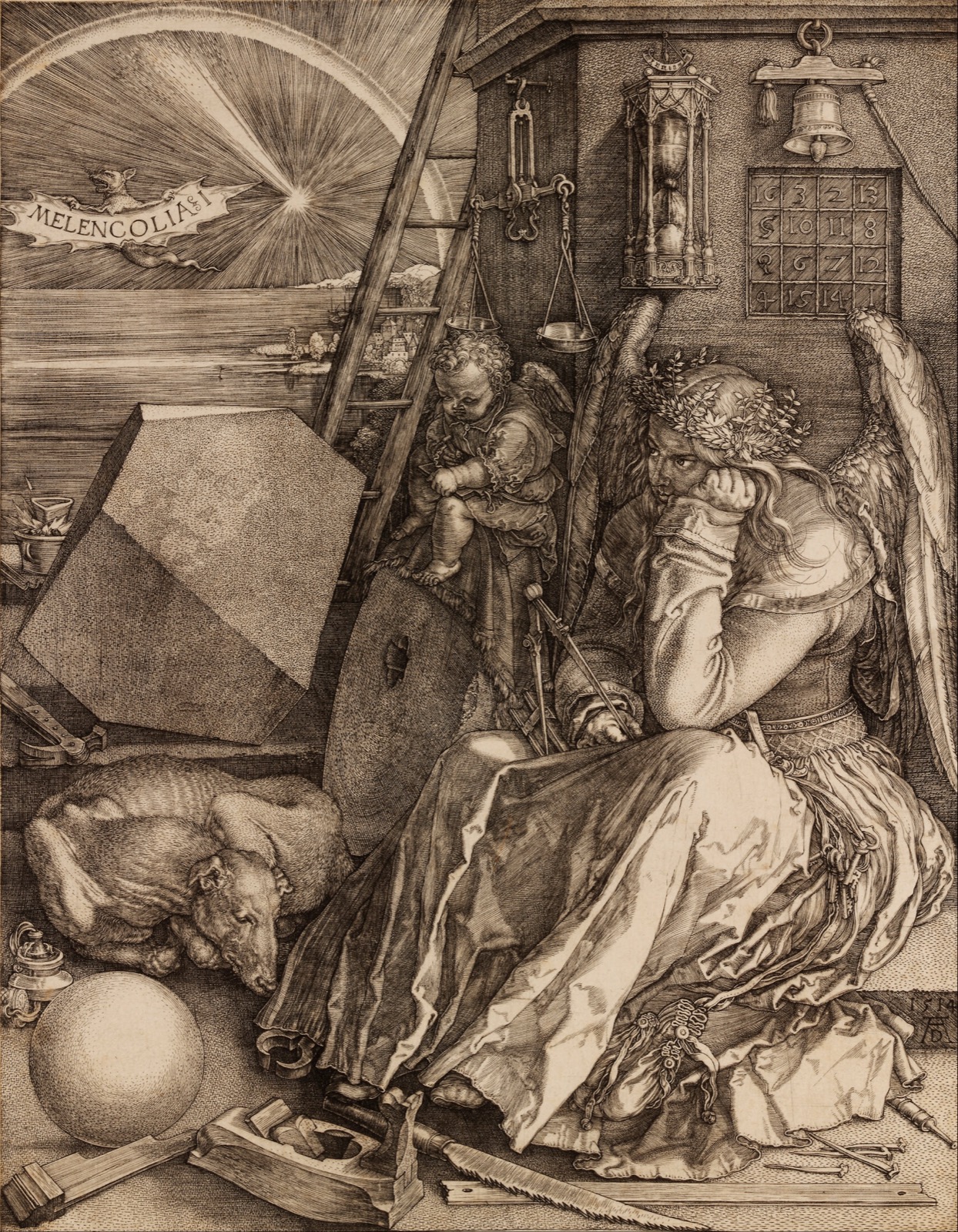
6. What the brain does when it imagines
Contemporary neuroscience shows that visual imagery recruits a distributed network, from frontal and parietal regions to sensory areas. Joel Pearson's review in Nature Reviews Neuroscience describes partial overlap between perception and imagery without treating them as identical. Imagining can function as a weakened, top-down version of some perceptual processes.
Memory and imagination are linked. The hippocampus and regions associated with the default mode network help recombine details from the past into possible scenes. Research on episodic future thinking suggests that anticipation reassembles familiar people, places, objects and relations. Imagination is neither creation from nothing nor simple copying: it is a reconfiguration machine.
Individual differences require caution. Aphantasia describes absent or strongly reduced voluntary mental imagery, while others report vivid hyperphantasia. The foundational study Lives without imagery demonstrates that sophisticated thought can occur without an inner visual screen. Any imaginary contact language would have to be multimodal.
7. AI: extension, mirror or normalisation of the imaginary?
Generative systems now transform sentences into images, sketches into video and corpora into latent spaces. They appear to externalise an operation that was once private: moving through possibilities and stabilising a form. Yet this does not establish conscious imagination. These systems calculate likely continuations from human data, architecture choices and training procedures.
AI can extend individual imagination by visualising difficult worlds, multiplying variants and translating intuition among sound, text and image. It can also create false convergence. A study in Science Advances found that generative assistance improved some individual stories while reducing their collective diversity. If all participants use one model, similarity may reflect the model's corpus rather than a shared signal.
A.L.I therefore treats AI as a comparison instrument, not an oracle. It can measure proximity among drawings, descriptions, sounds and models, search for recurrent relations and flag likely cultural influences. Raw data, model versions and parameters must remain available for challenge.
8. Central hypothesis: transmitting a rule of appearance
Imagine an intelligence that shares none of our organs or categories. Sending a picture of a tree would be fragile: it might recognise neither contour, depth nor colour. It might instead transmit constraints capable of producing comparable organisations in different receivers:
- a separation between centre and periphery;
- branching growth followed by a return towards unity;
- a rhythm alternating expansion and contraction;
- a stable relation across several scales;
- a transformation that preserves an invariant.
The shared content would not be an identical image but an imaginary attractor. One human might draw a forest and another a vascular network; an oceanic intelligence might produce a field of currents; an AI might generate a graph. Their outputs would differ, yet their deeper relations could be recognised.
This echoes an important artistic intuition: a work does not always encode one meaning. It creates conditions of appearance. Contact would begin when two worlds can produce variations around one constraint and recognise that they belong to one family.
9. The I.C.I. protocol: Imaginary Contact Interface
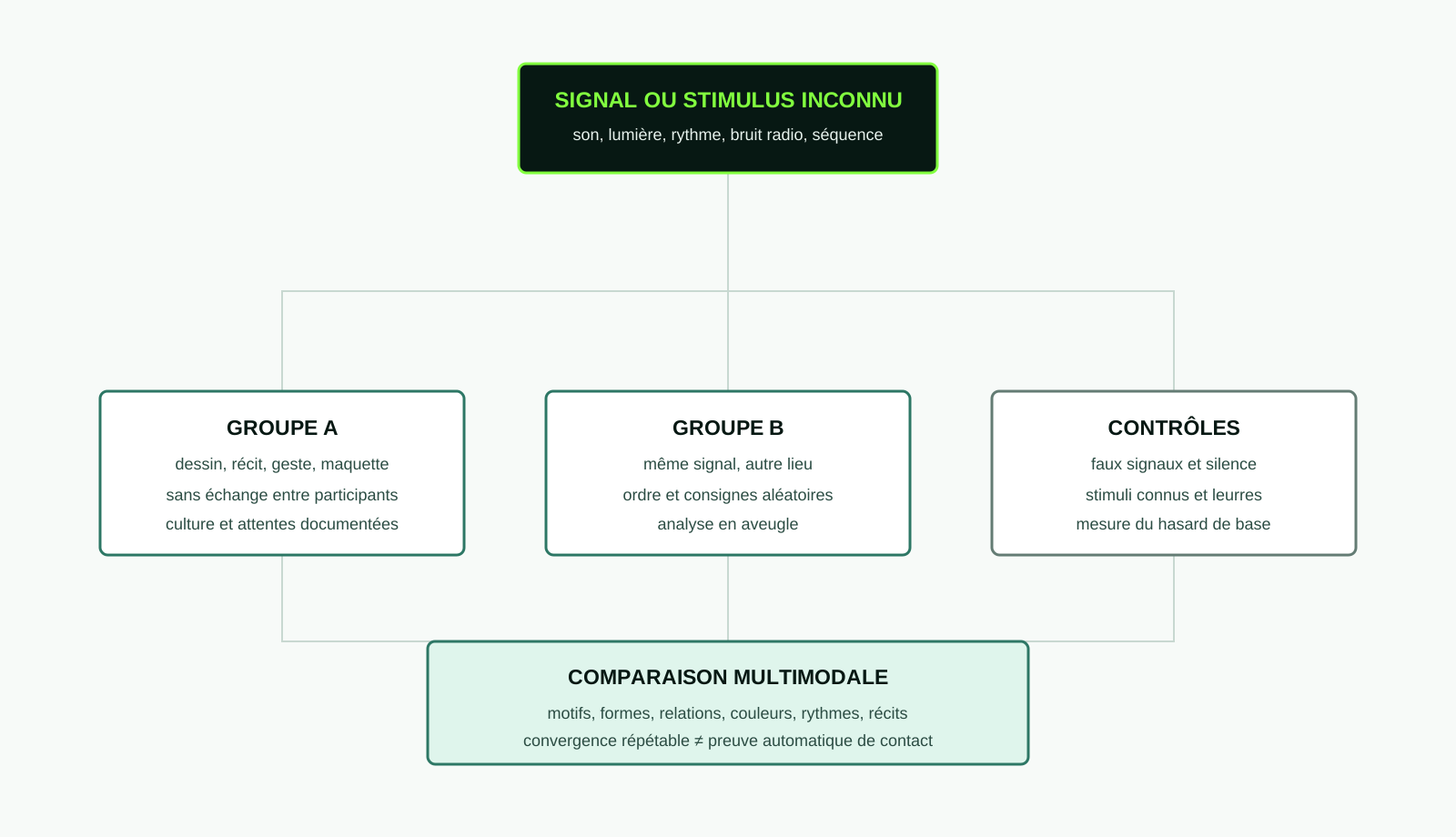
- Choose the stimulus. A sequence of sound, light, vibration or radio noise is fixed before the experiment. Conditions include astronomical data, synthetic signals and decoys.
- Separate receivers. Participants cannot communicate. Groups with different cultural backgrounds receive the same stimulus.
- Multiply response modes. Each person immediately produces a drawing, text, spatial map, gesture or object. Visual imagery is never mandatory.
- Document expectations. Knowledge of extraterrestrial culture, emotional state and familiarity with the project are recorded.
- Add controls. Silence, random sequences, known stimuli and false signals establish spontaneous convergence.
- Compare blindly. Human analysts and several independent models search for common forms, relations, rhythms and narratives without knowing the condition.
- Repeat. A pattern gains weight only when it reappears across sessions, places and populations.
The protocol never turns convergence directly into evidence of contact. It first asks whether resemblance exceeds chance, stereotypes, instructions and model bias. Only after these alternatives have been tested can an unexplained effect be described as unexplained.
10. Four artistic devices
The Chamber of Absent Images
A room plays a signal without displaying imagery. Visitors leave through separate booths where they record what appeared to them. A dynamic map presents convergence without reducing every response to an average illustration.
The Atlas of Induced Worlds
Groups in several cities receive one sequence simultaneously. Their drawings and stories form a layered atlas of geographies, organisms, temporalities and relations. Singular worlds and disagreements are preserved alongside clusters.
The Attractor Translator
A program searches for relations rather than objects. It translates a drawn branch into polyphony, a light alternation into architecture and a sentence into a force field. Cross-media translation tests what survives a change of body.
The Observatory of Collective Imagination
Over several months, an installation tracks how a motif spreads, mutates or disappears in a group. It compares cultural diffusion with independent appearance and makes visible the difference between contagion and convergence.
11. Risks, ethics and limits
- Suggestibility: a title, instruction or scenography can manufacture the expected response.
- False memory: repetition can increase familiarity without increasing truth.
- Cognitive inequality: visual requirements would exclude aphantasia and other modes of imagination.
- Cultural homogenisation: cinema, networks and AI already circulate stereotyped aliens.
- Algorithmic authority: a similarity score must never become a metaphysical verdict.
- Mental health: the work must not encourage delusional interpretations of ordinary experiences.
The responsible position neither dismisses inner experience nor declares it supernatural. It welcomes experience as lived data, protects the person reporting it and keeps several explanations open.
12. What this changes for A.L.I
Most interstellar communication projects ask which signs to send. Contact-imagination asks a prior question: which capacities of appearance must be shared before a sign becomes thinkable?
An advanced civilisation might send no encyclopaedia. It could send a small world-engine: a rule able to generate different images, sounds, geometries and narratives while preserving structure. A human response would not be the correct translation of a closed message, but a variation demonstrating that the rule had been recognised.
Developing imagination would not mean escaping reality. It would increase the forms we can receive without immediately reducing them to what we already know. Imagination becomes an inner antenna accompanied by a laboratory notebook.
Conclusion: contact as a co-imagined world
An ordinary language refers to a world already shared by its speakers. An interstellar language may first have to produce that common world. Imagination would provide a provisional meeting space in which two intelligences do not see the same thing, yet learn to transform one constraint together.
The strongest proposal is not “aliens speak in dreams”. It is narrower and more demanding: a signal might be recognised as intentional if it causes independent receivers to produce different worlds organised by the same relations — and if this convergence survives controls, cultures and the machines analysing it.
First contact may not be a face appearing on a screen. It may begin when distant beings discover that they can inhabit the same impossibility.
References and further reading
- Stanford Encyclopedia of Philosophy, “Imagination”.
- Internet Encyclopedia of Philosophy, Sartre and imagination.
- Tate, Surrealism and the liberation of imagination.
- British Museum, William Blake, The Ancient of Days.
- Joel Pearson, “The human imagination: the cognitive neuroscience of visual mental imagery”, Nature Reviews Neuroscience, 2019.
- Adam Zeman, Michaela Dewar and Sergio Della Sala, “Lives without imagery — Congenital aphantasia”, Cortex, 2015.
- Schacter et al., “Episodic Future Thinking: Mechanisms and Functions”.
- Doshi and Hauser, “Generative AI enhances individual creativity but reduces the collective diversity of novel content”, Science Advances, 2024.
- UNESCO, Guidance for generative AI in education and research.