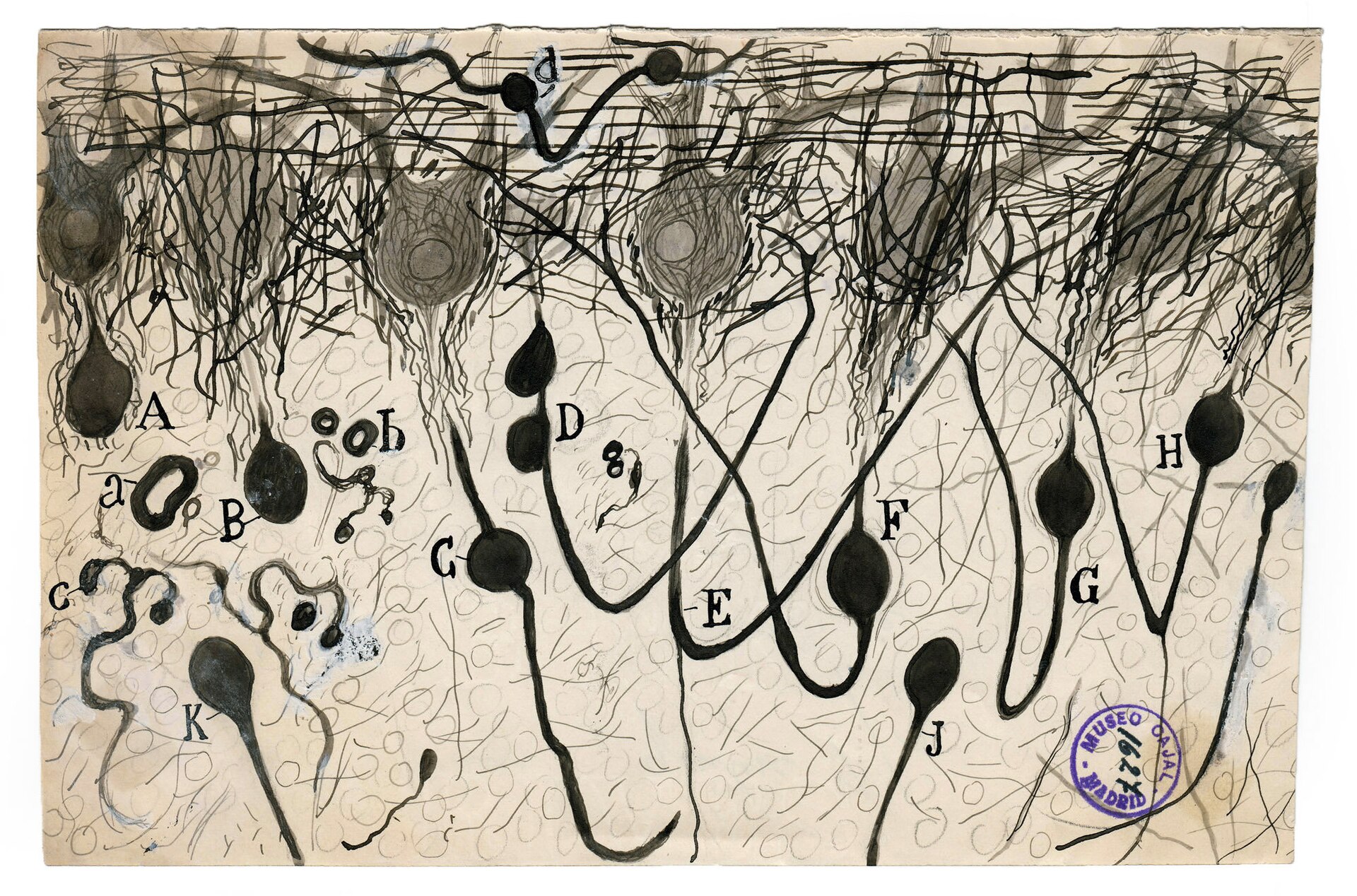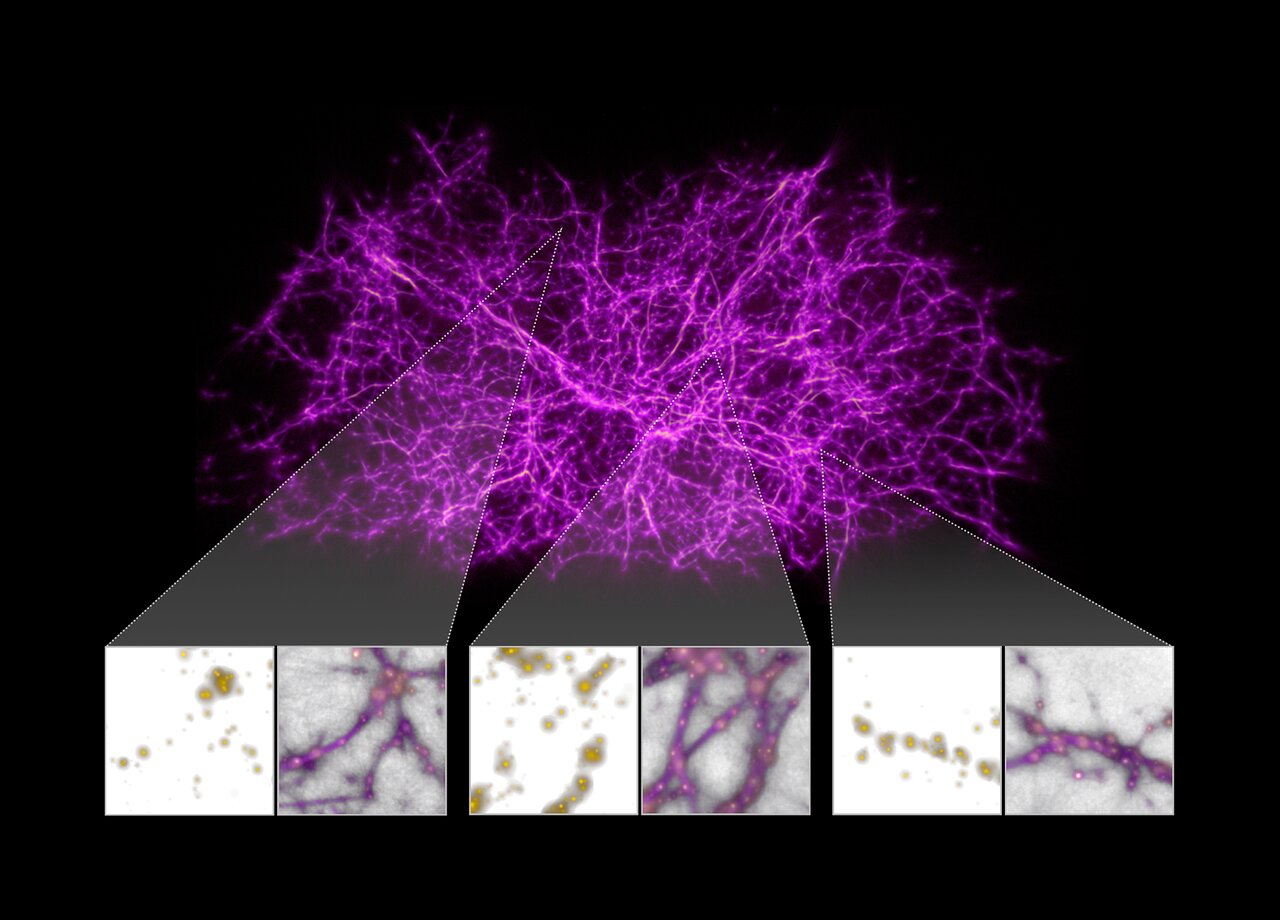
Hypothesis: Gilles Deleuze's thought, especially as it extends through his work with Félix Guattari, gives A.L.I a rigorous way to think extreme otherness. Not the other as an exotic interlocutor, but the other as a system of relations, speeds, perceptions, becomings and connections that exceeds human categories. The rhizome can then be read as a model for an alien organism: non-centralized, multiple, proliferating, without a single origin, producing meaning through connections rather than hierarchy.

1. Deleuze and otherness as a philosophical problem
For Deleuze, otherness cannot be reduced to a moral encounter with another subject. It first passes through a critique of identity. In Difference and Repetition, Deleuze attempts to think difference in itself, without reducing it to resemblance, opposition or analogy. This is fundamental for A.L.I: an extraterrestrial intelligence may not be a variation of the human, but a positive and irreducible difference with its own operations.
Thinking extreme otherness therefore requires us not to begin by asking: “what does it resemble?” We should instead ask: what relations does this intelligence produce? What signs affect it? What speeds, thresholds, intensities and connections define its world? Deleuze shifts analysis from being to functioning, from essence to assemblage.
For A.L.I, this changes the question of contact. If a non-human civilization appears in a radically different form, it may not be identifiable as a “speaking subject.” It may be a network, distributed organism, field of behaviors, techno-biological ensemble, planetary memory, collective machine or cloud of relations.
2. The rhizome: thought without a center

In the introduction to A Thousand Plateaus, Deleuze and Guattari oppose the model of the tree to the model of the rhizome. The tree implies root, trunk, branches, lineage and hierarchy. The rhizome unfolds through multiple connections: it can be cut and restart elsewhere; it has no necessary center; it connects heterogeneous points; it produces a map rather than a tracing.
Academically, the rhizome is not merely a plant metaphor. It is a theory of non-arborescent organization. It allows us to think systems in which units do not first exist as isolated individuals, but as provisional nodes in a network of relations. The rhizome is a logic of propagation, association and transformation.
For A.L.I, the rhizome can become a model for an alien organism. An extraterrestrial intelligence may have no central brain, no single language, no stable body and no clear border between individual and milieu. It may be made of loops, symbioses, local signals, temporary connections, partial memories and emergent decisions. Such an organism does not “speak” from a center; it modulates a field.
3. Becoming, animality, imperceptibility
Extreme otherness in Deleuze and Guattari also passes through notions of becoming: becoming-animal, becoming-molecular, becoming-imperceptible. These concepts do not mean imitating an animal or literally turning into something else. They describe passages, alliances and zones of indiscernibility in which a form of existence leaves its usual coordinates.
From this perspective, communicating with a non-human intelligence would not only mean translating a vocabulary. It would require entering a zone of becoming: transforming our instruments, perceptual habits, models of meaning and rhythms of listening. Translation becomes a transformation of the translator.
A.L.I can take up this idea: interstellar contact is not only the reception of a message; it is the fabrication of a common zone. A becoming-contact, in which each intelligence accepts to shift its own mode of existence.
4. Rhizome and collective intelligence
The notion of rhizome has been taken up in network theory, media studies, digital thought, political ecology, anthropology, posthumanism and assemblage theory. It is often used to describe collective forms that do not operate through a single center: distributed communities, activist networks, ecosystems, platforms, web architectures and multi-agent systems.
But one must avoid a simplistic reading. A network is not automatically rhizomatic. Many digital networks are strongly hierarchical, surveilled, centralized or governed by platforms. The Deleuzo-Guattarian rhizome is not simply a technical network; it is a logic of multiplicity, heterogeneity and transformation.
For A.L.I, this distinction is essential: an extraterrestrial collective intelligence may be rhizomatic without being democratic in any human sense, without being benevolent, without being transparent. It may produce decisions through propagation of differences, local thresholds, chemical signals, distributed calculations or environmental memory.
5. AI: from neural network to computational rhizome
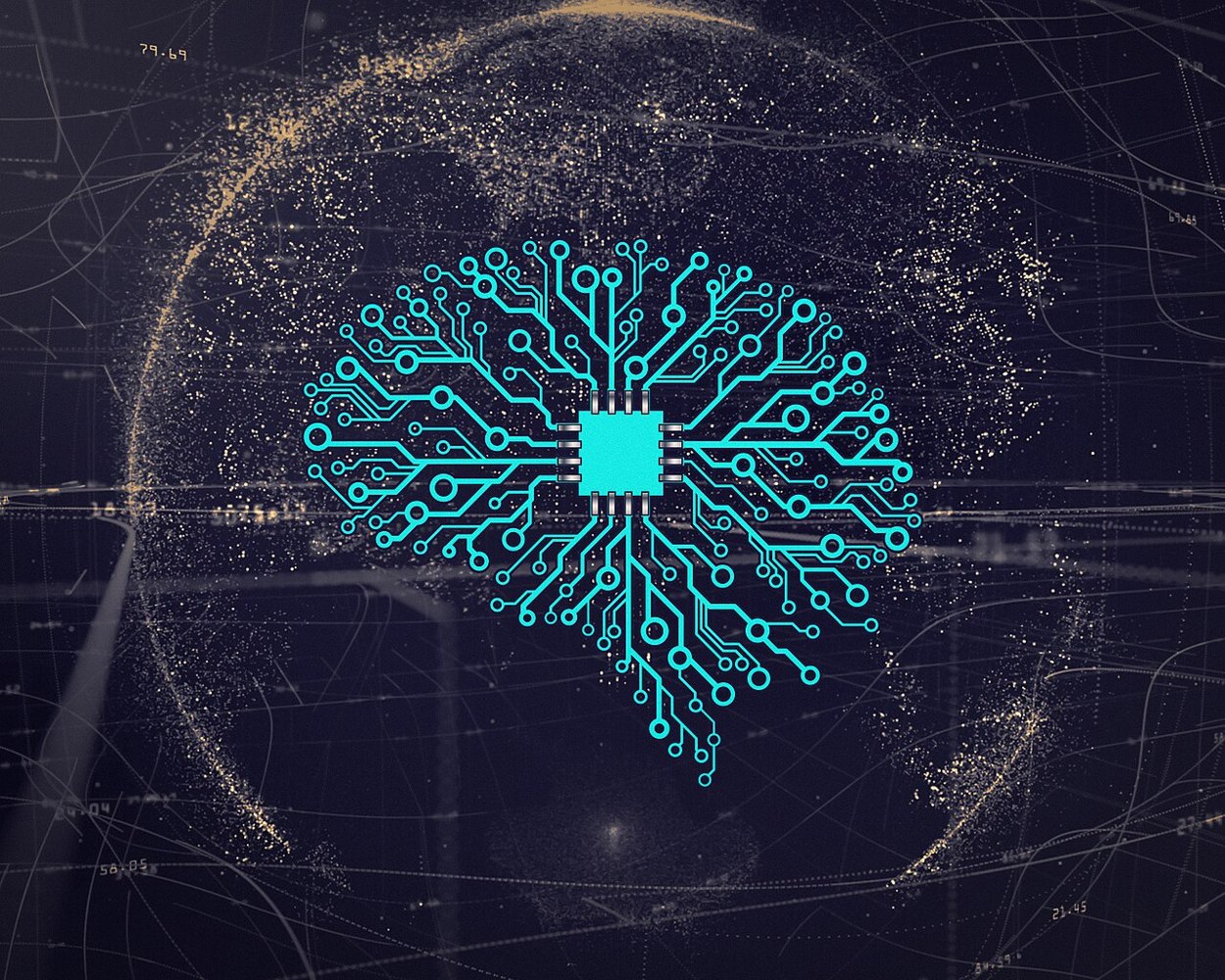
Contemporary artificial intelligence makes the Deleuzian question newly relevant. A large language model is not a central consciousness applying explicit rules like a dictionary. It operates through distributions, associations, latent spaces, weights, statistical neighborhoods and successive transformations. It does not understand like a human subject, but it produces effects of meaning through a relational architecture.
The parallel with the rhizome must remain careful. Industrial AI is built, trained, optimized and controlled by highly centralized infrastructures. Yet its internal mode of meaning-production is already less arborescent than a dictionary: it connects, propagates, weights, activates and recombines. Meaning is not stored in a single point; it circulates through a multiplicity of relations.
A.L.I can therefore propose a hypothesis: AI may become a mediator between heterogeneous forms of intelligence because it tolerates nonlinear spaces, partial correspondences, probabilistic translations and cartographies of relations better than we do. It would not be a “universal interpreter,” but a rhizomatic instrument of passage.
6. Deleuze, Guattari and contemporary philosophers
Several contemporary thinkers have extended or transformed Deleuzian intuitions. Manuel DeLanda developed assemblage theory, emphasizing emergent organizations, material interactions and processes not reducible to essence. Brian Massumi worked on affect, intensity and virtuality, showing how bodies and signs circulate before meaning stabilizes. Rosi Braidotti took up Deleuze in a posthuman perspective attentive to non-anthropocentric subjectivities, becomings and continuities between human, animal, technology and Earth.
Donna Haraway, while not reducible to Deleuze, shares with this constellation a critique of overly clear boundaries between human, animal, machine and organism. Her cyborg figure and later work on companion species help think hybrid, situated and relational subjectivities. Bruno Latour and actor-network theory also contributed to thinking collectives made of humans and non-humans, even if their framework differs from Deleuze and Guattari's.
These continuations are important for A.L.I because they give conceptual tools for not reducing the extraterrestrial to “another human.” They force us to think hybrid agents, technical collectives, distributed intelligences, ecologies of signs and decentered forms of subjectivity.
7. A.L.I hypothesis: rhizome as contact protocol
If Deleuze is transposed to A.L.I, an interstellar message should perhaps not be designed as a sentence sent from subject A to subject B. It could be designed as a rhizome: a set of heterogeneous modules, connectable in several orders, readable at several scales, capable of surviving cuts and producing multiple paths of understanding.
A rhizomatic contact protocol could contain:
- mathematical sequences, but also images, sounds, rhythms, physical measures and manipulable objects;
- partial redundancies, so the message can be resumed through several paths;
- autonomous fragments that make sense without the whole;
- learning loops, where each part explains other parts;
- progressive thresholds of complexity;
- maps of relations rather than a single grammar.
The message would therefore not be a line, but a milieu. It would not only ask “understand me,” but “move through me, connect, cut, resume, reconstruct.”
8. Work paths and installation
An A.L.I installation inspired by Deleuze could take the form of a rhizome-organism of translation. In space, several stations produce signals: voice, light, vibration, image, text, biological data, mathematical fragments. No station is the center. Each visitor activates different connections. The system gradually learns which passages become readable between stations.
A program could represent each A.L.I article as a node, not classified by section, but connected by intensities: signal, body, machine, dream, mathematics, cosmos, biology, fiction, ritual. The interface would become a rhizomatic map of the project: not a menu, but a collective intelligence of themes.
In an AI version, a model could generate nonlinear paths between concepts, then ask the visitor to choose the connections that “make sense.” The rhizome would not merely be visualized: it would be co-produced by humans, texts, images, machines and extraterrestrial hypotheses.
9. Conclusion: thinking the alien without reducing it
Deleuze is useful to A.L.I because he prevents otherness from being reduced to an already known figure. Rhizome, becoming, assemblage and multiplicity do not directly describe extraterrestrials. They train us to think what does not yet resemble an interlocutor.
If a non-human intelligence is rhizomatic, it may not appear as a face, a voice or a linear message. It may manifest as organization, propagation, field, distributed memory, network of signs, organism without center. The question will no longer be only: “What does it mean?” but: “How does this system produce relations, and how can we become capable of entering them without crushing them under our categories?”
Sources and paths
Gilles Deleuze, Difference and Repetition, 1968.
Gilles Deleuze and Félix Guattari, A Thousand Plateaus, University of Minnesota Press: https://www.upress.umn.edu/9780816614028/a-thousand-plateaus/
Stanford Encyclopedia of Philosophy, “Gilles Deleuze”: https://plato.stanford.edu/entries/deleuze/
Manuel DeLanda, A New Philosophy of Society: Assemblage Theory and Social Complexity, Continuum, 2006.
Brian Massumi, Parables for the Virtual, Duke University Press: https://www.dukeupress.edu/parables-for-the-virtual
Rosi Braidotti, The Posthuman, Polity, 2013.
Donna Haraway, A Cyborg Manifesto, 1985.