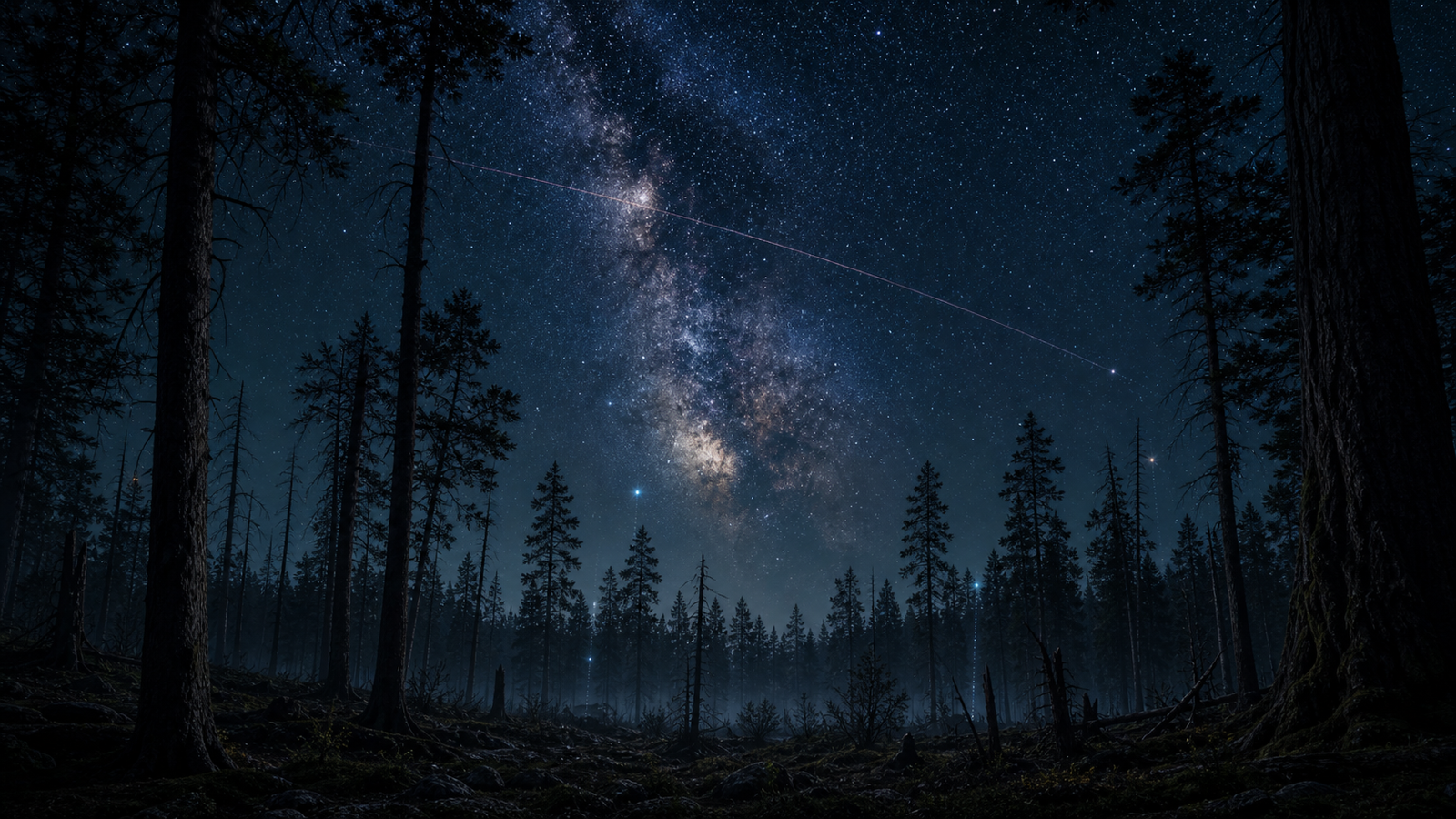
What if the next work of Land Art were drawn not in a desert, but across the entire planet? On a chosen night, millions of lamps, screens, facades and voluntary luminous devices synchronise. They do not draw a fixed picture. They produce a distributed pulse, a sequence of forms and silences regular enough to signal that intention inhabits Earth.
The project would begin with Land Art, Spiral Jetty and Double Negative, pass through the Nazca geoglyphs and crop circles, then shift scale once more. The landscape would no longer support the work: the planet would become material, transmitter and message at once.
1. Taking art out of the museum, then taking the sign beyond the horizon
In the late 1960s, Land Art moved the artwork outside the gallery. Soil, rocks, erosion, climate and distance became materials. The work was no longer an autonomous object: it depended on a place, a duration, a journey and a point of view.
This shift created a paradox. Earthworks are rooted in a site, yet many viewers encounter them through an aerial photograph, map or film. The real work and its circulating image no longer coincide. Robert Smithson's tension between site and nonsite is central here: matter exists far away while the museum or media reconstructs a partial experience.
2. Spiral Jetty: a form surrendered to entropy
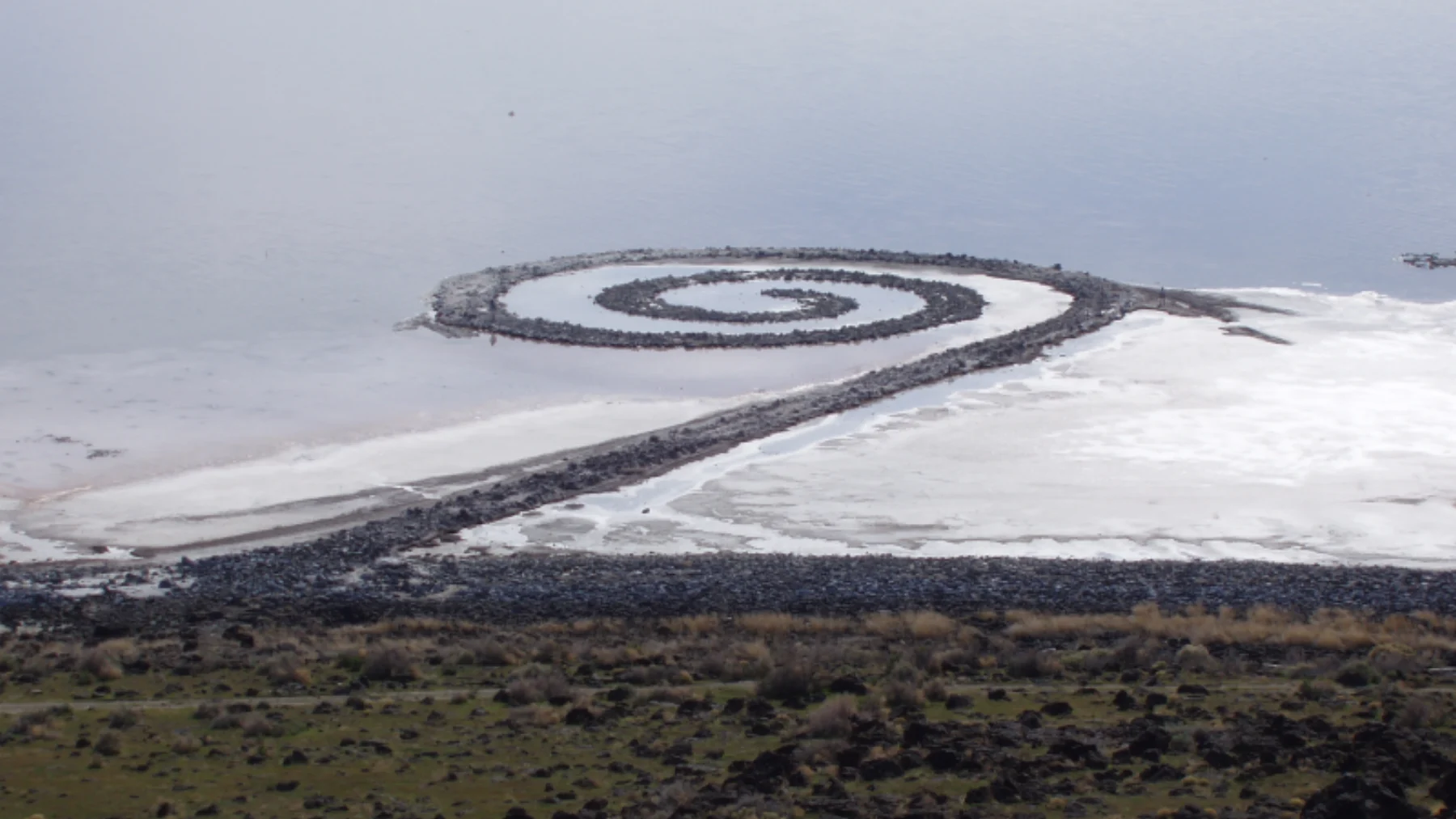
Built at Rozel Point in April 1970, Spiral Jetty extends about 1,500 feet into Great Salt Lake. Smithson did not isolate a sculpture from its environment. Water covers and reveals it; salt crystals whiten the rocks; algae sometimes colour the lake. The work includes its own transformation.
The Dia Art Foundation, its steward, describes a structure made from more than six thousand tons of local basalt and earth. Smithson's writings on entropy add a decisive dimension: a monument need not resist time; it can make time's irreversibility visible.
From the shore, the spiral is a path. From above, it becomes a sign. This difference already raises an interstellar question: for which observer is a form designed?
3. Heizer: sculpting with what is missing
With Double Negative, made in 1969 on Mormon Mesa, Michael Heizer deposited almost nothing. He removed. Two trenches face each other across a canyon: approximately 1,500 feet in total span, 50 feet deep and 30 feet wide, displacing 240,000 tons of rock according to the Museum of Contemporary Art, Los Angeles.
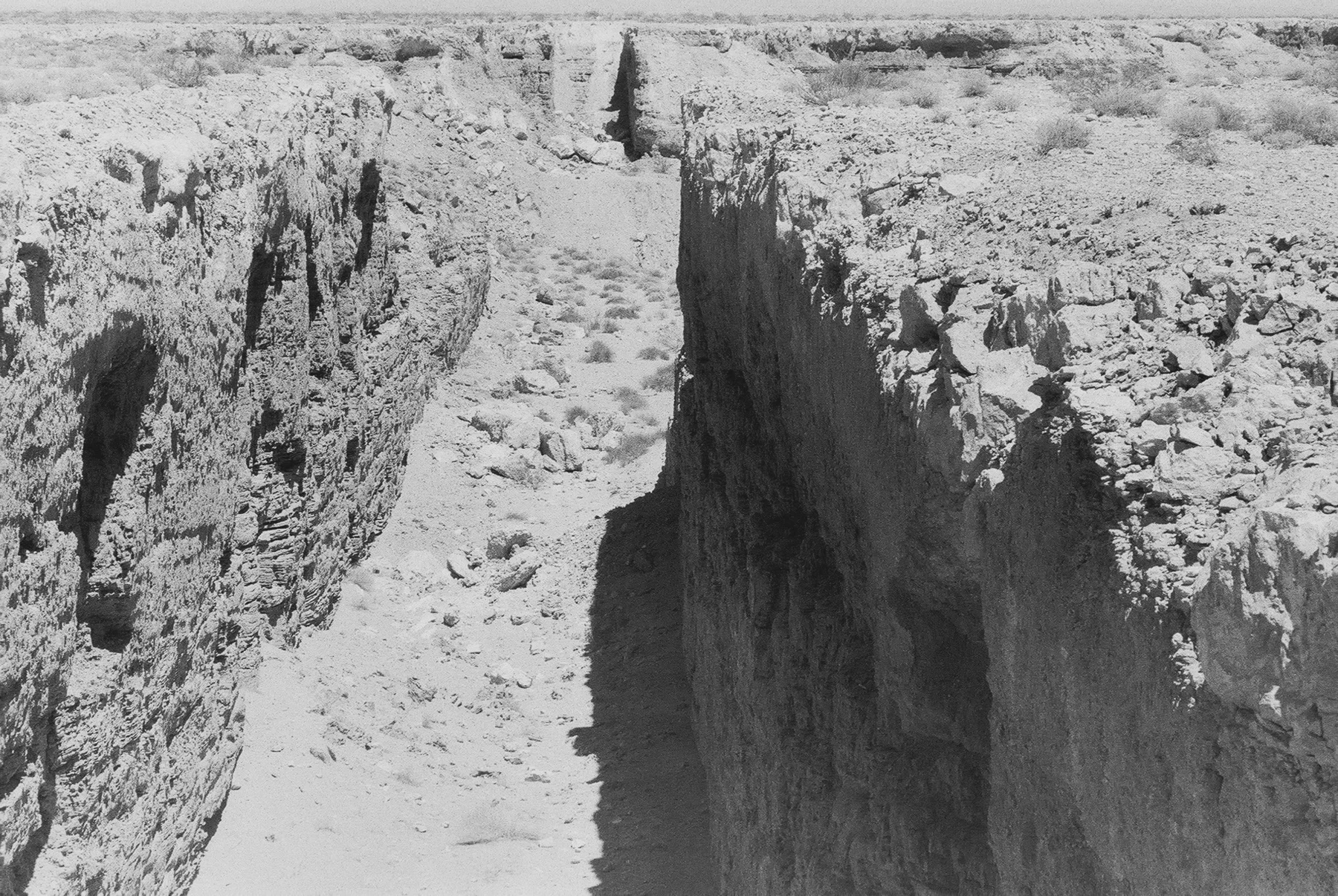
The “double negative” is material and logical: two absences produce a presence. The landscape is no longer a background for a form; it is cut to reveal a relation. At the scale of contact, this principle could become language: not only emission, but organised intervals, occultations and silences.
This negative economy already corrects the fantasy of an ever more powerful signal. An advanced civilisation might recognise not extravagant energy expenditure, but an unlikely, repeated, economical and verifiable modulation.
4. Nazca: an immense sign is not necessarily a message to the sky
The Lines and Geoglyphs of Nazca and Palpa cover roughly 450 square kilometres in Peru. Between 500 BCE and 500 CE, pre-Hispanic societies removed dark surface stones to expose lighter ground. Animals, plants, imaginary figures, lines, trapezoids and spirals compose a cultural and ritual landscape.
Their scale encouraged the modern claim that they were meant for aerial or even extraterrestrial observers. No evidence establishes this. UNESCO describes them as exceptional testimony to Andean symbolic, social and religious traditions. Current interpretations also consider some lines as ceremonial pathways: the figure may have been experienced by walking, not only viewed from above.
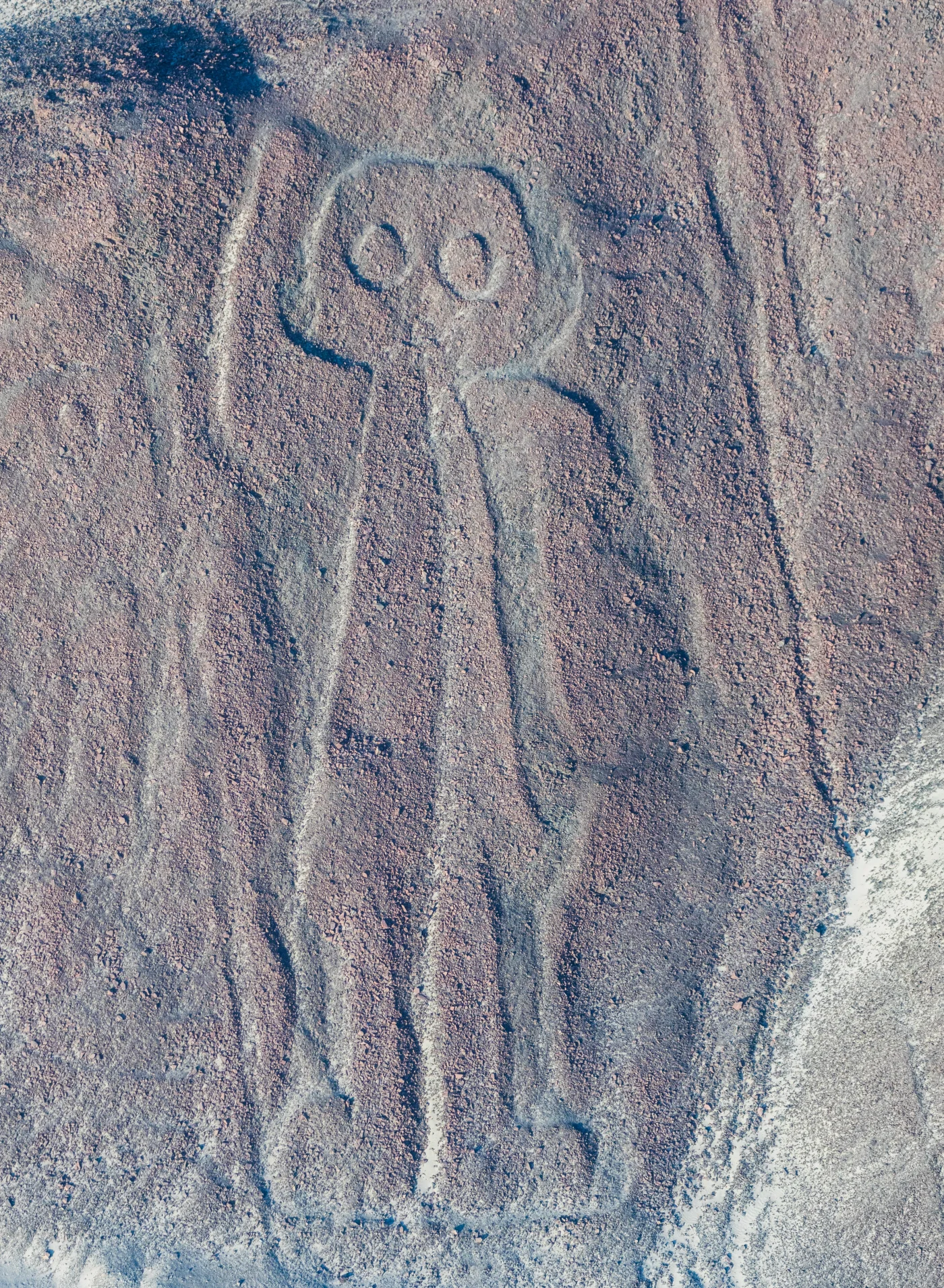
Nazca therefore gives A.L.I an essential lesson: monumental scale does not identify the recipient. An outsider can mistake a rite for a beacon, a path for an alphabet or a trace of use for a map. The archaeology of the unknown begins with this caution.
5. Crop circles: when the sign absorbs its own story
Crop circles shift the problem again. They are rapidly executed, seasonal, photographed from the air and immediately interpreted by media. Their effect depends less on mysterious origin than on organised ambiguity: evidence, hoax, performance, technological folklore and desire for contact overlap.
The A.L.I article on crop circles as language, myth and ground message already showed that the device creates an audience as much as a form. The sign calls forth investigators, believers, sceptics and authors. For interstellar Land Art, human reception would therefore be part of the work.
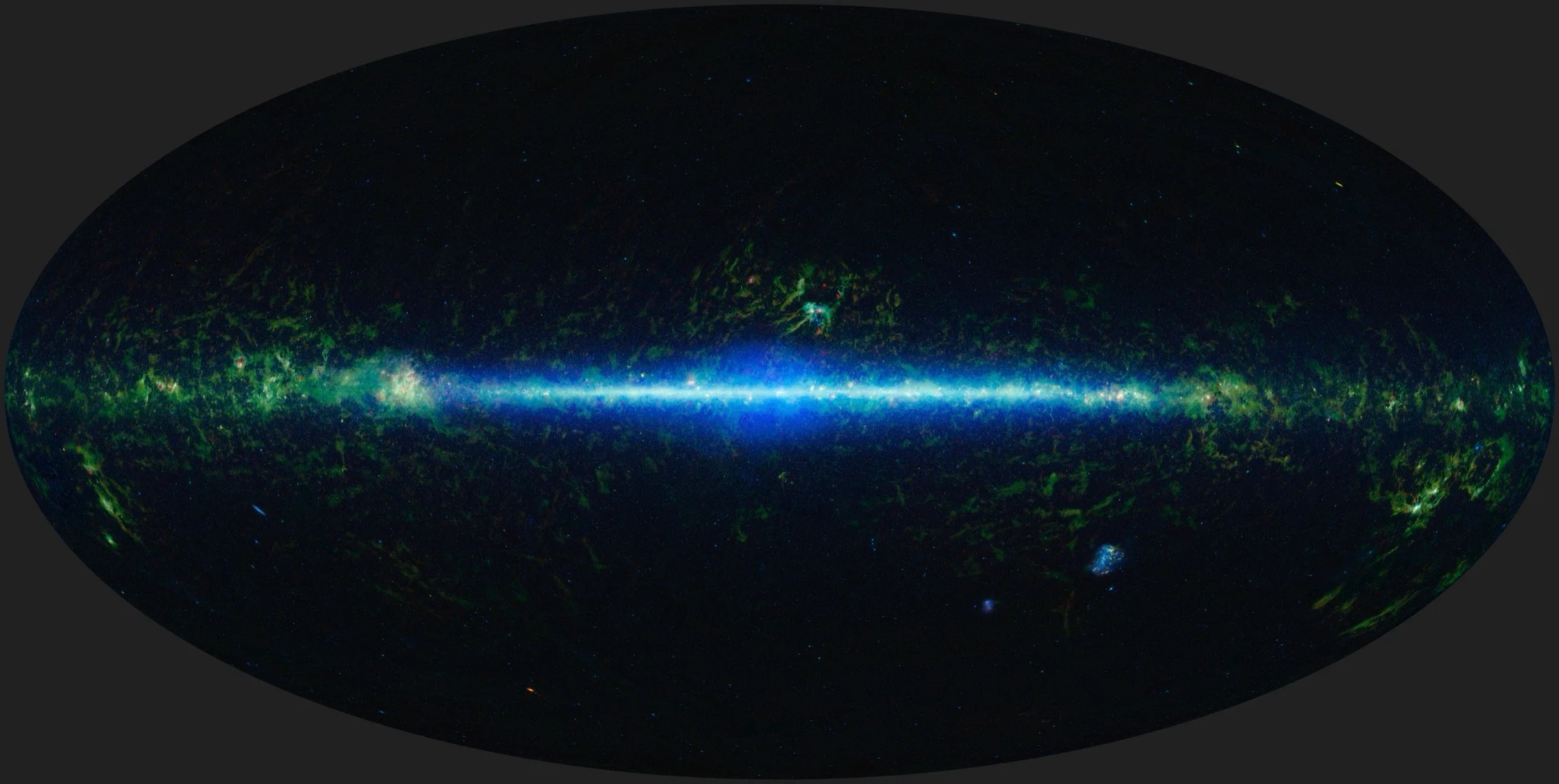
6. Earth at night is already a technosignature
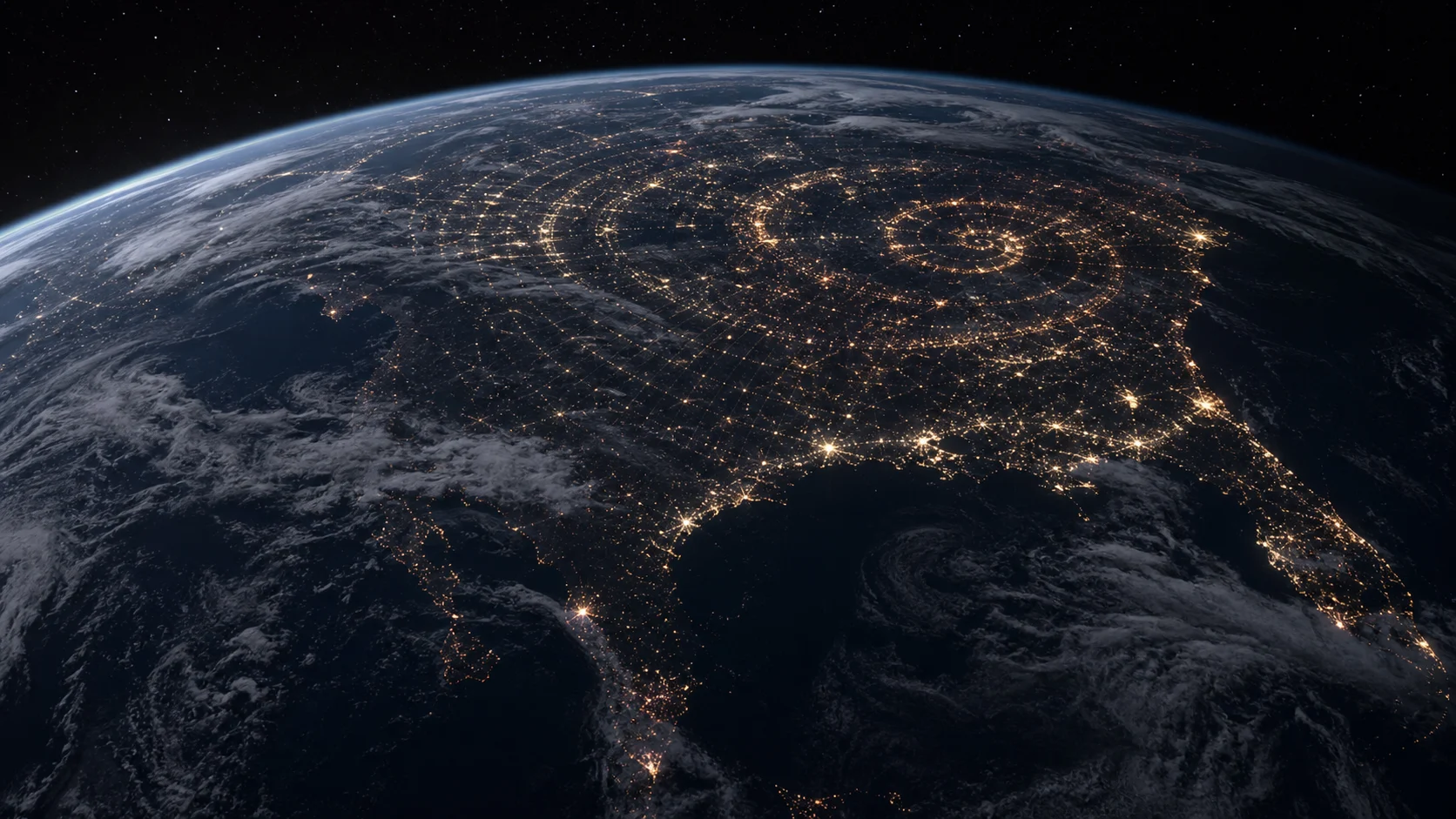
Every night, satellites record a specifically human signal: artificial illumination. NASA's calibrated Black Marble products use it to study urbanisation, energy, disasters, fishing and population displacement.
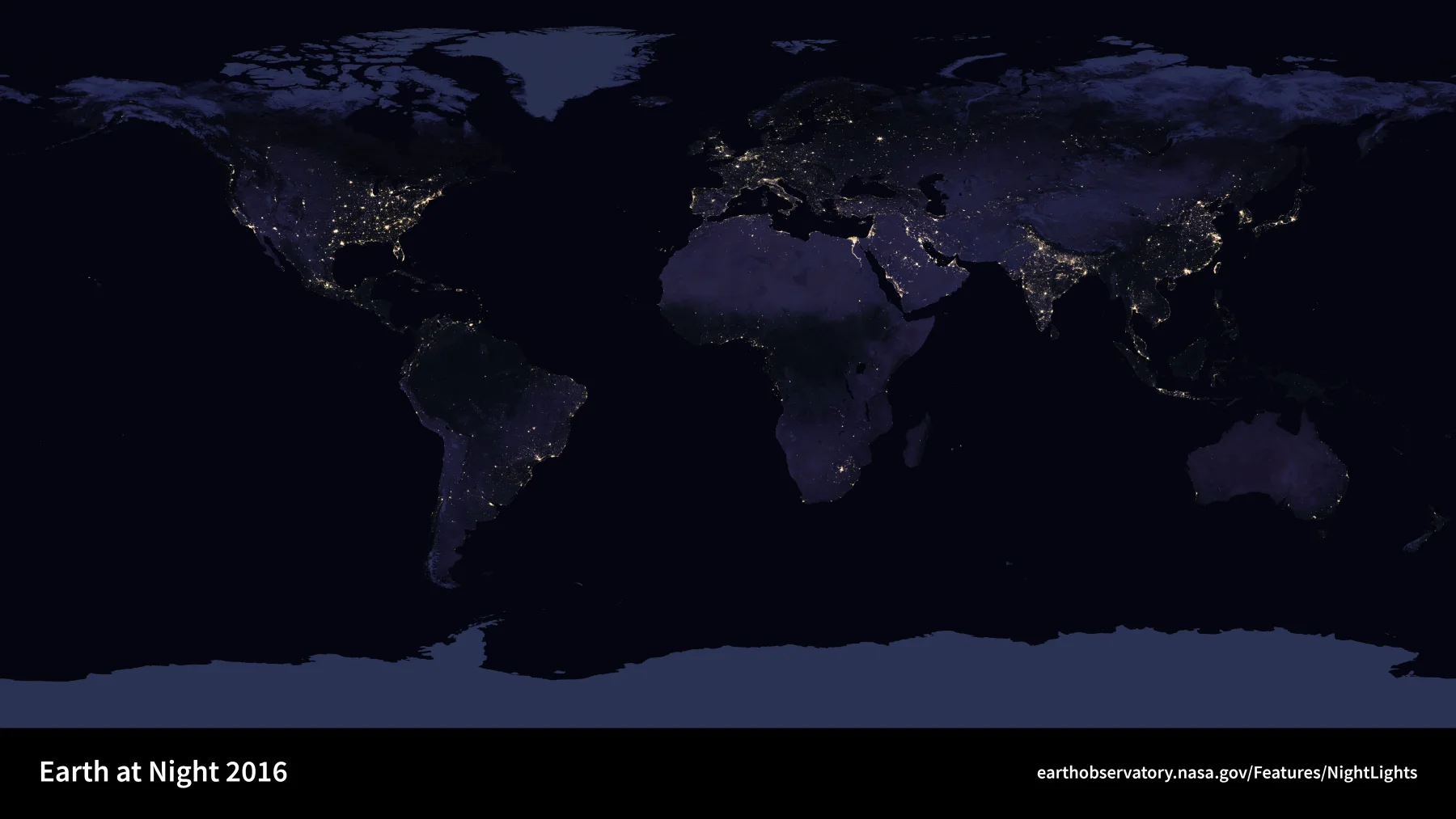
Such light is a possible technosignature, but orbital imagery must be distinguished from interstellar detection. From another star, no telescope would read a spiral formed by our cities as if looking at a photograph. The planet would be nearly point-like and overwhelmed by its star. Research on exoplanet city lights instead considers total brightness, artificial spectra or periodic variation from the nightside. Scenarios for Proxima b require urbanisation levels and future instruments well beyond present observations.
The project must therefore accept two different images: a pattern for humans and nearby satellites, then a temporal modulation aimed at deep space.
Antoine Schmitt: City Lights Orchestra, a connected precedent
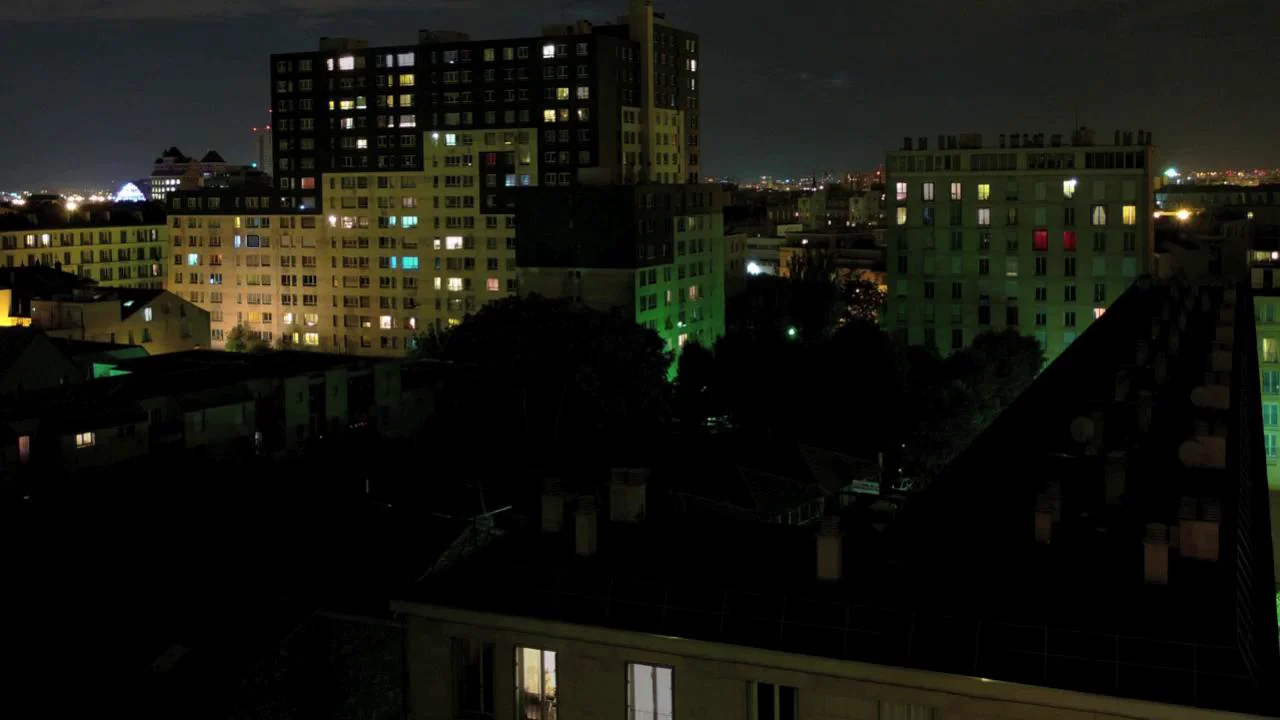
This hypothesis has a direct artistic precedent. In Antoine Schmitt's City Lights Orchestra, presented in Cape Town in 2012 and Saint-Denis in 2013, every Internet-connected computer illuminates a window and plays its own pulse while all windows remain in rhythm; smartphones can join the score. The city becomes orchestra, performer and audience at once. The work is urban and is not intended to contact extraterrestrials, yet it demonstrates how a network can turn private screens into a collective light signal in public space. PLANETARY GLYPH extends that intuition to regional and planetary scales, adding geography, consent, ecological limits and a listening protocol.
7. PLANETARY GLYPH: distributed Land Art
PLANETARY GLYPH would be a temporary global installation. It would not actually hack connected devices. Unauthorised access would be dangerous, illegal and conceptually incompatible with an artwork claiming to speak for a planet. The “hack” would be artistic: voluntarily diverting ordinary luminous infrastructure for a few minutes.
An open application and protocol would allow people, cities, museums, buildings, stages, decorative beacons, screens and domestic devices to enrol. Critical systems would be excluded: road signals, hospitals, aviation, maritime navigation, emergency services, security and medical equipment. Every participant would retain an immediate stop control.
Earth's night cannot illuminate everywhere at once because half the globe faces the Sun. The work would travel with the terminator, the moving boundary between day and night. Its motif would not be a simultaneous map but a twenty-four-hour planetary score, replayed as night crosses time zones.
8. An installation at three distances
From the ground, each participant would see a slow local pulse without rapid flicker: three rises in brightness, silence, five, silence, seven. The prime-number sequence would mark non-accidental organisation.
From orbit, Earth-observation satellites would reconstruct contributions as a map. Participating regions would successively draw a spiral, paired voids inspired by Heizer, and a temporal grid. The orbital image would become the work's document, as aerial photography documents earthworks.
From another star, only global variation could in theory be sought: regular alternation in brightness, repetition at prime intervals and a chosen spectral signature. The project would almost certainly remain undetectable at reasonable energy levels. That limit is not failure; it exposes the real distance between a spectacular image and an astrophysical signal.
9. Exchange protocol: transmit, then know how to be silent
- Consent. Explicit enrolment, local governance, public code and mapping without personal data.
- Calibration. A minimal light level compatible with nocturnal wildlife, sleep and visual accessibility.
- Baseline. Several minutes without intervention to record ordinary luminosity.
- Announcement. A slow prime-number sequence repeated in several permitted wavelengths.
- Pattern. Progressive transformation of the orbital map: spiral, interval, grid, disappearance.
- Silence. Voluntary dimming during a radio, optical and infrared listening window.
- Response. No immediate interpretation. Any candidate event must repeat, be localised and be tested against human, meteorological and astronomical causes.
- Open archive. Data, errors and non-response are published. The negative matters as much as the signal.
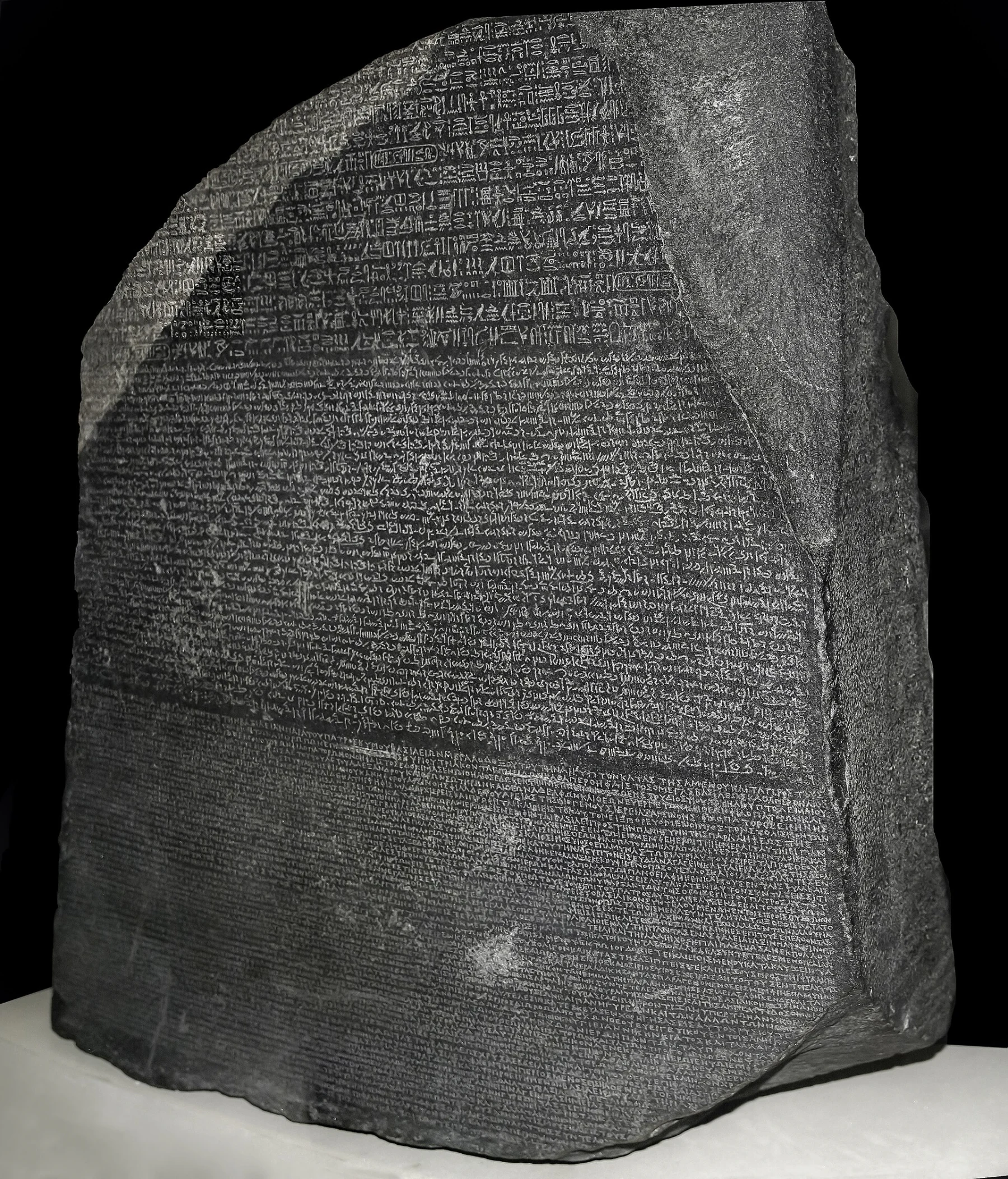
This protocol extends the new Arecibo message and the contemporary Pioneer plaque hypothesis: a message is not just content, but a verification device, a temporality and an ethics of the recipient.
10. Who has the right to make a planet speak?
The hardest problem is not technical. Who chooses the motif? Who represents Earth? A global artwork could reproduce infrastructure inequality: highly electrified regions would speak louder while deliberately dark territories disappeared.
PLANETARY GLYPH should reverse that bias. Participation would not be proportional to the number of bulbs. Each territory would have equal symbolic weight. Nonparticipating areas would be recognised as active silences, not absences. Total energy would be capped below ordinary consumption through dimming and timing shifts rather than extra light.
Historical Land Art sometimes treated landscapes as empty even when they were inhabited, crossed or politically situated. A planetary version can no longer ignore territorial rights, light pollution, migrating birds, insects and nocturnal rhythms. Speaking to the stars must not make Earth less habitable.
11. A rehearsal for contact
PLANETARY GLYPH would be unlikely to reach a distant civilisation. Its first recipient would be ourselves. Producing a few minutes of luminous coherence would require coordinating millions of decisions without a single centre, accepting refusal, sharing a clock, limiting energy and agreeing on syntax.
The work would measure less our power than our ability to compose. Smithson inscribed entropy in the lake; Heizer made absence into sculpture; Nazca bound forms, pathways and territory; crop circles turned fields into media. Interstellar Land Art would add another material: the voluntary synchronisation of a planet aware that it does not speak with one voice.
The first credible sign addressed to the stars may not be a brighter light, but proof that we can switch it on together, then stop and listen.
References
- Dia Art Foundation, Robert Smithson, Spiral Jetty.
- Robert Smithson, “Entropy and the New Monuments”, 1966.
- MOCA Los Angeles, Michael Heizer, Double Negative.
- UNESCO, Lines and Geoglyphs of Nazca and Palpa.
- NASA, Black Marble 2016.
- Antoine Schmitt, City Lights Orchestra, documentation video.
- Abraham Loeb and Edwin Turner, detecting artificially illuminated objects, 2012.
- Thomas Beatty, “The Detectability of Nightside City Lights on Exoplanets”, 2022.