Hypothesis: exoplanets are not only possible places for life. For A.L.I, they are possible contexts for language: each world imposes an atmosphere, gravity, chemistry, light, cycles and therefore very different forms of perception and communication.
Where Does Research Stand?
On June 21, 2026, the NASA Exoplanet Archive returned 6,298 confirmed exoplanets in its default planet table. This number changes regularly as confirmations, catalogues and revisions evolve.
This is already enormous, but it is only a tiny sample of the Galaxy. We mostly detect planets made visible by our instruments and methods: worlds close to their stars, well-oriented systems, repeated signals and stars observed long enough.
Main Detection Methods
- Transit: a planet passes in front of its star and produces a measurable dip in brightness.
- Radial velocity: the planet makes its star wobble slightly through gravity.
- Direct imaging: difficult, but able to photograph some young, massive planets far from their star.
- Gravitational microlensing: temporary amplification of a background star by a planetary system.
- Astrometry: measuring a star’s apparent motion under the influence of a planet.
These methods do not see the same planetary populations. Our statistical image of planetary systems is still biased.
What Researchers Look For Today
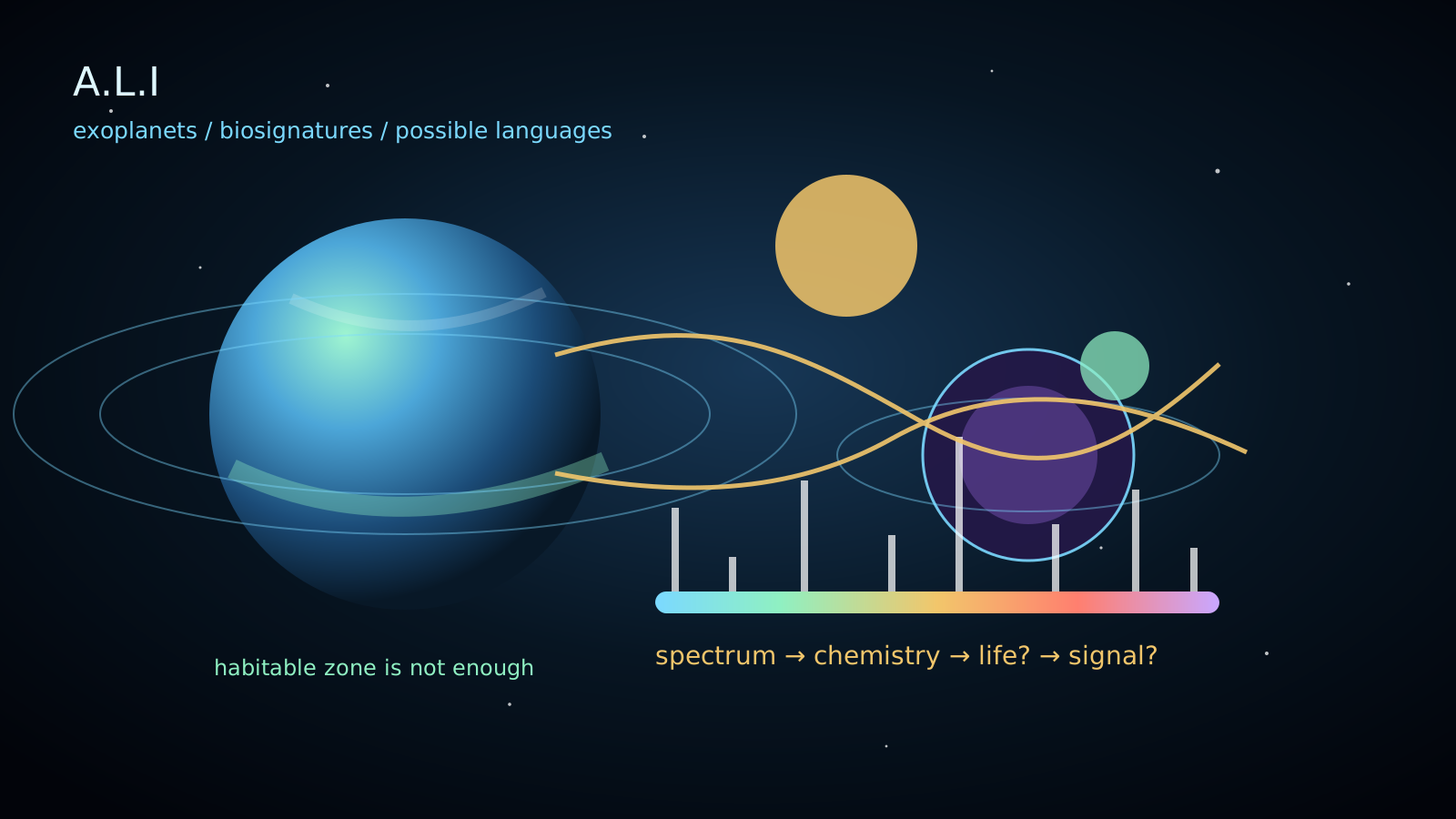
Current research no longer only finds planets. It tries to understand atmospheres, masses, radii, densities, orbits, temperatures and histories. With JWST and large ground-based instruments, part of the field is moving toward atmospheric spectra: water, CO₂, methane, ozone, clouds, hazes and atmospheric escape.
But a planet in the “habitable zone” is not automatically habitable. The habitable zone only means that temperatures compatible with liquid water are possible under certain conditions. Stable atmosphere, pressure, chemistry, stellar stability, geological history and perhaps magnetic or protective mechanisms also matter.
Possible Forms of Life
Several levels can be imagined without jumping too quickly to civilization:
- Microbial life: probably the strongest hypothesis if life emerges easily in favorable chemistry.
- Photosynthetic life: possible on worlds receiving enough light, but with pigments adapted to their star.
- Subsurface life: microbes or ecosystems protected below the surface.
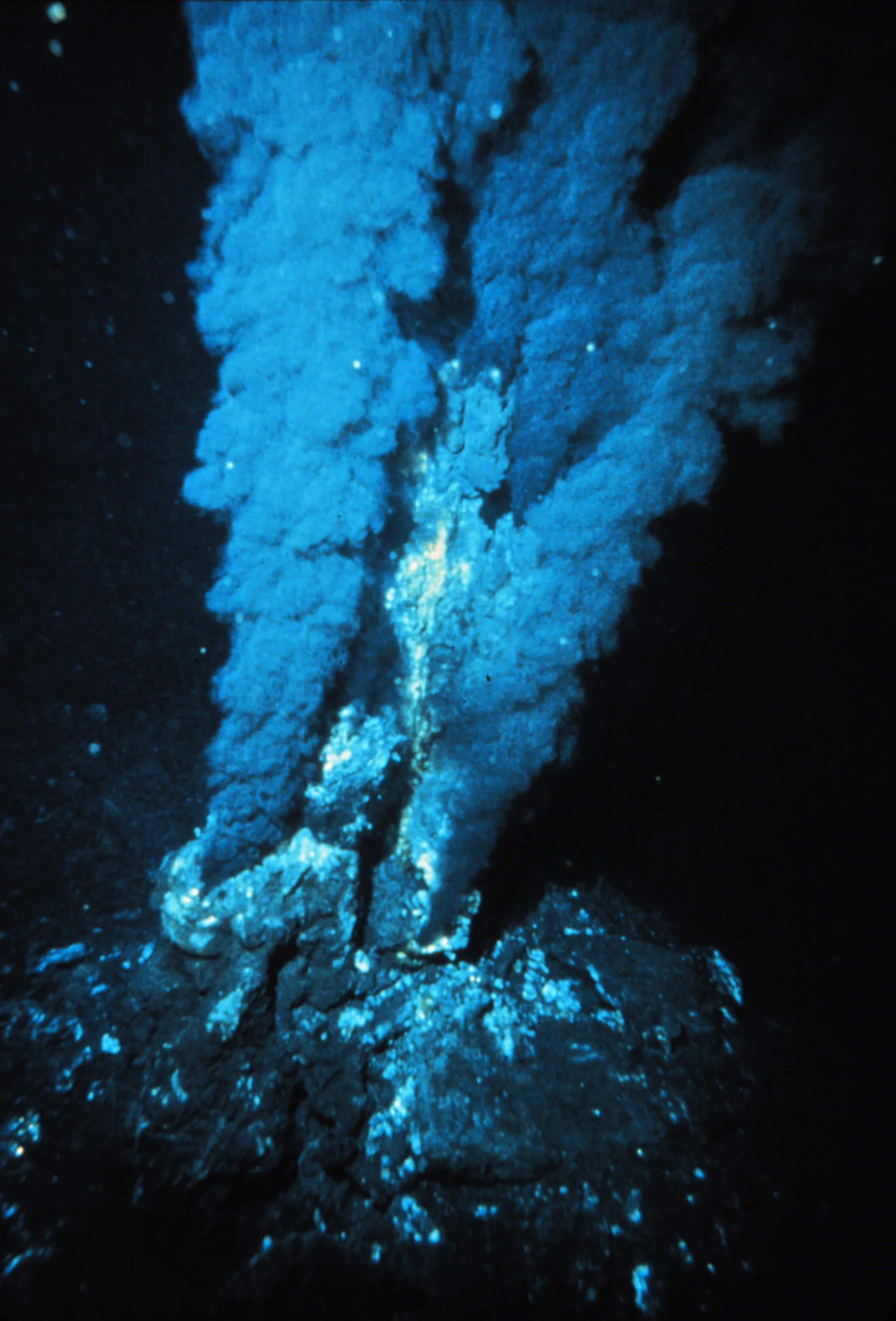
- Ocean life: water worlds, icy moons, subsurface oceans, hydrothermal chemistry.
- Atmospheric life: hypothetical floating organisms in temperate layers of gas planets or thick super-Earths.
- Complex life: more uncertain, depending on long-term stability, energy, evolution and ecology.
- Technological life: rarer still, or simply difficult to detect.
Numbers Extrapolated by Galaxy
The Milky Way probably contains roughly 100 to 400 billion stars. Kepler and other surveys indicate that planets are common: it is reasonable to speak of hundreds of billions of planets in our Galaxy.
An often-cited estimate from Kepler data suggests that there may be about 300 million potentially habitable planets in the Milky Way, broadly meaning rocky worlds in zones where liquid water could be possible. This does not mean 300 million inhabited planets. It means 300 million physically interesting candidates.
| Scale | Order of magnitude | Caution |
|---|---|---|
| Confirmed exoplanets | 6,298 on June 21, 2026 | observed catalogue, not total population |
| Planets in the Milky Way | hundreds of billions | statistical extrapolation |
| Potentially habitable planets in the Milky Way | about 300 million | minimal physical habitability, not evidence of life |
| Planets in the observable universe | 10²² to 10²³ possible | depends on galaxy counts and sizes |
| Potentially habitable worlds in the observable universe | 10¹⁸ to 10²⁰ as speculative order | very uncertain, useful only for thinking at scale |
Extrapolating to the Universe
The observable universe contains at least hundreds of billions of galaxies, with some estimates reaching around two trillion depending on counting method. If each large galaxy contains hundreds of billions of planets, the order of magnitude quickly becomes staggering: 10²² to 10²³ possible planets in the observable universe.
If we very roughly extrapolate the fraction of potentially habitable worlds, we can imagine 10¹⁸ to 10²⁰ candidate worlds. But this should be read as a scale exercise, not a measurement. It mixes very different galaxies, stars and a minimal definition of habitability.
Life Does Not Mean Language
For A.L.I, the crucial point is this: even if life is frequent, language may be rare. Even if language is frequent, it may be local, chemical, gestural, electric, luminous, oceanic or entirely undetectable by radio.
An exoplanet inhabited by microbes will probably emit no message. A planet with complex animals may produce sounds, traces, colors, rhythms, architectures or chemical emissions without technology. A technological civilization may be silent, brief, buried, optical, encrypted, or unwilling to transmit.
A.L.I Questions
- What atmosphere would make sonic language possible?
- Would an ocean civilization invent pressure, sonar, bioluminescent or chemical language?
- Would a planet around a red dwarf favor life sensitive to infrared or stellar flare cycles?
- Would a high-gravity world produce radically different bodies, gestures and communication architectures?
- Could a biosphere without accessible fire develop radio technology?
- Should we search for messages, technosignatures, biosignatures or planetary behaviors?
A.L.I Prototype: Atlas of World-Languages
A speculative atlas could generate a possible language from planetary parameters:
mass + gravity + atmosphere + star + water + temperature + light → possible body → possible perception → possible language channelThe visitor would choose a world type: ocean planet, super-Earth, tidally locked world, desert planet, icy moon, planet around a red dwarf. The system would then generate an alphabet, sound, light, texture or grammar compatible with that environment.
Sources and Data
- NASA Exoplanet Archive: reference catalogue, consulted on June 21, 2026 for the confirmed planet count.
- NASA Exoplanet Exploration: public resources and updated exoplanet figures.
- NASA - 300 million potentially habitable planets: estimate from Kepler data.
- ESA - Exoplanets: European resources on exoplanet science.
- NASA JWST: atmospheric observations and spectroscopy.
LABO question: if each world imposes its own bodies, perceptions and channels, can we still imagine a universal language, or only local bridges between forms of life?