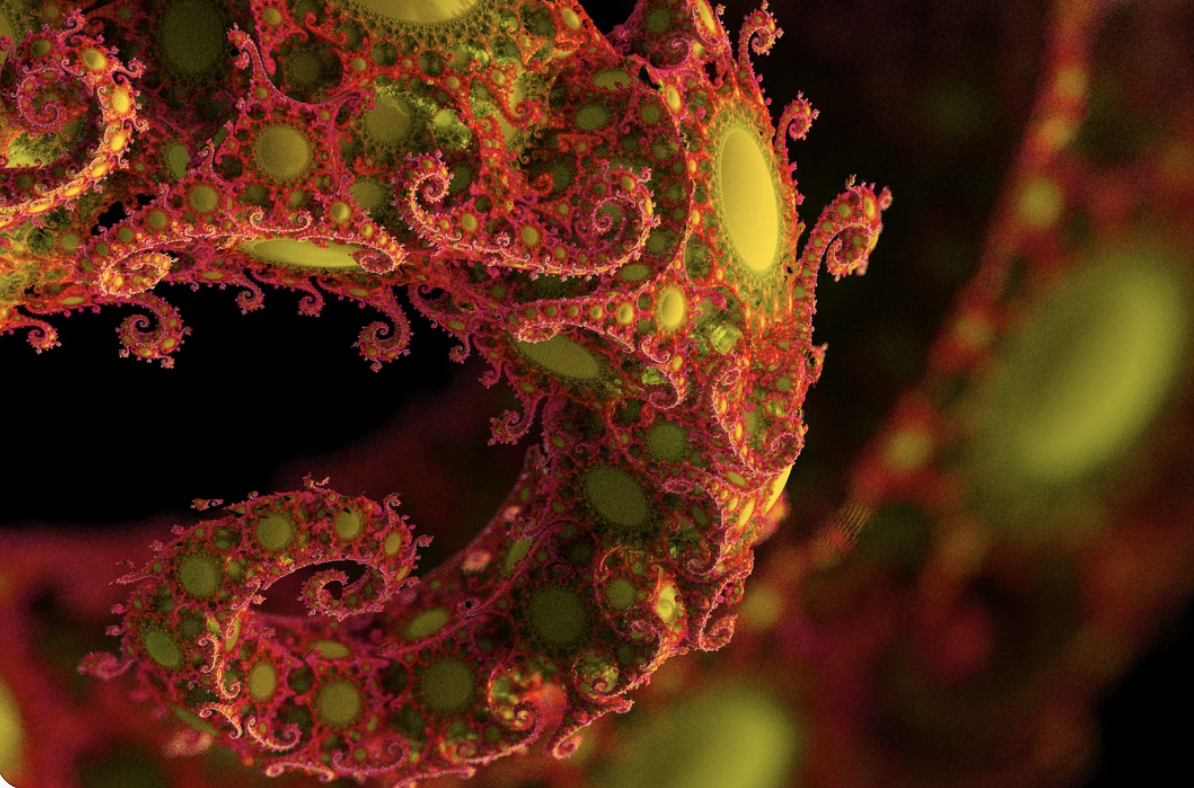
A fractal is a form whose structure repeats or transforms across scales. It is not only a complex image: it is a way of thinking about growth, boundaries, networks, bifurcations and living forms.
For A.L.I, fractals matter because they let us imagine a language that is not only verbal, not only mathematical and not only visual. A dynamic language: recognizable through structure, able to unfold in time, space and several levels of organization.
1. Precise definition
The word fractal comes from the Latin fractus, meaning broken, fragmented, irregular. Benoît Mandelbrot used it in the 1970s to name forms whose complexity persists when scale changes.
A fractal can have several properties:
- self-similarity: a part resembles the whole, exactly or approximately;
- iteration: a simple rule is repeated many times;
- fractal dimension: the form occupies space in a way that lies between line, surface and volume;
- complex boundary: a limit can become endlessly detailed, like a coastline, cloud or biological contour;
- sensitivity to initial conditions: small variations can produce very different forms.
A fractal is therefore not merely a beautiful pattern. It is a generative structure. It shows how complex form can emerge from a simple rule repeated over time.
2. Short history
Long before Mandelbrot, several mathematical objects announced fractals: the Koch snowflake, the Sierpinski triangle, the Cantor set, Peano and Hilbert curves. These forms disturb classical intuition: continuous but non-smooth, bounded but endlessly detailed, simple to produce but difficult to classify.
In 1967, Mandelbrot published a famous paper: How Long Is the Coast of Britain? He showed that length depends on the scale of measurement: the smaller the ruler, the longer the coastline appears. Ordinary geometry is not enough to describe irregular reality.
In the 1980s, the image of the Mandelbrot set became iconic. Computers made it possible to visualize iterative structures of immense richness. The fractal became at once a scientific object, a cultural image and a modelling tool.
3. Natural examples
Nature does not always produce perfect mathematical fractals, but it often produces approximate fractal forms:
- tree branches and ramifications;
- ferns, where each leaflet echoes the organization of the whole leaf;
- blood, lung and neural networks;
- rivers and drainage basins;
- lightning, roots, corals, crystals, mountains, clouds;
- certain bacterial colonies and cellular growths.
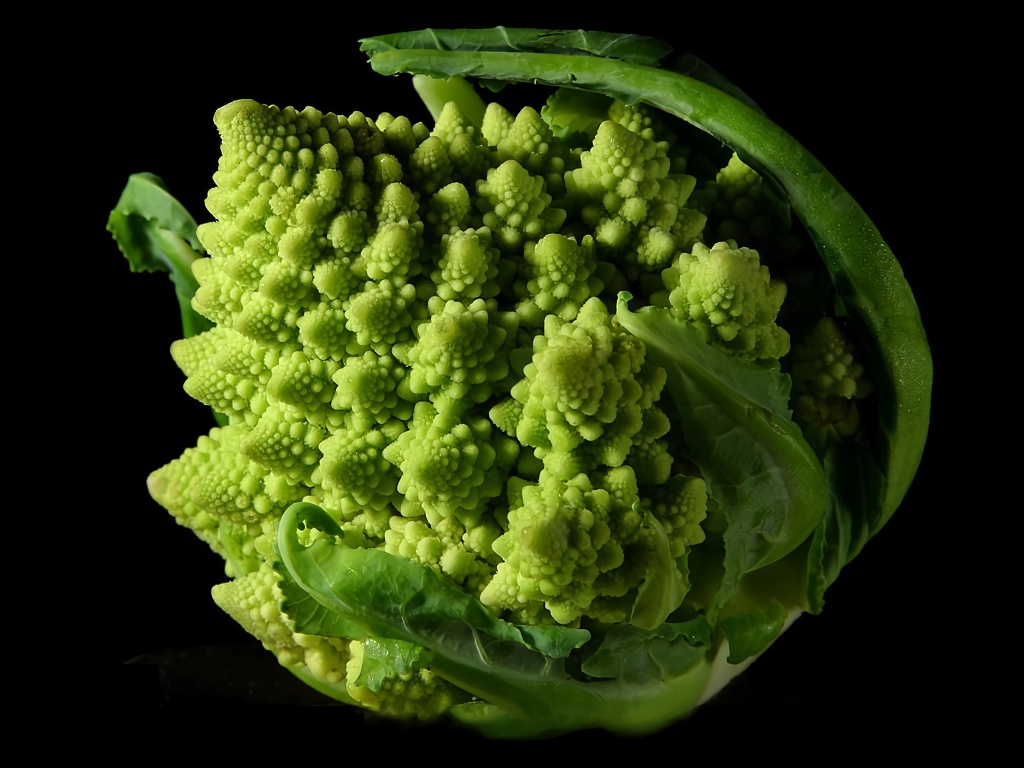
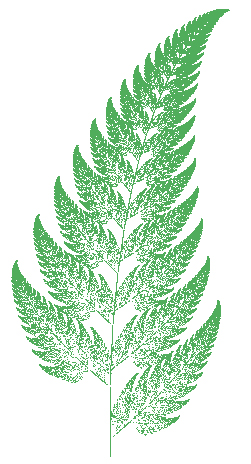
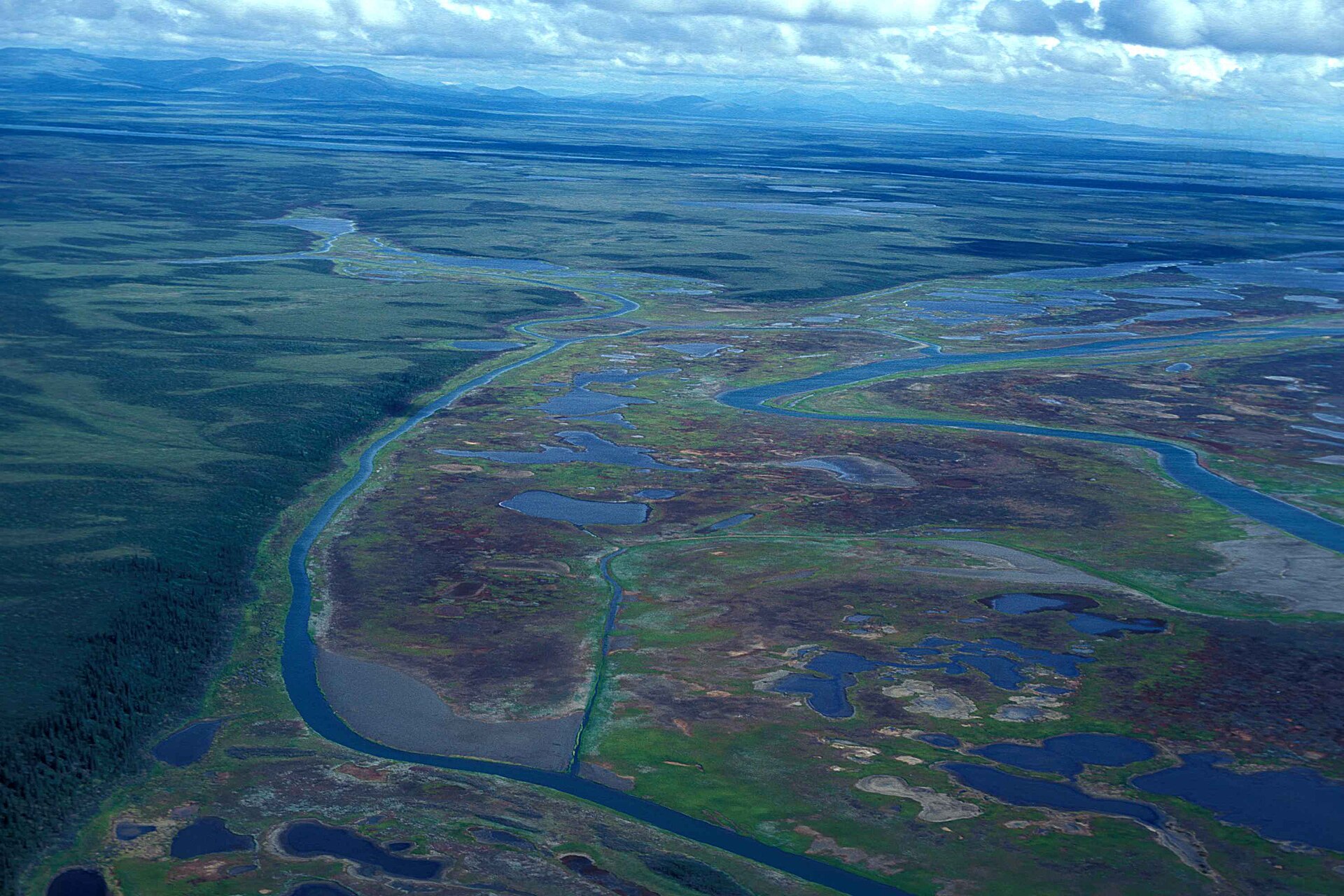
These forms are not decorative. They often answer a constraint: distributing energy, capturing light, transporting fluids, exploring space, maximizing exchange surfaces, branching without controlling everything from a center.
From this perspective, a fractal is a biological or physical solution: a way of growing intelligently within an environment.
4. Golden ratio, Fibonacci and phyllotaxis
The golden ratio, φ, is approximately 1.618. It appears in geometric relations, in certain sequences and in Western aesthetic imagination. Caution is necessary: not everything in nature is the golden ratio. Many popular associations are exaggerated.
But there is a serious link between Fibonacci, the golden angle and plant organization. In phyllotaxis, the arrangement of leaves, seeds or petals, angles near 137.5 degrees can optimize exposure, avoid overlap and produce visible spirals in sunflowers, pine cones or artichokes.
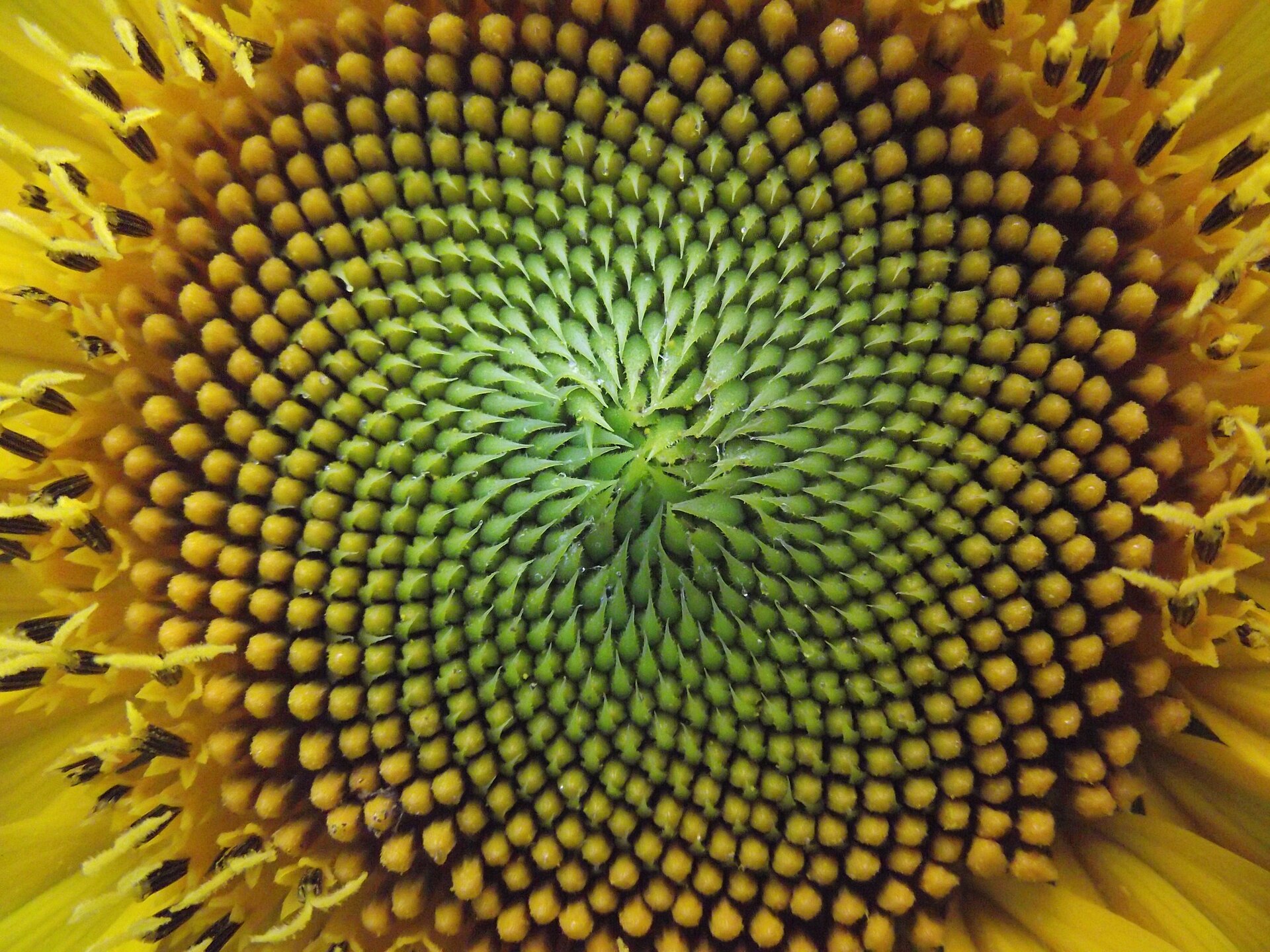
The plant does not "know" the golden ratio. It follows local growth processes: divisions, pressures, hormones, available space. But these local rules can produce remarkably regular global structures. This is exactly what makes fractals interesting for A.L.I: an intelligence may recognize a rule in a form without sharing our language.
5. Origins of life and morphogenesis
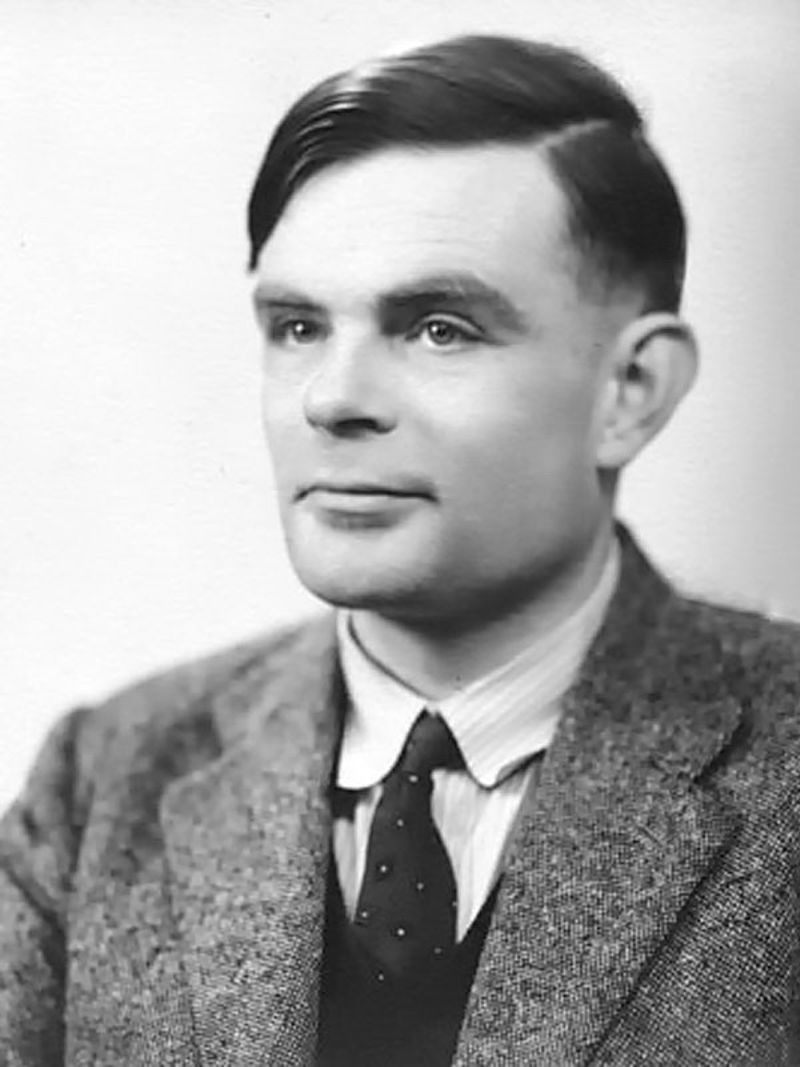
The question of fractals also touches the origin of living forms. In 1952, Alan Turing proposed a model of morphogenesis based on chemical reaction and diffusion capable of producing patterns: spots, stripes, regularities. Even if it is not a fractal theory in the strict sense, it shows how biological patterns can emerge from simple physico-chemical rules.
In living systems, form is not added afterwards. It appears with the process. An organism builds itself through growth, differentiation, repetition, bifurcation and feedback. Lungs, vessels, roots, branches and neurons are not drawings placed on matter: they are dynamic solutions to problems of circulation, surface, exchange and adaptation.
If life appears elsewhere in the Universe, it may not resemble terrestrial forms. But it could encounter analogous constraints: capturing energy, reproducing, exchanging, maintaining a boundary, exploring an environment, optimizing surfaces. Fractal or quasi-fractal morphologies could therefore reappear as convergent solutions.
6. A dynamic universal form?
Fractals can be seen as a universal form not because they would be identical everywhere, but because they describe a principle: generating complexity through iteration, adaptation and scale change.
An extraterrestrial civilization might not recognize our words, myths or sounds. But it could recognize:
- a rule that repeats;
- a transformation visible from scale to scale;
- a motif that encodes its own mode of production;
- a growth process revealing local logic;
- a structure that can be replayed, extended and predicted.
The fractal is not only an image to look at. It is a grammar. If one understands the rule, one can continue the form.
7. Toward a fractal language for A.L.I
A fractal-inspired language could work by levels. Each message would contain a simple form, then its transformation, then its repetition at another scale. The receiver would not only read a symbol. It would understand a rule of generation.
Possible example:
- level 1: a point becomes two branches;
- level 2: each branch becomes two new branches;
- level 3: the angle changes according to a sequence;
- level 4: the sequence encodes prime numbers, constants or coordinates;
- level 5: the global form becomes a map, organism or visual sentence.
This kind of language could be transmitted as image, light, sound, radio, 3D print, biological growth or simulation. It would be robust because it does not depend on a single channel. It could also be interactive: an intelligence would answer by correctly continuing the form.
8. Language, plants and non-human intelligence
Plants offer an essential clue. They do not speak like us, but they compute orientations, respond to light, gravity, chemical signals and neighboring constraints. Their form is already a kind of writing of their history: drought, light, injuries, growth, competition.
A fractal language could therefore take inspiration from the vegetal: not sending a sentence, but growing a structure. The message would be readable in bifurcations, angles, spacing, densities and growth speeds. An A.L.I installation could create an artificial or algorithmic plant whose growth encodes a message.
The living form then becomes a communication support: no longer only alphabet, but morphology.
9. Projections
In the long term, several paths can be imagined:
- a fractal alphabet where each sign contains the rule that produces it;
- a message sent as an algorithmic seed: little data, large generated form;
- a contact protocol where the reply consists in continuing the fractal;
- an interstellar archive where each chapter is a zoom into the previous structure;
- communication with AIs or non-biological forms through recursive patterns;
- a living sculpture where growth, light and astronomical data produce an evolving form.
The fractal could thus become a bridge between mathematics, biology, art and signal. It does not merely say "here is a message". It says: here is a rule, here is how it transforms, here is how you can verify that you understood.