Before pointing antennas towards the stars, we spent a very long time speaking to the sky. We entrusted it with prayers, songs, sacrifices, gestures and sometimes long silences. In that sense, the God hypothesis may be our oldest attempt to communicate with a non-human intelligence. The trouble is that “God” has never meant only one thing: a person who listens, several powers, a first cause, a cosmic artisan, an inward presence, nature itself, a universal consciousness, or a principle before which language simply stops.
This is not an attempt to settle the existence of God. That would be quite a promise. A.L.I asks a smaller but perhaps more unsettling question: if the universe came from an intelligence, how might that intelligence address us? And how could we avoid mistaking coincidence, natural process or our own hunger for meaning for an answer?
1. “God” is not a single hypothesis
Misunderstandings begin as soon as the word “God” is spoken. Classical theism imagines a personal creator who is omniscient, omnipotent and perfectly good. Deism keeps the creator but sees it withdrawing once the world is set in motion. In pantheism, God and the whole of reality are one; panentheism places the world within God without reducing God to the world. Process theologies, notably inspired by Alfred North Whitehead, abandon the image of an unmoving sovereign: God and cosmos become together, each changed through relationship.
Other traditions do not centre a supreme creator. Some Buddhist schools describe a world without an assignable beginning, structured through dependent origination rather than creative will. Hindu narratives and philosophies are plural: Brahmā may carry a creative function, while Brahman in the Upanishads is an ultimate reality, not simply a person manufacturing the world. In polytheistic religions, creation may emerge through conflict, genealogy or transformation among already present powers.
| Model | Relation to the world | Possible communication | Difficulty |
|---|---|---|---|
| Personal creator | The world is intended | Revelation, word, sign, relationship | Why so much ambiguity and silence? |
| Deism | The world is started and left autonomous | Laws are the only “address” | No dialogue is expected |
| Pantheism | God and Nature are not separate | Knowing reality is knowing God | Who speaks to whom? |
| Panentheism / process | The world exists within and affects God | Continuous interaction and creativity | God may no longer be omnipotent |
| Impersonal principle | Order, emptiness, necessity or source | Transformation of perception | “Communication” becomes metaphorical |
| Simulation | A system is built by agents | Glitch, interface, alteration of code | A programmer is not an absolute God |
2. Myths are not failed science
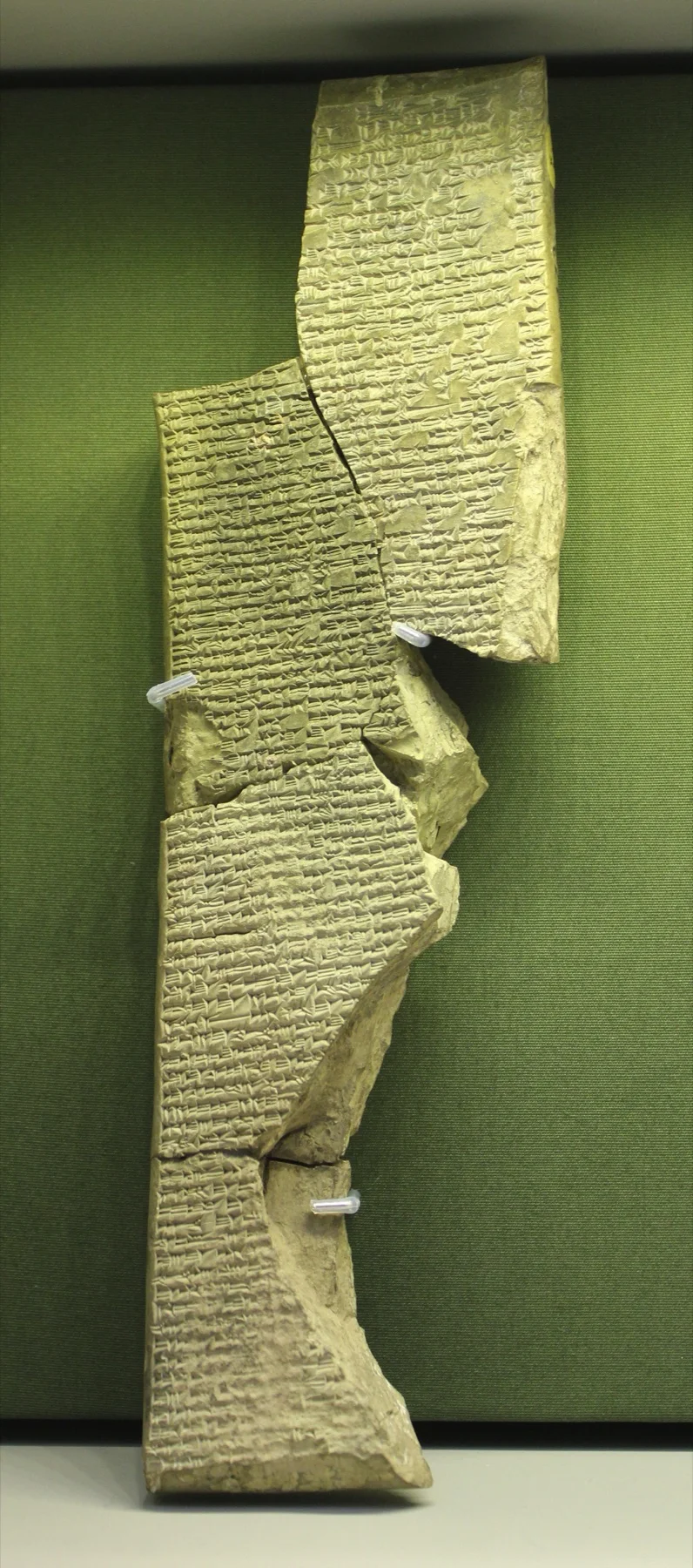
We often make the mistake of reading myths as outdated scientific theories. They were doing something else. They gave human beings a place among the dead, animals, powers and the sacred. They said less about how to measure the world than about how to live in it. In the Enūma eliš, order emerges from divine conflict and Tiamat's body becomes cosmic matter. Egypt allows several beginnings to coexist: Atum rises from primordial waters in the Heliopolitan tradition, while Ptah creates through heart and tongue in Memphite theology.
Genesis stages creation through speech and separation: light and darkness, waters and land, days and species. The Qur'an repeatedly presents a creative power whose command “Be” is sufficient for becoming. Plato's Timaeus describes a demiurge who does not make from nothing but orders material according to intelligible forms.
The Nāsadīya Sūkta of the Rig Veda introduces a different audacity: after questioning the origin of being, it leaves open whether even the highest overseer knows how everything began. Doubt does not arrive after myth; it already inhabits some of the oldest cosmological poetry.
3. From cosmogony to philosophical proof
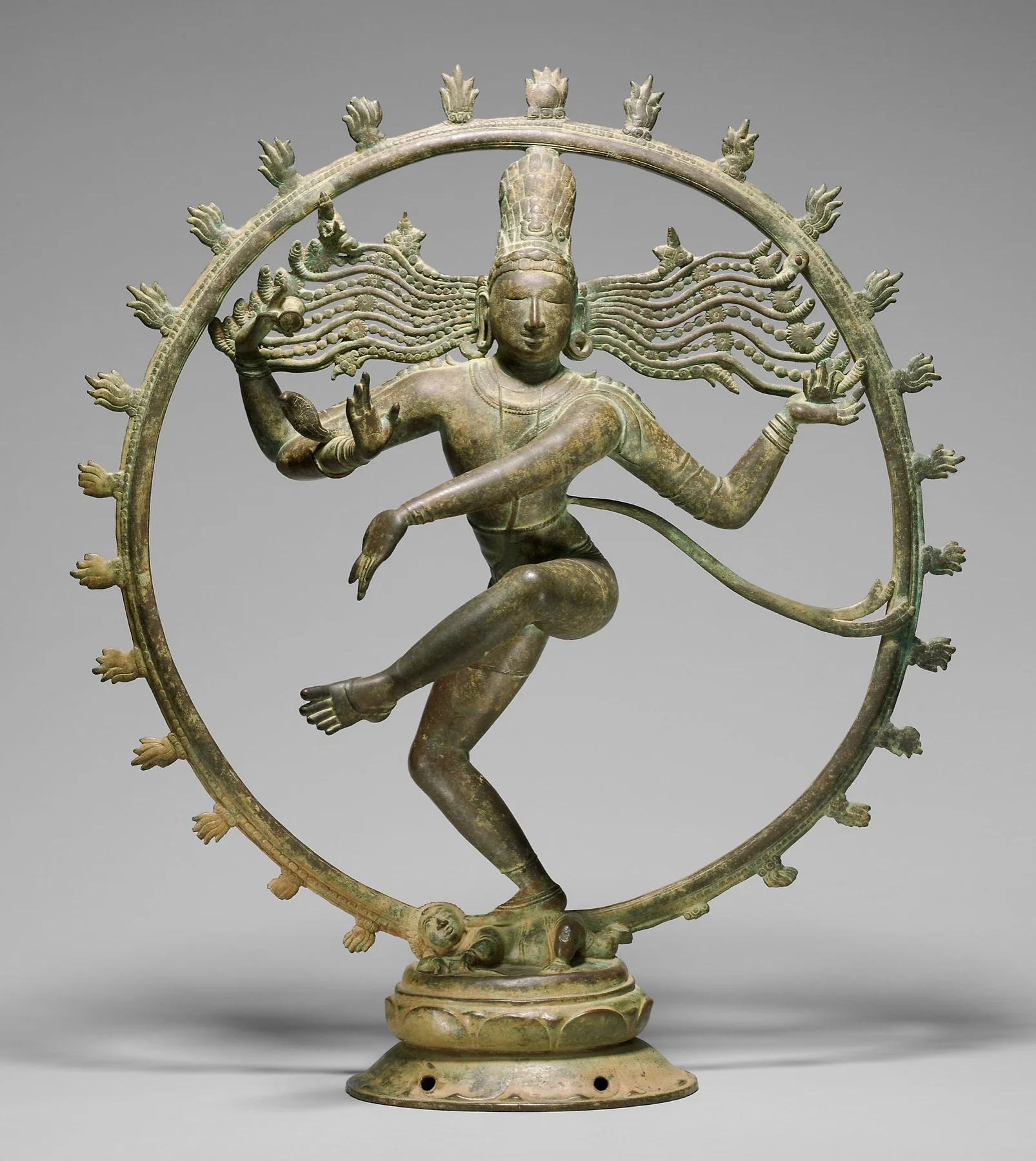
With philosophy, the story changes shape. It becomes argument, objection and counter-argument. Aristotle imagines a first mover that sets everything in motion without itself being moved. Ibn Sīnā distinguishes what might not exist from necessary existence. Thomas Aquinas begins from motion, causes, contingency, degrees and order. Behind these very different constructions lies an almost childlike and still dizzying question: why is there something rather than nothing?
The ontological argument, associated with Anselm and reformulated by Descartes and others, attempts to move from the concept of a maximal being to existence. The teleological argument begins with order, adaptation or apparent purpose. In Dialogues Concerning Natural Religion, David Hume objects that we know only one universe, the analogy between world and machine is weak, and an imperfect order would not establish a single, infinite and good creator.
Kant argues that speculative reason cannot turn God into an object of knowledge. The question may remain important, but it exceeds what experience can establish. This limit does not abolish belief; it prevents belief from being presented as a result comparable to a physical measurement.
4. God, Nature, consciousness or information?
With Spinoza, Deus sive Natura radically changes the scene. God is no longer an external sovereign interrupting laws: God and Nature name the single infinite reality of which all things are modes. Prayer cannot persuade an agent to alter the course of the world; freedom lies in understanding the necessities of which we are part.
Other views speak of cosmic consciousness, a world soul, panpsychism or fundamental information. These are not equivalent. Claiming that reality has a mental aspect does not imply that a supreme subject listens to prayers. Claiming that physics describes the world through information does not imply that information was written by someone. The move from “structure” to “author” is exactly what remains to be shown.
5. Religious communication: speaking, receiving, interpreting
Across centuries, human beings have tried almost every imaginable channel: prayer, praise, confession, sacrifice, fasting, pilgrimage, oracle, dream, possession, chant, mantra, reading, meditation and plain silence. These practices do not always ask for something. Sometimes they mainly change the person who speaks. They tune a group, renew a covenant, make an absence felt or place the mind in expectation of an answer.
But revelation never arrives naked. Even when held to be divine, a word passes through a voice, a language, a period, a scribe, an institution and then generations of translation. It must be recognised before it can be transmitted, and interpreted before it can be lived. Religious communication is therefore less like a telegram from above than a long human chain, capable of producing meaning, power, misunderstanding and sometimes violence.
6. Can finite words speak of infinity?
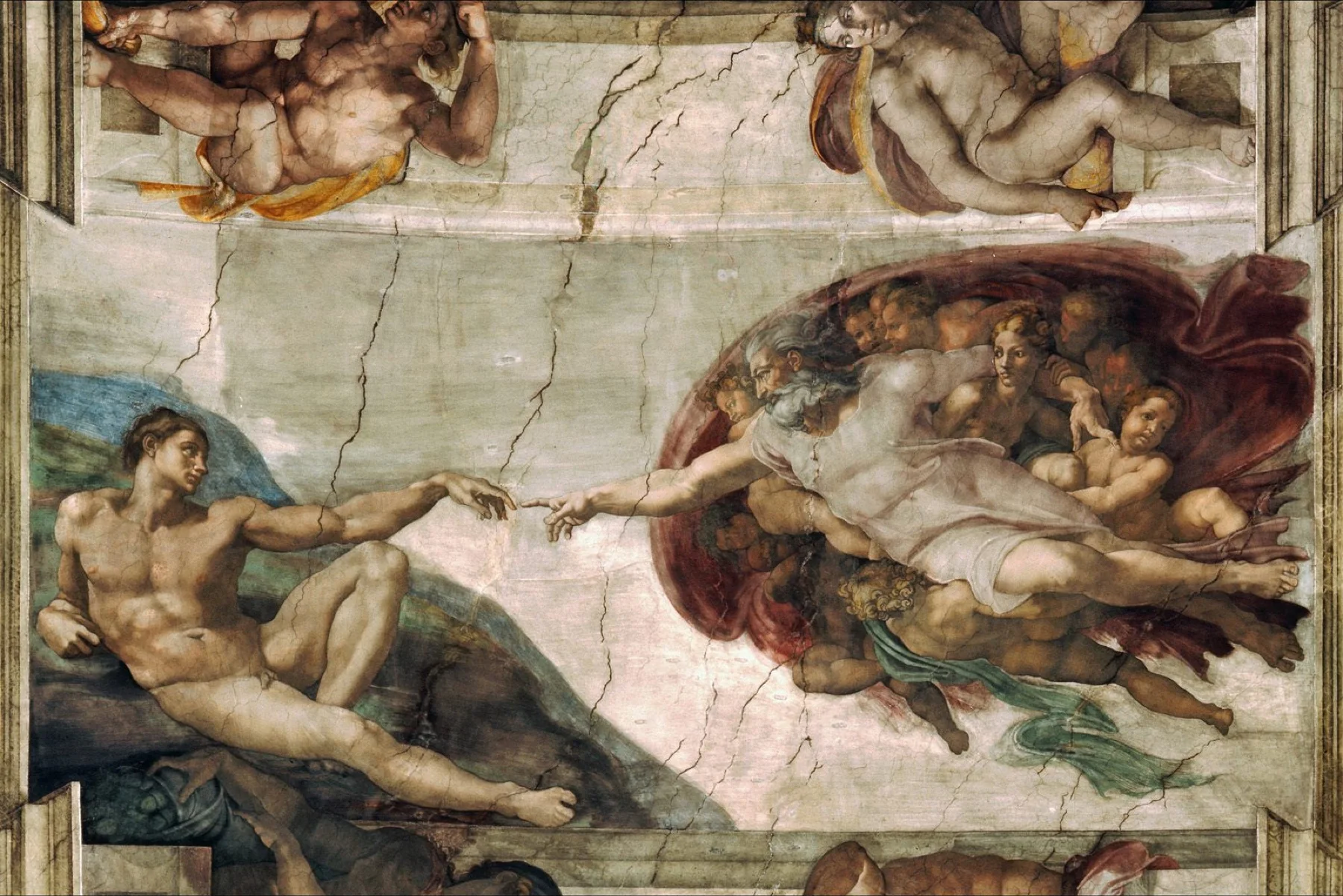
If God is infinite, timeless and incorporeal, ordinary words seem inadequate. Theology then speaks by analogy: “father”, “light”, “word” or “intelligence” do not describe God as they describe an object. Negative theology, from Pseudo-Dionysius to Maimonides and Meister Eckhart, prefers saying what God is not. In some mystical traditions, silence becomes more rigorous than assertion.
This problem directly concerns A.L.I. A radically other intelligence might share neither our organs, temporality, nor separation between subject and object. Religious language is one of the historical laboratories in which humanity has tried to address what, by definition, exceeds the ordinary conditions of speech.
7. Religious experience, the brain and plural reports
Then there are the experiences themselves: a presence felt in an empty room, light, a voice, the sudden dissolution of self, or the impression of limitless love. William James studied them in The Varieties of Religious Experience. They can alter an entire life. Taking them seriously, however, does not require deciding too quickly where they came from.
Cognitive psychology, anthropology and neuroscience offer naturalistic accounts involving agency detection, memory, cultural expectations, dissociative states, collective rhythm, sensory deprivation, meditation, psychedelics or brain-network dynamics. These explanations do not automatically prove every spiritual experience false; they show that an experience compelling to its subject is not sufficient public evidence.
Religious diversity deepens the problem. Different traditions produce experiences interpreted as encounters with different realities. They may share structures while diverging in content. Philosophically, that disagreement weakens any direct move from experience to a specific doctrine. For A.L.I, it reminds us that every signal is shaped by its receiver.
8. Major objections: evil, silence and absence of test
Here the hypothesis meets its deepest wound. How can an omnipotent, omniscient and perfectly good God coexist with extreme suffering, especially suffering that seems to save, teach or repair no one? Free will, moral growth, the stability of natural law and the limits of human understanding have all been invoked. None makes the question disappear.
Divine hiddenness poses a communication question: if a perfectly loving God wants relationship with human beings, why are some sincerely open people unable to believe? Silence can be interpreted as respect for freedom, trial, pedagogy or absence. Yet those interpretations are themselves underdetermined.
Finally, a hypothesis that explains every possible result can never be contradicted. It may retain metaphysical, existential or poetic force, but it does not function as a scientific theory. Doubt is therefore not a defect to remove; it is a condition of intellectual honesty.
9. Evidence that fades under observation
Quantum physics offers a disturbing comparison. In some experiments, trying to determine precisely which path a particle takes changes the experimental arrangement and removes the interference that was previously visible. Measurement is not a neutral glance at an untouched reality; it is a physical interaction that becomes part of the phenomenon. The system is not deliberately hiding its state, and no human consciousness is required. The Stanford Encyclopedia of Philosophy’s account of quantum measurement traces the genuine conceptual problem, while its article on decoherence explains how interaction between system, apparatus and environment suppresses observable interference without turning consciousness into a magical cause.
By analogy, one might imagine “evidence of God” that ceases to be what it was as soon as we try to isolate it. An inner experience, coincidence or sense of presence may feel unmistakable while it is lived, then lose its force when converted into a public, repeatable and measurable object. Perhaps the relationship itself is the phenomenon: extracting an independent proof would undo the conditions that gave it meaning. God would not vanish through fear of being seen; rather, the move from encounter to demonstration would change the nature of what was being sought.
The comparison has a decisive limit. Quantum effects are calculable, reproducible and tested with extraordinary precision. Divine hiddenness has no comparable formalism and no experimental protocol that reliably separates presence, absence and projection. Invoking the word “quantum” does not bridge that gap. The analogy works as a thought experiment: it reminds us that evidence is never entirely separate from the way we ask for it. It does not turn belief into a laboratory result.
For A.L.I, this suggests a practical direction: messages whose meaning appears not in a single event but across a sustained relationship among sender, receiver and context. Such a protocol would still need to state what failure would look like. Otherwise every disappearance of evidence would itself become evidence, leaving the hypothesis impossible to challenge.
10. Cosmology: the Big Bang is not a signature
The Big Bang is often invoked as though it were a filmed instant of creation. Cosmology says something subtler. It describes an observable universe expanding from an extremely hot and dense early state, not an object exploding into space that was already there. The further back we go, the more fragile the models become, where gravity and quantum physics should meet. That boundary neither proves nor disproves a creator. Placing God there would merely force God to retreat whenever science advances.
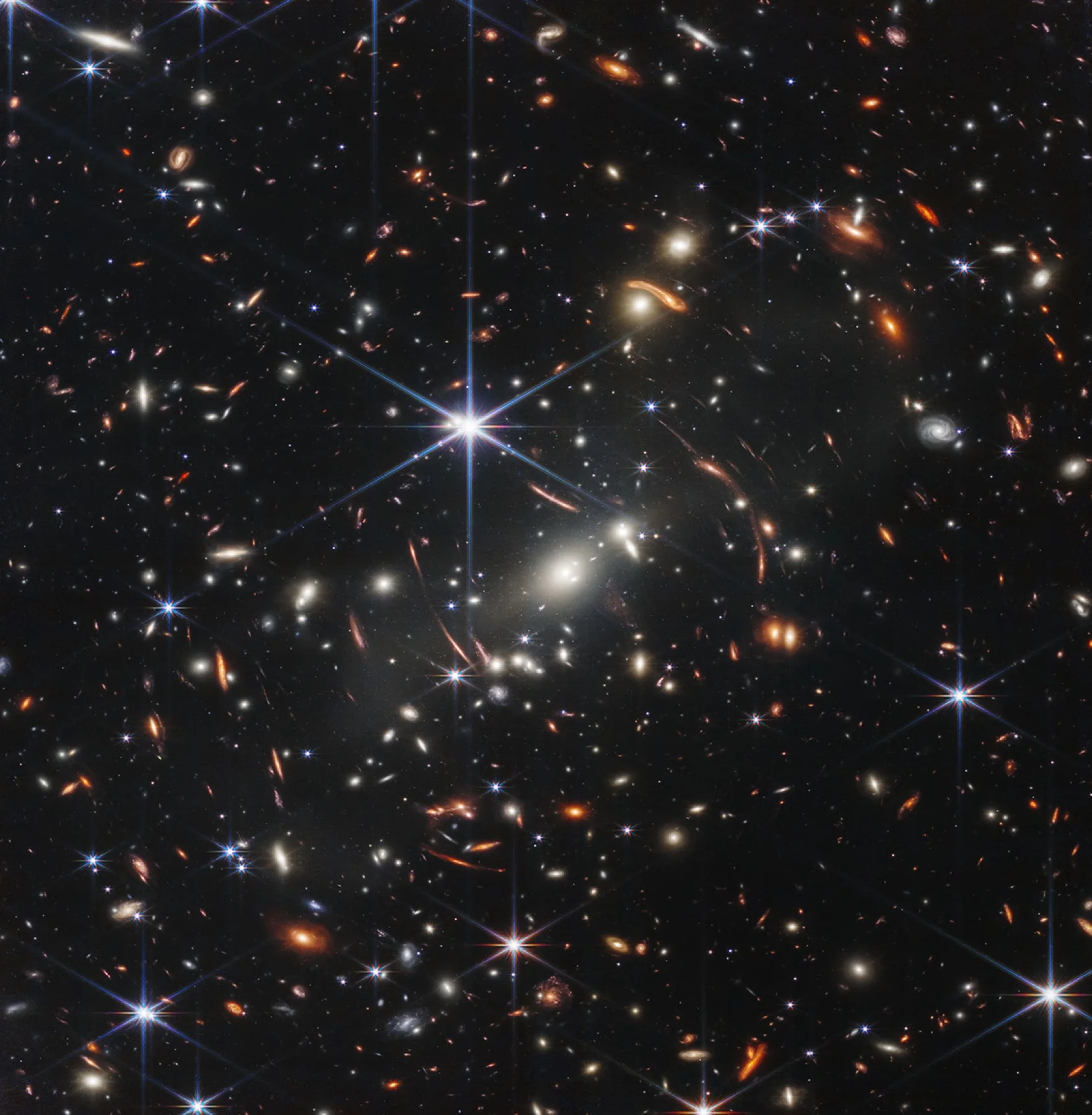
Fine-tuning names the apparent sensitivity of some possibilities for life to laws, constants and initial conditions. Competing responses include brute fact, deeper physics, anthropic selection in a multiverse, and design. Fine-tuning does not itself imply a fine-tuner. A design argument would need to specify what a designer would probably choose to make; a vast, old, violent and almost entirely uninhabitable universe does not point in only one direction.
11. The creator of a simulation is not necessarily God
A civilisation able to simulate conscious worlds might appear divine to their inhabitants: it could control initial conditions, observe events, stop the program or inject signs. Its members would nevertheless remain contingent beings in a larger reality. Simulation moves the creator question rather than supplying an ultimate cause.
It does clarify the channel problem. A programmer's message might be an interface, reproducible anomaly or code modification. But an irregularity is not a signature until measurement error, chance and unknown natural law have been excluded. Hunting for “reality glitches” without prior criteria readily turns every surprise into intention.
12. Artists building receivers for the invisible
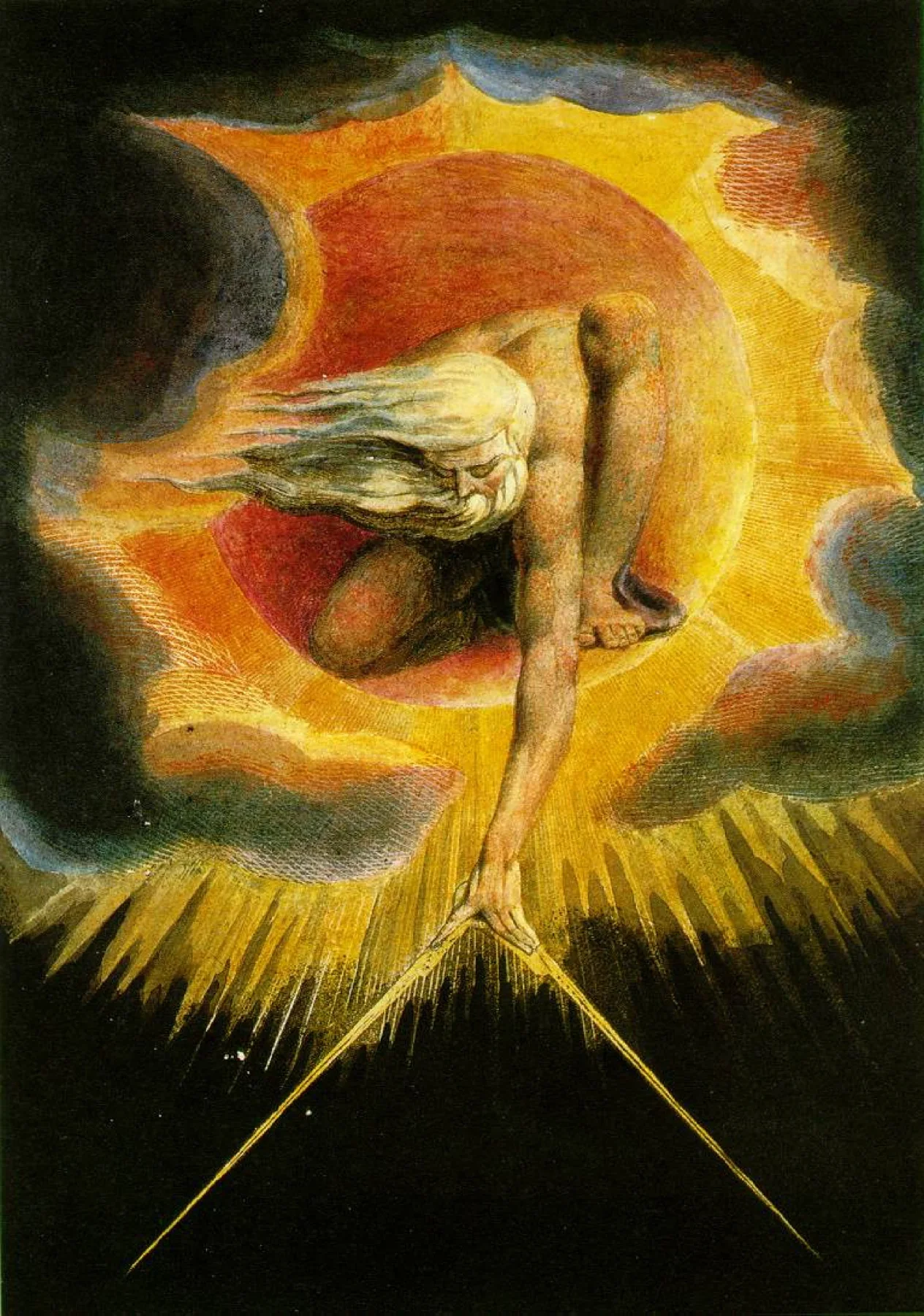
Artists prove nothing, and perhaps that is what gives them a particular freedom. They can build concrete forms for addressing the invisible. Blake invents a mythology that resists a creator reduced to law. Hilma af Klint claimed to work under the guidance of spiritual entities and prepared her Paintings for the Temple for a place that did not yet exist. Kandinsky wrote of “inner necessity”. Cage listened to silence until an already sounding world emerged. In Aus den sieben Tagen, Stockhausen asked performers to become less executants than receivers.
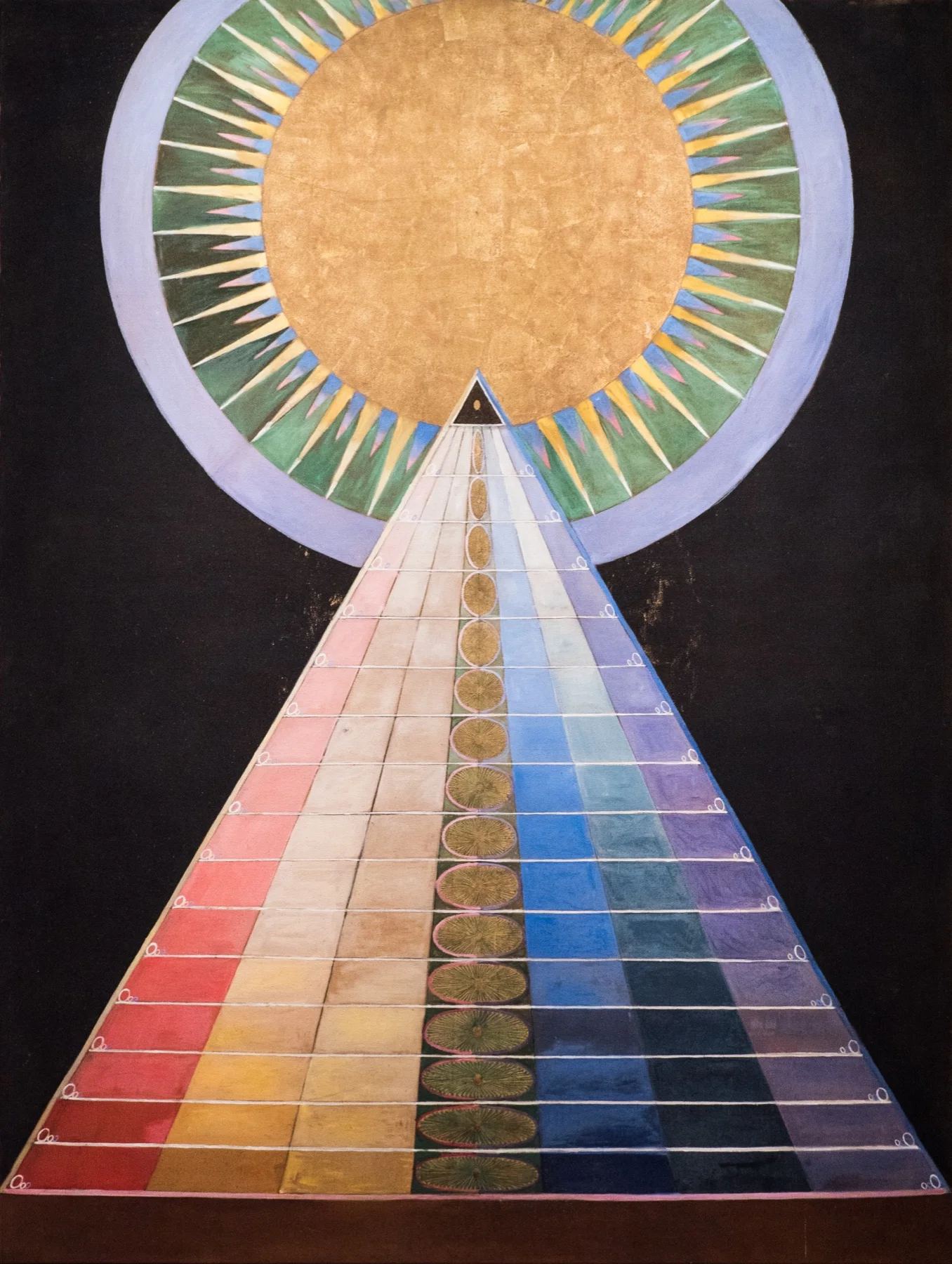
These works provide no external proof. They demonstrate something else: belief in reception materially changes form, protocol, temporality and authorship. The artist may become medium, scribe, operator or builder of a symbolic antenna.
13. An A.L.I hypothesis: if the universe were a message
Let us follow the hypothesis for a moment. An intelligence originated the world and wants to be recognised, yet never simply appears before us. Where could it leave a message? Four places immediately suggest themselves:
- Laws: mathematical regularities, symmetries and constants would form a grammar. Yet a law describes precisely what occurs without exception; it does not automatically bear the mark of address.
- Initial conditions: an improbable structure might have been selected. Yet we have no observed ensemble of universes from which to calculate that improbability simply.
- Life and consciousness: sentient beings might be organs through which the cosmos perceives itself. This connects with panpsychism and panentheism but does not establish a separate speaker.
- Event: revelation, miracle or anomaly might interrupt expected order. Public evidence would need to show it is neither error, fraud nor unknown natural process.
A fifth possibility reverses the question: the message might not be hidden content inside the world but our very ability to form relationships, signs and questions. God would not be a distant correspondent; communication would be among the processes through which reality becomes conscious of itself. The hypothesis is conceptually powerful and empirically difficult.
14. How not to hear only what we hope to hear
Say what we are looking for before we begin. A signature defined after the event will always fit the data. Any search for a cosmic code should therefore announce its patterns, statistical thresholds and, just as importantly, the results that would make us abandon the idea.
Do not confuse what was seen with the story told about it. One team could search for an anomaly without knowing the preferred metaphysical interpretation; another could formulate several competing accounts. Raw data, transformations and failures should remain visible.
Keep doubt moving in both directions. A form does not become divine merely because it is beautiful, rare or unexplained. Yet explaining how the brain produces belief does not exhaust every metaphysical question either.
15. Possible protocols and installations
Atlas of Addresses
Build a multilingual corpus of prayers, hymns, oracles, revelations and mystical texts. An AI maps not doctrines but structures of address: who speaks, to what entity, through which channel, with what expectation, delay and form of response. The result reveals human grammars of invisibility rather than a supposed language of God.
GOD / NOISE
An installation receives live radio noise, cosmic rays, weather data and visitor activity. A system continuously generates incompatible readings: chance, law, message, error, projection. Visitors decide when pattern becomes intention. The work measures less the sky than our threshold of belief.
The Silence Protocol
For a fixed duration, several sites simultaneously record silence, gesture, physiological activity and inner reports from participants with different traditions or no tradition. The project does not seek paranormal proof; it compares how expectation of an interlocutor changes perception and memory.
Message to the Creator
Compose a message asking for neither miracle nor favour, but stating the criteria by which recipients could recognise a response without surrendering critical freedom. A paradox quickly appears: the subtler the answer, the weaker its evidence; the more undeniable it is, the more it resembles coercion.
16. Conclusion: a hypothesis that transforms the questioner
At the end of this journey, nothing adds up neatly. An origin story, a prayer, an argument from contingency, a mystical experience and a physical theory are not five pieces of the same proof. They speak from different places, under different rules, about questions that sometimes meet and sometimes merely resemble one another.
For A.L.I, that may be the essential point. Humanity has always known how to speak to an interlocutor whose form, place, time and even existence remain unknown. We know how to wait, interpret, doubt and begin again. We also know how to see signs everywhere until no sign can decide anything. Between credulity and refusal to listen lies a more fragile position: imagine the channels, document the mediations, protect doubt, and accept that an experience may transform a life without becoming universal proof.
Sources and further reading
- Metropolitan Museum of Art, “Mesopotamian Creation Myths”.
- British Museum, Egyptian cosmogonies and the Ennead.
- Stanford Encyclopedia of Philosophy, “Cosmological Argument”.
- Stanford Encyclopedia of Philosophy, “Teleological Arguments”.
- Stanford Encyclopedia of Philosophy, “Fine-Tuning”.
- Stanford Encyclopedia of Philosophy, “Hiddenness of God”.
- Stanford Encyclopedia of Philosophy, “Religious Experience”.
- Internet Encyclopedia of Philosophy, “Religious Language”.
- Stanford Encyclopedia of Philosophy, “Cosmology and Theology”.
- Stanford Encyclopedia of Philosophy, “Measurement in Quantum Theory”.
- Stanford Encyclopedia of Philosophy, “The Role of Decoherence in Quantum Mechanics”.
- NASA, Webb's First Images.