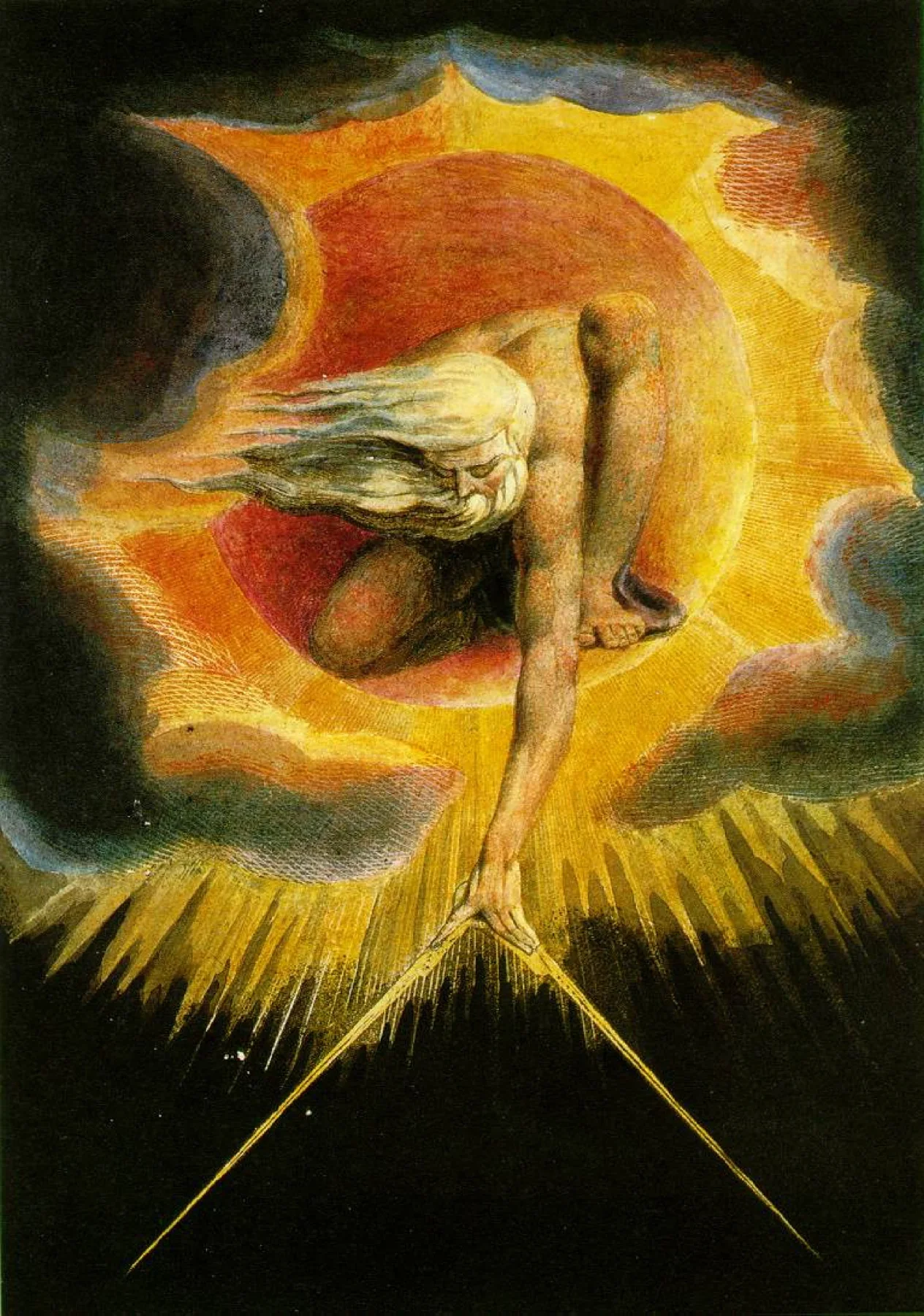
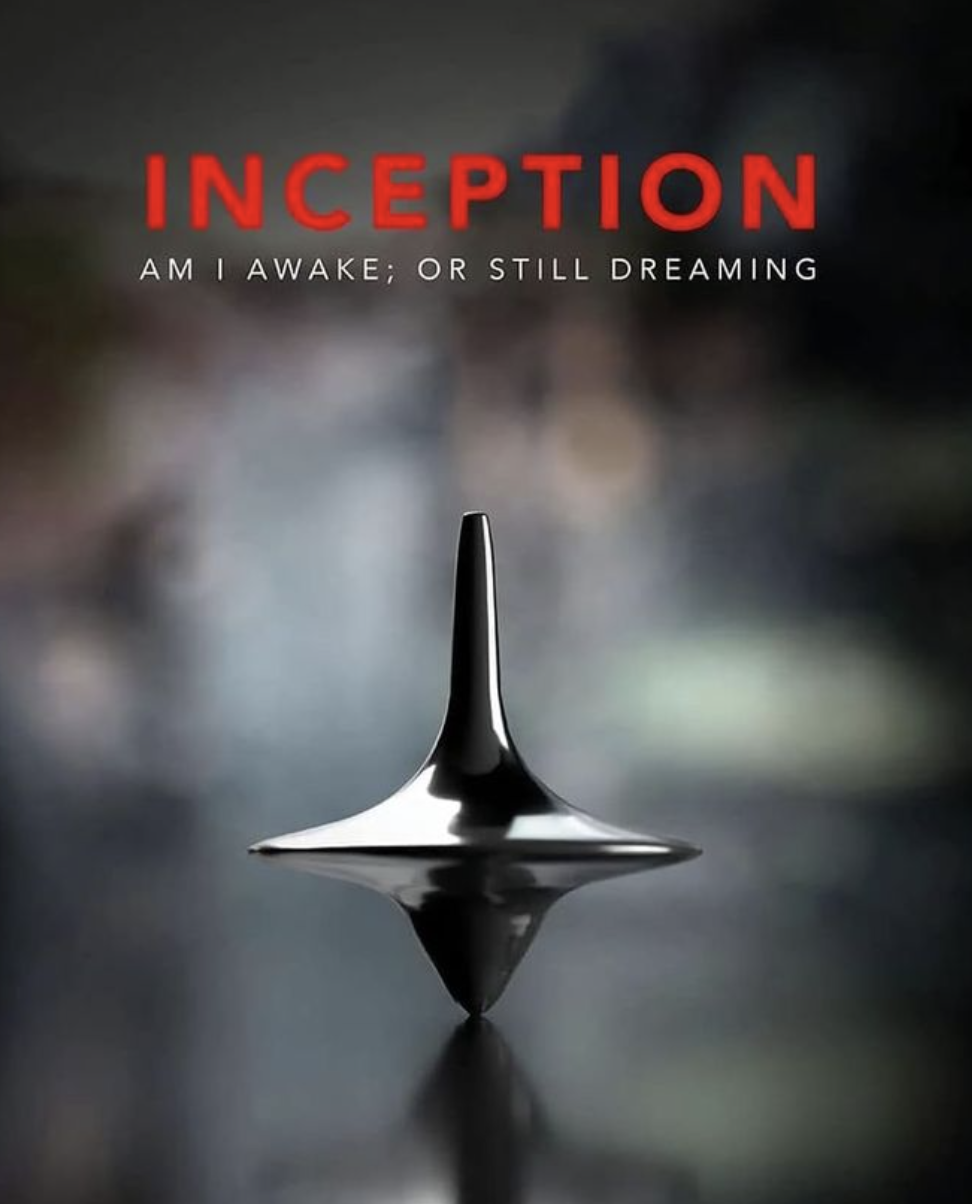
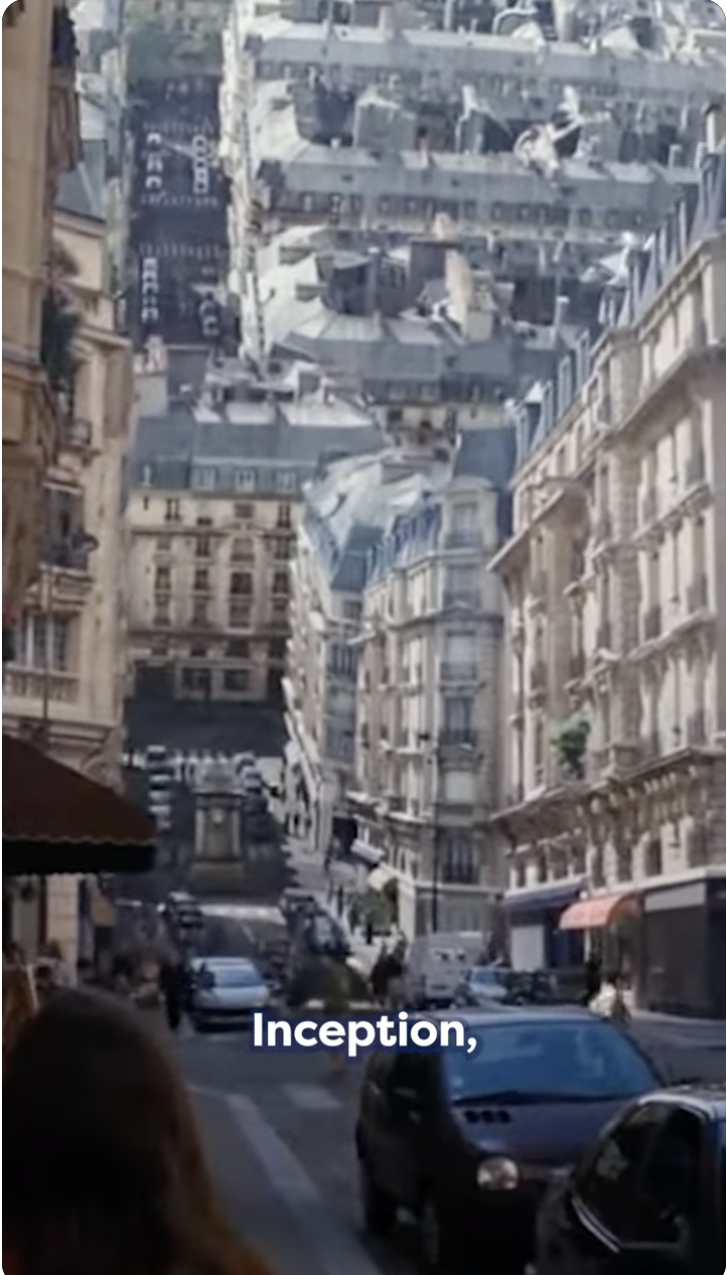
Christopher Nolan's Inception gives A.L.I a powerful image: dreaming is not only an inner fiction, but a constructed, shared, traversed, sometimes attacked and sometimes encoded space. The film imagines nested dream levels, where each layer modifies time, memory and causality.
If A.L.I searches for communication forms between different intelligences, dreaming becomes a fascinating laboratory. It does not work like a clear sentence. It combines images, emotions, fragments, symbols, architectures and transformations. This nonlinear quality may be precisely what makes it useful for thinking about a non-human message.
1. Inception: information inside a mental space
In Inception, the central idea is that information can be planted deep enough in the mind to be mistaken for a personal thought. The film is not simply about telepathy. It is about mental architecture: building a world, placing a clue inside it, designing a path and making an idea feel internal.
This meets an essential A.L.I question: must an extraterrestrial message always be an external signal? Or could it take the form of a mental image, a recurring pattern, a structure that recomposes itself inside the receiver's mind?
Dreaming, in this hypothesis, becomes a translation channel. It does not only transmit words. It transmits scenes, atmospheres, relations and spatial forms. It can carry a message that cannot be reduced to a sentence.
2. Fractals: repeating a form across scales
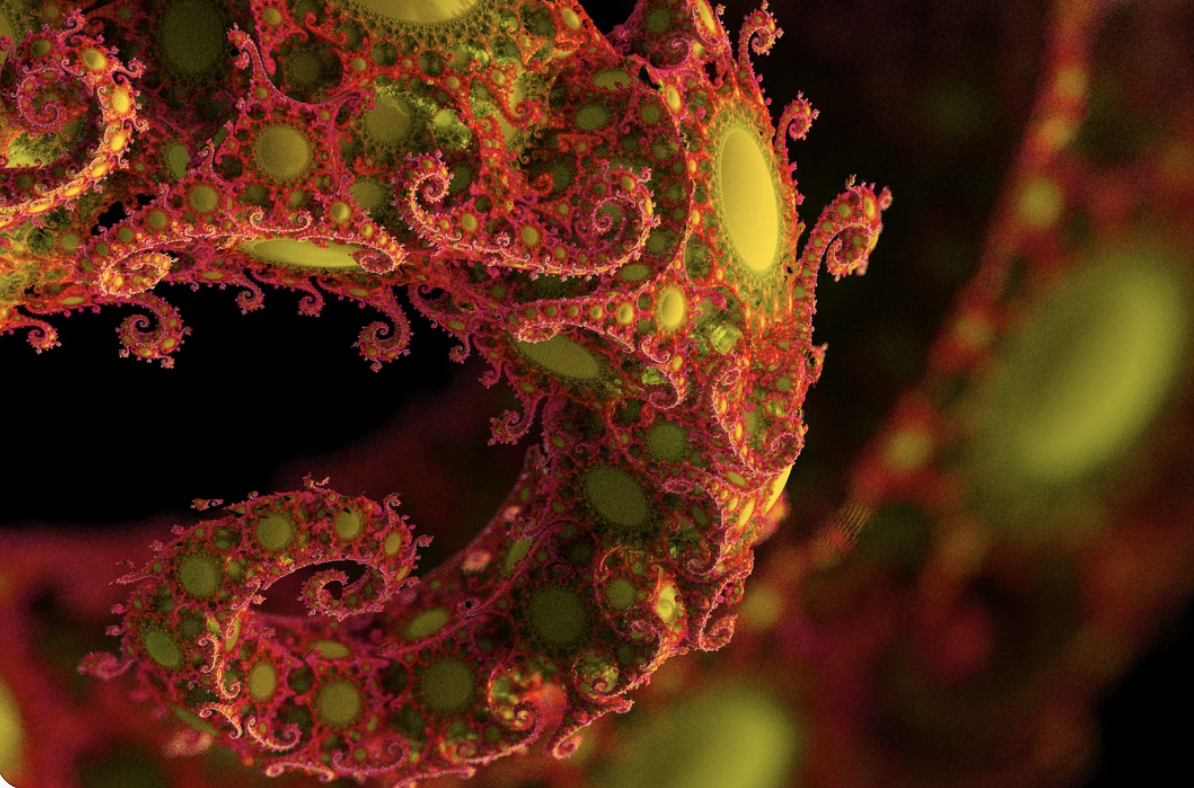
Fractals, associated in particular with Benoît Mandelbrot, are forms where a motif repeats at different scales. A coastline, a cloud, a fern, a vascular network or the Mandelbrot set can display this logic: each level recalls the whole without being a simple copy.
The link with dreaming is immediate. In a dream, a detail can contain an entire scene. A door opens onto an impossible place. A sentence returns as an object. An image becomes architecture. As in a fractal, meaning is not only local: it circulates between scales.
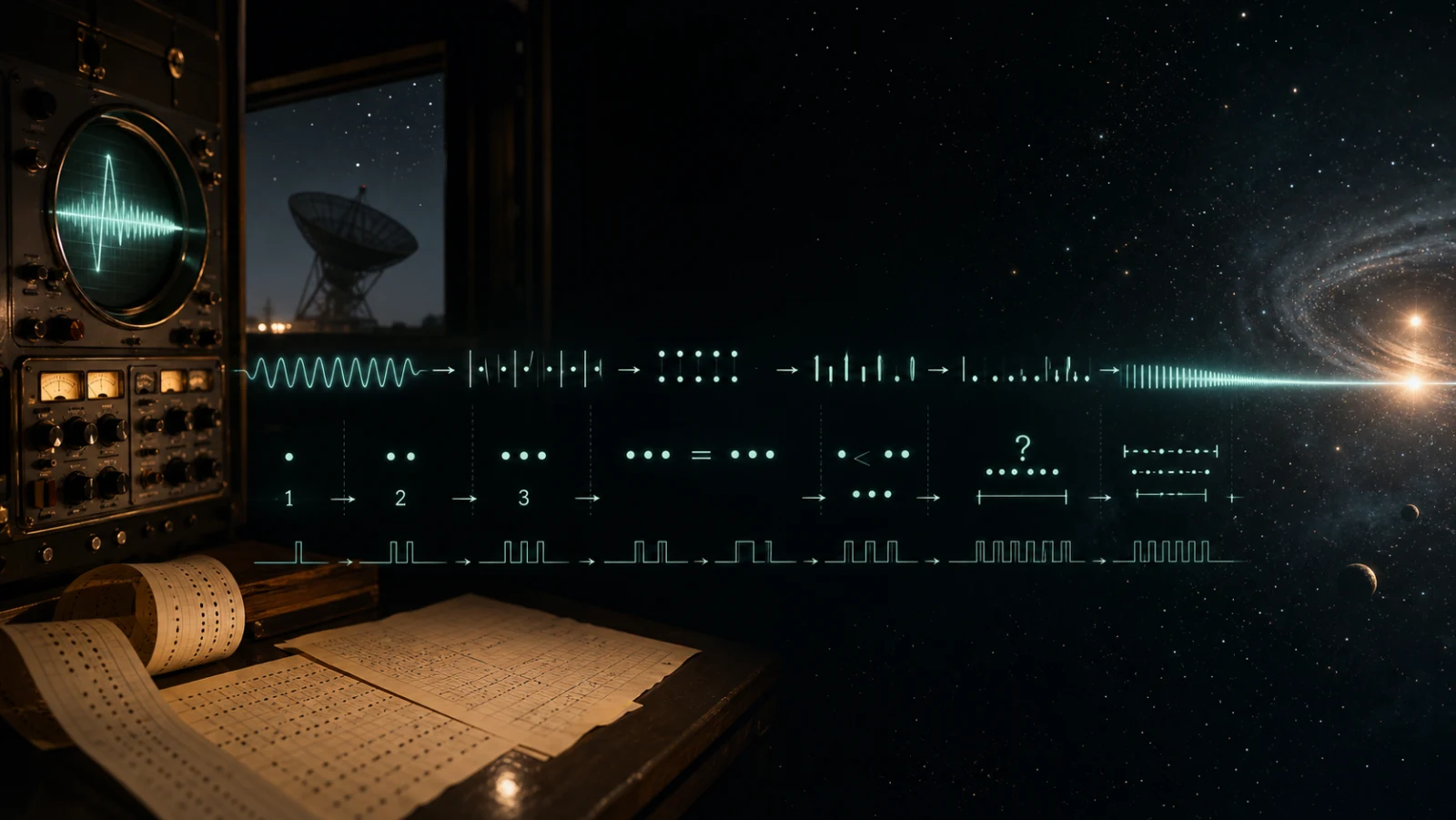
For an interstellar language, fractals could become an encoding principle: the same message inscribed in a sound, an image, a geometric form, a light sequence and a narrative structure. If the receiver does not understand one level, it may recognize the motif at another.
3. Dreaming as a communication interface
Contemporary research on lucid dreaming shows that, in some cases, limited dialogue with sleeping people is possible. Experiments published in Current Biology showed that lucid dreamers could answer simple questions during sleep through coded eye or muscle movements. Dreaming is therefore not completely closed.
Dormio, developed around the MIT Media Lab, explores targeted dream incubation: influencing dream content through stimuli during sleep onset. These works do not prove exotic communication, but they open a territory: dreaming can become a partly programmable, reactive space crossed by external signals.
From an A.L.I perspective, this changes the frame. A message would no longer be sent only to an antenna or telescope. It could be sent to a state of consciousness: sleep, hypnosis, deep meditation, lucid dreaming or the threshold between waking and sleeping.
4. Fractal architecture of the message
One can imagine a dream-communication protocol in several layers:
- a sonic layer: pulses, phonemes, frequencies, incomplete words;
- a visual layer: simple forms, spirals, doors, maps, symbols;
- a spatial layer: recurring places, rooms, staircases, folded cities;
- an emotional layer: fear, trust, curiosity, alert;
- a fractal layer: the same motif reappears at each level in another form.
The receiver does not receive a text. They move through a structure. The message is the experience itself: repetition, recognition, change of scale, transformation.
5. Communicating with a non-human intelligence
If an extraterrestrial intelligence shares neither our biology, nor our vocalization, nor our graphic conventions, dreaming could offer a space less dependent on verbal language. It already works with unstable images, associations, analogies and metamorphoses.
This does not mean that dreaming is a magical channel. We should remain precise: we do not know how to communicate with extraterrestrials through dreams. But conceptually, dreaming lets us imagine a language that is neither alphabetic, nor purely mathematical, nor only sonic. A language that passes through lived forms.
The fractal then becomes a method of robustness. If the message must cross an unknown biology, it can multiply its chances of being recognized by repeating its structure across several media: visual motif, rhythm, architecture, narrative and sensation.
6. Inception reversed: not planting an idea, but letting a structure be recognized
In the film, inception means planting an idea. For A.L.I, the gesture should almost be reversed. It would not be about manipulating a mind, but about creating a structure clear enough for another intelligence to recognize an intention.
An ethical dream message should not force. It should propose. It should leave clues, repetitions, thresholds and exits. It should be decodable without capturing the receiver.
Dreaming then becomes a cautious contact space: neither invasion nor simple technical broadcast. A resonance chamber where mental imagery becomes an intermediary between two worlds.
7. A.L.I research paths
- Create an audio-visual sequence for sleep onset, where a fractal motif returns as sound, image and language.
- Build an immersive installation inspired by Inception: a room inside a room, a dream inside a dream, a message in layers.
- Test collective dream journals: if several people encounter the same motif before sleep, do shared structures emerge?
- Develop a fractal alphabet: each sign contains a reduced version of the whole system.
- Compare lucid dreaming, hypnosis and meditation as states of amplified reception.