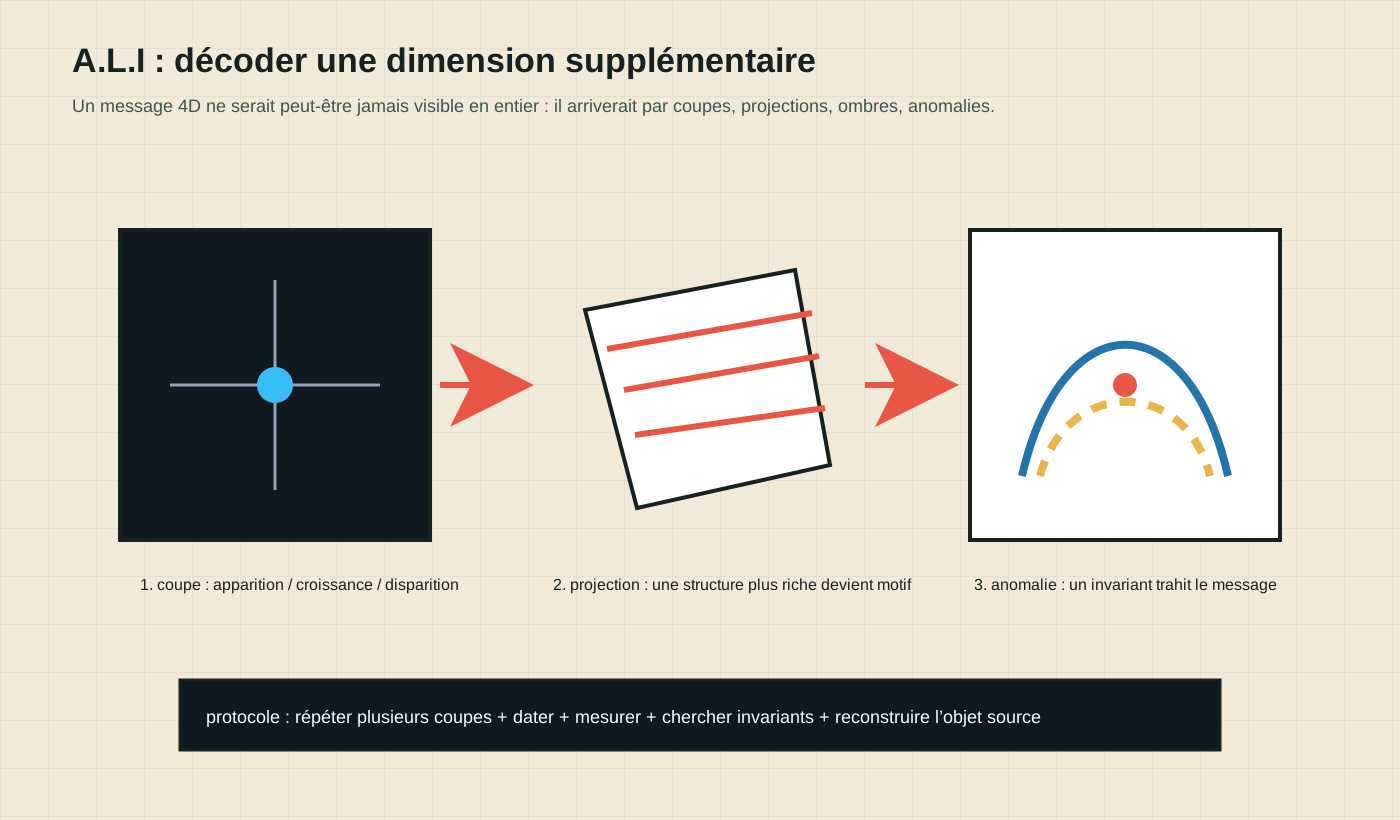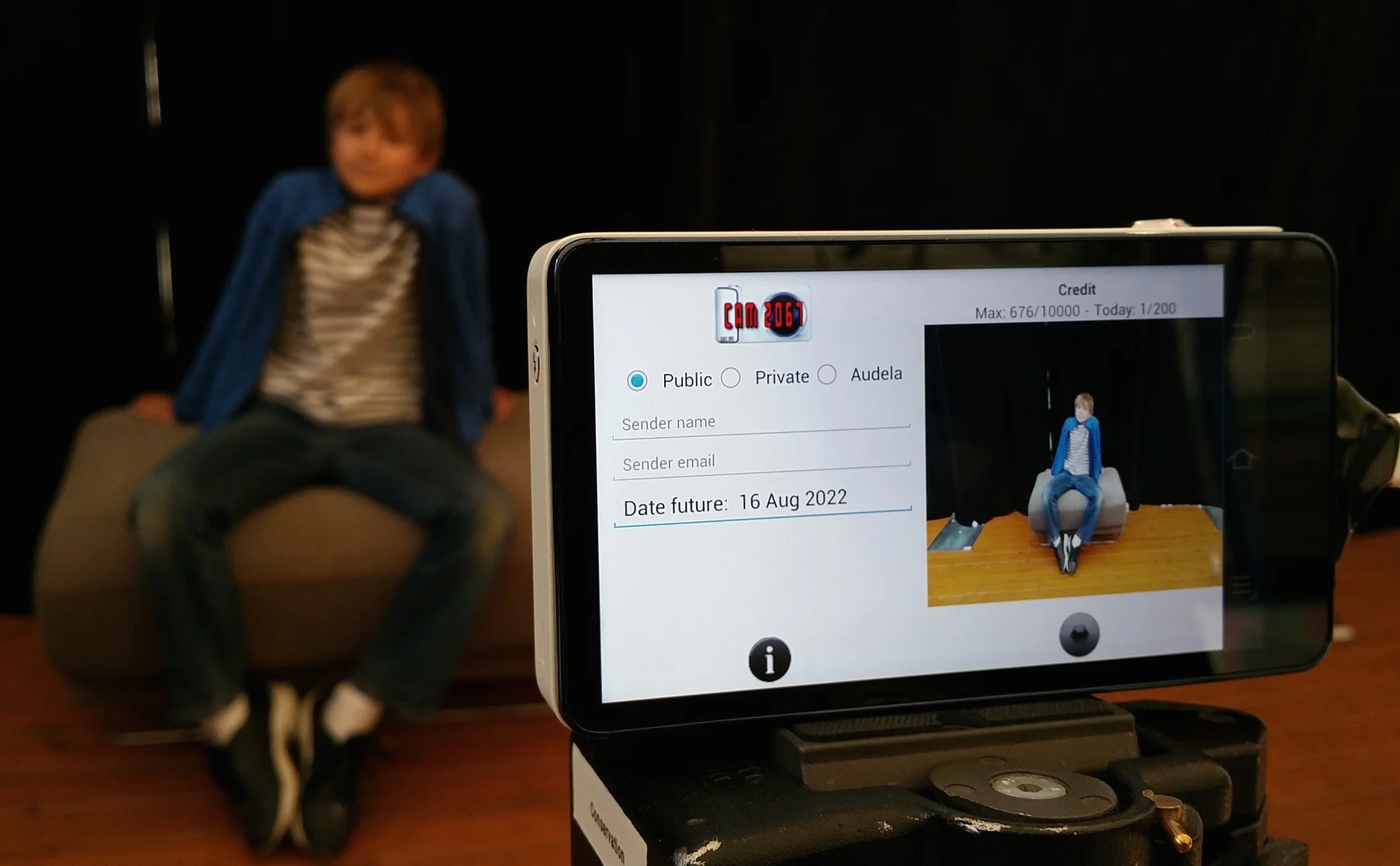
Christopher Nolan’s Interstellar offers a powerful idea for A.L.I: a message may not only be sent through space. It may be addressed through an additional dimension, using an ordinary object as a reading interface: a bookshelf, dust, a watch, a hand.
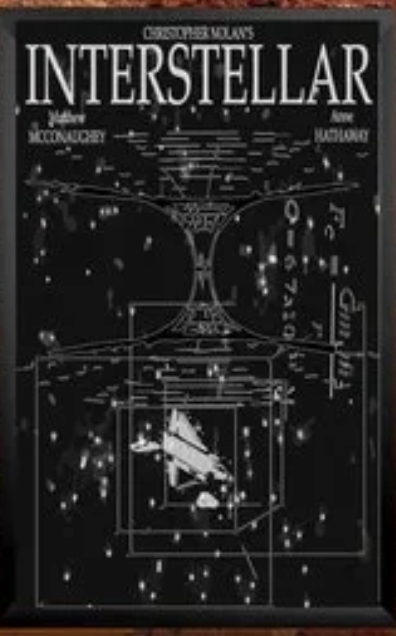
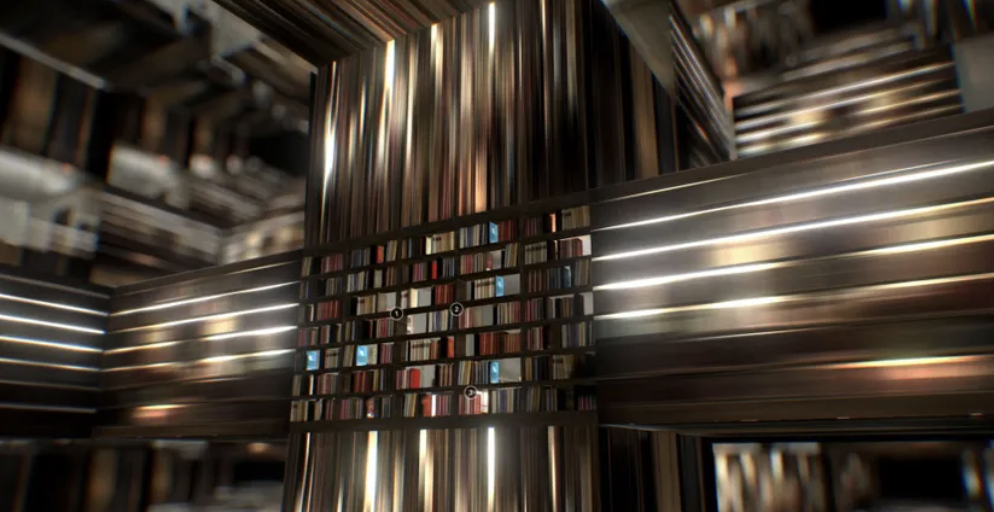
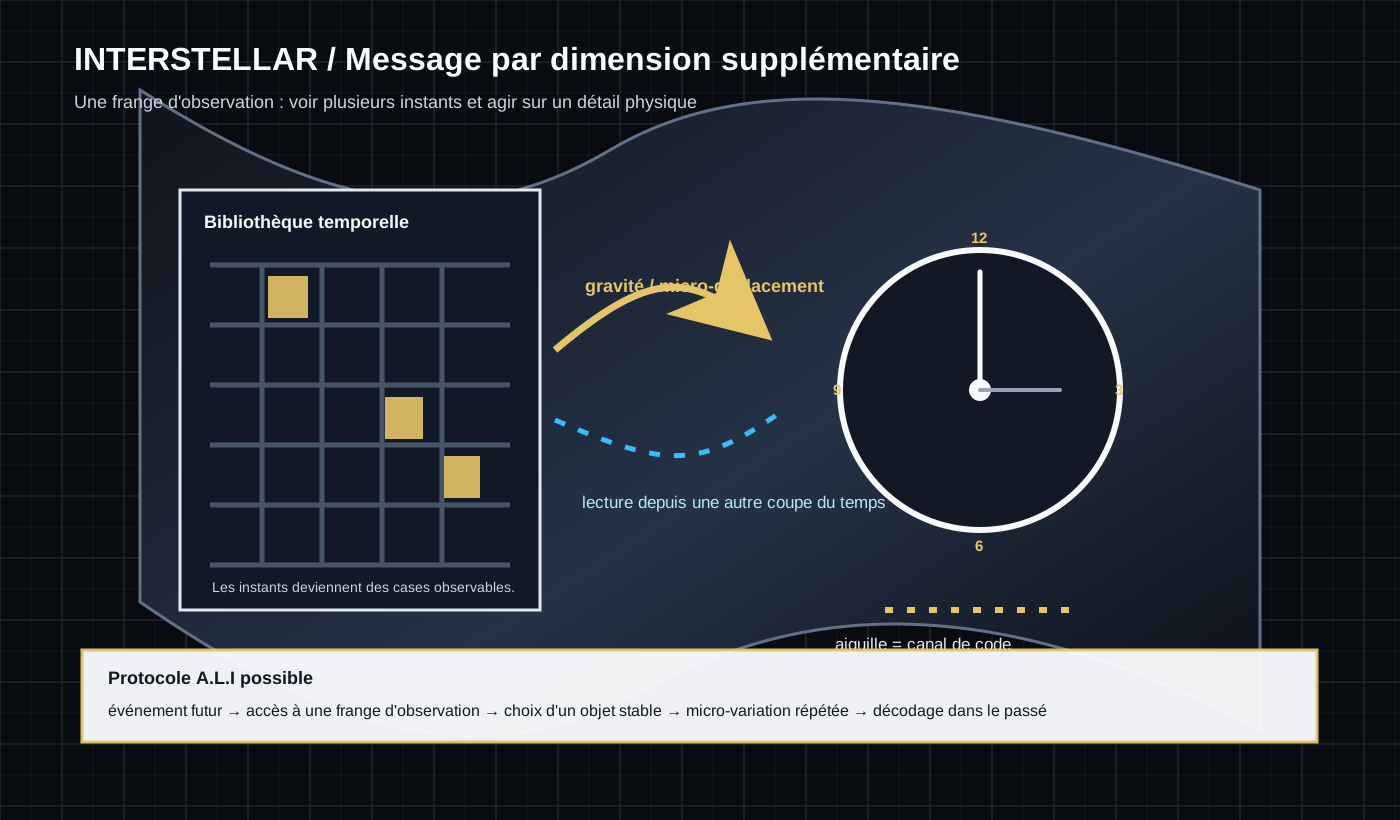
In the film, Cooper enters a hyperdimensional structure often called the tesseract. He does not see time as a line, but as a set of accessible moments. Murph’s bedroom becomes a readable facade of time: each instant is like a cell, a shelf, a slice. Cooper cannot simply speak. He acts through gravity on very specific objects.
The Narrative Principle
The film articulates three moments of communication. First, dust lines in Murph’s bedroom become a binary message: they indicate coordinates. Then the bookshelf transmits the word STAY in Morse code through falling books. Finally, the watch becomes the finer channel: the second hand encodes data in Morse, long enough for Murph to read it.
physical anomaly → observable pattern → coding → human interpretationThe essential point is that the message does not arrive as an already written sentence. It appears as a disturbance. Someone must suspect that the anomaly is not random, then translate it.
The Fourth Dimension as Reading Space
In ordinary experience, we are caught inside time. We move with it. In Interstellar, the tesseract gives the character a different relation: he can observe several moments as if time had become spatial. This is not only “seeing the past”. It is identifying an observation fringe: a zone where a being located elsewhere in the structure of time can read, choose and act.
For A.L.I, this notion is precious. An interdimensional message might not be a direct transmission, but a local, repeated, detectable modification inside a stable object.
The Interface Object: Why a Watch?
The watch is ideal because it already has a language of time. It has a hand, a rhythm, a scale, repetition. If the hand deviates in a regular way, it becomes a channel. A short deviation can become a dot. A longer deviation can become a dash. Morse works because it turns temporal variation into alphabet.
short deviation → dot
long variation  → dash
short pause      → next letter
long pause       → next word
The brilliance of the scene is there: the message does not need a screen. It slightly parasites an object already designed to measure time.
Observation Fringe
We can call “observation fringe” the zone where two regimes touch: our linear world and a structure capable of seeing several instants. Inside that fringe, the message must be very simple. It cannot depend on a complex conversation. It must use a robust, repetitive, interpretable support.
| Support | Possible variation | Reading | A.L.I use |
|---|---|---|---|
| Dust | lines, clusters, spacing | binary, coordinates | minimal spatial message |
| Book | fall, order, rhythm | Morse or event alphabet | alert, injunction, sign |
| Watch | micro-deviation of the hand | Morse, long data | patient transmission |
| Light | blink, intensity | discrete signal | observable beacon |
| Sound | pulse, frequency | temporal code | biological interface |
Extrapolation: Possible Prototypes
1. The A.L.I watch. A watch or clock whose hand can be moved by micro-impulses. The user enters a text; the system converts it into Morse or binary code; the hand replays it very slowly. It is not a message to the past, but a physical simulation of a message readable through time.
2. The coded bookshelf. A row of motorized, magnetic, or light-based books. Each book becomes a bit. A fall, shift, displacement or light creates an alphabet of events. The viewer must understand that domestic space has become a transmission medium.
3. Binary dust. A vibrating or electrostatic plate organizes dust, sand or iron filings into lines. The produced image can encode coordinates, a formula, a prime-number sequence or a minimal A.L.I message.
4. The software tesseract. An interface shows several instants of the same room, like stacked slices. One clicks an object in a temporal slice, and the program calculates how a micro-action could become readable in another slice. The point is not to prove a fourth dimension, but to think a grammar of nonlinear communication.
Coded Message and the Ethics of Paradox
The film relies on a loop: Cooper causes in the past the signs that led to his own departure. For A.L.I, this loop is fascinating but dangerous as a model. A temporal-message protocol must avoid confusing sign, belief and causality. Fiction can be used as a thinking tool without claiming that such a channel physically exists.
The real question becomes: if a message cannot arrive as a sentence, which objects in our world could reveal intention? A watch? An antenna? A screen? Dust? An animal? Architecture?
Toward an A.L.I Protocol
1. choose a stable and familiar object
2. define a measurable micro-variation
3. repeat the variation according to a simple code
4. include a synchronization pattern
5. allow several reading levels: rhythm, binary, text, data
6. archive the observation with date, angle, noise, error
7. keep visible the border between phenomenon and interpretation
From this perspective, Interstellar is not only a film about space. It is a film about choosing a medium. Contact is not a spectacular apparition. It is a difficult, fragile reading inside an ordinary object that starts behaving differently.
Sources
- Hamilton / Swatch Group: context for Murph’s watch and the Morse message in Interstellar.
- Hamilton - Khaki Field Murph: the watch inspired by the film and the Morse “Eureka” inscription.
- Colossal - tesseract scene: elements on the tesseract scene and its visual device.
- Movies & TV StackExchange: discussion of the watch, gravity and the coded signal.
LABO question: if an intelligence could only act on our world through micro-variations, which object would it choose so that we understand it is a message?