The Turing test does not prove that a machine thinks: it organises a situation in which the difference between two interlocutors becomes difficult to establish. For interstellar communication, the question must be reversed. Instead of asking whether an extraterrestrial can pass as human, we should ask whether an exchange progressively reveals an autonomous intelligence capable of modelling us, correcting our errors, and building a shared language with us.
A.L.I calls this extension the interstellar Turing test. It is not a single trial, but a cumulative protocol intended to distinguish a genuine response from an echo, a natural phenomenon, terrestrial interference, or a projection generated by our own artificial-intelligence systems.
1. Turing: computing, decrypting, imitating, and generating form
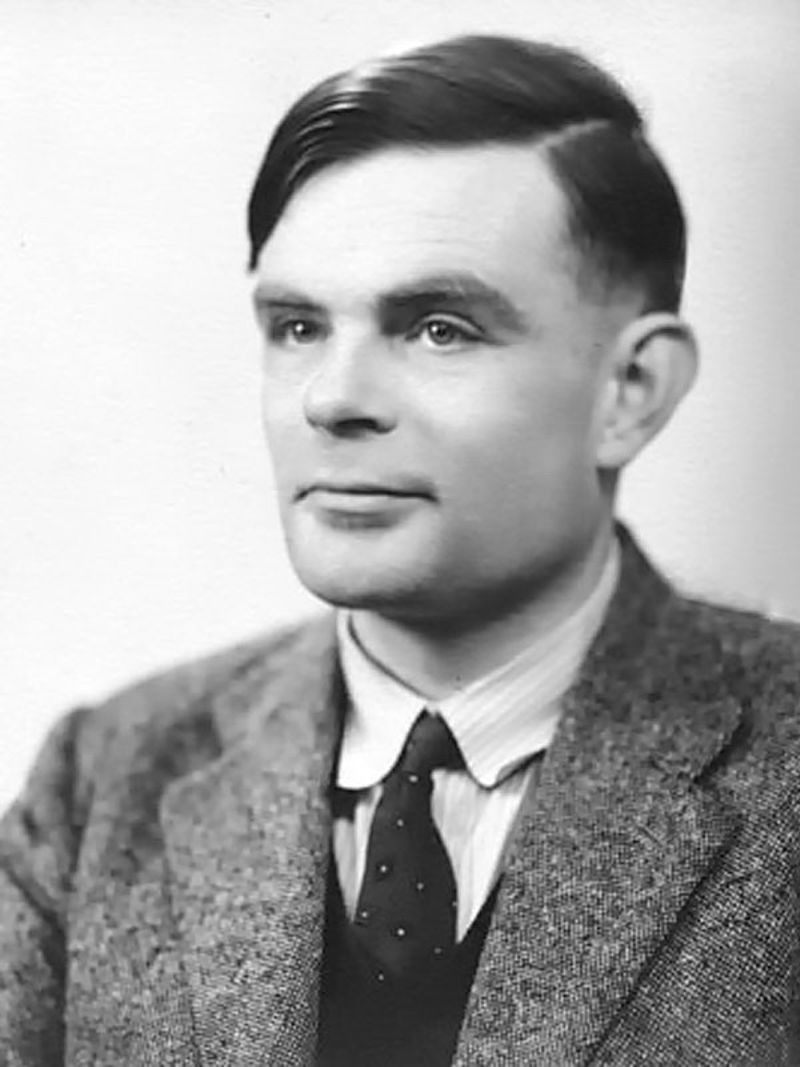
In 1936, Alan Turing described an abstract machine able to execute any operation expressible as a sequence of instructions. This universal machine did more than anticipate the computer: it also established a limit, because some questions cannot be decided by any general algorithm. From the outset, his work joined computational power to an awareness of what escapes it.
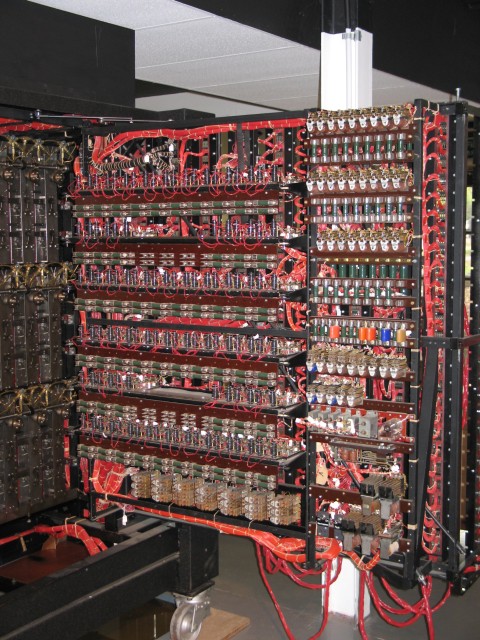
During the Second World War, Turing worked at Bletchley Park on Enigma cryptanalysis. The British Bombe, developed with Gordon Welchman and grounded in earlier Polish cryptological work, automated the search through possible settings. The lone-genius myth is misleading: codebreaking was collective intelligence combining mathematics, engineering, linguistics, intelligence work, and human procedure.
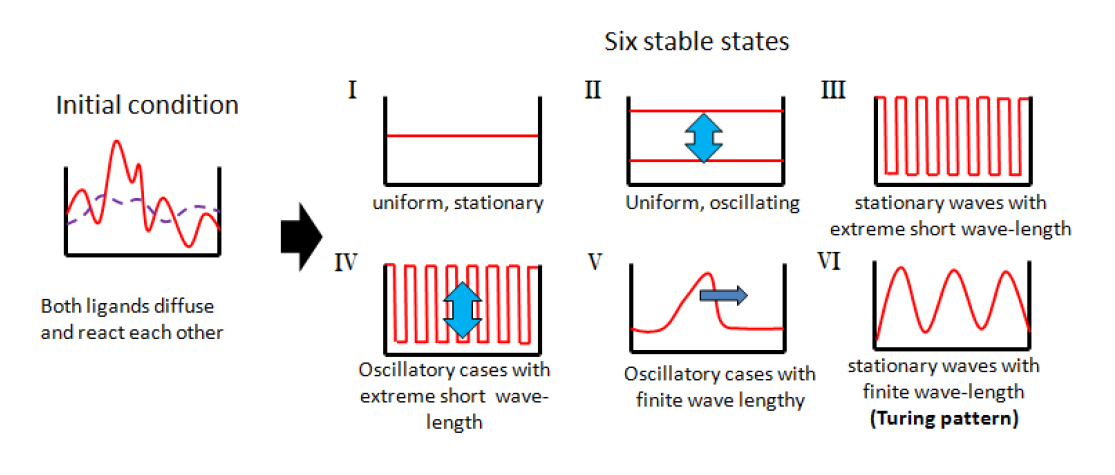
In 1950, Computing Machinery and Intelligence replaced “Can machines think?” with an observable game. In 1952, Turing’s paper on the chemical basis of morphogenesis showed how biological patterns can emerge from local interactions. Formalisation, decoding, testing, and emergence already form a method for A.L.I.
2. What the imitation game actually measures
In the game’s initial form, an interrogator tries to distinguish a man from a woman through written answers. Turing then changes the roles and asks whether a machine can take one participant’s place. The text-only channel removes body, voice, and appearance so that judgement concentrates on the exchange.
The test is operational. It defines neither thought, consciousness, nor understanding; it examines a situated performance. Success means that a system commands conversational expectations well enough to make its origin undecidable for a given period. It does not demonstrate identical inner lives.
This shift is both strength and weakness. Turing avoids an insoluble metaphysical dispute, but the criterion rewards human imitation. An extraterrestrial civilisation might fail precisely because it is too different: different body, memory, causality, objects, or temporality.
3. Difference at the centre of the test
The original framework makes identity and passing part of the protocol. This resonates painfully with Turing’s life: in 1952 he was convicted for homosexuality and subjected to hormonal treatment. A simple biographical reading would be irresponsible; the 1950 paper is not a direct commentary on his persecution. Yet the device forces us to ask who defines normality and under what conditions difference becomes acceptable.
Emmanuel Levinas argues that the Other exceeds the categories used to grasp them. Jakob von Uexküll shows that every living being inhabits a perceptual world of its own. Donna Haraway invites us to think relations that do not rest on prior identity. An interstellar test should not ask “Are you like us?” but “Can we establish that something other participates in constructing this exchange?”
4. Objections anticipated by Turing
Turing considered theological refusal, mathematical limits, consciousness, Lady Lovelace’s claim that a machine can originate nothing, the continuity of the nervous system, and the informality of human behaviour. He even mentioned extrasensory perception, not as validation but as an ironic complication that might disrupt the experiment.
The lesson is methodological: a serious test must include the reasons why it could be wrong. For A.L.I these include natural periodicity mistaken for intention, echoes of our own transmissions, human interference, contaminated data, a response forged by terrestrial AI, or the retrospective selection of one pattern among billions.
5. From the Chinese Room to large language models
In 1980, John Searle imagined a person manipulating Chinese signs according to a rulebook without understanding them. Correct answers could emerge while the operator knew no Chinese: syntax alone would not entail semantics. Joseph Weizenbaum’s ELIZA had already shown how readily users attribute understanding to a simple dialogue system.
Large language models made the issue concrete. They generate fluid, contextual, often convincing dialogue from large-scale statistical learning. A 2026 PNAS study reports that, under specific controlled conditions and prompts, several models became difficult to distinguish from human interlocutors. This demonstrates conversational indistinguishability; it is not by itself evidence of consciousness, general understanding, or subjective experience.
6. Why the classical test fails at cosmic scale
Interstellar communication involves delays of years or centuries, limited bandwidth, noise, no shared language, an unknown emitting body, and little opportunity for rapid repetition. A message might also be an archive left by an extinct civilisation rather than a live conversation.
Human resemblance is therefore a poor criterion. A swarm might answer without a central individual; a planetary intelligence might take a century to alter a pattern; a civilisation based on unknown senses might ignore our images while recognising mathematical transformations. The test must move from imitation to structured reciprocity.
7. A.L.I hypothesis: the interstellar Turing test
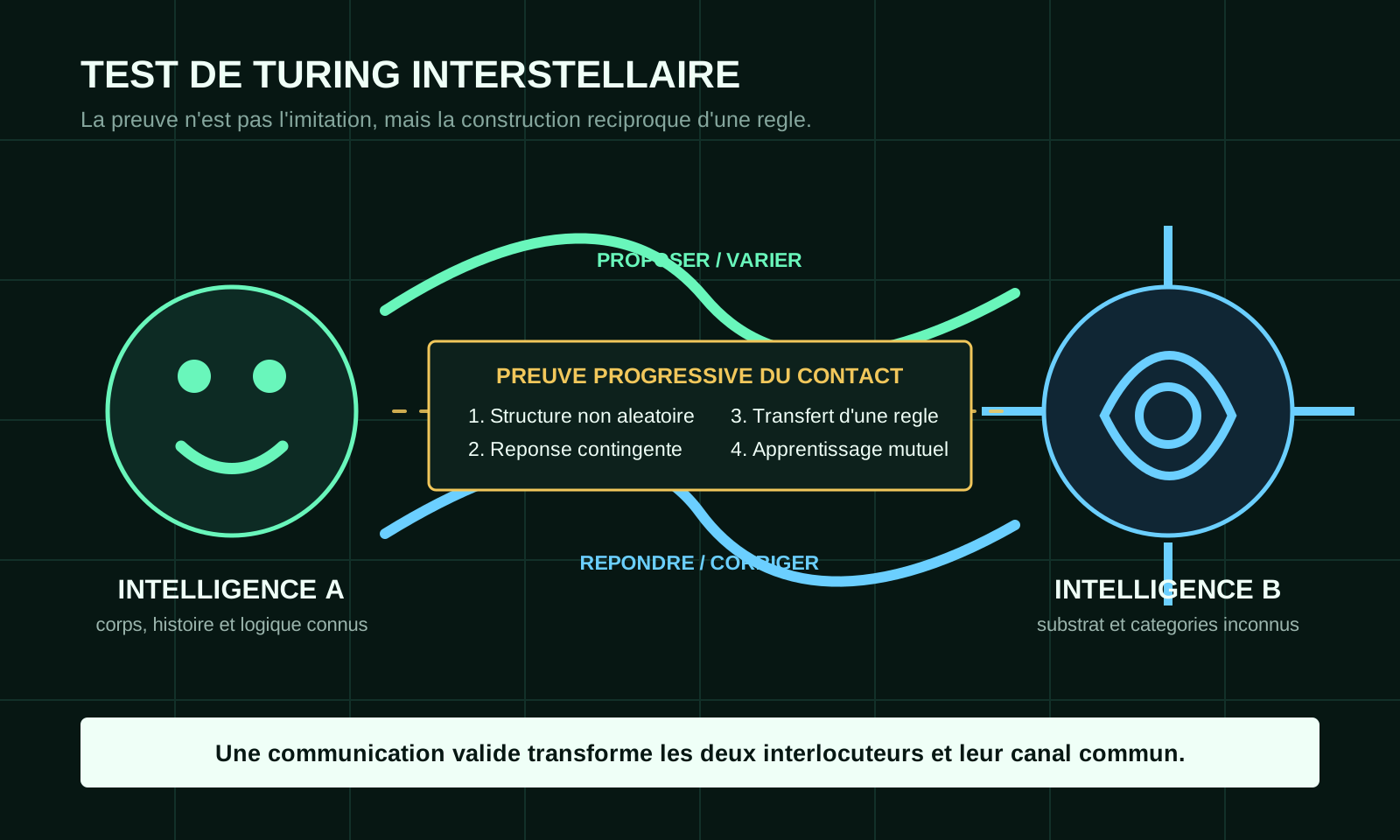
We propose replacing “Which participant is human?” with seven cumulative levels of evidence. No level is decisive alone; convergence increases the plausibility of an autonomous interlocutor.
- Structure. The signal is improbably organised relative to noise models.
- Contingency. It changes after a precise question within an announced time window.
- Correction. The emitter detects a deliberate error and requests or produces a repair.
- Transfer. A rule learned in one context reappears in a new situation.
- Counterfactual response. The interlocutor handles a transformation never shown in that exact form.
- Mutual learning. Both parties alter their protocol in response to the other’s mistakes.
- Continuity. Responses display coherent memory over time without becoming mere repetition.
The strongest evidence would not be a perfect sentence. It would be novelty that neither sender nor receiver could have built alone: a third language emerging between them.
8. Four experimental devices
The reciprocal black box
Two separated agents — humans, AIs, or simulated systems — initially share only pulses. Researchers control delays, inject noise, and hide partner identities. The goal is not to guess who is behind the channel but to measure whether stable conventions emerge and survive perturbation.
The displaced rule
A sequence teaches a simple transformation: duplication, inversion, symmetry, or scaling. The channel then presents unseen objects. Correct out-of-sample responses reduce the memorisation hypothesis. Multiple laboratories preregister rules and criteria before transmission.
The third witness
Three observatories receive different fragments and do not know one another’s outgoing questions. If independent predictions converge on the same response grammar, local illusion becomes less likely. The International Academy of Astronautics SETI protocols already emphasise independent verification before announcement.
The archive of misunderstandings
Every rejected hypothesis, competing translation, and applied filter is preserved. Failure becomes data. Unknown intelligence may appear less through our correct answers than through the regular way it repairs our mistaken interpretations.
9. Measuring without confusing measurement and meaning
The protocol can combine mutual information, compression gains when a grammar is found, out-of-sample prediction, reduction of uncertainty after each exchange, and stability of conventions under noise. No metric alone proves shared meaning.
Validation should combine radio astronomy, information theory, linguistics, ethology, anthropology, philosophy, and computer security. NASA’s Archaeology, Anthropology, and Interstellar Communication shows that between detection and understanding lies interpretive work resembling archaeology without shared context.
10. Installation: The Jury of Species
An A.L.I installation would distribute the same signal to several interpreters: human visitors, AI models with different architectures, biological sensors, and statistical automata. Each would propose the next question. The system would not immediately choose a winning translation; it would display divergences, predictions, and corrections over time.
Visitors could add noise, slow the channel, or hide symbols. A visualisation would reveal not an “alien face” but the changing geography of agreements and disagreements. The work asks the political question behind every test: who has the authority to declare communication valid?
11. Four thought experiments
- The slow civilisation. One response arrives every thirty years. Does coherence belong to a person, institution, or species?
- The dead archive. The message adapts because it contains a program, but its makers are gone. Are we speaking with a civilisation or its automaton?
- The terrestrial mirror. An AI trained on our broadcasts returns exactly what we expect. Which test reveals that we are conversing only with our own statistics?
- The incompressible Other. Responses remain unpredictable yet consistently alter our instruments. Must intelligence be understandable to be recognised?
12. Limits, ethics, and critical position
A proof protocol must not become a machine for manufacturing extraterrestrials. False signals, confirmation bias, and retrospective interpretation require accessible raw data, preregistered criteria, replication, adversarial teams, and an explicit separation between fact, inference, and fiction.
Conversely, requiring intelligence to master our conversation, emotions, and metaphors reproduces the anthropocentric bias of the classical test. Rigour means holding two refusals together: do not treat every pattern as a message, and do not reject a message because it does not resemble our language.
13. Conclusion: evidence as relation
The classical Turing test places a judge before candidates. A.L.I’s interstellar test turns the judge into a participant. The task is not only to recognise the Other, but to observe whether two systems can jointly produce rules, expectations, repairs, and memory that neither possessed at the outset.
Evidence for valid communication may be neither a translated word nor an isolated signature. It may reside in reciprocal transformation: we learn to ask better questions, something learns to answer us, and the space between the two gradually becomes inhabitable.
LABO question: what minimum degree of reciprocity is enough to move from an organised signal to the plausible presence of an interlocutor?
References and further reading
- Alan Turing, “Computing Machinery and Intelligence,” Mind, 1950.
- The Turing Digital Archive — documents related to the 1950 paper.
- Alan Turing, “The Chemical Basis of Morphogenesis,” 1952.
- Stanford Encyclopedia of Philosophy — The Chinese Room Argument.
- 2026 PNAS study on large language models and the Turing test.
- NASA — Archaeology, Anthropology, and Interstellar Communication.
- IAA SETI — verification and announcement protocols.