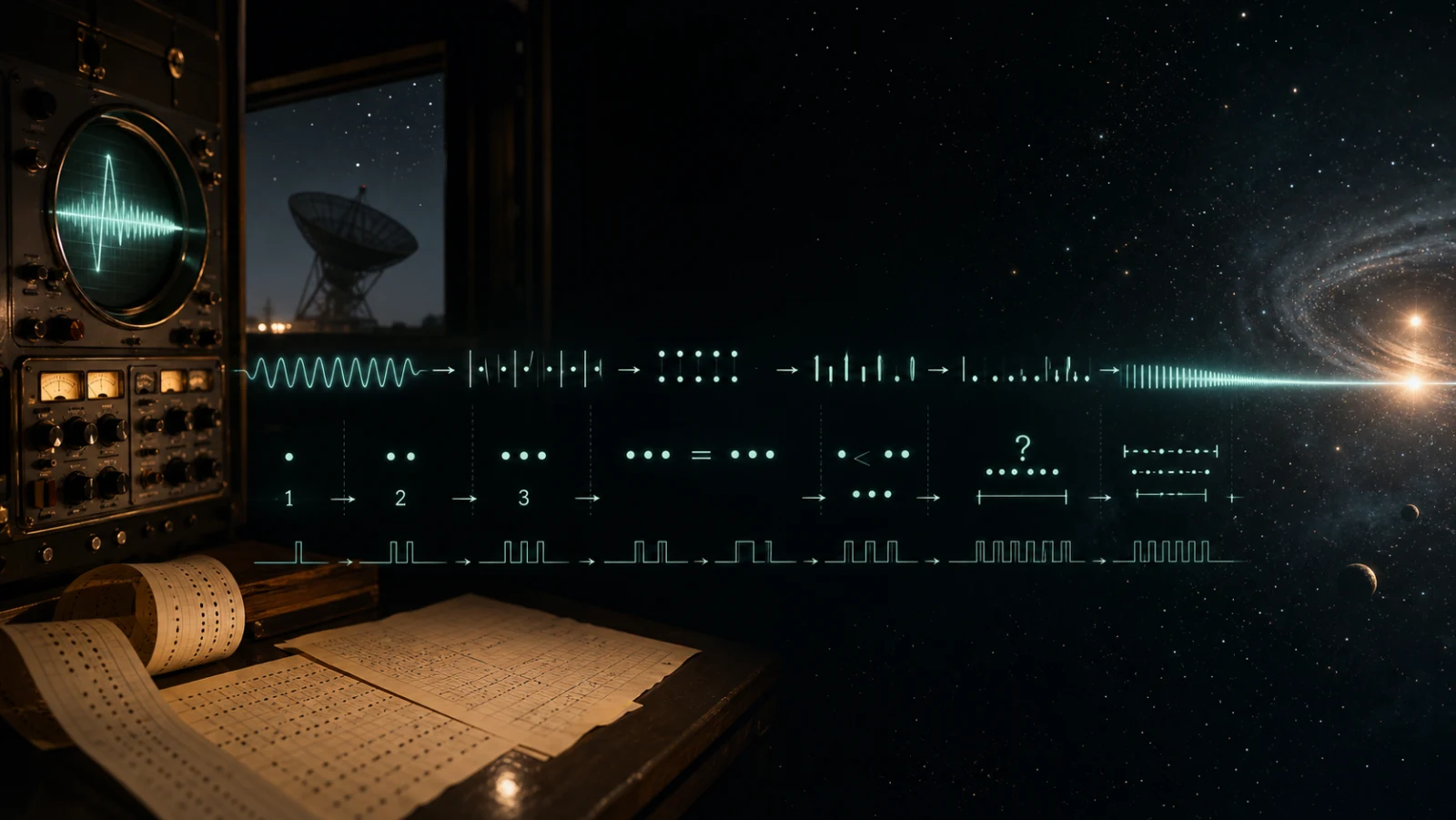
Quantum entanglement is one of the most unsettling phenomena in modern physics. Two particles can be prepared in a common state, then separated. When one is measured, the result of the other is correlated, even if the two objects are very far apart.
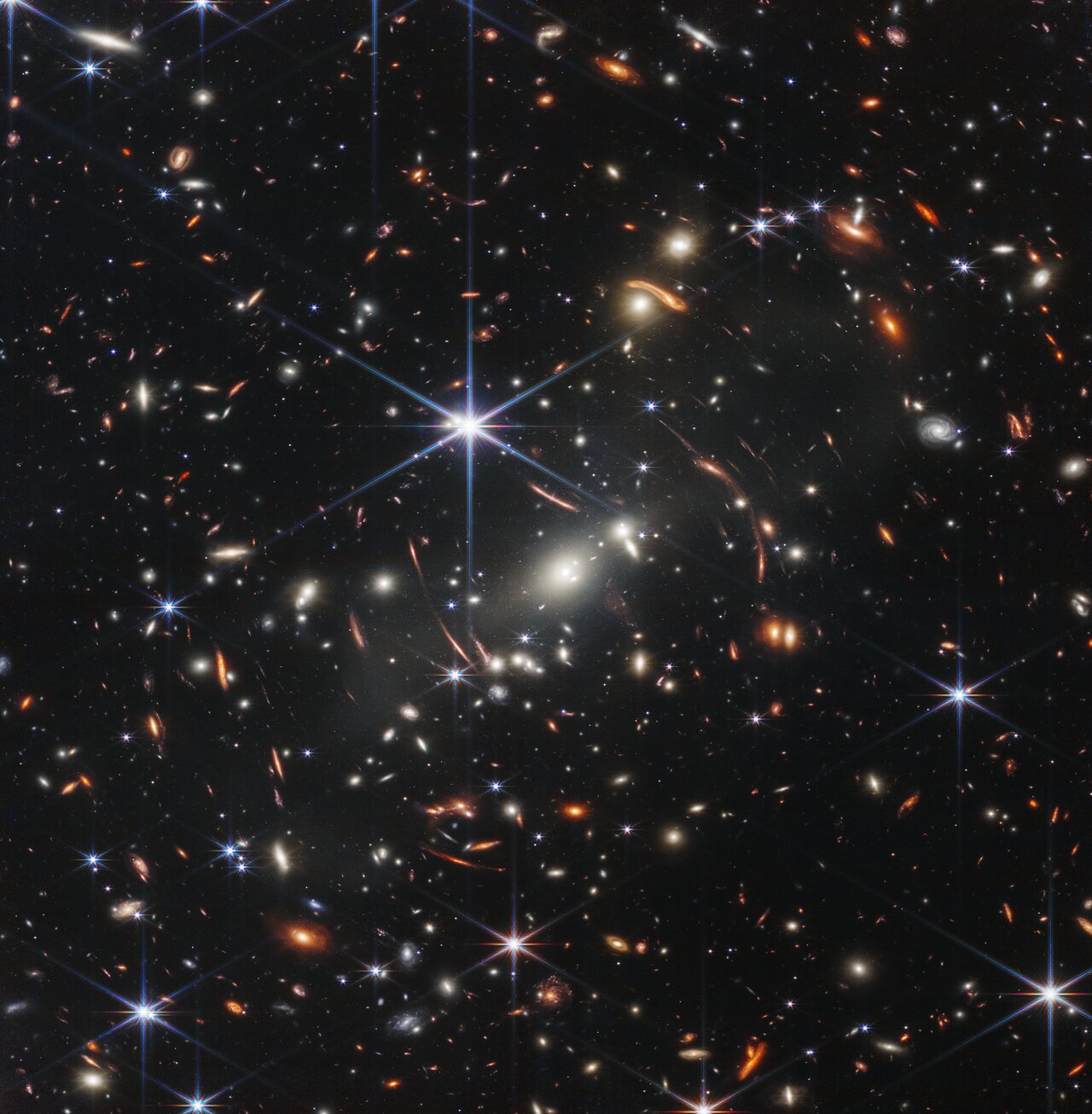
At first glance, this sounds like a dizzying promise: what if we could send an instant message to another star, or even another galaxy, through some invisible thread between particles? But this is exactly where physics draws an essential distinction.
What Entanglement Allows
When two systems are entangled, they no longer each possess an independent state in the classical sense. They form a common state. If two observers measure their particles separately, they obtain results that may be strongly correlated.
entangled particles
        ↓
separate measurements
        ↓
locally random results
        ↓
classical comparison
        ↓
correlation revealed
This is beautiful: the relation exists even when the objects are separated. But it does not appear as an immediately readable message. It only appears when observers compare their results.
What Entanglement Does Not Allow
According to current physics, entanglement does not allow controlled information to be sent faster than light. One cannot freely choose the result of a quantum measurement in order to encode a message such as “yes”, “no”, “hello” or “we are here”. Individual results remain random.
In other words, entanglement is not a superluminal telegraph. It does not carry a usable message by itself. It creates a structure of correlation. To recognize that correlation, information must still be exchanged through a classical channel, limited by the speed of light.
Entanglement does not say: “I am sending you a sentence instantly”. It says instead: “our measurements belong to a common relation”.
Why This Matters for A.L.I
For A.L.I, this limit is not a disappointment. It simply shifts the question. If entanglement cannot be used to instantly call a galaxy, it can inspire another idea of message: not an arrow travelling from sender to receiver, but a prepared relation, conserved and later revealed.
A classical message travels:
sender → signal → receiverAn entanglement-inspired message connects:
common preparation → separation → measurements → comparison → recognitionIt is no longer only transmission. It is shared memory.
Hypothesis 1: A Shared Key Before Separation
Imagine two civilizations that, in a very ancient past, shared a vast reserve of entangled states. Each preserves one part of those pairs. Thousands or millions of years later, they still could not speak instantly. But they could use these correlations to verify a common key, authenticate an origin, or synchronize measurements.
ancient sharing of entangled states
        ↓
cosmic separation
        ↓
local measurements
        ↓
slow classical channel
        ↓
comparison of correlations
        ↓
proof of an ancient link
In this scenario, the message is not transmitted by entanglement. It is recognized through it. Correlation becomes a signature.
Hypothesis 2: The Message as Half an Object
At galactic scale, this idea becomes almost archaeological. A civilization could send into space not only signals, but devices able to produce, store or verify correlations. The message would remain incomplete until compared with another part of the system.
This opens a poetic path for A.L.I: the intergalactic message as half an object.
- One half alone does not speak.
- Two halves compared reveal a structure.
- Communication becomes an act of reunion.
Hypothesis 3: A Map of Correlations
We could imagine a message composed not of words, but of tables of results. Each table appears random in isolation. But when compared with another distant table, a statistical pattern appears.
It would be a language of controlled coincidence: nothing is readable alone, everything becomes readable in the relation.
archive A: noise
archive B: noise
A + B: statistical pattern
statistical pattern + protocol: message
A.L.I Example: Measurement Ritual
An A.L.I protocol could ask two separated observers to measure systems according to precise angles, at precise times. The content would not be inside one particle, but in the way the results answer each other.
choose a measurement basis
measure
timestamp
archive
compare
extract correlations
This kind of language would be very strange to us, because it would not be immediately readable. It would require patience, statistics, repetition and trust in the protocol.
Artistic Prototype
An artistic prototype could simulate an “entangled message” without claiming to produce real quantum communication. Two separate interfaces would display sequences of apparently random results. Each interface alone would seem to produce noise. But when the two archives are brought together, correlations appear and draw a text, an image or a structure.
screen A: noise
screen B: noise
A + B: message
The viewer would then understand that the message was not in a single stream. It was in the relation.
Fundamental Limit
We must be clear: according to current physics, entanglement does not allow communication faster than light. No distant galaxy could instantly receive our sentence through two entangled particles. Correlations exist, but their interpretation always requires an exchange of classical information, therefore limited by the speed of light.
This limit does not weaken the idea. It makes it stronger. It forces A.L.I to imagine a message that respects physics while inventing another logic: message as proof, key, delayed relation.
LABO Question
If an extraterrestrial civilization did not only want to send a signal, but to prove that a link exists between two regions of the universe, would it use a wave, an image, a mathematical key, or a correlation?