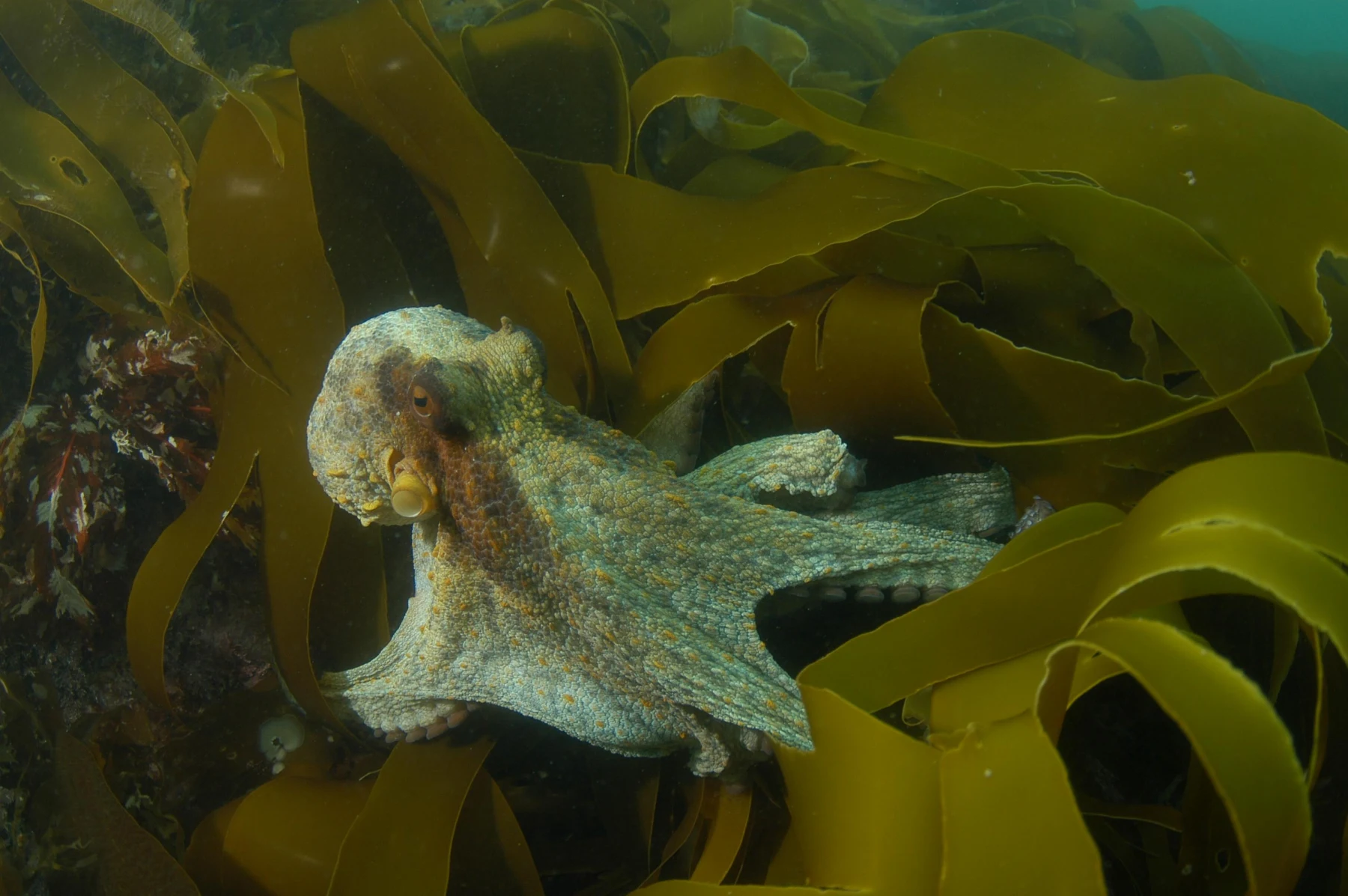
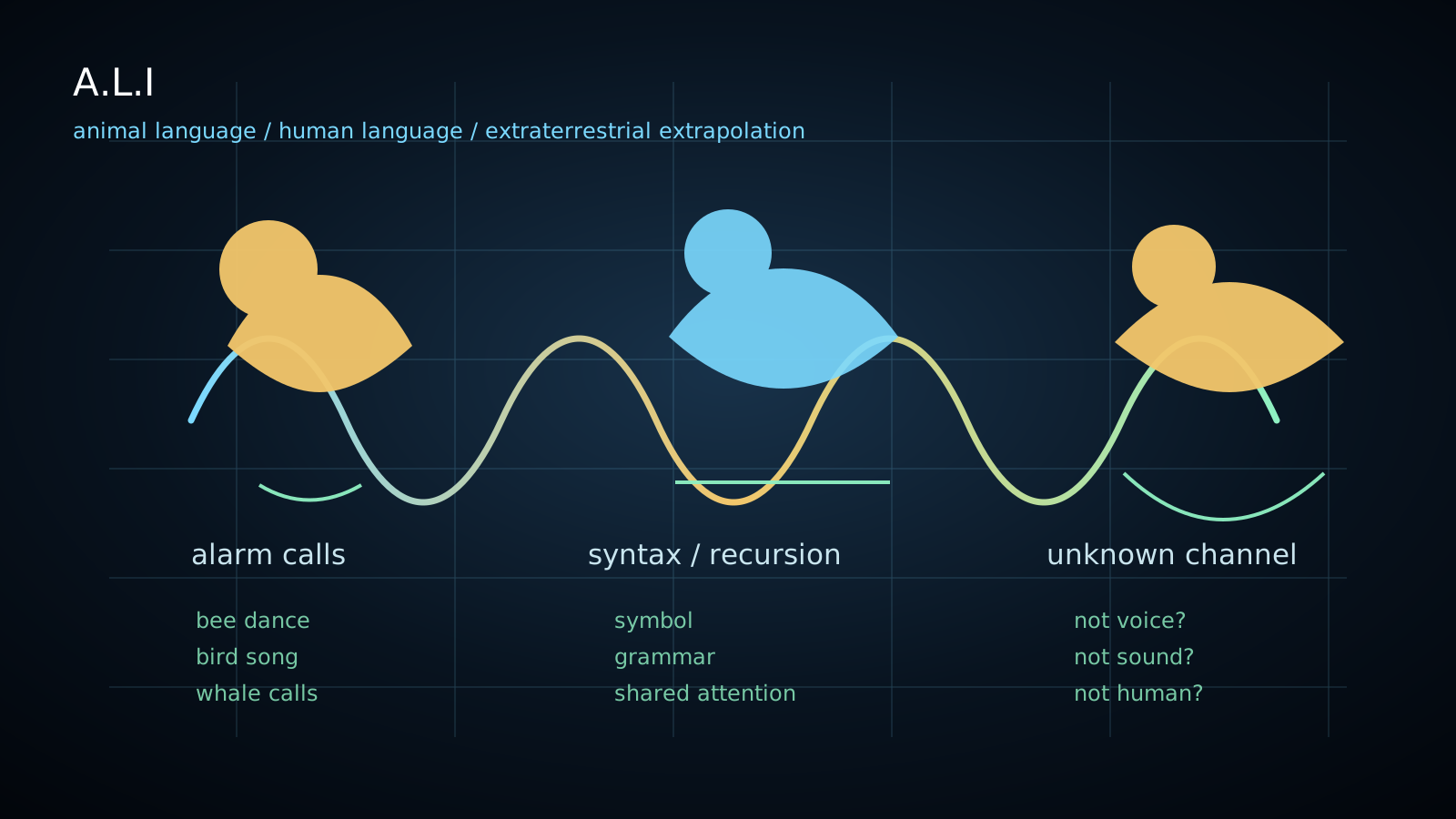
Hypothesis: comparing animal communication and human language is not only a way to classify species. For A.L.I, it is a method for imagining extraterrestrial language without starting too quickly from our own words, voice and grammar.
Language or Communication?
Animals communicate massively: calls, songs, smells, postures, colors, vibrations, dances, pheromones, electric signals and ultrasounds. The difficult scientific question is when communication becomes language in the strong sense.
Linguist Charles F. Hockett proposed a set of language “design features”: arbitrariness, semanticity, productivity, cultural transmission, displacement, duality of patterning, reflexiveness and more. This framework is debated, but it asks a useful question: which traits are shared with other species, and which appear especially developed in humans?
What Animals Already Do
Serious studies show that animals should not be reduced to reflex machines. Several species use rich, specialized and sometimes highly abstract systems.
| Species / case | What is transmitted | A.L.I interest |
|---|---|---|
| Honeybees | direction, distance and quality of a food source through waggle dance | a spatial message can pass through movement, angle and duration |
| Vervet monkeys | different alarm calls for predators: eagle, snake, leopard | a signal can classify the world and trigger adapted action |
| Dolphins | signature whistles linked to individual identity | a “name” can be sonic, learned and social |
| Japanese tits | call combinations with order and compositional effects | proto-syntax can exist outside human language |
| Bonobo Kanzi | lexigram use and comprehension of human instructions | a primate can learn an interspecies symbolic interface |
| Parrot Alex | categories, colors, shapes, quantities, “same/different” | symbolic cognition does not always follow expected brain size |
Key Studies
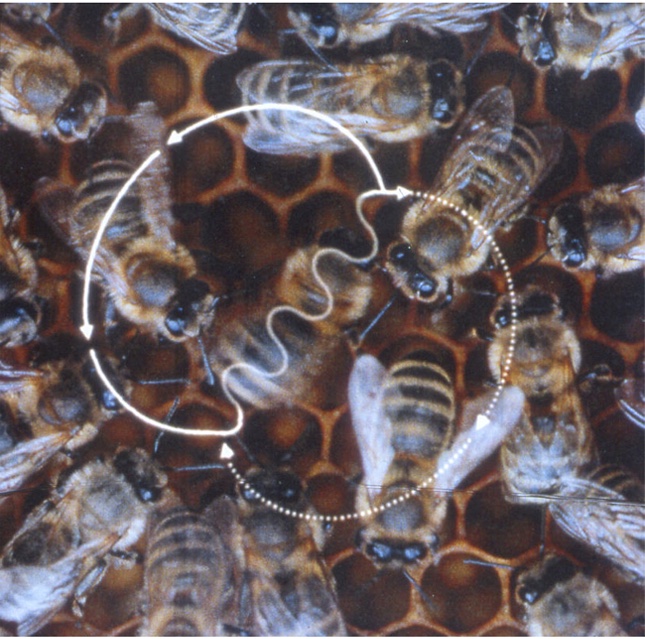
In honeybees, Karl von Frisch showed that the waggle dance transmits information about the location of a resource. It is not a word, but a bodily encoding of direction, distance and quality.
In vervet monkeys, the work of Seyfarth, Cheney and Marler showed that distinct alarm calls trigger adapted behaviors: looking upward, climbing into trees or scanning the ground. The signal is linked to a category of danger.
In dolphins, Stephanie King and Vincent Janik showed that bottlenose dolphins respond to copies of their own signature whistles, supporting the idea of learned individual vocal labels. It is not a human “name”, but it is a form of learned social identification.
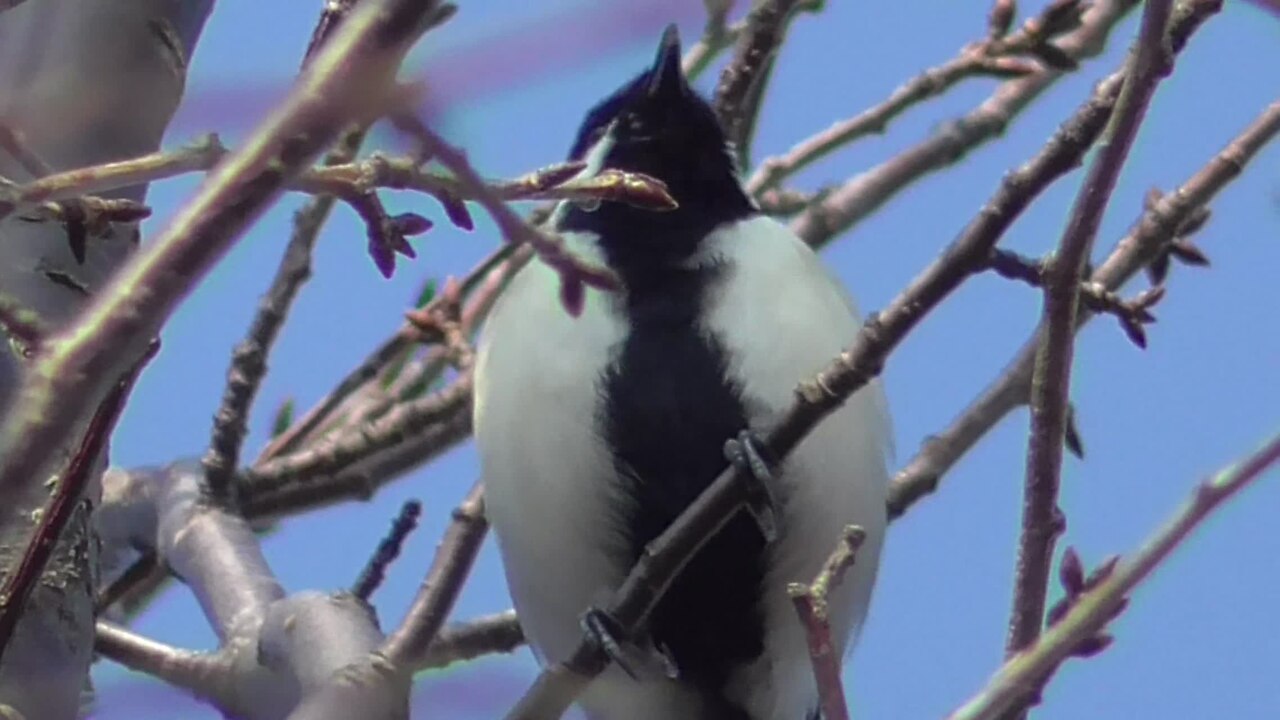
In Japanese tits, Toshitaka Suzuki and colleagues proposed experimental evidence for compositional syntax: certain call combinations produce a compound meaning, and order matters.
What Human Language Adds
Human language is not just richer. It combines several properties rarely brought together at this scale: open-ended productivity, recursion, displacement, narrative, lying, poetry, metalanguage, cumulative cultural transmission and the ability to talk about language itself.
- Productivity: creating sentences never heard before.
- Displacement: speaking about absence, future, past and fiction.
- Recursion: embedding one phrase inside another.
- Metalanguage: using language to analyze language.
- Writing: externalizing speech into a durable support.
But the conclusion should not be too simple. Animals are not “without language” in the sense of silence or poverty. They live in specialized semiotic worlds. Human language may be less an absolute rupture than a very particular stacking of capacities.
A Classic Mistake: Looking for Human Sentences Everywhere
Much of the misunderstanding comes from anthropocentric expectation. We look for words, names, sentences and audible grammar. But a species can communicate efficiently without producing anything that resembles human conversation.
A bee does not “say” a sentence; it inscribes a trajectory in a moving body. A dolphin does not “speak” English; it produces a social acoustic system adapted to water. An ant does not discuss; it writes chemically in space through pheromones.
Extraterrestrial Extrapolation
If we encountered extraterrestrial intelligence, it might not use an augmented version of human language. It might communicate through:
- electric or magnetic fields;
- chemical variations;
- light modulations;
- spatial or architectural structures;
- temperature changes;
- collective rhythms;
- shared memory, if its biology allows it;
- artifacts or behaviors rather than speech.
Animal communication teaches humility. We should not ask only “where are the words?”, but “which contrasts are relevant for this organism, in its environment, with its sensors and needs?”
A.L.I Encoding / Decoding
For A.L.I, every communication must be analyzed as a complete system:
sender biology → physical channel → signal structure → receiver behavior → social context → possibility of translationThis chain is crucial. An extraterrestrial signal might be perfectly clear to its sender and invisible to us, not because it is “mystical”, but because we lack the right organs, instruments or expectations.
A.L.I Prototype: Speculative Interspecies Translator
An installation could juxtapose several systems:
- bee dance transformed into a map;
- vervet alarm call transformed into an action pictogram;
- dolphin whistle transformed into a graphic signature;
- birdsong transformed into mini-syntax;
- a human sentence transformed through these four modes;
- then a fifth deliberately non-vocal “extraterrestrial” mode.
The visitor would see that one intention changes radically depending on the body that carries it.
Sources and Research
- Seyfarth, Cheney & Marler, 1980, Science: vervet monkey alarm calls.
- Suzuki, Wheatcroft & Griesser, 2016, Nature Communications: compositional syntax in Japanese tits.
- King & Janik, 2013, PNAS: bottlenose dolphin signature whistles.
- Current Biology, 2023: contemporary review of honeybee dance communication.
- Review on Savage-Rumbaugh and Kanzi: debates around ape linguistic competence.
- Wacewicz & Żywiczyński, 2015: critique of Hockett’s design features as a tool for language evolution.
LABO question: if an extraterrestrial intelligence communicates as differently from humans as a bee, dolphin or ant does, will we recognize that it is speaking to us?