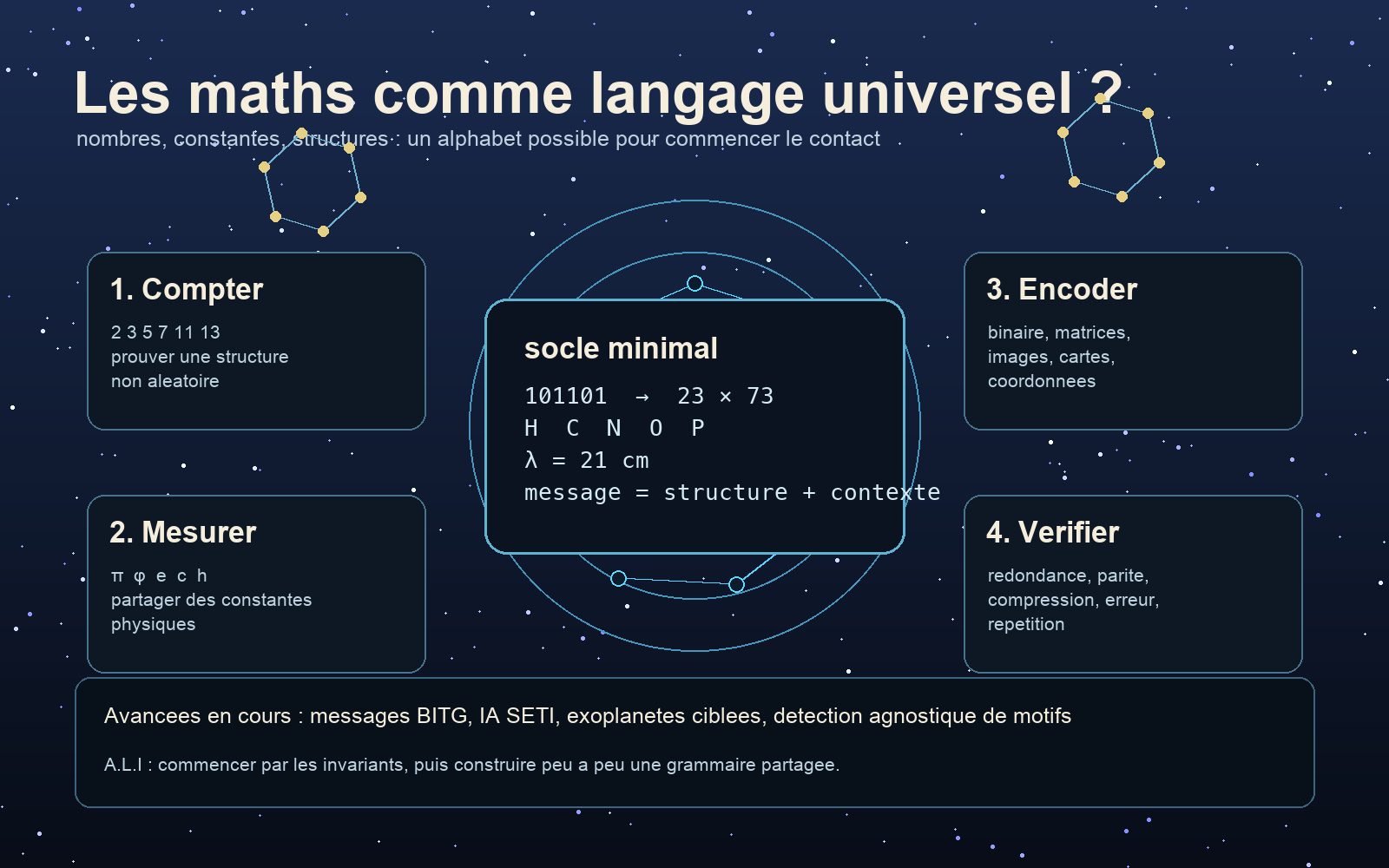

Hypothesis: a contemporary Arecibo message should not simply update the data. It should update the method: who writes it, how it is decoded, what risks it acknowledges, and what image of Earth it sends.
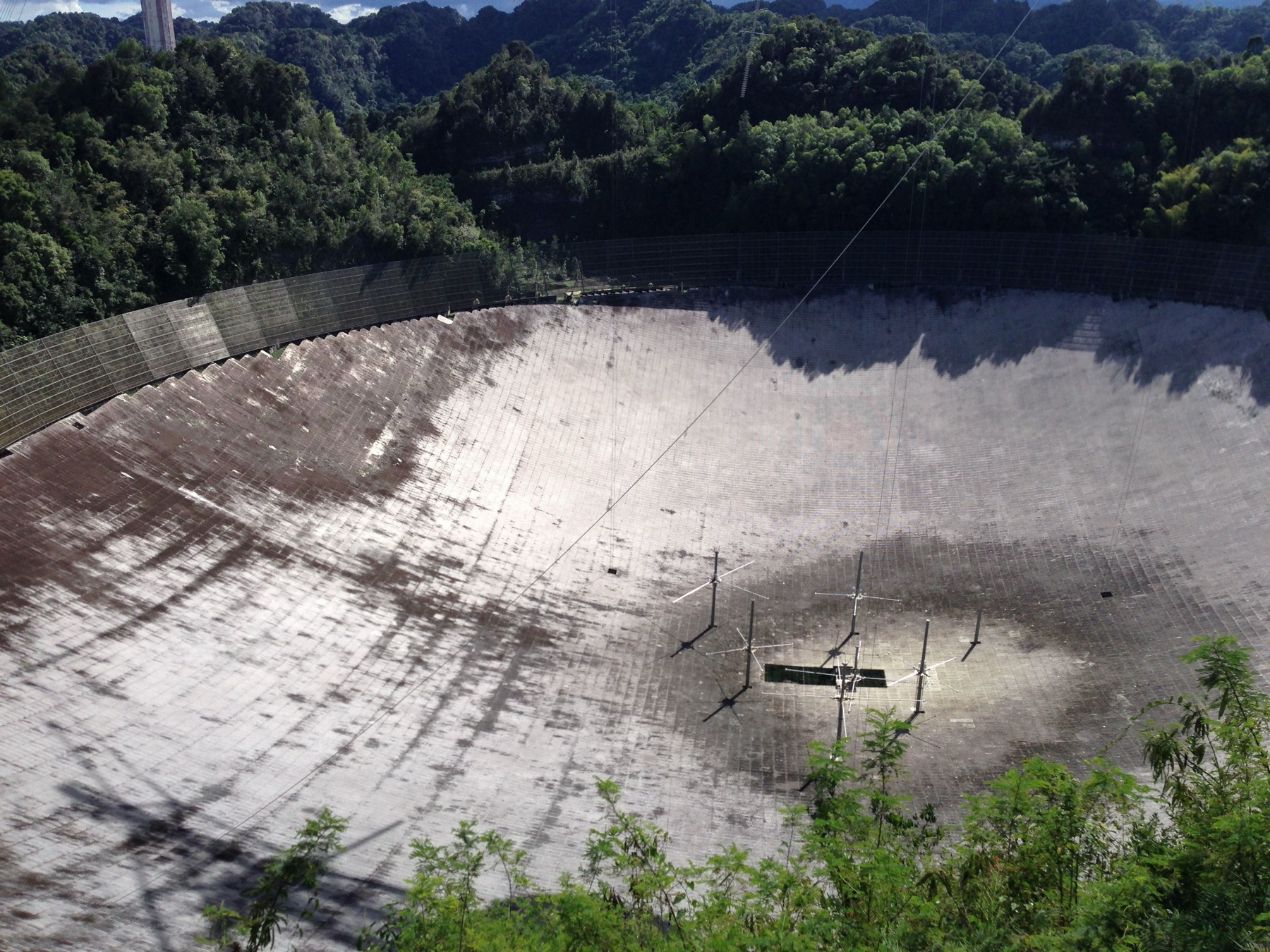
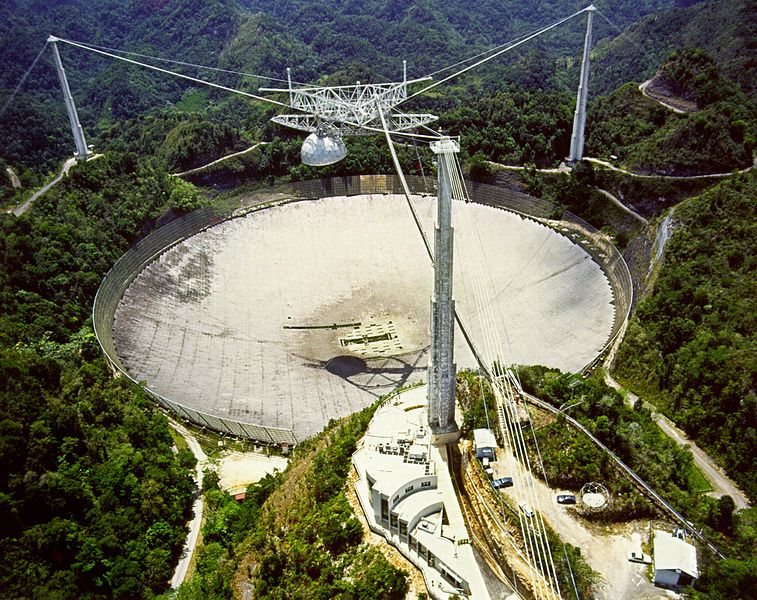
The 1974 Message
The original Arecibo message was transmitted in 1974 toward the globular cluster M13. It used binary information arranged into a rectangular grid. The message encoded numbers, chemical elements, DNA, a human figure, population, Solar System and the Arecibo telescope.
What to Keep
The original remains elegant because it begins with structure. A receiver must recognize number, order, image and proportion. This approach is still useful: mathematics and binary grids are among the few tools we can hope to share across worlds.
What to Update
- exoplanet knowledge and planetary diversity;
- Earth’s atmosphere and climate change;
- human biological diversity rather than one generic figure;
- digital networks and artificial intelligence;
- more explicit decoding instructions;
- a collaborative authorship process instead of one institutional voice.
Crop Circles and Myth
Some crop-circle narratives, especially around Chilbolton, present images as replies to Arecibo. A critical A.L.I approach does not treat these claims as evidence of contact. It treats them as cultural material: humans imagine extraterrestrial response through fields, pixels and mirrored diagrams.

Prototype
A new message could be created as a public workshop. Participants choose data, convert it into binary, test several grid sizes, print the result as an image, play it as sound, and display it as light. The message becomes readable through multiple media.
data → binary → grid → image → sound → radio/light performanceEthics
METI remains debated. Should humanity actively transmit? Who has the right to speak for Earth? A contemporary Arecibo message must include this debate instead of hiding it behind optimism.
LABO question: can a message to space be democratic, or is every interstellar message necessarily a fiction of unity?