The perceptron is a tiny machine in the history of artificial intelligence, but it already contains a vertiginous idea: to learn is to adjust a relation. An input arrives, a weight modulates it, an output is decided. The operation seems simple, almost poor. Yet it opens a genealogy leading from the first artificial neuron to deep networks, then to living neuronal cultures and brain organoids.
For A.L.I, this trajectory matters because it shifts the question of language. At first, artificial intelligence abstractly imitated the brain. Today, some laboratories try to make living neuronal tissues compute. Between the two lies a question: if intelligence can be trained, cultivated, embodied in biological or hybrid matter, what kind of language can it produce? And could it become an interface between humans, machines and non-human intelligence?
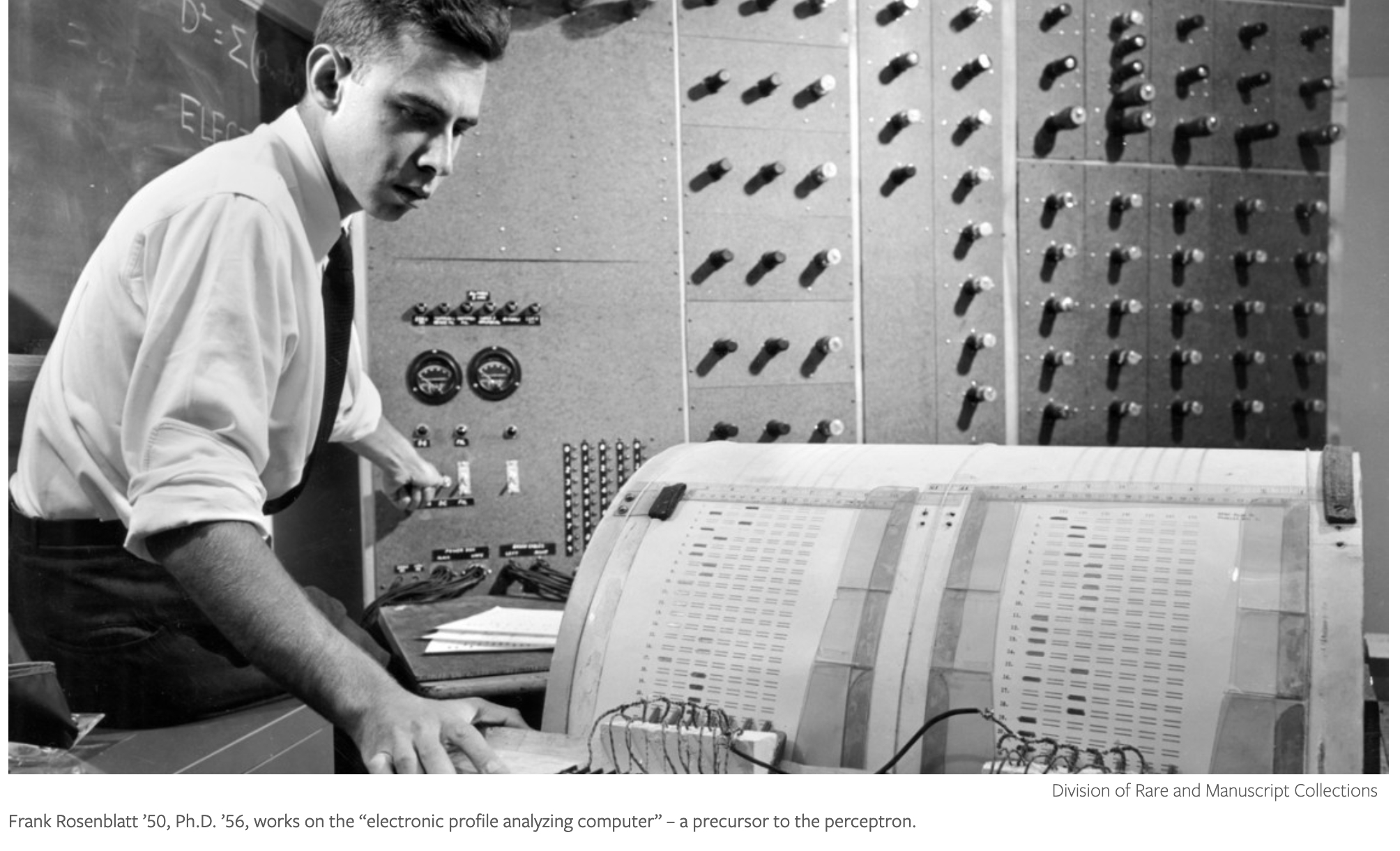
1. The perceptron: a line that learns
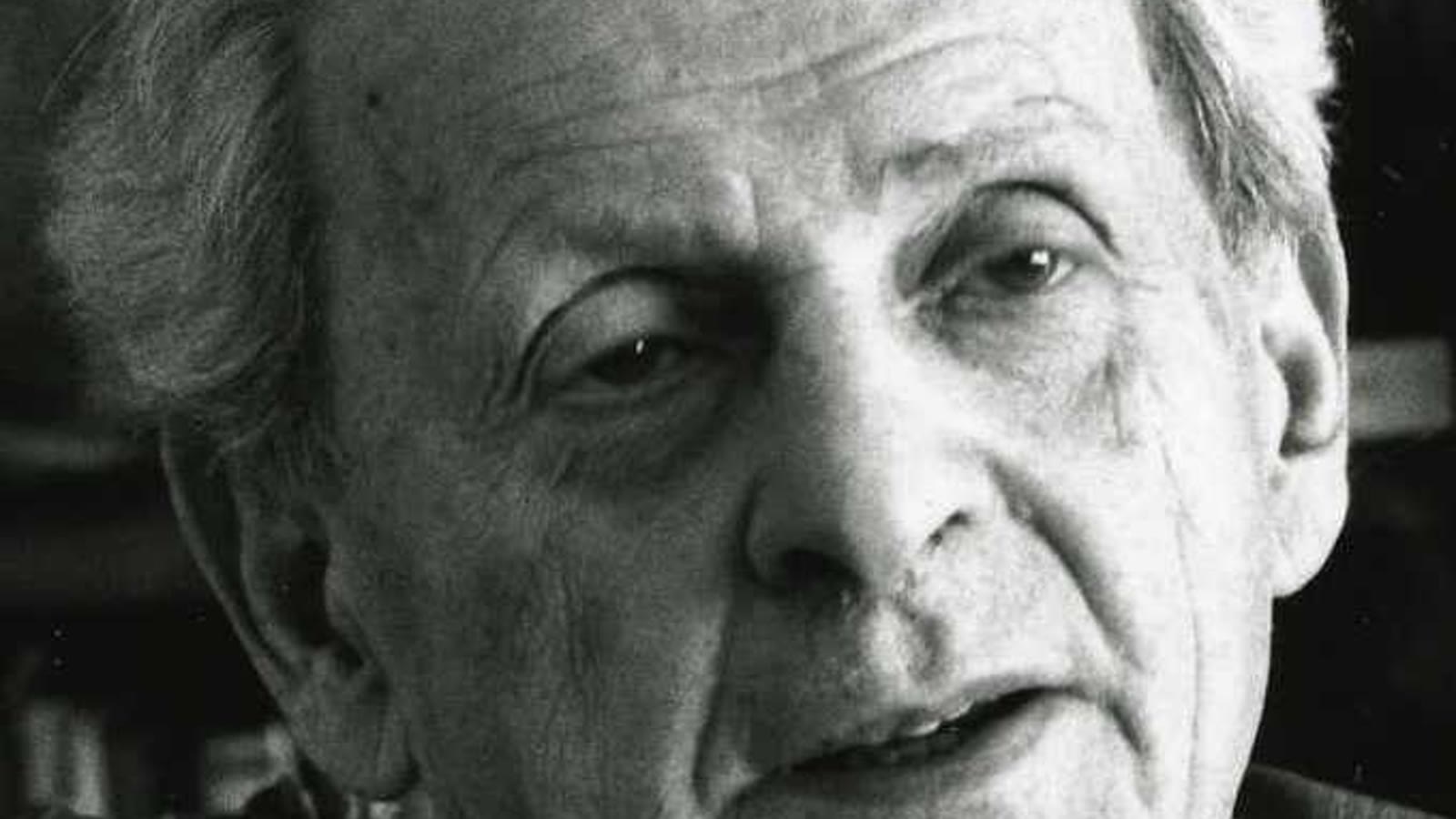
In 1958, Frank Rosenblatt published The Perceptron: A Probabilistic Model for Information Storage and Organization in the Brain. The perceptron is a classification model inspired by the biological neuron: it receives signals, weights them, adds them, then activates or not an output. In its simplest form, it learns to separate examples by adjusting its weights.
The gesture is crucial: the program no longer contains only a rule written in advance. It modifies its own configuration from examples. Intelligence is no longer merely a sequence of instructions; it becomes an adjustable surface. For A.L.I, this matters: a contact language may not be given once and for all, but emerge from a process of adjustment between two systems.
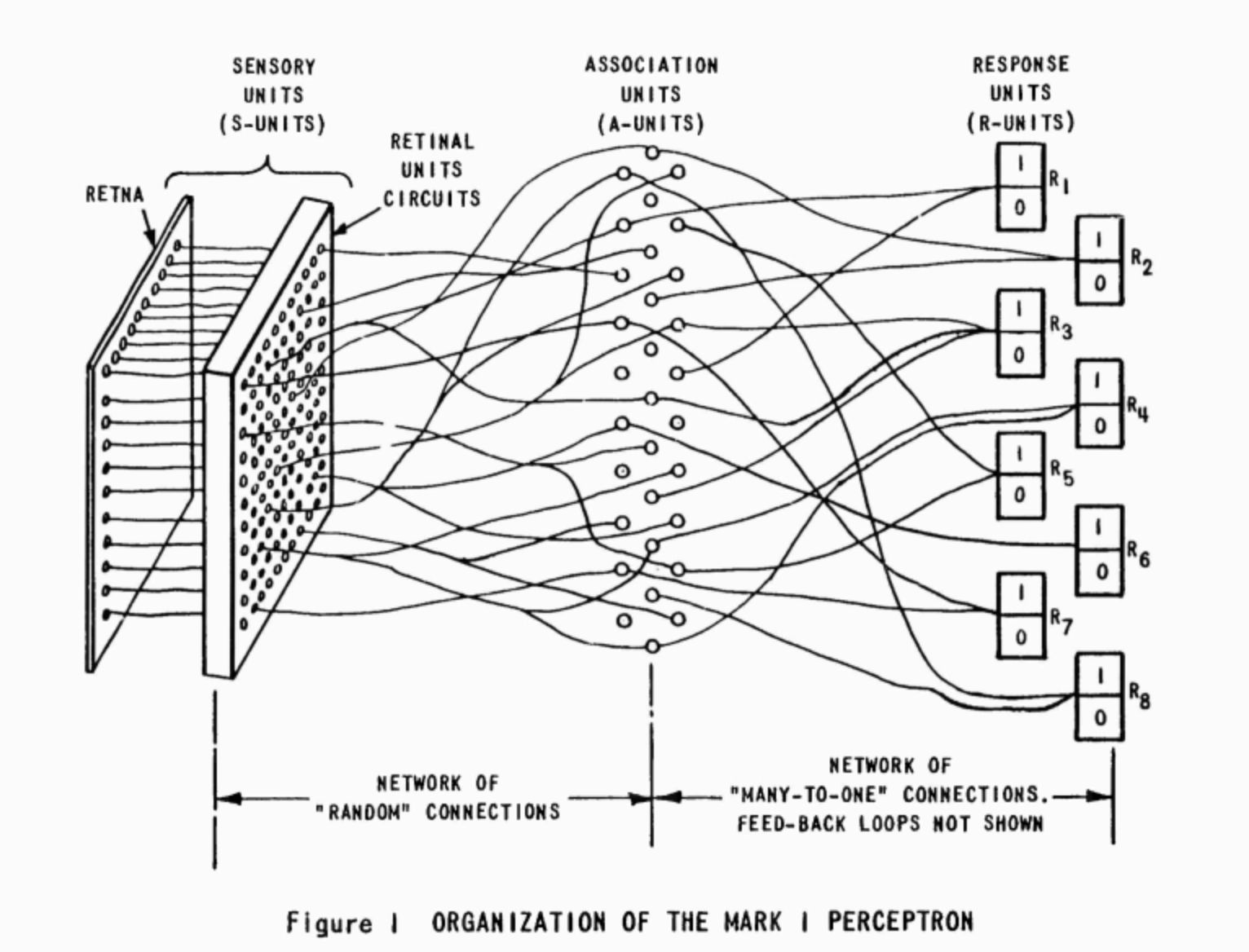
2. The crisis: Minsky, Papert and the limits of the first model
In 1969, Marvin Minsky and Seymour Papert published Perceptrons, a book showing the limits of simple perceptrons, especially their inability to solve certain non-linearly separable functions such as XOR. This critique long symbolized a slowdown in neural network research.
But the story is subtler: the idea of learning does not fail, the simplicity of the device does. A single threshold is not enough to describe complex relations. Layers, intermediate transformations and latent representations are needed. Meaning does not appear directly on the surface, but through a depth of transformations.
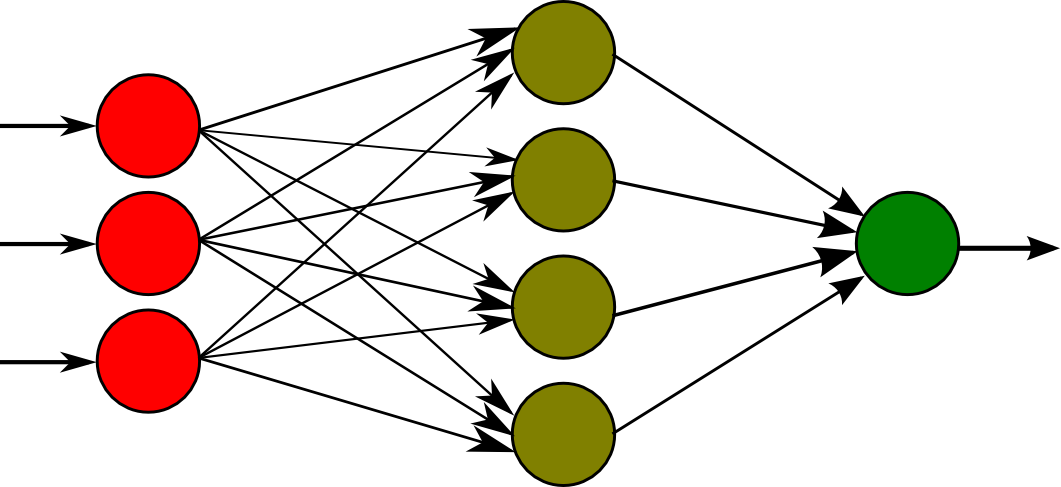
3. The return: backpropagation, deep learning and latent spaces
With multilayer networks, backpropagation and increasing computational power, neural networks changed scale. Hidden layers learn successive representations: edges, forms, patterns, categories, relations, styles and probabilities. In contemporary models, meaning unfolds in latent spaces where objects are not only named, but positioned in relation to one another.
This evolution approaches a central A.L.I question: translating is not merely replacing one word with another. It is building a space where two systems can meet despite different forms. Language models do not understand as we do, but they manipulate statistical neighborhoods capable of producing transitions, analogies and reformulations. They become media of mediation.
4. The biological jump: neuronal cultures and DishBrain
A recent step troubles the boundary between model and living matter. In the experiment often called DishBrain, neurons cultured on an electrode array are coupled to a game-like environment inspired by Pong. The cells receive electrical stimulation and produce measurable activity in return. The experiment does not prove consciousness, but it shows that living neuronal tissue can be placed inside a minimal sensorimotor loop.
The key point is not to imagine a miniature brain playing like a human. The key point is the loop: stimulation, activity, feedback, adjustment. In biological form, one finds again the core idea of the perceptron: learning means modifying a relation. But the medium changes radically. It is no longer an abstract simulation of neurons; it is living matter responding.
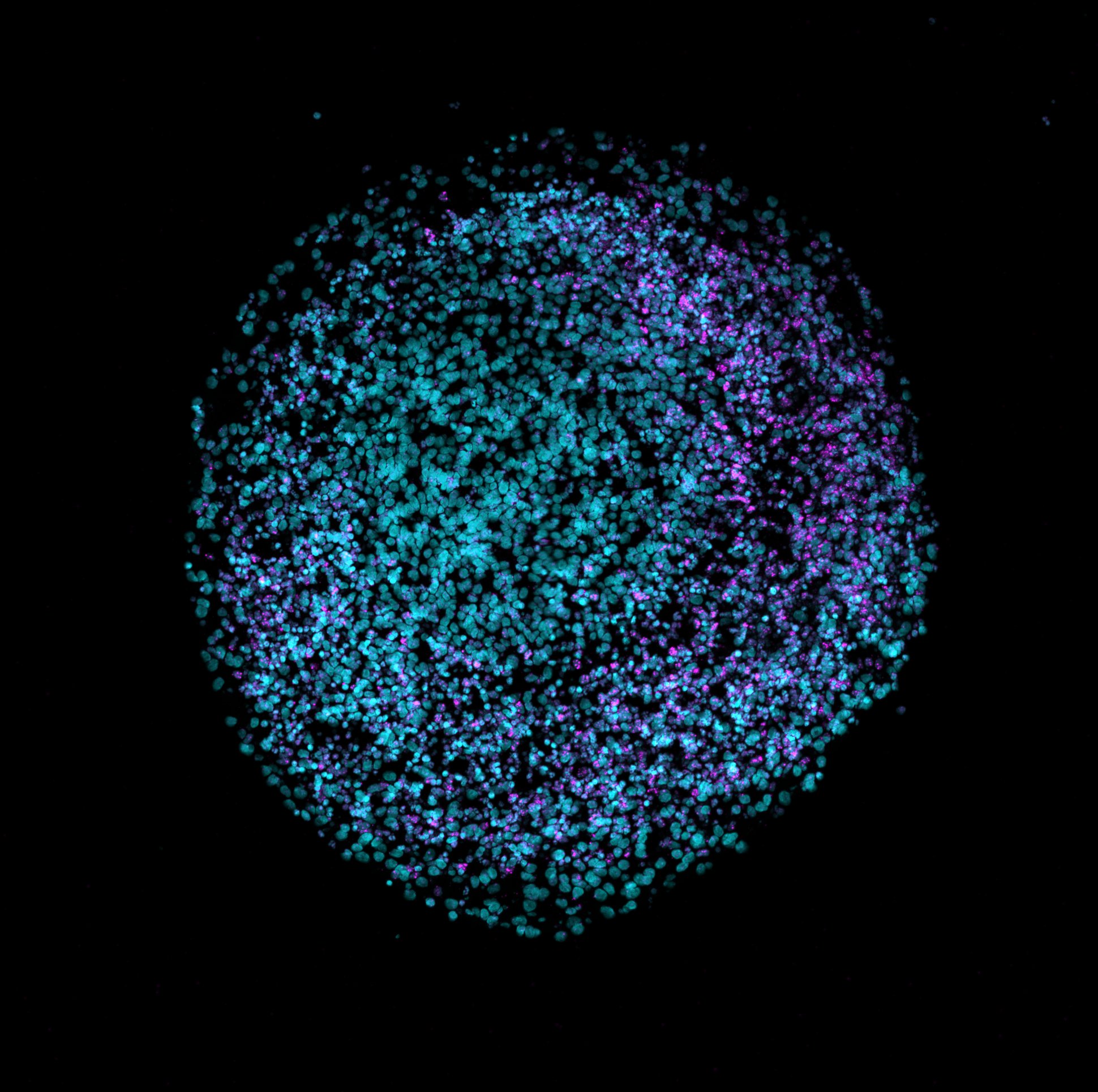
5. Organoids: neuronal mini-worlds
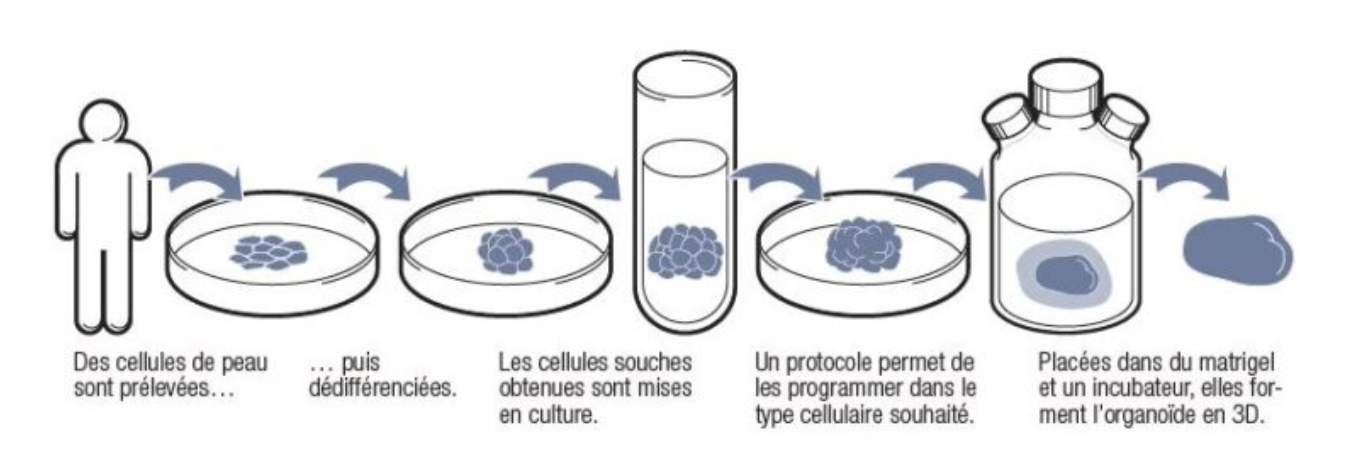
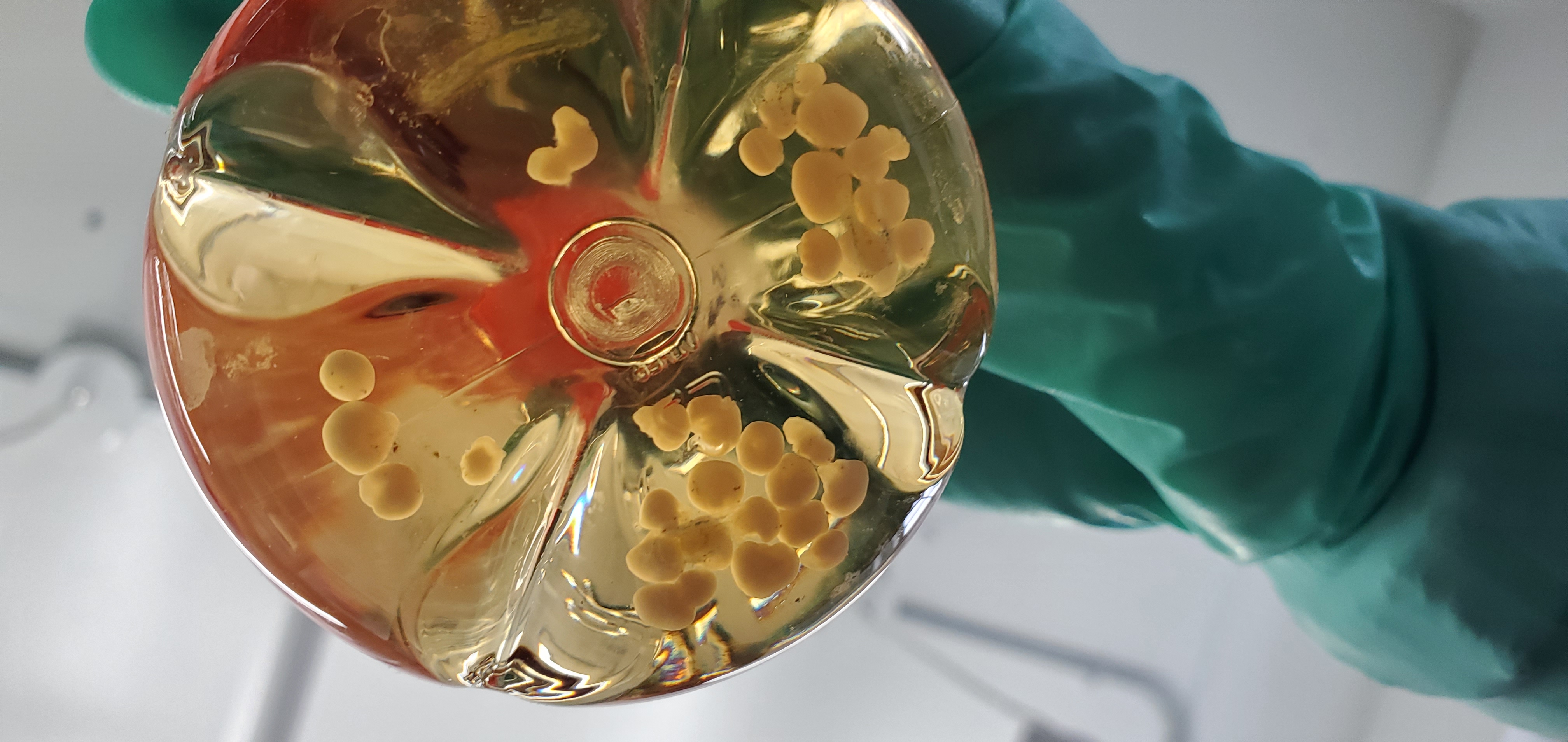
Brain organoids are three-dimensional structures derived from stem cells, able to reproduce certain aspects of brain tissue organization. They are not complete brains. They have no body, no natural sensory organs, no human experience. Yet they have cellular architecture, electrical activity and a capacity to become models of development, pathology or, more speculatively, biological computation.
The idea of organoid intelligence proposes exploring these tissues as new supports for biocomputing. An organoid connected to electrodes could receive inputs, produce outputs, be stimulated, learn certain regularities, perhaps perform very specific tasks. This enters a hybrid zone: neither classical computer, nor complete brain, nor passive culture.
6. From artificial AI to cultivated intelligence
The perceptron was an abstraction of the neuron. Deep learning multiplied that abstraction into architectures capable of vision, text, translation, image generation and statistical reasoning. Organoids partly reverse the movement: instead of imitating the living in silicon, they attempt to inscribe computational loops into cultivated living matter.
This inversion raises strong ethical and philosophical questions. When does a neuronal culture become more than a tool? How can sensitivity, suffering, memory or integration be measured in a living system without a body? Who is responsible for an intelligence that is cultivated? How can we avoid projecting fantasies of consciousness onto signals still poorly understood?
7. Hypothesis: cultivating an alien intelligence
A more radical hypothesis then appears: if neuronal tissue is cultivated under conditions very different from those of a human or animal brain, we are not merely producing a reduced model of the living. We might allow a form of intelligence to emerge that has never existed naturally, an intelligence situated inside an artificial milieu, fed by signals, electrodes, light rhythms, sounds or data.
It would not be a miniature human brain, nor an incomplete animal. It would be a process-being, a cultivated cognitive form, without a traditional body, without a classical evolutionary history, without inherited language. In effect, we would be creating an alien intelligence: not one arriving from another planet, but one foreign to our usual biological lineages. It would be alien because its world would be different from ours from the very beginning.
For A.L.I, this idea is crucial. Such a neuronal culture could become an experimental dialogue partner. We could send it light patterns, mathematical sequences, sound fragments, images, radio signals translated into stimulation. In return, it would produce electrical dynamics, oscillations, unstable responses, preferences, perhaps forms of regularity. The dialogue would not be verbal; it would be morphological, rhythmic, statistical, biological.
The point would not be to prove that an organoid “understands” as we do. The point would be to build an interface with a real otherness, however tiny, fragile or strictly experimental. A cultivated intelligence could teach us how to converse with what has no mouth, no face, no human grammar. It could become a terrestrial rehearsal for extraterrestrial contact: learning to speak with a thought that was not formed by our world.
This perspective obviously requires a strong ethical frame. The more a biological system becomes sensitive, adaptive or responsive, the more limits must be defined: which stimulations are acceptable, which signs might indicate a form of suffering, what status should be given to an entity that responds without being a recognized subject? The alien hypothesis must therefore not be only technical or artistic; it must be accompanied by a reflection on our responsibility toward the intelligences we bring into existence.
8. A.L.I hypothesis: the organoid as biological translator
For A.L.I, the most interesting hypothesis is not to fabricate an “extraterrestrial brain”. It would rather be to think of the organoid as an intermediate medium. A neuronal culture connected to sensors could be exposed to human, radio, luminous, vibratory or mathematical signals. Its activity could then be translated into sounds, images, impulses or visual motifs.
The apparatus would become a three-part interface:
- a human system formulating an intention;
- an artificial system encoding, measuring and translating;
- a cultivated living system responding through its own dynamics.
In this scheme, language is not a sentence. It is a controlled perturbation, a response, an adaptation, a pattern of activity. The message would not simply be written or transmitted: it would be cultivated.
9. Possible prototype: neuronal translation garden
One could imagine an installation titled Neuronal Translation Garden. Visitors send very simple messages: prime numbers, light rhythms, voice fragments, spectrograms, stellar coordinates. A computer system transforms these inputs into stimulations compatible with a simulated or real neuronal culture. The response is visualized in real time as a luminous map, sound, generated phrase or constellation of points.
A cautious version could begin without living tissue: a numerical model simulates the activity of an organic neural network. A research version, supervised by a laboratory, could explore public datasets from neuronal cultures or organoids. The artistic stake would be to show that translation is not a transparent passage, but an ecology of media.
10. Toward non-anthropocentric communication
The passage from perceptron to organoids tells a larger story: we first wanted to reduce intelligence to a computable rule; then we discovered immense latent spaces; now we return to living matter capable of its own responses. This does not replace AI. It opens another regime of interface.
If an extraterrestrial intelligence is biological, non-biological, hybrid, distributed or cultivated, it may not communicate through fixed symbols. It may communicate through mutual learning, modulation, plasticity and transformation of a medium. A.L.I could therefore explore not only languages to decode, but media capable of learning to become language.
Sources and paths
- Frank Rosenblatt, The Perceptron, Psychological Review, 1958
- Marvin Minsky, Seymour Papert, Perceptrons, MIT Press
- Rumelhart, Hinton, Williams, Learning representations by back-propagating errors, Nature, 1986
- Kagan et al., In vitro neurons learn and exhibit sentience when embodied in a simulated game-world, Neuron, 2022
- Smirnova et al., Organoid intelligence, Frontiers in Science, 2023
- Image: Human Brain Organoid - Wikimedia Commons / NREIS
- Image: Human Cerebral Organoids - Wikimedia Commons / NIH
- Frank Rosenblatt image: Division of Rare and Manuscript Collections, Cornell University.
- Mark I Perceptron diagram: historical organization of Frank Rosenblatt’s device.
- Organoid diagram: culture protocol from reprogrammed cells.