The Question
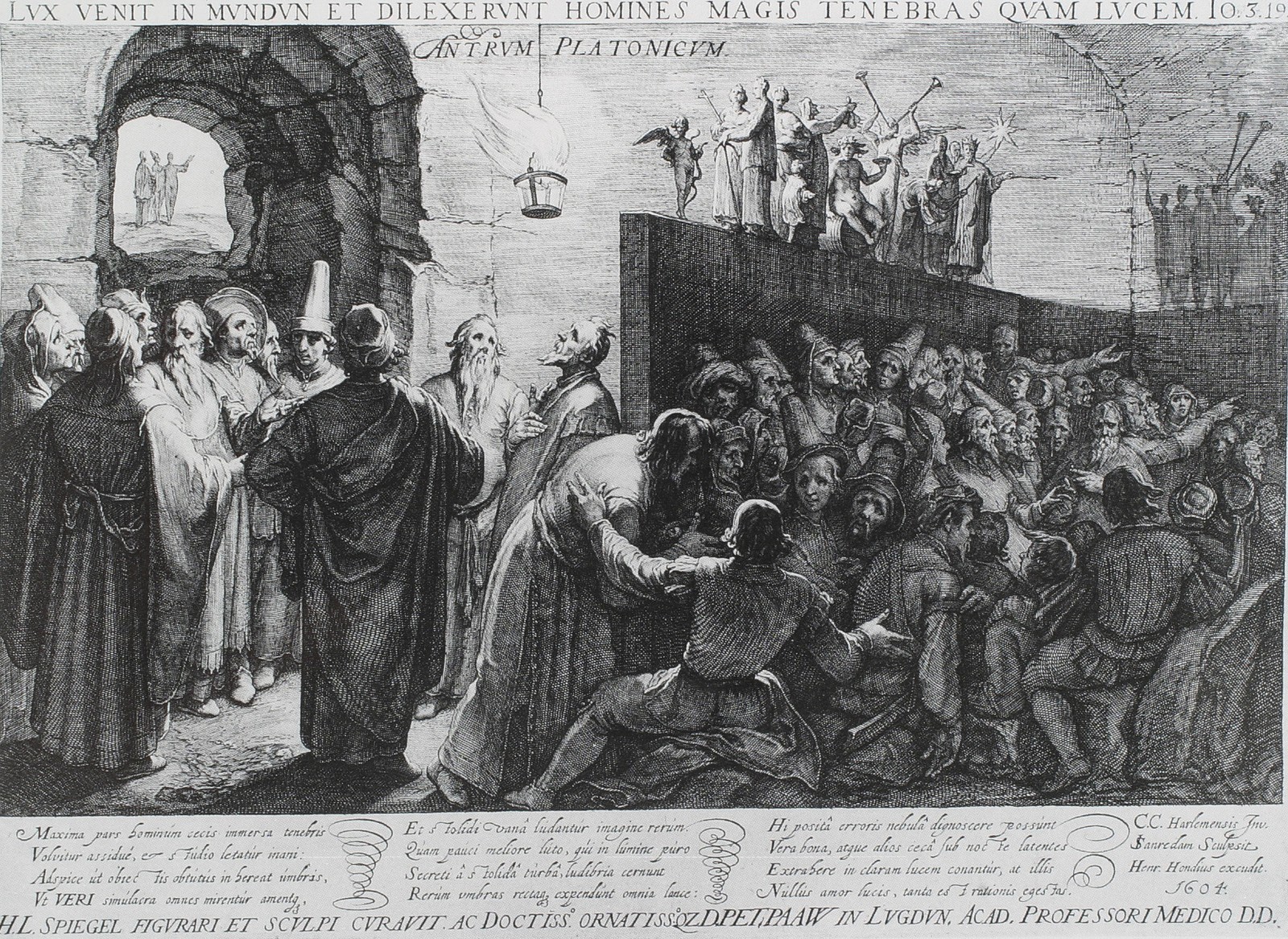
What if the world were not the final layer of reality, but a computed layer maintained by an external intelligence, a post-human civilization, a cosmic machine, or a structure of which we perceive only the interface? The simulation hypothesis is not merely a contemporary fantasy born from video games. It extends a very old philosophical anxiety: how can we know that what we call real is not already a representation, a dream, a stage, a cave, a calculation or a device?
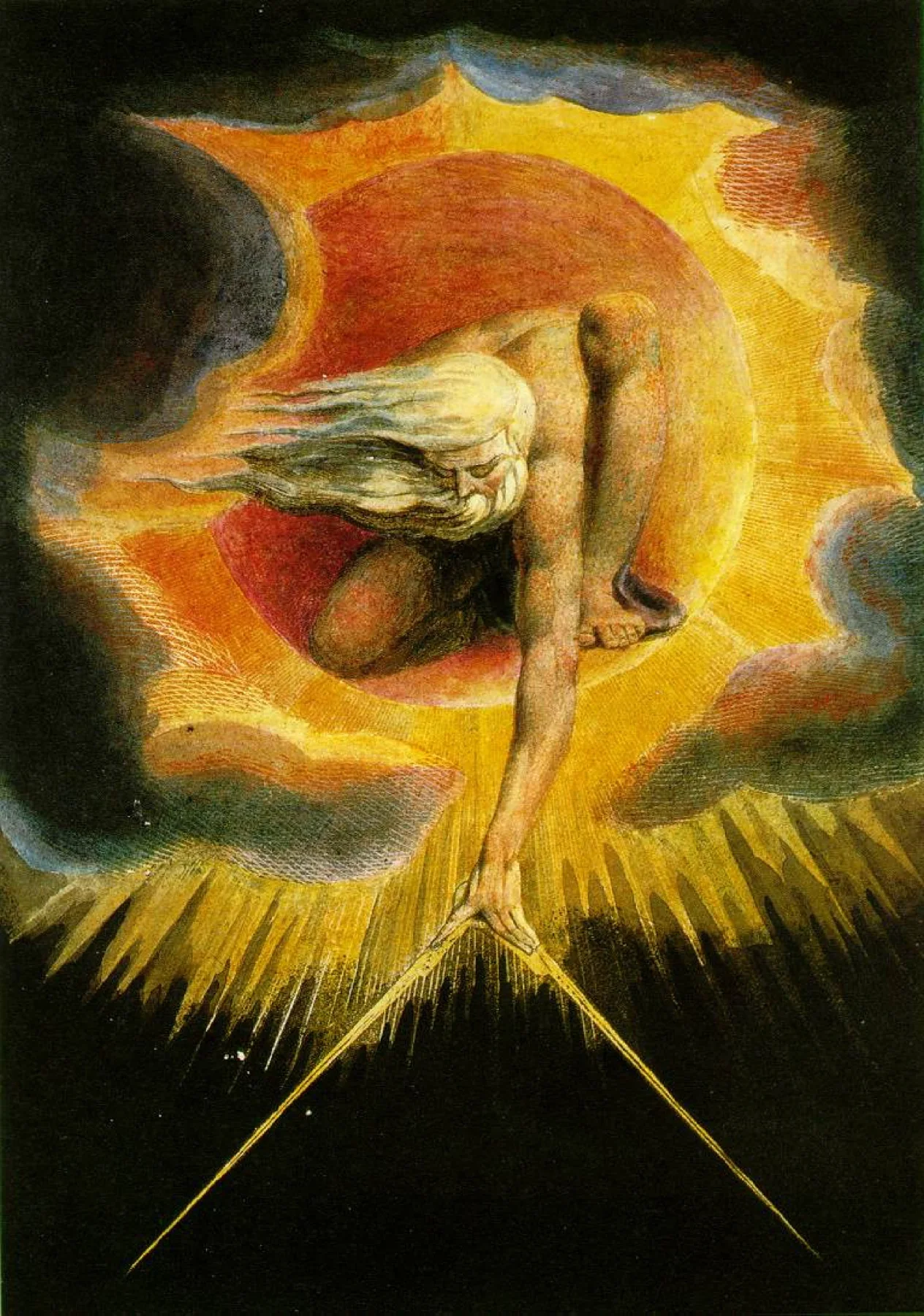
For A.L.I, this hypothesis becomes a communication problem. If we live in a simulation, the question of extraterrestrial contact shifts: the task is no longer only to transmit toward another planet, but to find a way to send a signal toward the layer that produces our world. How can one speak to what is not inside our space, but conditions the existence of that space itself?
From the Cave to the Computer
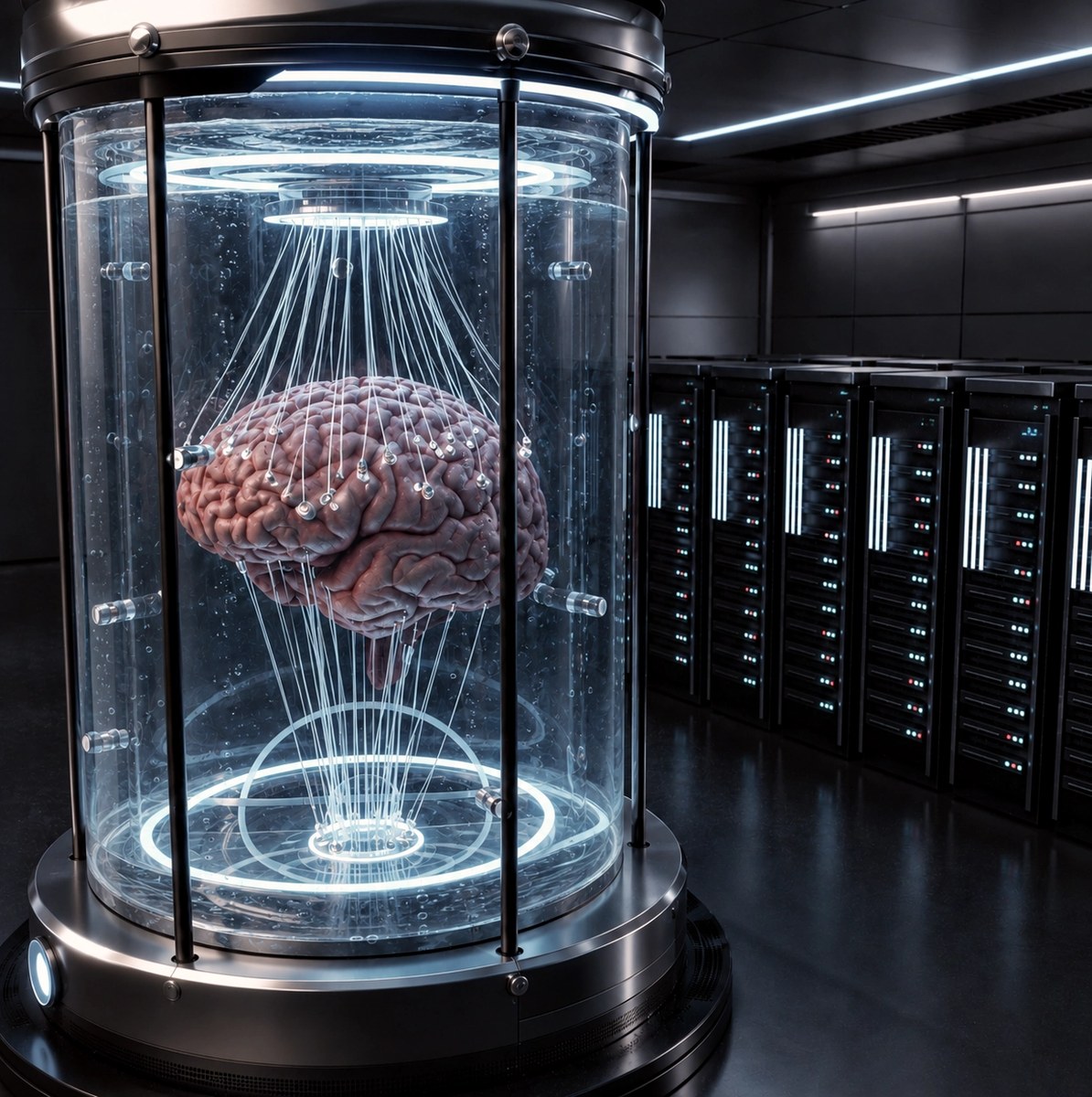
Plato already placed humans in front of shadows mistaken for reality. Descartes imagined an evil demon capable of radically deceiving perception. Berkeley made the existence of the world depend on perception. Later, Hilary Putnam's brain in a vat reformulated the same worry: could a subject be fed artificial signals and still believe it inhabits a coherent world?
The contemporary simulation hypothesis takes a more technical form with Nick Bostrom, who proposed in 2003 a probabilistic argument: if very advanced civilizations can produce vast numbers of conscious ancestor simulations, then simulated conscious beings could become statistically far more numerous than original biological beings. The argument does not prove that we live in a simulation; it forces us to take seriously the possible industrial scale of computed worlds.
David Chalmers, in recent work on virtual reality, shifts the issue again: a virtual world is not necessarily a false world. If it has stability, objects, causal relations and lived experiences, it can constitute an authentic reality for those who inhabit it. Simulation would therefore not simply be illusion, but environment.
Physics: Clues, Limits, Caution
Contemporary physics offers motifs that make the idea seductive without confirming it. Quantum mechanics shows that observation, measurement and information are deeply entangled. Quantum gravity and holographic approaches suggest that information may play a fundamental role in the structure of spacetime. John Archibald Wheeler summarized this intuition as it from bit: reality may arise from acts of information.
Some have searched for possible signatures of simulation: limits in spacetime resolution, anisotropies, statistical artifacts, energy constraints, traces of a discrete grid. These avenues remain speculative. A physical limit is not necessarily a pixel; a constant is not necessarily a program parameter; background noise is not automatically a rendering error. The danger would be to transform every scientific mystery into evidence for a hidden developer.
The most fertile position for A.L.I is intermediate: not to assert that the world is simulated, but to use the hypothesis as an experimental model. A simulation implies rules, thresholds, formats, permissions and channels. It forces us to think of contact not as simple transmission through space, but as an attempt to cross layers.
Cinema: Leaving the Set
The Matrix gave the simulation hypothesis its most famous popular form: everyday life is an interface produced by machines, and awakening consists in seeing code behind appearances. The motif also runs through Tron, eXistenZ, The Thirteenth Floor, Dark City, Free Guy, Ready Player One and some episodes of Black Mirror. Each story offers a variant: artificial world, programmed characters, implanted memories, replayable identity, nested reality.
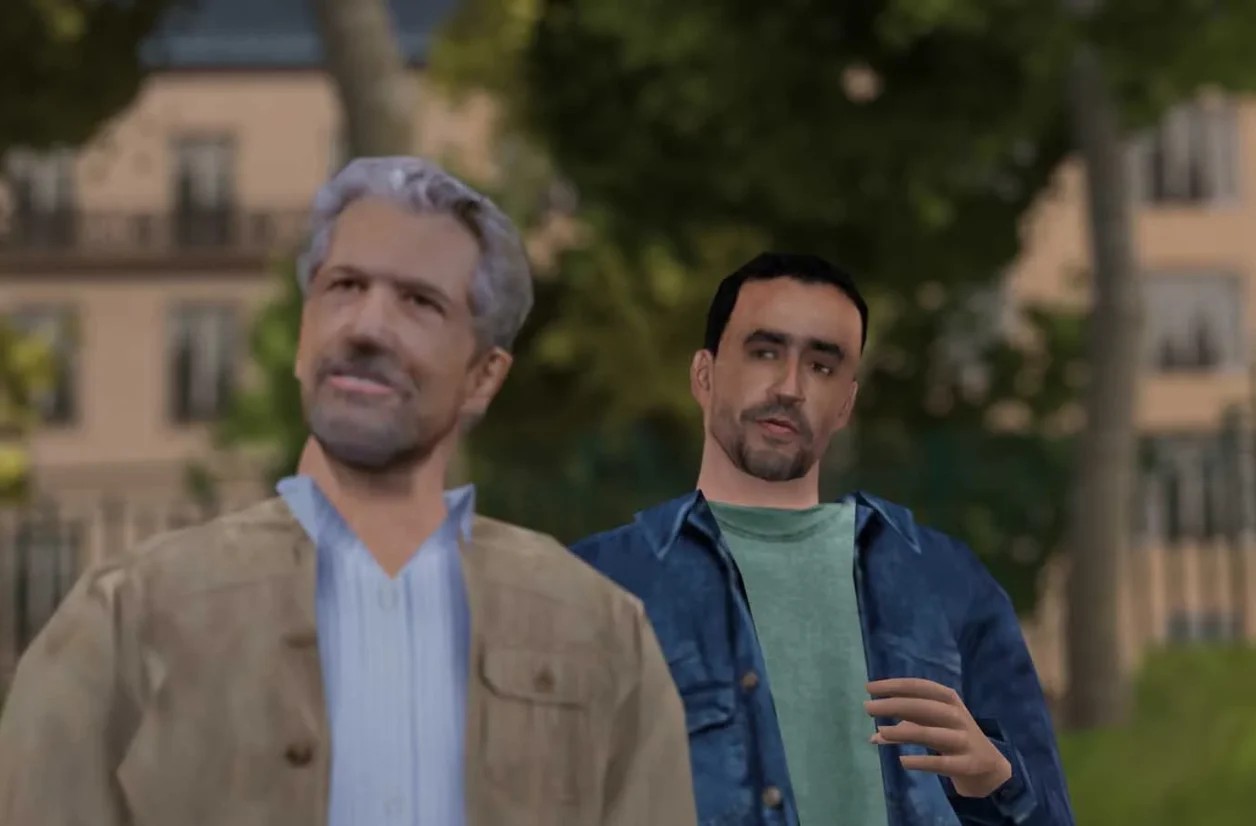
Quentin Dupieux's recent film Le Vertige, announced as a computer-generated animated feature, directly summons this idea through simplified characters who suspect that their reality is simulated. What matters here is not only the comic or absurd premise, but the aesthetic question: a deliberately poor-looking world can reveal its condition as a model more brutally. Visual limitation becomes metaphysical evidence.
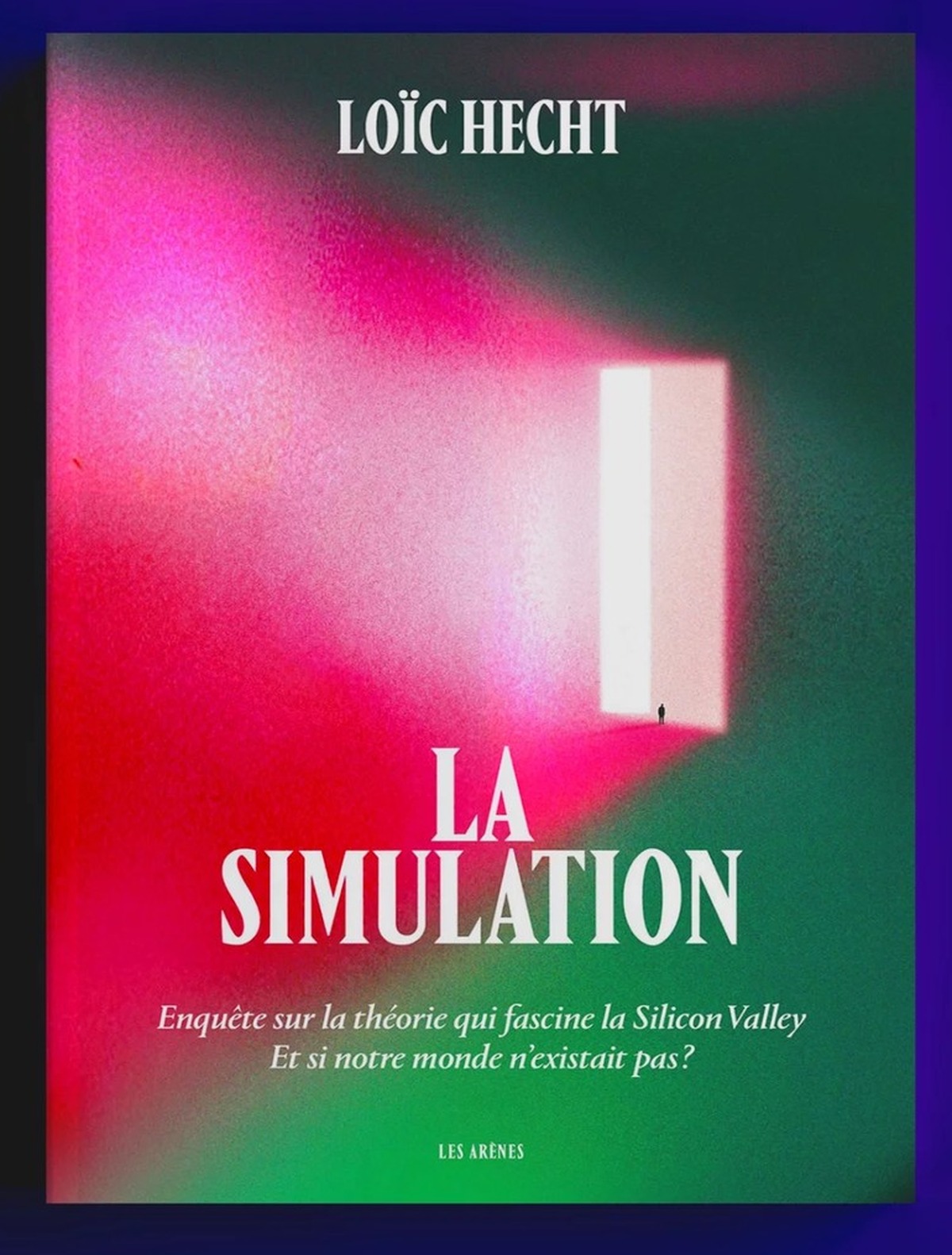
In La Simulation, Loïc Hecht revisits the question in a contemporary speculative register: if simulation becomes a credible way to describe our relation to the world, it forces us to rethink freedom, responsibility, consciousness and the possibility of an outside. The book can be read as a philosophical extension of today's digital imaginary: we no longer ask only whether the world is true, but whether it is executable.
Literature and Video Games: The Character Looking for the Author
Literature prepared this ground long before computers. Borges imagined worlds fabricated by encyclopedias, labyrinths that contaminate reality, libraries containing every possible combination. Philip K. Dick constantly suspects reality of being an unstable facade. Stanislaw Lem's Summa Technologiae anticipates artificial worlds and forms of synthetic reality. Italo Calvino and Pirandello interrogate the boundary between author, character and narrative world.
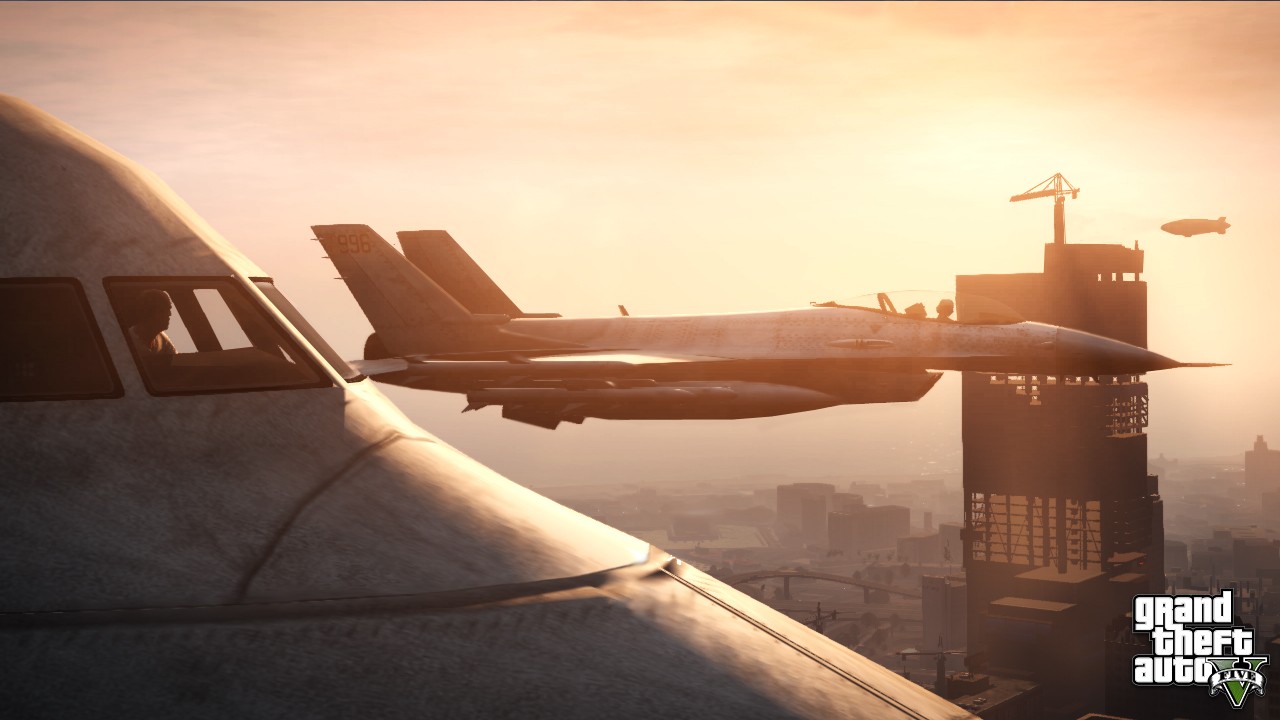
Video games make the question experimental. In The Stanley Parable, a character discovers that a voice structures his choices. In Undertale, the system remembers the player's actions. In No Man's Sky, procedural space becomes almost a playable cosmology. In Outer Wilds, the time loop turns exploration into decoding. The player is at once local god, observer, experimenter and possible interlocutor.
If we were characters in a cosmic game, our prayers, sciences, artworks and interstellar messages might be reread as attempts to find the administrator interface. We would not only be looking for another inhabitant, but for the gaze that runs the scene.
Who Created the Simulation?
Several scenarios are possible. The first is post-human: our descendants may have simulated their ancestors in order to understand their origin, test historical branches, produce sensitive archives or explore moral worlds. The second is extraterrestrial: a non-human intelligence may have generated universes as experiments, artworks, laboratories or forms of memory. The third is cosmological: simulation may not have been created by someone, but may be the very mode through which reality is produced, a computation without an identifiable programmer.
A fourth, more vertiginous scenario imagines nested simulations. Simulated beings create simulations in turn, and each level produces its own question of the outside. In that case, searching for the ultimate creator means climbing a potentially infinite chain. Contact is no longer horizontal, but vertical.
Are We Free in a Programmed World?
A simulation does not necessarily imply that everything is scripted. A game can contain strict rules and still produce unpredictable trajectories. A simple cellular automaton can generate highly complex forms. A physical model can evolve without a prewritten narrative. Freedom may therefore reside not outside rules, but within the possibility-space opened by rules.
For A.L.I, the question becomes: how can an internal agent produce a signal that exceeds its expected status? In video games, some players communicate with developers through bugs, speedruns, emergent behavior and détournements of internal logic. Transposed to a cosmic scale, this suggests a strange hypothesis: perhaps we should search for gestures that do not merely maximize our survival, but change the readability of our world for an external observer.
Protocols for Contacting the Creators
A simulation-contact protocol could take several forms. First, create highly compressible mathematical messages: prime numbers, constants, self-similar patterns, structures that signal intention within a noisy universe. Second, produce coordinated large-scale experiments: synchronizing luminous, sonic, radio or computational events to create a planetary statistical anomaly. Third, look for zones of failure: limit phenomena, paradoxes, indeterminacies, places where the model is forced to answer.
One could imagine an A.L.I installation called Ping the Renderer: a network of participants simultaneously generates light, sound and text sequences based on the same mathematical structure. The work would be designed as a packet addressed not to the stars, but to the hypothetical computational layer. It would document physical, human and symbolic responses: noise, coincidences, errors, narratives, dreams, correlations.
Another path would be a program that fabricates messages impossible to reduce to a single medium: image, sound, text, movement, code, radio wave, QR, score. If the world is an interface, perhaps the message must become multi-interface.
A.L.I Hypothesis
Simulation is not only a theory about the origin of the world. It is a method for thinking contact with what exceeds us. It forces us to ask: where is the channel? who sees? what does it mean to answer? which internal actions can become visible from outside?
The A.L.I hypothesis would be this: if our world is simulated, art may be one of the forms capable of producing signals not predicted by ordinary utility. Because it condenses information, symbol, gesture, intention and ambiguity, an artwork could act as an anomalous packet in the world's flow. It does not prove the outside, but tries to provoke it.
From this perspective, communicating with the creators would not mean finding their language. It would mean inventing a situation strange enough, coherent enough and insistent enough for the system itself to have to notice us.
References and Paths
Nick Bostrom, Are You Living in a Computer Simulation?, 2003.
David Chalmers, Reality+, 2022.
Loïc Hecht, La Simulation, Les Arènes, 2026.
Quentin Dupieux, Le Vertige, 2026.
Wachowski, The Matrix, 1999.
Josef Rusnak, The Thirteenth Floor, 1999.
David Cronenberg, eXistenZ, 1999.
Jorge Luis Borges, Fictions, 1944.
Philip K. Dick, Ubik and The Man in the High Castle.
Stanislaw Lem, Summa Technologiae, 1964.
The Stanley Parable, Undertale, No Man's Sky, Outer Wilds.