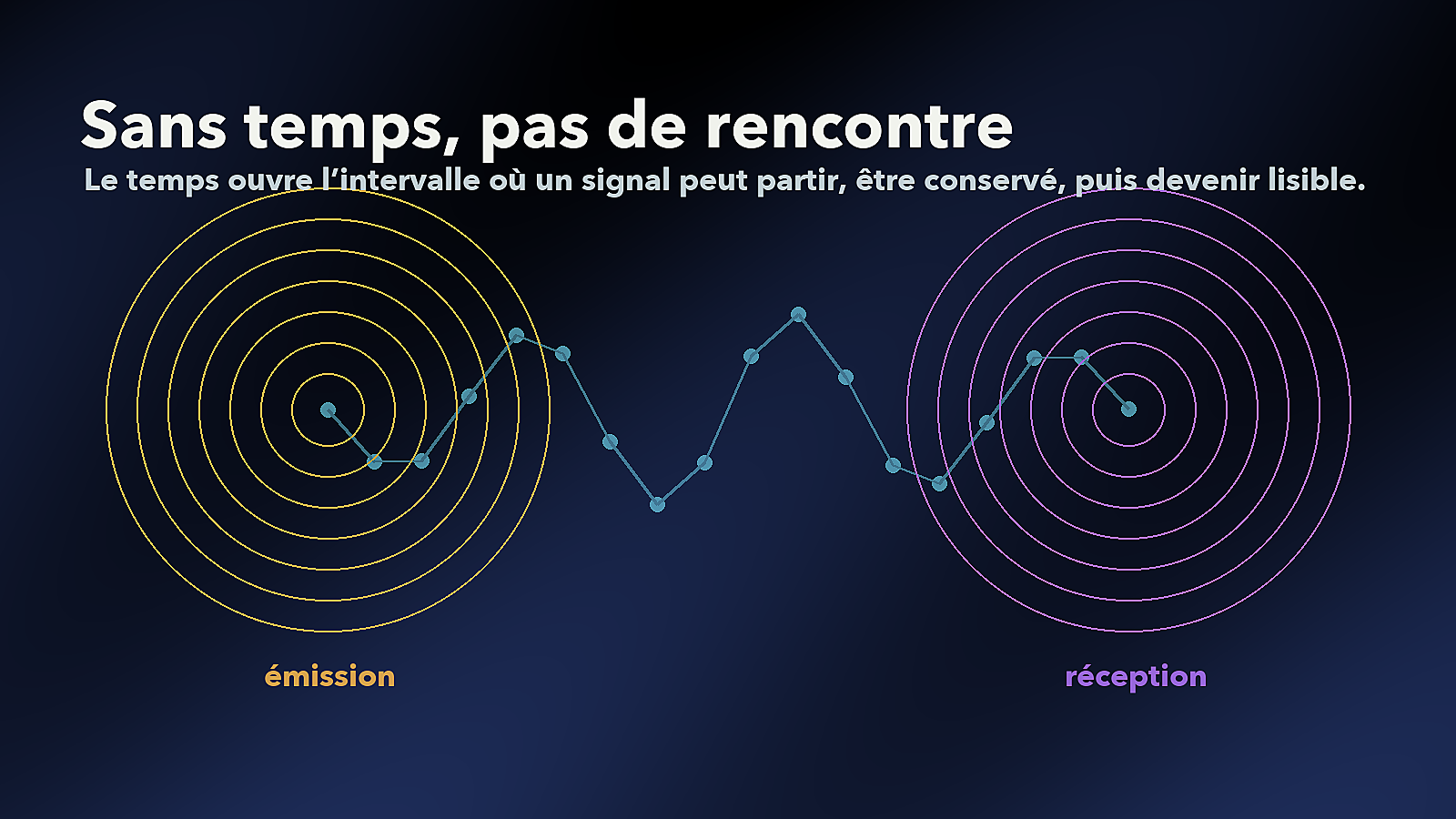
Without time, there is no encounter. There may be objects, bodies, worlds and signals, but nothing actually meets. Encounter requires a gap, a waiting period, propagation, and a minimum of memory: something has to leave, last, cross a distance, then be received.
For A.L.I, time is therefore not simply a cosmic background. It may be the first language of contact. Before knowing what a message says, one must know when it speaks, how long it can survive, at what rhythm it returns, and in what memory it is inscribed.
1. Origins: counting, waiting, returning
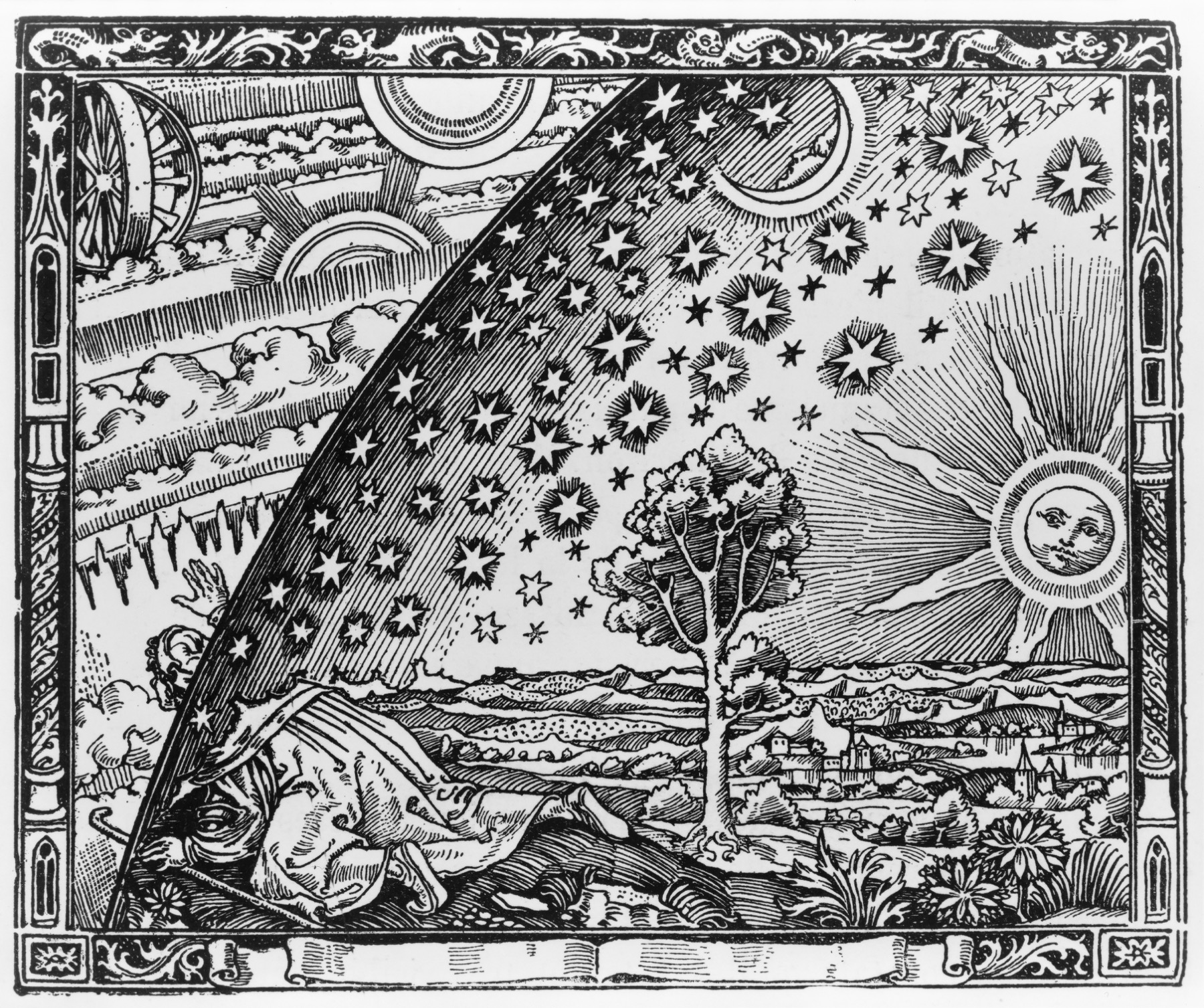
The first human forms of time are not abstract. They come from day and night, seasons, lunar cycles, germination, hunting, death and the return of stars. Time is first a way to coordinate bodies with a world: sleep, sow, wait, remember, anticipate.
Ancient calendars, monuments aligned with solstices, agricultural rituals and cosmogonic narratives do not yet separate the measurement of time from its symbolic power. Time is both cosmic and social order. It says when to act, when to celebrate, when to transmit.
In this perspective, an interstellar message asks an archaic question in an extreme form: how can a sign survive long enough to meet a gaze that may not yet exist?
2. From lived time to measured time
Saint Augustine formulated one of the strongest intuitions: we know what time is as long as nobody asks us, but it becomes elusive as soon as we try to define it. The past is no longer, the future is not yet, the present immediately withdraws. Time seems to exist in memory, attention and expectation.
Henri Bergson later opposed homogeneous clock time to duration: a qualitative, lived, irreversible continuity. Duration is not a series of points on a line. It is texture, transformation, thickness. It resembles a melody more than a ruler.
This distinction is essential for A.L.I. A civilization may measure time with extreme precision while living it differently. If its biology, memory or environment differ from ours, its units of duration, rhythms of attention and forms of waiting may be radically other.
3. Science: relativity, entropy, clocks
With Newton, classical time appears absolute: it flows uniformly, independently of things. With Einstein, this evidence collapses. Relativity shows that time depends on motion and gravitation. Two clocks may not tick in the same way. Time becomes local, relative, bound to space.
This is decisive for interstellar language. Between two planets, probes or civilizations, there is no simple shared present. The message travels through spacetime, where distance, velocity and gravity transform the conditions of reception. To communicate is already to negotiate clocks.
The other major arrow comes from thermodynamics. Entropy gives time a direction: states disperse, traces decay, archives age. A message intended for the cosmos must therefore resist erasure. It must be redundant, repairable, readable despite loss.
Atomic clocks introduce a third dimension: time is no longer only astronomical, it becomes frequency. The modern second is defined through a cesium transition. Time becomes a stabilized vibration. This opens both a poetic and technical hypothesis: perhaps a universal message should not only describe a duration, but provide a frequency for synchronization.
4. Carlo Rovelli: the order of time undone
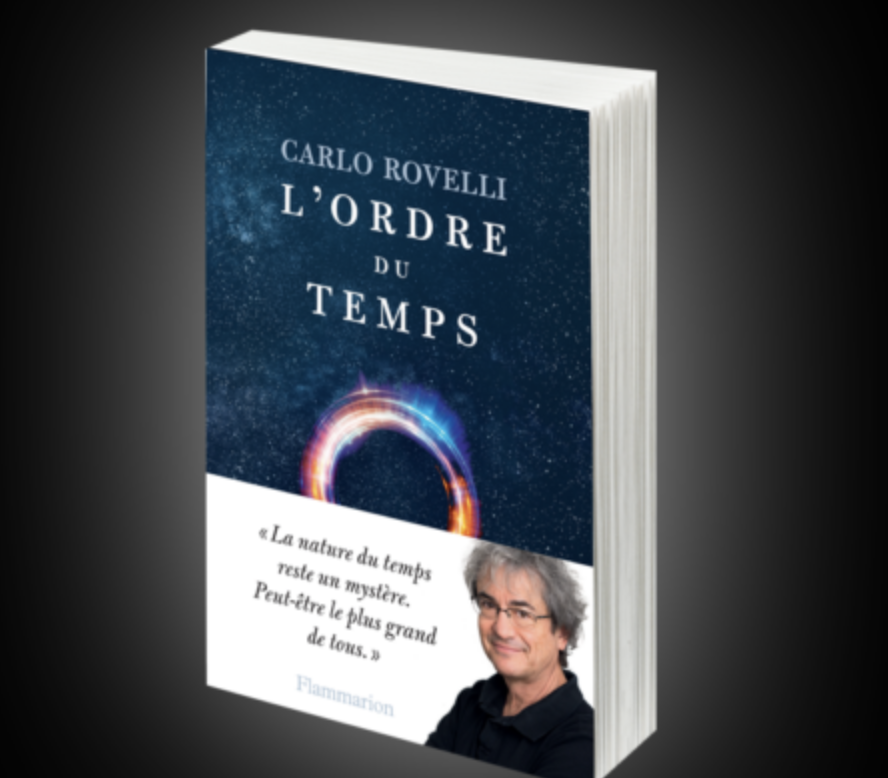
In The Order of Time, Carlo Rovelli offers an idea that is crucial for A.L.I: the time we think we know - single, universal, regular, simply oriented - dissolves when viewed through contemporary physics. There is no great common cosmic time wrapping all events in the same way.
Rovelli emphasizes several shifts: time passes differently depending on place and velocity; the clear distinction between past, present and future does not have the same status everywhere; irreversibility largely comes from our thermodynamic position, from the way we see the world through entropy and memory.
For A.L.I, this means that an interstellar message is never simply sent “in time”. It is sent between local times. It must cross not only distance, but temporal regimes: gravitational clocks, relative speeds, biological durations, technical memories, cultural expectations. Contact then becomes an operation of temporal translation.
5. Literature: time as inhabited memory
Literature has often understood time as a problem of memory. In Proust, a taste, sensation or smell can reopen a block of the past. Lost time is not destroyed: it is stored elsewhere, in the body, in associations, in involuntary memory.
In Borges, time becomes a labyrinth. In The Garden of Forking Paths, all possibilities unfold as branches. Time is no longer only succession; it becomes an architecture of variations. In Virginia Woolf it dilates within consciousness, while science fiction, from H. G. Wells to Ted Chiang, turns it into a machine, a loop, reversed causality or non-human perception.
Cinema extends this with Tarkovsky, who spoke of “sculpting in time”, with Chris Marker’s La Jetée, where an image becomes a temporal anchor, or with Arrival, where language transforms the perception of temporality.
6. Poetry and music: rhythms, returns, silences
Poetry does not merely measure time: it makes time. Verse, caesura, rhyme, enjambment and typographic blank organize expectation. A poem is a miniature time machine: it delays, accelerates, suspends, makes things return.
Music makes this even clearer. Time becomes direct matter. Bach builds architectures of return and variation; Messiaen explores non-retrogradable rhythms and durations inspired by birds, theology and modes of time; Steve Reich works with phasing, where identical motifs slowly shift until a new structure appears; John Cage turns silence into a duration of listening.
These practices can inspire A.L.I: a message for another intelligence might be less a sentence than a score. It could carry its instructions through repetition, shift, variation, return and silence.
7. A.L.I hypothesis: multidimensional, multifrequency, quantum memory
We can now propose a hypothesis: time is not only the line separating emission from reception. It is a multidimensional memory.
Multidimensional, because an event never exists in only one layer. It is physical, biological, psychic, social, technical, cosmological. A radio signal is also an expenditure of energy, a cultural choice, an archive, a rhythm, an address.
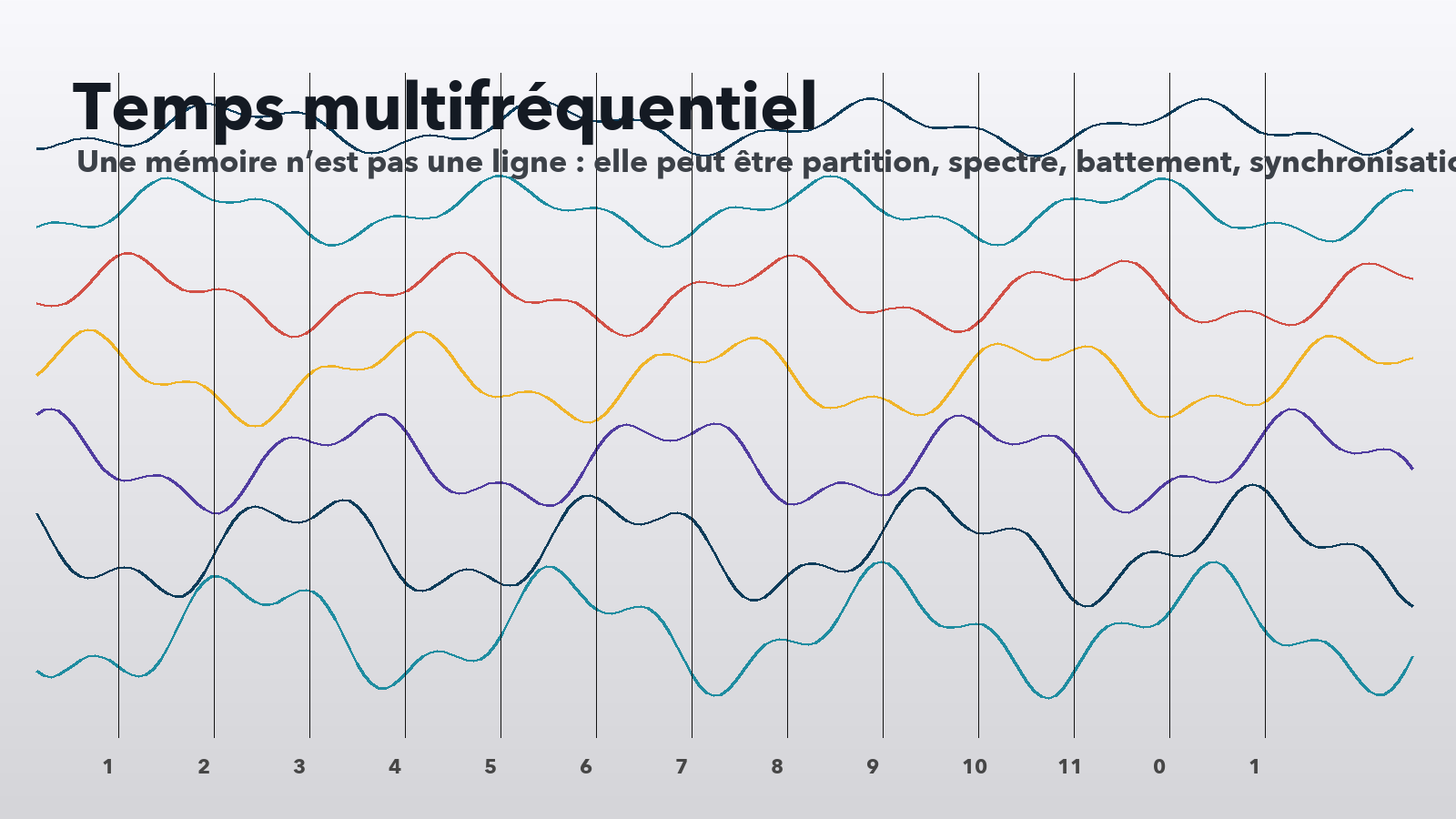
Multifrequency, because every system has its own speeds: heartbeat, circadian cycle, neural memory, atomic frequency, planetary rotation, orbit, pulsar, cosmic expansion. Communicating with another intelligence might mean finding a zone of common beat among these frequencies.
Quantum, not because entanglement would magically send instantaneous messages, but because quantum theory forces us to think state, probability, measurement and correlation. A message could be designed as a space of possibilities whose reception actualizes a form. To read would be to reduce a multiplicity of meanings into one trajectory.
8. Time as a protocol of encounter
If we want to invent a contact language, perhaps we must begin by transmitting a theory of time. Not “here is our name”, but “here is how we wait”. A civilization might recognize another intelligence by its way of repeating, preserving, dating, synchronizing and leaving a trace for later.
An A.L.I protocol could therefore send several temporal layers:
- a stable frequency serving as a shared clock;
- a series of repetitions with measurable variations;
- an archive capable of explaining its own aging;
- a pattern that changes according to observation time;
- a message whose several readings appear at different temporal scales.
In this model, contact is no longer merely information exchange. It becomes synchronization of expectations. To meet an alien intelligence would be to succeed, however briefly, in inhabiting the same form of duration.
9. Arrival: a writing system that contains time
Denis Villeneuve’s Arrival, already studied in another LABO article, adds a precise point here: the heptapod language does not merely represent time; it seems to include time in its very mode of writing. The circular logograms are not read as a sentence moving from left to right. They appear as global forms, in which beginning and end are conceived together.
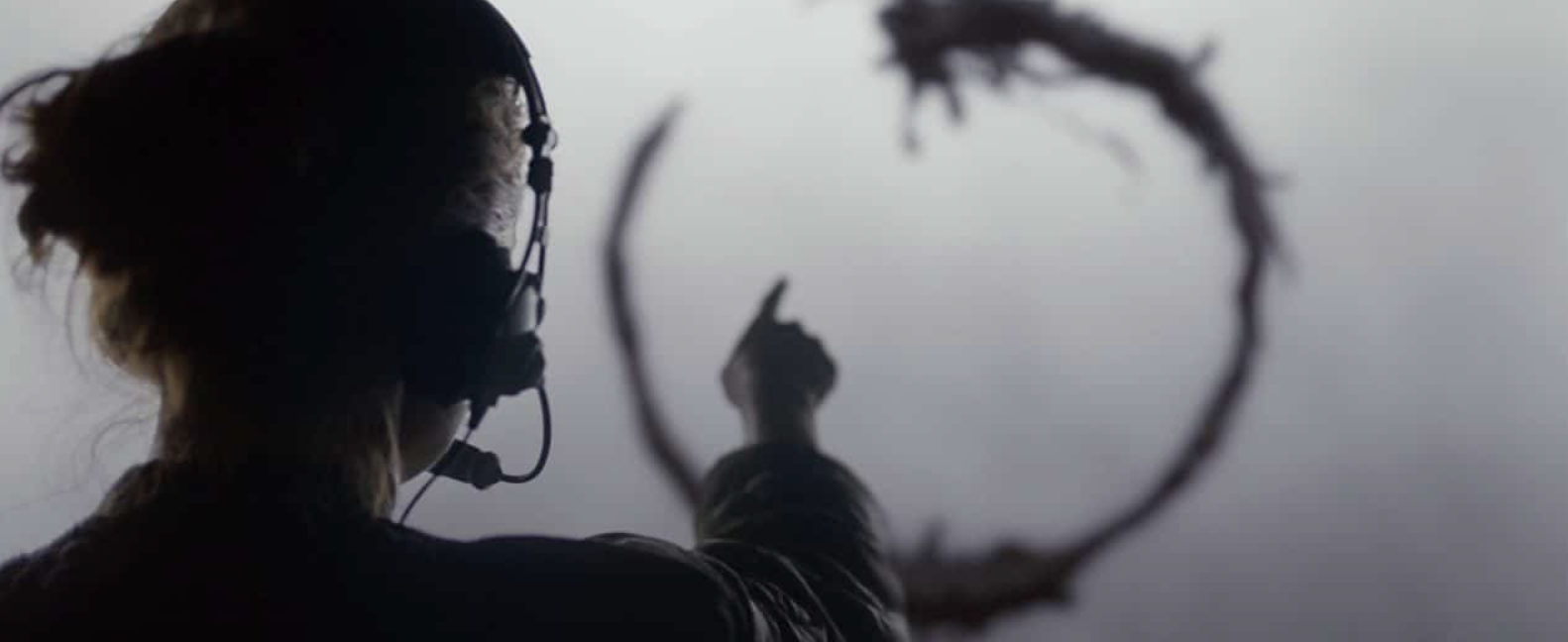
This is fundamental for A.L.I. Linear writing often assumes that meaning arrives piece by piece, in the same order as reading. A temporal writing system could instead require the sender to know the whole form before beginning. To write would then mean depositing a complete event, like a score already traversed by its future.
In a contact hypothesis, an advanced language could therefore include temporality within its syntax: observation duration, order of revelation, periodic returns, possible bifurcations, delayed readings. The message would not only say something in time; it would make time a dimension of dialogue.
10. AI: an interface for passing through time
Artificial intelligence can be understood as a statistical time machine. It does not see the future prophetically; it projects probable continuations from massive archives. Every generated text, image or sound is an anticipation: among several possible futures of a sentence, motif or situation, it actualizes one.
This opens an A.L.I hypothesis: AI could become an interface for passing through time. It could link traces of the past, signals of the present and future projections inside a single latent space. It could simulate what a message becomes after noise, translation, forgetting, cultural mutation or reception by another form of intelligence.
In a contact protocol, AI would therefore not only translate between languages. It would translate between temporalities. It could test the survivability of a message, produce several futures of reading, detect the structures that remain stable, and propose forms capable of being understood later by unknown recipients.
11. Installation or software proposal
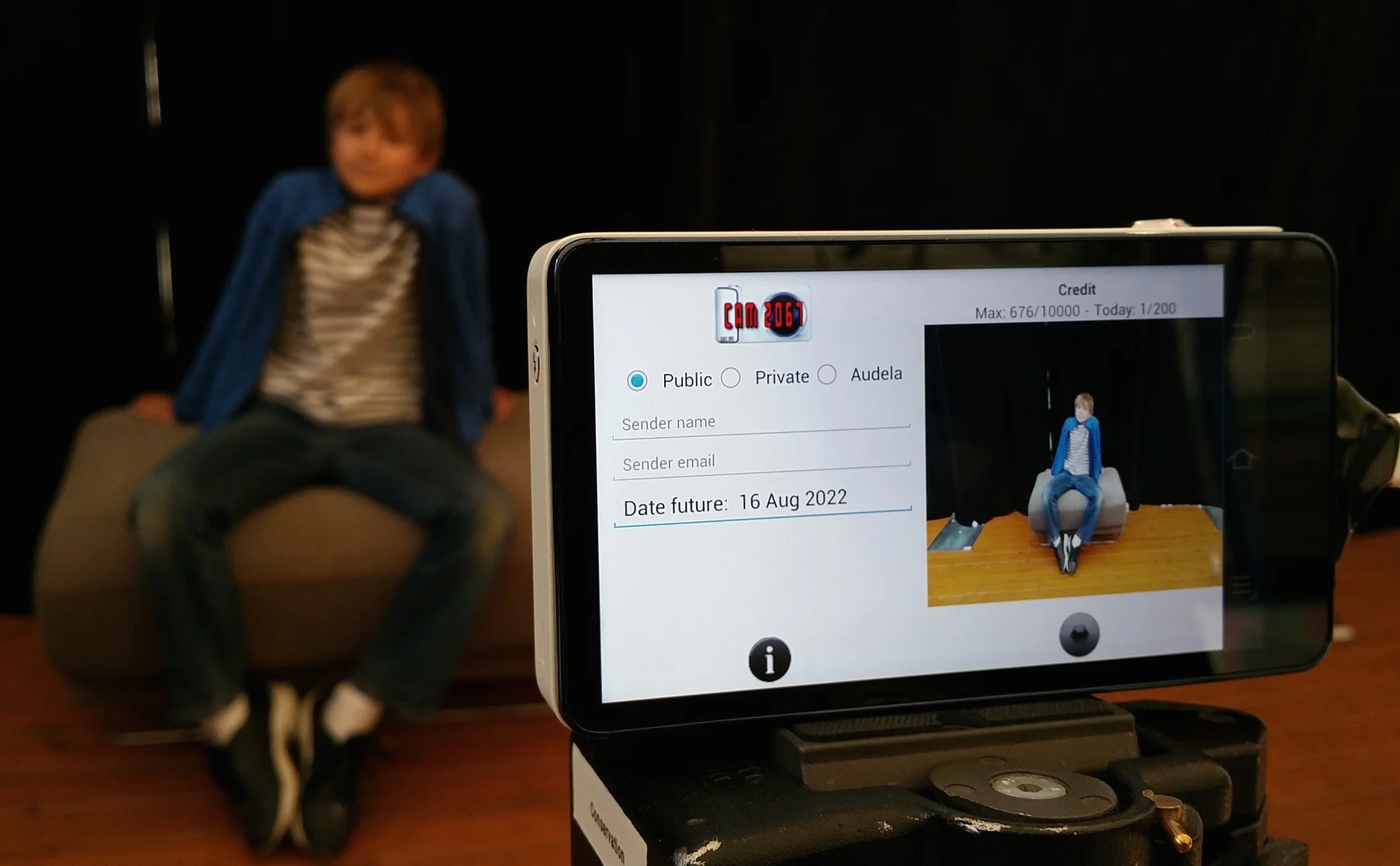
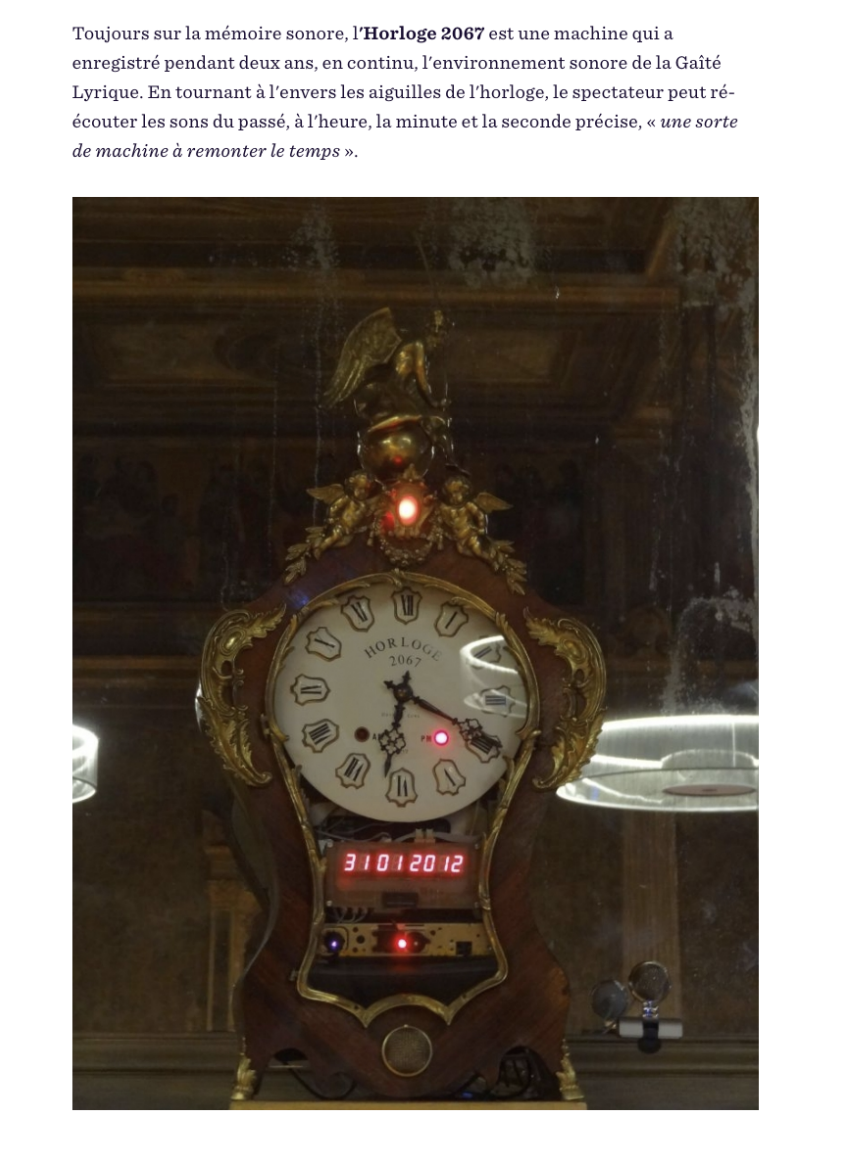
One could build an installation titled Clock for an Absent Intelligence. It would receive several flows: pulsars, heartbeats, a simulated atomic clock, the breathing rhythm of the public, sound archives, light variations. A program would transform these flows into a luminous and sonic score.
The viewer would never see “the message” all at once. They would have to stay, return, wait. Some layers would appear after a few seconds, others after several minutes, others only by comparing two visits. The device would make tangible that understanding is not only decoding: it is accepting a shared duration.
12. Conclusion: time before language
A.L.I could formulate this rule: every message begins with a clock. Before the sign, there is the interval. Before the sentence, there is rhythm. Before encounter, there is the possibility that two presences do not yet coincide, but may still reach one another.
Time is therefore not only what separates us from other worlds. It is also what makes their encounter thinkable. It gives the signal a route, memory a depth, waiting a form, and the unknown a chance to become readable.
Sources and leads
- Saint Augustine, Confessions, Book XI: https://en.wikipedia.org/wiki/Confessions_(Augustine)
- Henri Bergson, Time and Free Will: https://en.wikipedia.org/wiki/Time_and_Free_Will
- Stanford Encyclopedia of Philosophy, Time: https://plato.stanford.edu/entries/time/
- NIST, time and frequency division: https://www.nist.gov/pml/time-and-frequency-division
- NASA, relativity and time travel: https://spaceplace.nasa.gov/time-travel/en/
- Einstein Online, relativity and clocks: https://www.einstein-online.info/en/spotlight/changing_places/
- Jorge Luis Borges, The Garden of Forking Paths: https://en.wikipedia.org/wiki/The_Garden_of_Forking_Paths
- Olivier Messiaen: https://en.wikipedia.org/wiki/Olivier_Messiaen
- Steve Reich: https://en.wikipedia.org/wiki/Steve_Reich
- John Cage, 4′33″: https://en.wikipedia.org/wiki/4%E2%80%B233%E2%80%B3
- Andrei Tarkovsky: https://en.wikipedia.org/wiki/Andrei_Tarkovsky
- Carlo Rovelli, The Order of Time: https://en.wikipedia.org/wiki/The_Order_of_Time_(book)
- Arrival, Denis Villeneuve: https://en.wikipedia.org/wiki/Arrival_(film)