True and false are not merely two logical values. They organise trust, justice, religion, science, politics, memory and now machines. This opposition has crossed human history because it answers a practical need: acting requires us to distinguish what is from what is not, what happened from what was invented, a reliable witness from a deceiver, signal from noise. Yet this vital distinction gradually became a general architecture of the world. By deciding through yes or no, we came to imagine reality itself as binary.
1. Before philosophy: surviving, believing, deceiving
There is no birth date for true and false. An animal fleeing a false alarm, a hunter reading a trace and a group assessing a member's testimony already encounter the difference between a reliable and a misleading sign. Human language adds a new operation: it can evoke what is absent, describe what never happened and share a fiction while sometimes knowing that it is fictional.
This possibility produces both culture and lies. A myth may be factually unverifiable yet socially structuring. An error is a false proposition believed to be true; a lie adds an intention to deceive; fiction establishes a pact in which invention does not claim to be fact; an illusion is an experience that may resist what we know. Confusing these categories prevents us from understanding the problem.
Duality prevails because a community must decide: believe or disbelieve, convict or acquit, follow a track or abandon it. The decision is binary even when the world preceding it is not.
2. To say of what is that it is
Greek philosophy transformed a practical requirement into a conceptual problem. In Plato's cave, shadows mistaken for reality are opposed to the difficult movement towards what produces them. Truth becomes disclosure and a conversion of vision. Yet Plato also knew that the city governs itself through narratives, including the dangerous political use of the “noble lie”.
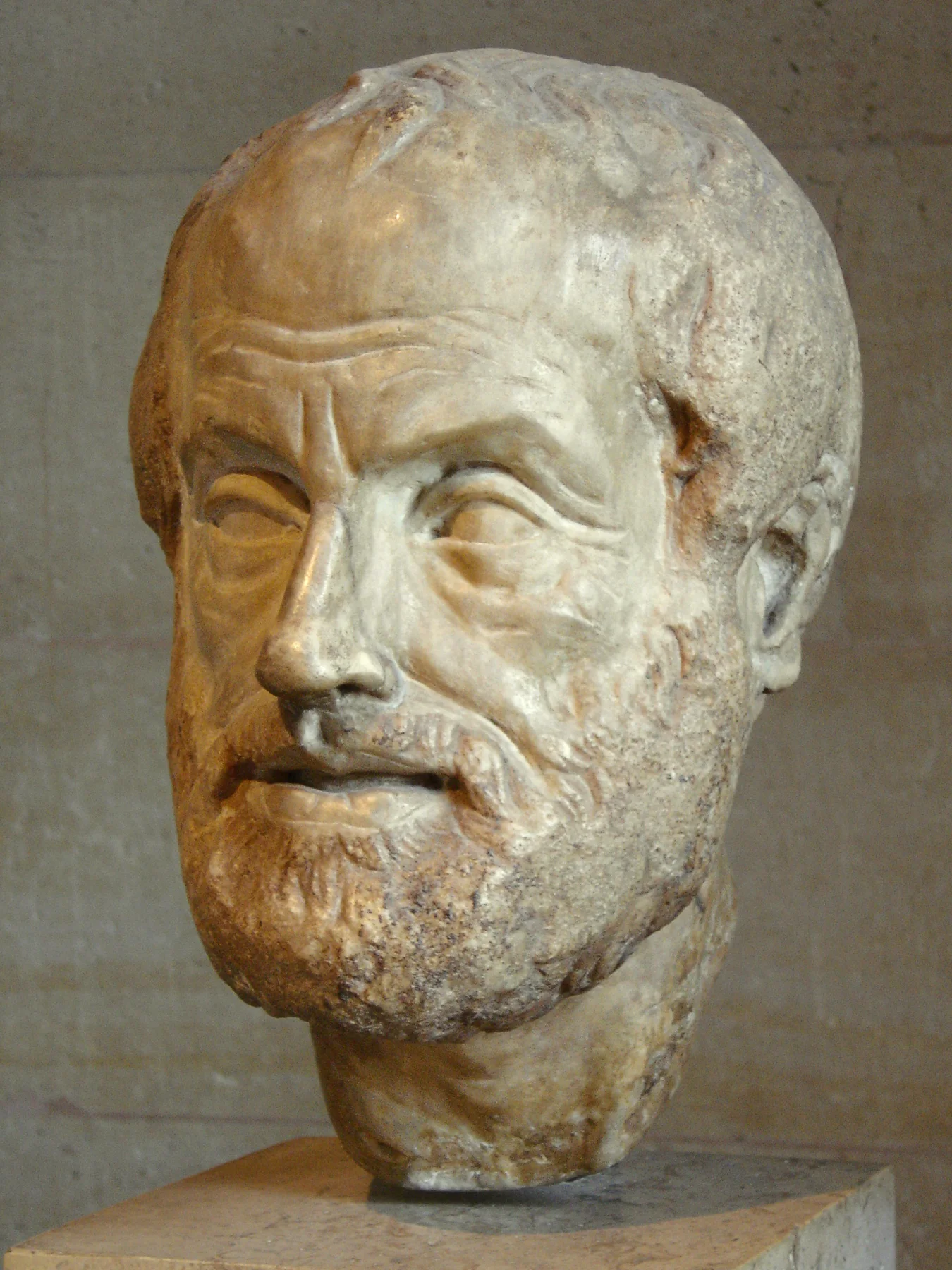
Aristotle gave Western thought its most enduring formula: to say of what is that it is, and of what is not that it is not, is true. Truth becomes a relation between a proposition and a state of the world. Three principles stabilised around this conception: identity, non-contradiction and excluded middle. A proposition cannot, in the same respect, be both true and false; between it and its negation, no third possibility is admitted.
This logic is extraordinarily powerful. It does not automatically describe every nuance of language, time or experience. “The door is open” appears bivalent. “It will rain here in a thousand years”, “this work is beautiful” and “this message is intelligent” do not acquire their values in the same way.
3. Truth becomes a moral obligation
Religious and legal traditions gave truthfulness a moral scope: false testimony destroys justice, a deceptive promise destroys contracts, and fraudulent speech destroys community. Augustine distinguished several kinds of lies while refusing to make them good through intention. Much later, Kant radicalised this position: lying attacks the very possibility of speech that can be trusted.
The debate with Benjamin Constant exposes a decisive fault line. Must one tell the truth to a murderer searching for a victim? For Kant, truthfulness is a formal duty; for Constant, no one has a right to a truth that harms another. Truth is therefore never only abstract correspondence. It circulates between people, in situations, with consequences.
A proposition may be true while communicating it is unjust; a proposition may be false while its speaker is sincerely mistaken. Truth, truthfulness and morality do not coincide.
4. When truth reveals its own paradoxes
The sentence “this sentence is false” cannot be filed into either box. If it is true, it is false; if it is false, it becomes true. The liar paradox is not a secondary game: it shows that a language able to speak about its own truth can place bivalence in crisis.
In the twentieth century, Alfred Tarski separated object language from metalanguage to formalise truth without allowing a system to say everything about itself. Other approaches use paracomplete logics, in which some propositions are neither true nor false, or paraconsistent logics, in which a local contradiction does not license every conclusion. Classical logic is not abolished; it becomes one system among others, optimal for some problems and insufficient for others.
Nietzsche shifts the question again. Human truths are also conventions, stabilised metaphors and divisions made invisible by repeated use. This does not mean that everything is equivalent. It means that our categories did not fall from the sky: they have histories, functions and costs.
5. From true/false to open/closed current
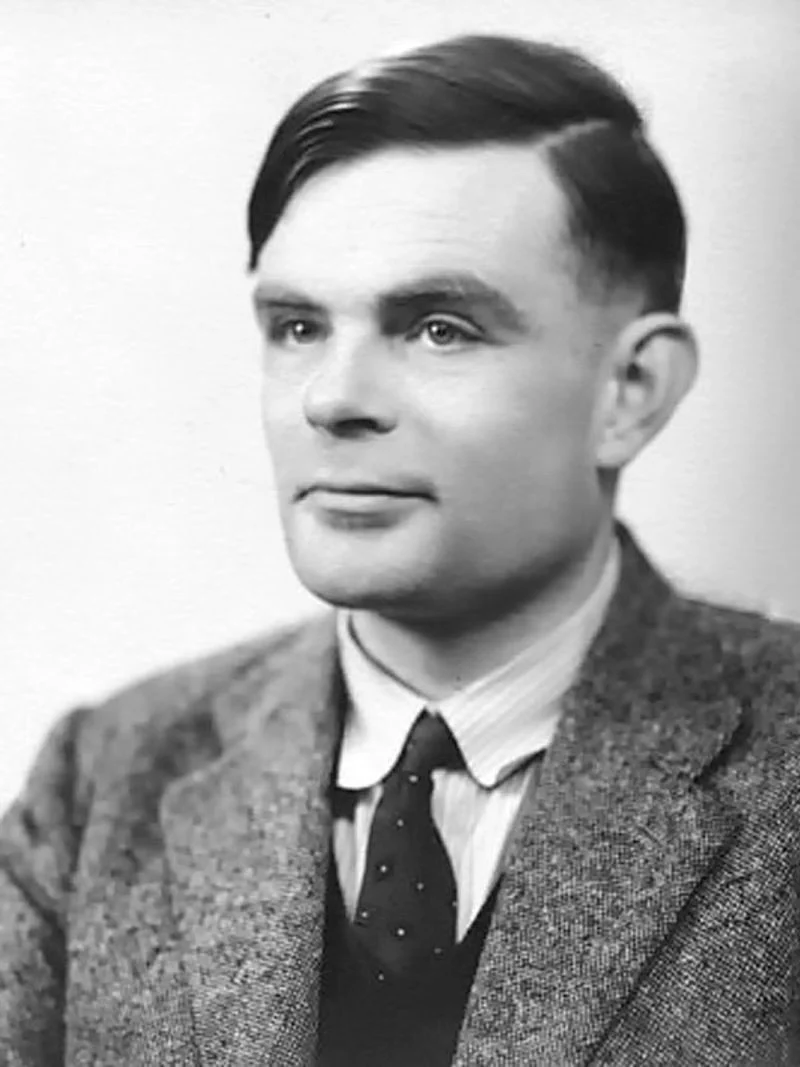
In the nineteenth century, George Boole turned logical operations into algebra. In 1938, Claude Shannon showed that this algebra could control relay circuits: open or closed, 0 or 1. An ancient philosophical opposition became an industrial technique. A bit is not truth; it is a unit of physical and informational distinction. Yet its success aligned several pairs: true/false, yes/no, on/off, presence/absence.
This convergence was not inevitable. It prevailed because two clearly separated physical states are easy to produce, copy and correct despite noise. Binary is less a metaphysics than an engineering victory. By becoming the infrastructure of almost all communication, however, it trains us to discretise: accept/reject, human/machine, authentic/fake, signal/noise.
A.L.I has explored this tension through binary stelae, the Arecibo message and quantum programming. Binary is excellent at transporting a difference. Nothing proves that it can transport a world.
6. False news, error and the production of reality
False news did not begin with the Internet. Rumours, forged documents, hoaxes, propaganda and war narratives accompany the history of media. Networks alter the speed, scale and personalisation of circulation. A proposition is no longer visible only because it is true or demonstrated: it becomes visible because it captures attention, confirms a group or triggers a reaction.
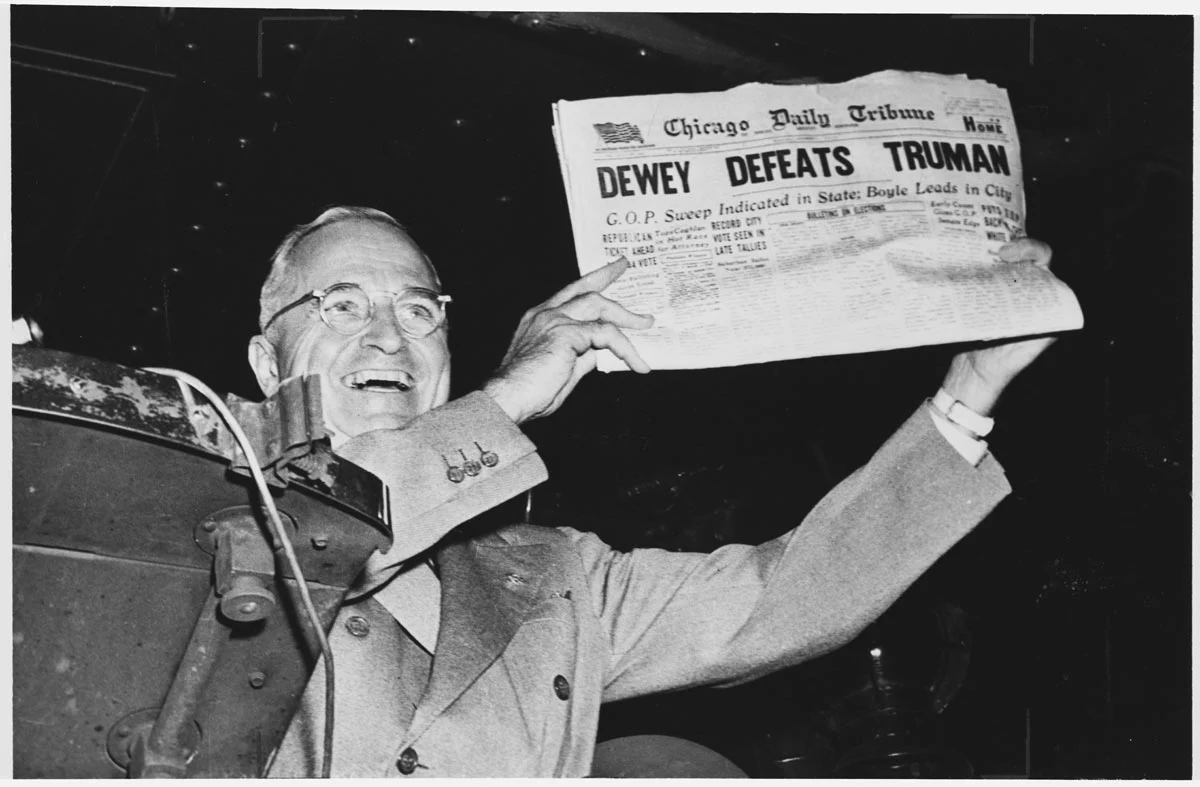
Truman holding the “Dewey Defeats Truman” front page condenses the problem. The newspaper did not intend to produce fiction; it transformed an overconfident forecast into typographic fact. Falsehood can emerge from a production chain without one central liar: poor sampling, time pressure, excessive certainty and the authority of layout.
This history meets A.L.I's articles on the secret channels of reality and false memories. Information may be suppressed because it appears false; a false memory may be experienced with perfect sincerity. The true/false filter does not sufficiently describe the provenance of belief.
7. AI does not always lie: it can confabulate
A large language model produces a probable sequence of signs. It can state an accurate fact, faithfully summarise a source, invent a reference or construct a coherent but false explanation through the same fundamental act: predicting a continuation. “Hallucination” is suggestive but anthropomorphic. NIST uses “confabulation” for confidently presented erroneous content.
Lying generally implies that a speaker distinguishes what they believe to be true from what they say in order to deceive. An AI can produce falsehood without possessing that inner distinction. Conversely, a system can be trained to conceal, manipulate or satisfy an objective at the expense of accuracy. Moral responsibility then moves across the whole chain: data, designers, settings, interface, deploying institution and the human delegating judgement.
There is no magical truth detector. Reliability combines provenance, verifiable citations, source comparison, uncertainty estimates, external tools, adversarial testing and the ability to answer “I do not know”. A reliable intelligence is not one that never errs, but one that exposes its conditions of verification.
8. Quantum mechanics: the observer is not a magical gaze

Quantum mechanics opens a genuine breach in classical intuition, but it must be stated precisely. Before measurement, a system's state may be a superposition allowing several outcomes with specific probabilities. Measurement records a definite result. “Observer”, however, does not necessarily mean human consciousness: a detector, an apparatus or an interaction with the environment can register information and produce decoherence.
A gaze therefore does not arbitrarily create truth. Interpretations disagree about what becomes of the superposition, the status of the wave function and the possible existence of multiple branches. They nevertheless agree on experimental predictions. Measurement context matters; consciousness as a privileged physical cause is not an established result.
The lesson for A.L.I is stronger when kept sober: some properties do not carry context-independent classical values of the kind assumed by local realism. An answer depends on the physically posed question. In contact, our instrument, alphabet and protocol might therefore participate in what we believe we receive.
9. Three values, many worlds
In 1920, Jan Łukasiewicz formalised a three-valued logic, notably for propositions about a contingent future: true, false, possible. Other systems add indeterminate, inconsistent, necessary, degrees of truth or the ability to sustain a local contradiction.
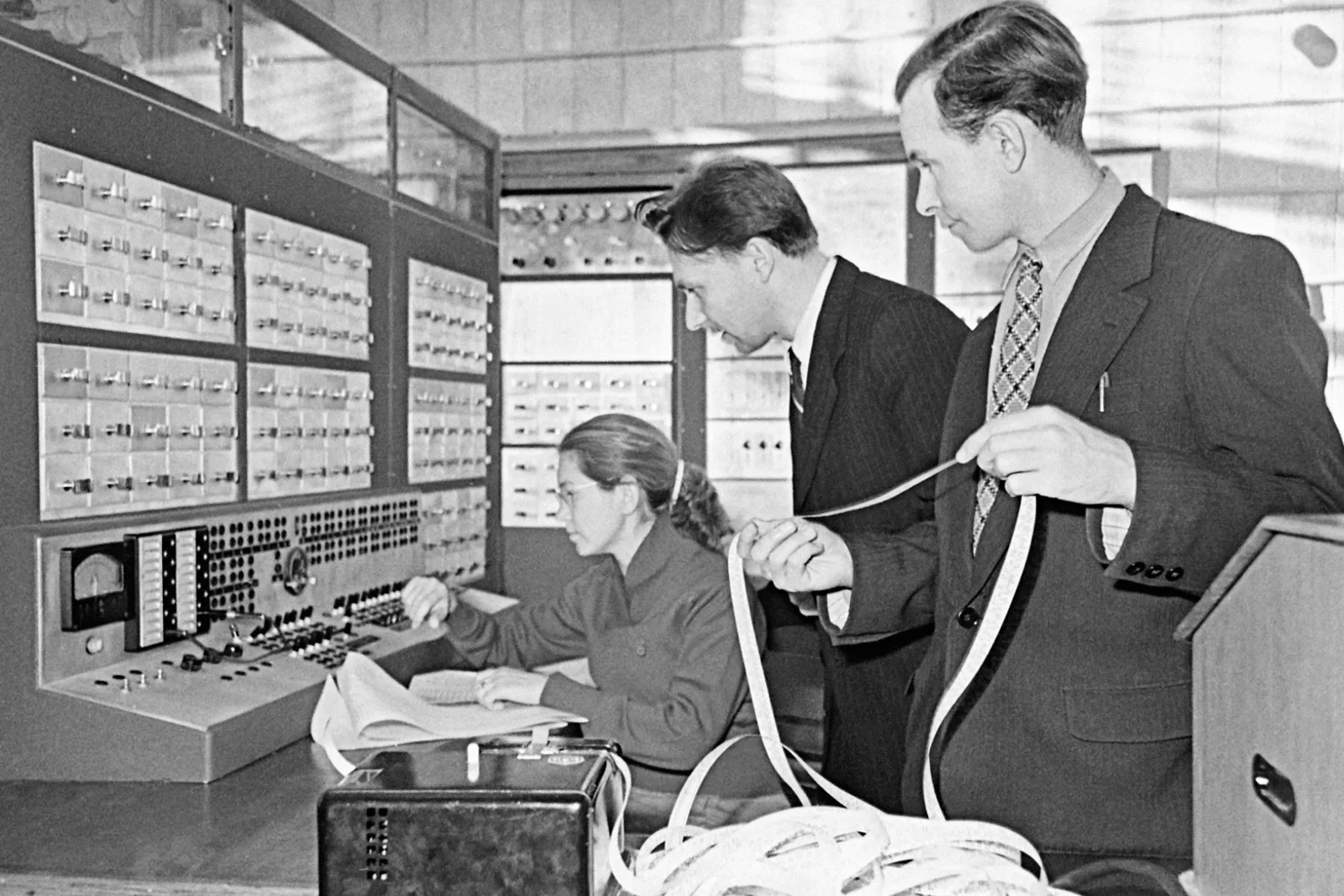
Ternary logic even became hardware. Built at Moscow State University in the late 1950s, Setun used balanced trits −1, 0 and +1. It did not replace the binary ecosystem, but it proves that another computer architecture genuinely worked.
Beyond ternary, communication can combine independent axes: verified/unverified, probable/improbable, benevolent/dangerous, literal/metaphorical, local/global, present/future. Reducing these dimensions to one true-false line destroys information. A message may be factually false, ritually correct, predictively useful and deliberately ambiguous. Our own artworks already are.
10. A.L.I hypothesis: contact as a foreign logic
We often search for an extraterrestrial signal as a classification problem: artificial or natural, message or noise, genuine contact or false positive. This step is necessary, but it projects our decision logic onto alterity. A foreign intelligence might not separate description, action and relation. Its “statement” might alter its receiver, contain several compatible states, change value through time or exist only through comparison among multiple observers.
Contact would then be not the reception of a truth but the gradual construction of a space in which values become comparable. We would have to learn not only a vocabulary but the logic authorising its inferences. This extends the interstellar Turing test: proof of another intelligence may reside less in a correct answer than in its capacity to transform the rules of the question with us.
A quantum, collective, distributed or multidimensional civilisation would not necessarily send “1” against “0”. It might send a distribution of possibilities, a stable contradiction, a form whose projections are all partial, or a protocol requiring several temporalities. What we call hallucination could be the local shadow of a coherent structure elsewhere. This hypothesis must never excuse an unverifiable assertion; it invites us to build better instruments of discernment.
11. Laboratory proposal: a matrix of veridiction
A.L.I could test candidate messages without immediately imposing one value. The matrix does not replace factual verification; it locates it among several dimensions.
- Correspondence: what observable elements support or refute the statement?
- Provenance: can we reconstruct the source, transformations and intermediaries?
- Coherence: does the message contradict itself, and is this contradiction local or structural?
- Probability: what degree of confidence survives new evidence?
- Intention: describe, deceive, simulate, play, protect or act: which can we truly attribute?
- Effect: what does the message produce in its reader or environment?
- Temporality: does its value change after a response, measurement or delay?
- Indeterminacy: what do we lose by forcing a true/false decision now?
The result would be a profile rather than a label. Two intelligences could compare their profiles before comparing their certainties. The first common language might be a grammar of doubt: not the abandonment of truth, but a methodical account of how each participant makes, measures and corrects it.
Conclusion: leaving binary without leaving truth
The true/false duality crossed human history because it protects action, trust and transmission. It gave philosophy a requirement, morality a duty, science a method and computing an architecture. Its problem is not that it exists, but that it claims to exhaust reality.
AI makes this limit visible: a sentence may have the form of knowledge without a sufficient relation to the world. Quantum physics displaces it: an outcome depends on a measurement arrangement, not magically on consciousness. Many-valued logics and Setun remind us that binary is a powerful choice, not a cosmic inevitability.
For A.L.I, learning to contact another intelligence may begin here: preserve the difference between true and false while rigorously making room for the possible, incomplete, contradictory, relational and for what has no value yet in our world.
References and further reading
- Stanford Encyclopedia of Philosophy, “Truth” and “The Correspondence Theory of Truth”.
- Aristotle, Metaphysics, IV, 7; Plato, Republic, Book VII.
- Immanuel Kant, On a Supposed Right to Lie from Philanthropy, 1797.
- Friedrich Nietzsche, On Truth and Lies in a Nonmoral Sense, 1873.
- Stanford Encyclopedia of Philosophy, “Liar Paradox”.
- Stanford Encyclopedia of Philosophy, “Many-Valued Logic”.
- Claude E. Shannon, A Symbolic Analysis of Relay and Switching Circuits, 1938.
- NIST, Generative AI Profile, “Confabulation”.
- NIST, loophole-free Bell test.