Hypothesis: extraterrestrial typologies in ufology tell us as much about human imagination as about possible non-human life. For A.L.I, they are useful as a vocabulary of expectations.
Why Classify?
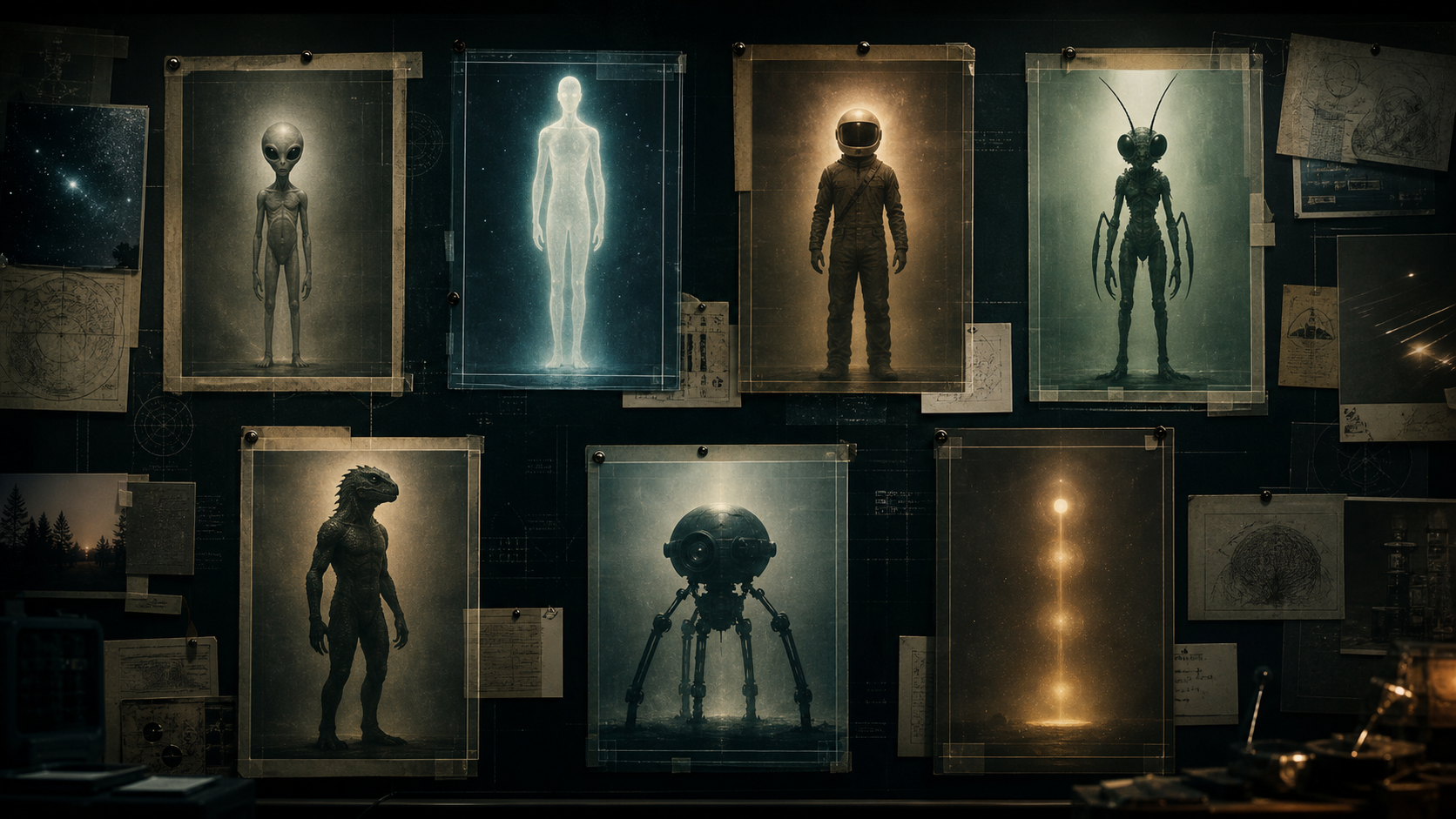
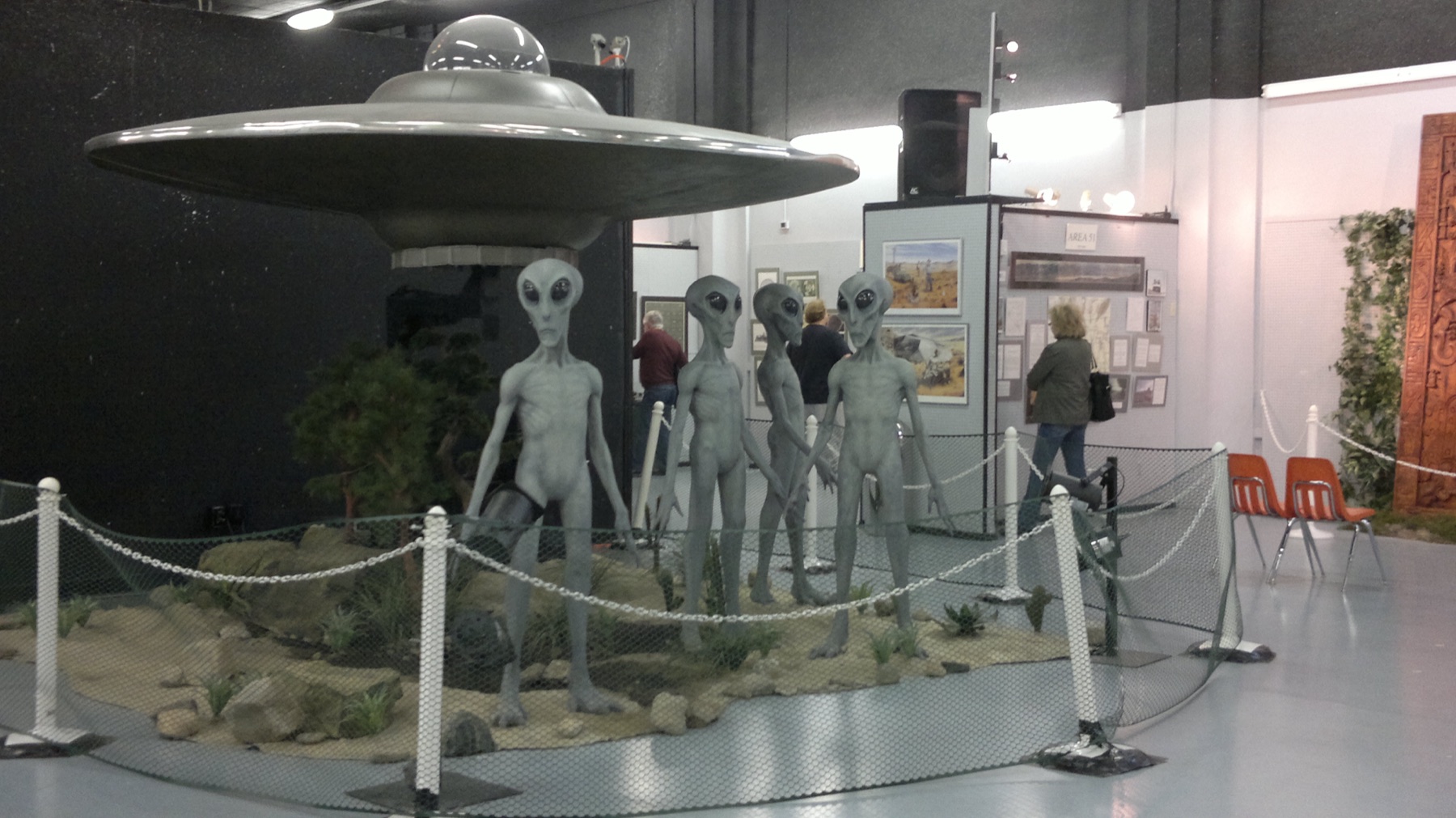
Witness accounts, books and UFO archives often describe recurring figures: small humanoids, large beings, luminous presences, Greys, reptilians, insectoids, robots or forms without clear bodies. A typology helps compare narratives without accepting every claim as fact.
Common Figures
- Small humanoids: early UFO folklore often describes short beings with suits, helmets or oversized heads.
- Greys: large eyes, small mouths, thin bodies; strongly associated with abduction narratives.
- Luminous entities: beings described as light, energy or apparition rather than biology.
- Reptilians: a later conspiratorial category, often mixed with political mythology.
- Insectoids: mantis-like figures that appear in some abduction and contact reports.
- Robotic probes: non-biological agents, drones or machine intelligences.
- Non-humanoids: rare forms that challenge the expectation of a body like ours.
Archives and Evidence
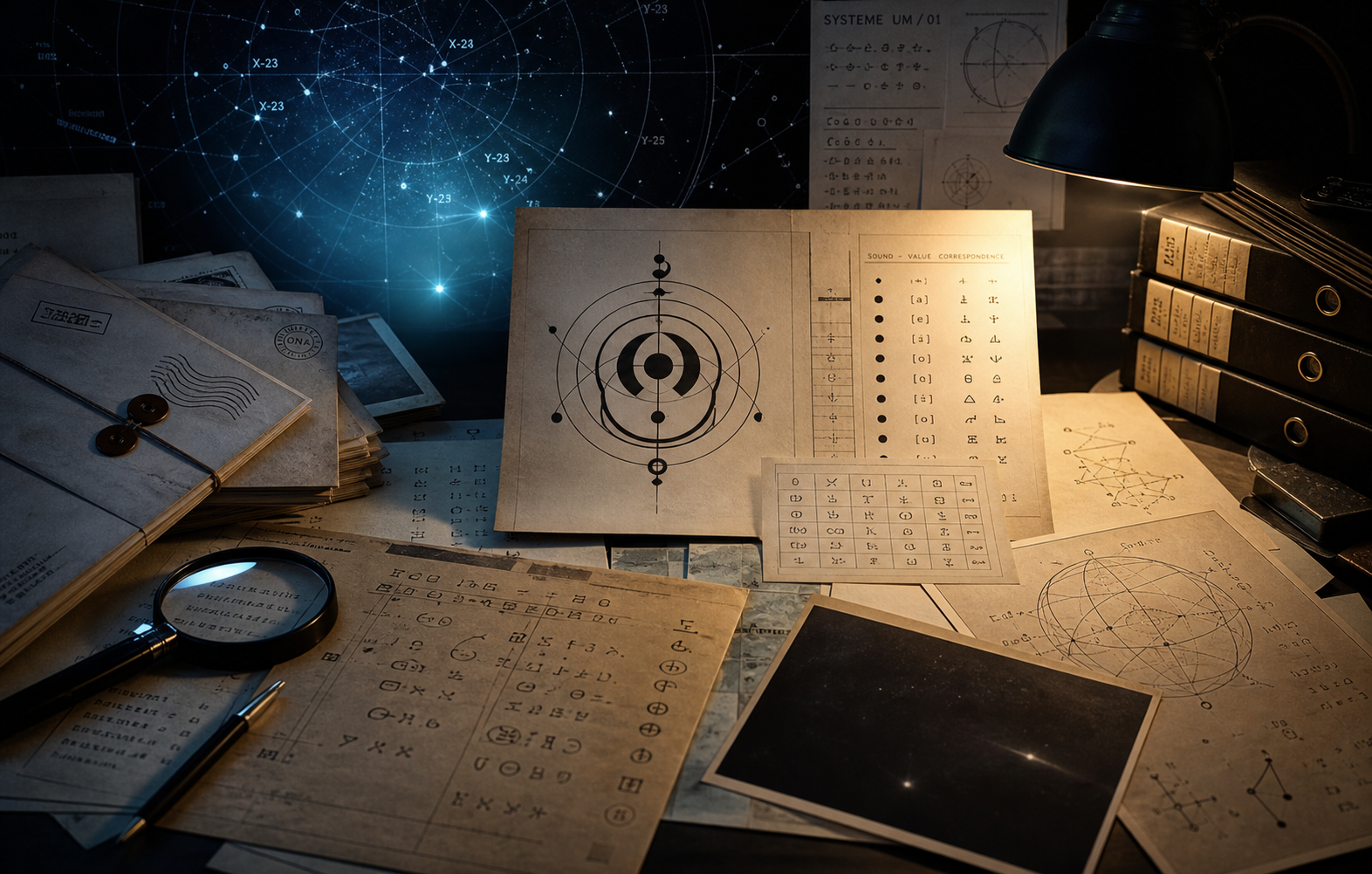
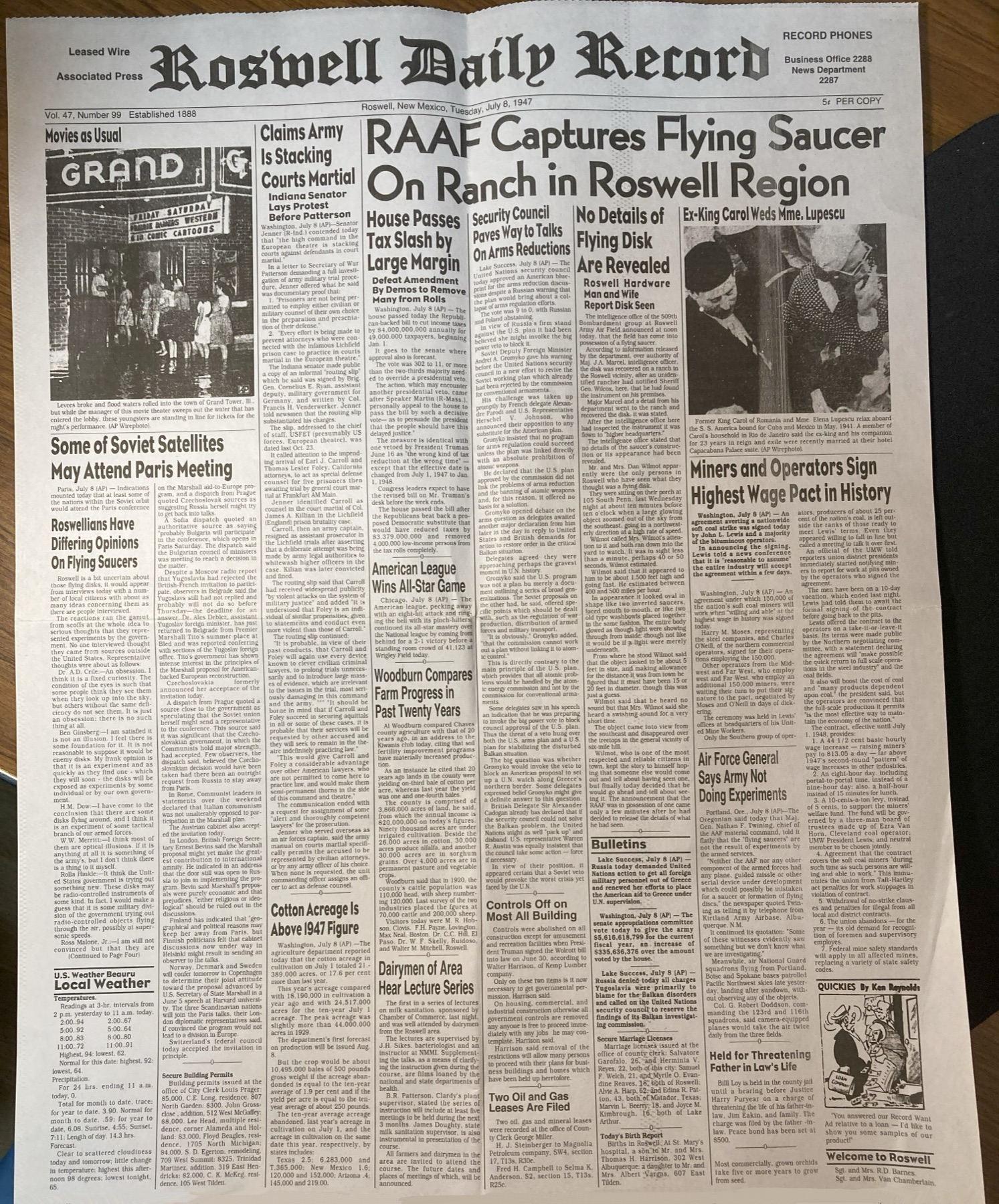
Project Blue Book, NICAP files, CIA reading-room documents and press archives are useful sources, but they must be read critically. They contain reports, drawings, interpretations and administrative traces, not simple proof.
Language Question
Each type implies a different theory of communication. Greys are often linked to telepathy. Luminous entities suggest affect and perception. Robots imply protocol and data exchange. Non-humanoids force us to imagine language beyond face, gesture and voice.
A.L.I Use
The typology can become a design board: for each figure, invent a communication channel. A Grey might use images, a luminous entity modulation, an insectoid rhythm, a robot checksum, a non-humanoid environmental pattern.
Critical Position
A.L.I does not need to decide whether these beings exist. It can ask why these forms return, what they reveal about fear and desire, and how they shape our imagination of contact.
LABO question: do we imagine extraterrestrials with bodies because language itself seems to need a body?