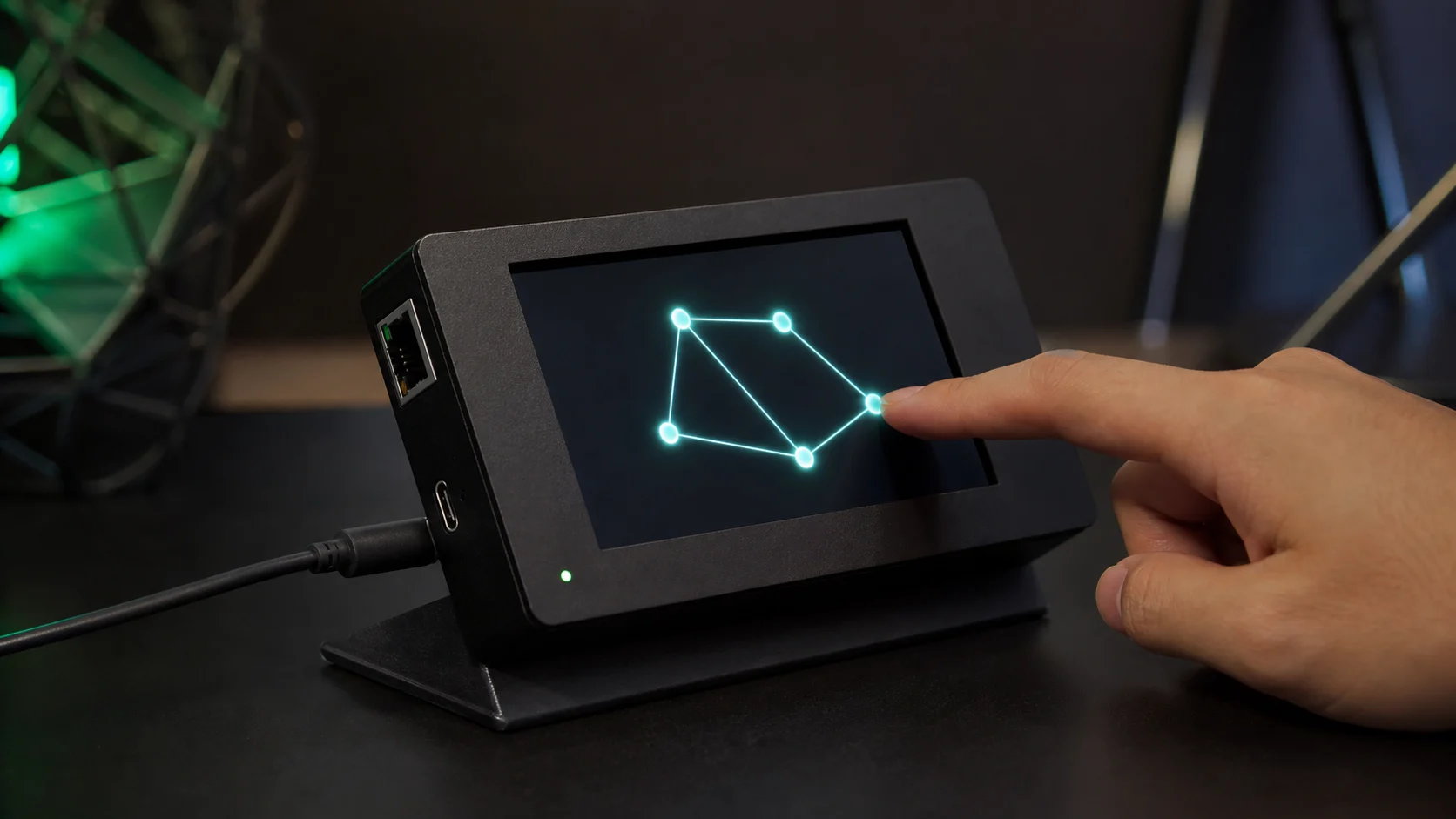
Touch surface
4.3-inch capacitive screen, 800 x 480 pixels, displaying a graph of up to 32 nodes.
A.L.I project / design study
Draw locally. Compose regionally. Signal as a planet.
Prototype in design - 2026
The object
Glyph Node is a small connected object with a capacitive touchscreen. A participant draws a graph made of points and links, chooses the type of voluntary light connected to the object, and places the drawing in a regional queue.
Every night, once astronomical darkness reaches the region, the nodes agree on one eligible drawing. Each object translates only its fragment into a local light score. No central server can activate the work alone, and no node can control equipment that has not been explicitly enrolled.
Glyph Node / G-01
The first version deliberately uses available components. A custom board only becomes useful after the regional protocol has been tested.
4.3-inch capacitive screen, 800 x 480 pixels, displaying a graph of up to 32 nodes.
Raspberry Pi Zero 2 W for prototypes, then Compute Module or an equivalent low-power Linux board.
A device key stored in a secure element signs drawings, readiness messages and execution receipts.
Wi-Fi and Ethernet, Bluetooth only for onboarding, local clock corrected through several independent time sources.
Encrypted SQLite stores the node profile, drawings, peer log and the last executable scores.
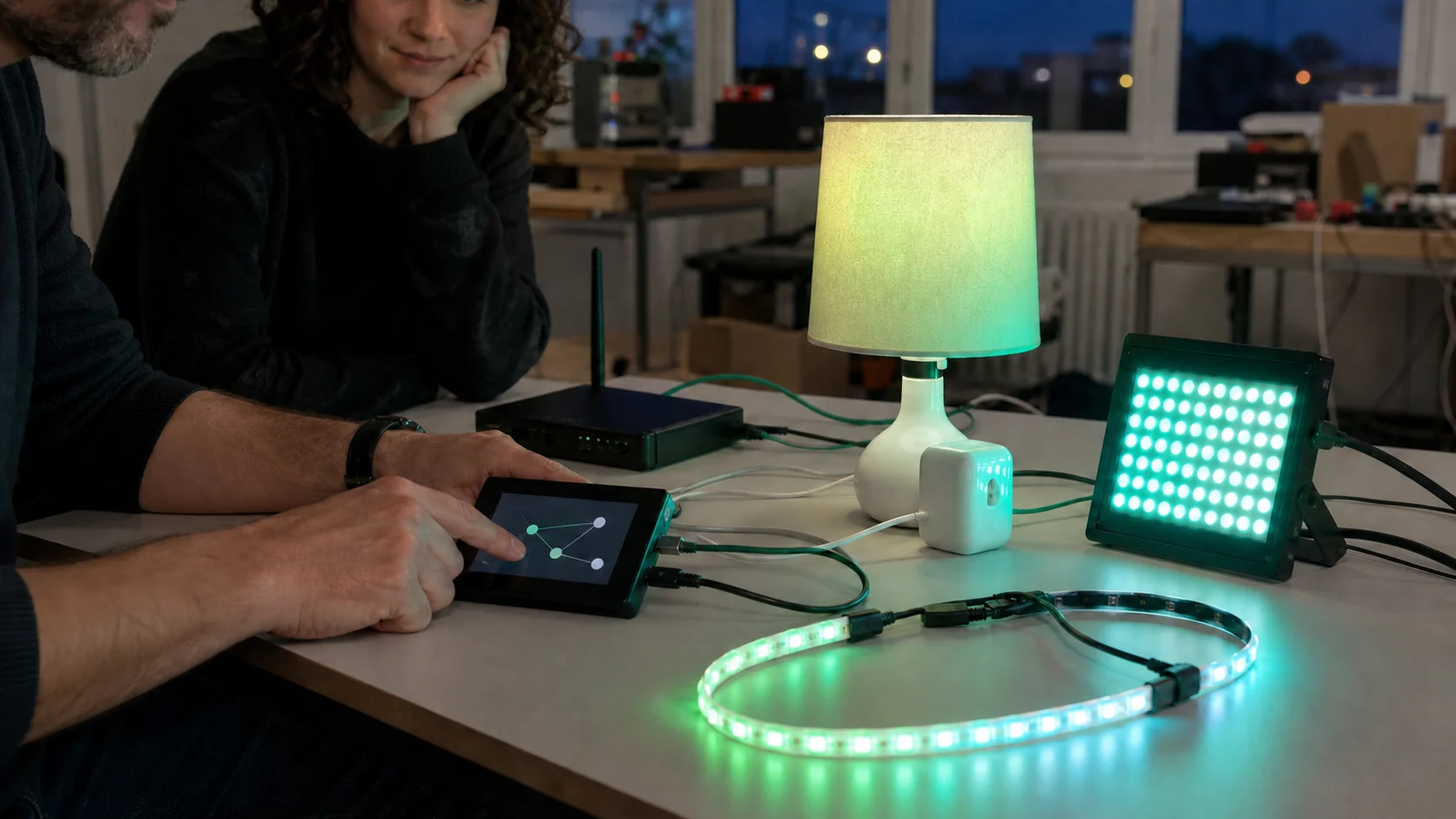
Local adapters for Matter lighting, WLED strips and professional DMX / Art-Net installations.
Logical architecture
Pure peer-to-peer networking is unreliable behind domestic routers. The practical solution is a hybrid mesh: direct connections whenever possible, several community relays for discovery, and a read-only public index for maps and archives.
A pseudonymous node ID, coarse H3 cell, time zone, available light types, maximum brightness delta, accessibility limits, consent period and last heartbeat.
Exact address, Wi-Fi credentials, local device names, private keys and direct control endpoints remain on the object.
The drawing queue and availability states can merge after disconnections without a central database deciding which copy is authoritative.
Drawing format
The participant places points and links them. Coordinates are normalised between zero and one, so the same drawing can be translated onto six lamps, a facade, a LED strip or hundreds of regional nodes.
The file contains geometry, order, timing and constraints. It contains no command addressed to a specific lamp. Translation into light happens locally after validation.
{
  "protocol": "pgp/1",
  "glyph": "sha256:…",
  "region": "h3:8a1…",
  "nodes": [[.12,.40],[.48,.18],[.81,.62]],
  "edges": [[0,1],[1,2],[2,0]],
  "tempo": 0.20,
  "max_delta": 0.15,
  "expires": "2026-09-01T23:00:00Z"
}
Nightly cycle
A signed drawing enters the regional stack. Its author may withdraw it until the daily lock.
The date, region and previous execution receipt form a public seed. Every node independently obtains the same eligible drawing.
The graph is partitioned according to geography and capabilities. Dark areas count as intentional intervals, not missing pixels.
Each object previews its fragment, verifies time, brightness, environmental limits and the physical stop control.
After astronomical twilight, three slow sequences run for no more than five minutes, with fades and no stroboscopic effect.
The lights return to their prior state. Nodes publish signed execution receipts; observatories preserve optical and radio measurements.
PGP/1
Every event is compact, signed, dated, hashed and limited in duration. The protocol transports intentions and proofs, never unrestricted remote-control commands.
REGISTERPseudonymous node and coarse region.
CAPABILITYLight type and hard local limits.
GLYPH_COMMITHash of a drawing before publication.
GLYPH_REVEALGraph geometry and timing.
SCORE_LOCKDeterministic selected score.
READYLocal checks passed; participation remains revocable.
PLAYTimestamp, not a raw light command.
RECEIPT / ABORTProof of execution or documented refusal.
Non-negotiable constraints
Opt-in only. No scanning, credential collection or unauthorised control of connected objects.
Critical exclusion. Road, rail, aviation, maritime, medical, emergency and security lighting can never be enrolled.
Ecological gate. A region cancels activation during migration alerts, sensitive breeding periods, adverse weather or local restrictions.
No strobe. Slow fades only, brightness delta capped at 15%, duration capped at five minutes and accessible preview before consent.
Physical stop. A local control always overrides the network and restores the previous light state.
Feasibility
The object and a ten-node local network are feasible with existing components. Large-scale visual coherence is harder: it depends on participation density, observation points and environmental permissions, not only software.
Indicative prototype scale: EUR 150–300 per object using off-the-shelf parts, excluding design and development. A credible first public pilot is primarily a software, mediation and authorisation budget, not a hardware budget.
Long-term projection
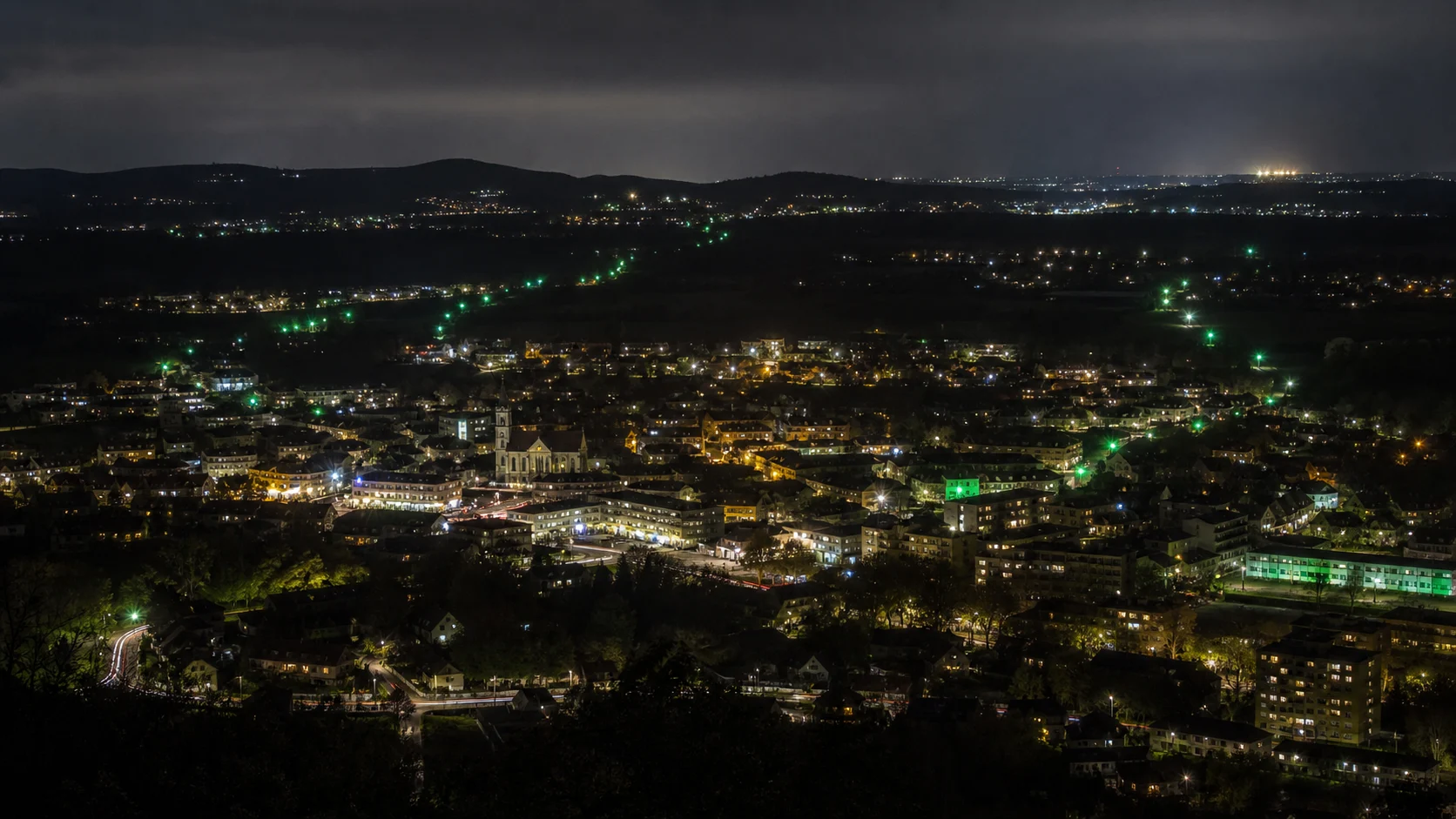
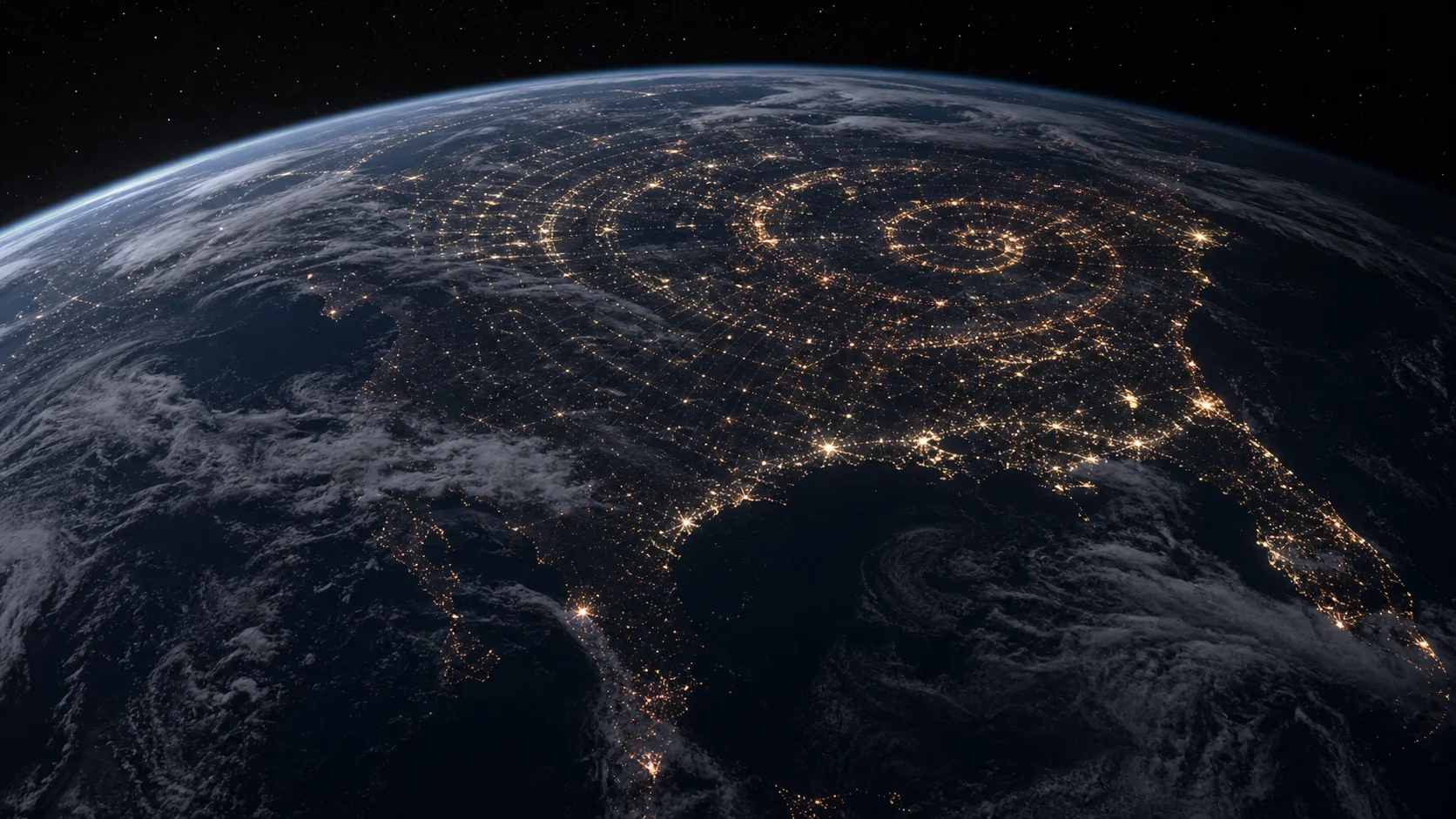
A nearby satellite could reconstruct the regional graph. A distant observer could not resolve it as a drawing. At interstellar distance, only a repeated global variation or artificial spectrum might become a technosignature. The project keeps those two scales separate.
Technical basis