To transmit absolutely means more than inscribing a message in resistant matter. It also means transmitting the conditions of its reading. The Rosetta Stone and Linear B offer complementary models: one makes an unknown script accessible through already known meaning; the other was deciphered without a bilingual text, through patient structural analysis followed by a prediction verified on independent evidence. David Guez’s Binary Steles move this problem into the present: how can code, its reader, and its memory survive the machines that produced them?
1. The Rosetta Stone: One Meaning in Three Forms
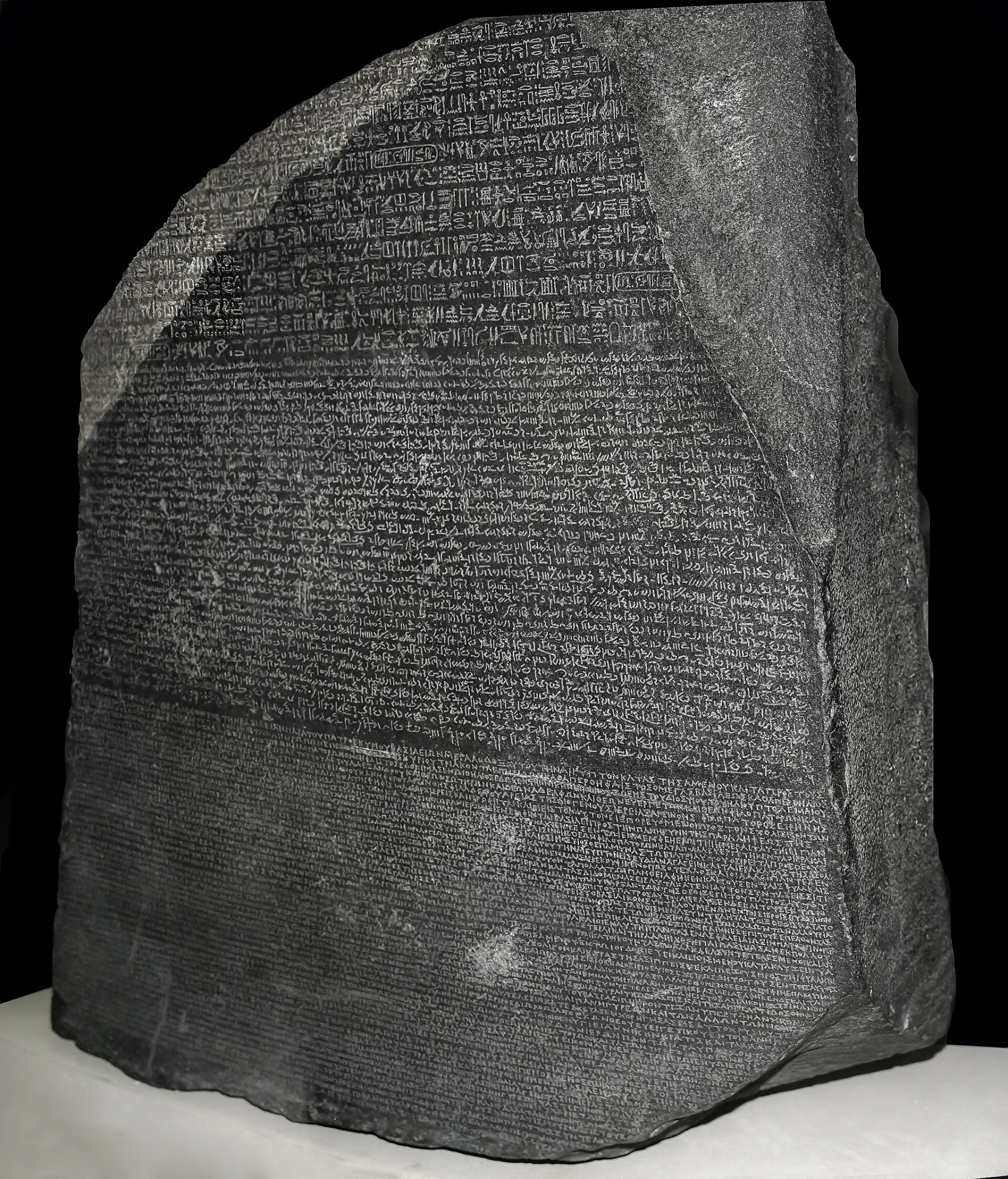
Discovered in 1799, the Rosetta Stone bears a priestly decree issued in 196 BCE during the reign of Ptolemy V. It is written in hieroglyphic, Demotic, and ancient Greek scripts. The stone is not a dictionary but a device of equivalence: three graphic systems give access to the same political and ritual event.
Its power depends on a decisive asymmetry. Greek remained readable; the Egyptian scripts did not. Known meaning anchors unknown form. Thomas Young identified phonetic values in royal cartouches. Jean-François Champollion then compared names including Ptolemy, Cleopatra, and Ramesses, using his knowledge of Coptic to understand that hieroglyphic writing combines phonetic signs, determinatives, and ideograms. His 1822 Letter to M. Dacier marked the decisive breakthrough.
The lesson for A.L.I is clear: repetition alone is insufficient. A successful Rosetta Stone constructs testable equivalences between several sign systems. It allows a reader to isolate what remains invariant when medium, language, or scale changes.
2. Linear B: Deciphering Without a Bilingual Key
Linear B presented the opposite difficulty. Tablets excavated by Arthur Evans at Knossos from 1900 onward offered no parallel translation. Evans even believed their language was not Greek. Decipherment therefore began not with meaning but with form.
Emmett Bennett established a rigorous inventory of roughly eighty-seven syllabic signs. Alice Kober classified thousands of occurrences on index cards, observing repetitions and groups of signs with variable endings. Her “triplets” demonstrated that the language was inflected and made it possible to construct a relational grid before anyone knew how the signs sounded. Michael Ventris extended that architecture, tested the Mycenaean Greek hypothesis, and gradually assigned phonetic values to the grid.
3. PY Ta 641: Proof Through Independent Prediction
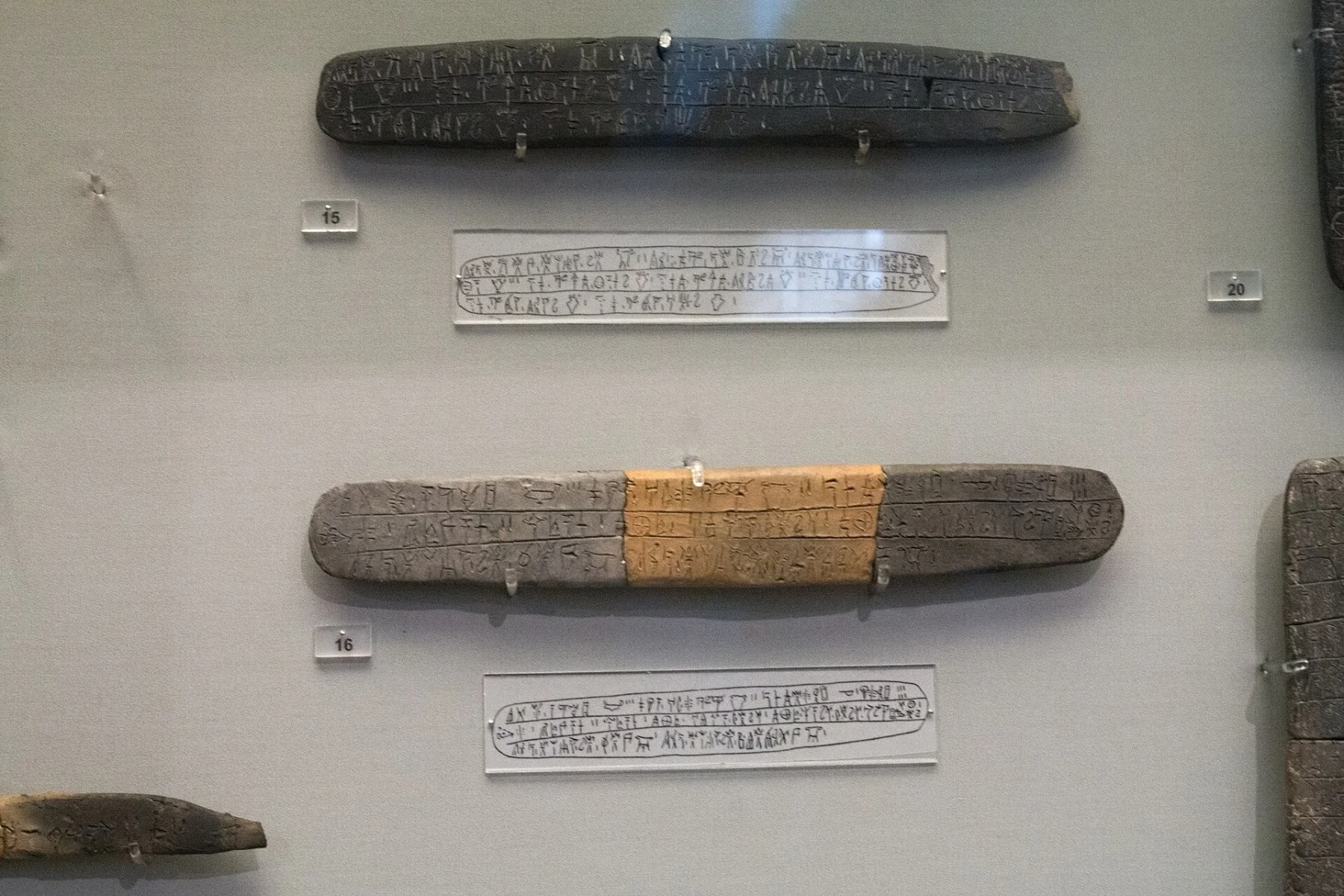
In 1952, tablet PY Ta 641, discovered at Pylos by Carl Blegen’s team, offered a striking verification. It combines vessel ideograms with syllabic groups. The reading ti-ri-po-de, understood as a form of “tripod,” matches the inventoried objects. The system therefore worked beyond the examples used to construct it: it produced a relevant reading from evidence independent of the original reasoning.
This is a crucial criterion. A strong decipherment must do more than construct a plausible story. It must generate risky expectations that could fail, then survive contact with new data. Linear B thus becomes a model of decipherment through structure and prediction.
4. Two Methods, One Requirement
The Rosetta Stone and Linear B are not the only decipherments in history: cuneiform and Maya writing were also reconstructed. They are, however, two paradigmatic cases especially useful to A.L.I. They also show that no one deciphers from an absolute void. Champollion had Greek and Coptic; Ventris worked on a human language within a world of objects, numbers, and administration that remained partly recognisable.
5. What Still Resists
Linear A, the Indus script, rongorongo, the Phaistos Disc, and the Voynich manuscript reveal the limits of decipherment. A corpus may be too short, a related language absent, the system non-linguistic, or the context insufficient. Interstellar communication would present a more radical challenge: separating code from a cognition whose categories of world, time, and agency may be alien to us.
6. Code Has Never Been Immaterial
Digital culture encourages the illusion that information floats outside the world. In reality, every bit has a body. On a hard drive it is a magnetic orientation; in flash memory, an electrical charge; on an optical disc, a change of surface; in a cable, a variation of voltage or light. Binary does not abolish matter. It reduces matter to two distinguishable states.
This reduction is its strength. Two states can be carved, printed, punched, woven, illuminated, or performed. It is also its trap. A stone covered with zeros and ones may remain intact for millennia and still become perfectly mute if no one knows the reading order, grouping, or required transformation.
7. From Bit to Letter: A Chain of Conventions
A bit does not naturally mean yes, no, black, white, true, or false. It merely identifies one of two states. To write A.L.I in ASCII, a widely documented computer convention, a reader must already know the group size and correspondence table:
This small example reveals several hidden layers: reading direction, eight-bit grouping, the choice of ASCII or UTF-8, and the linguistic interpretation of the letters. An image, sound, or film also requires dimensions, pixel order, sampling rate, container, codec, and sometimes compression. A file is not only a binary sequence. It is a binary sequence surrounded by technical culture.
8. Binary Steles: Taking the File Out of the Machine
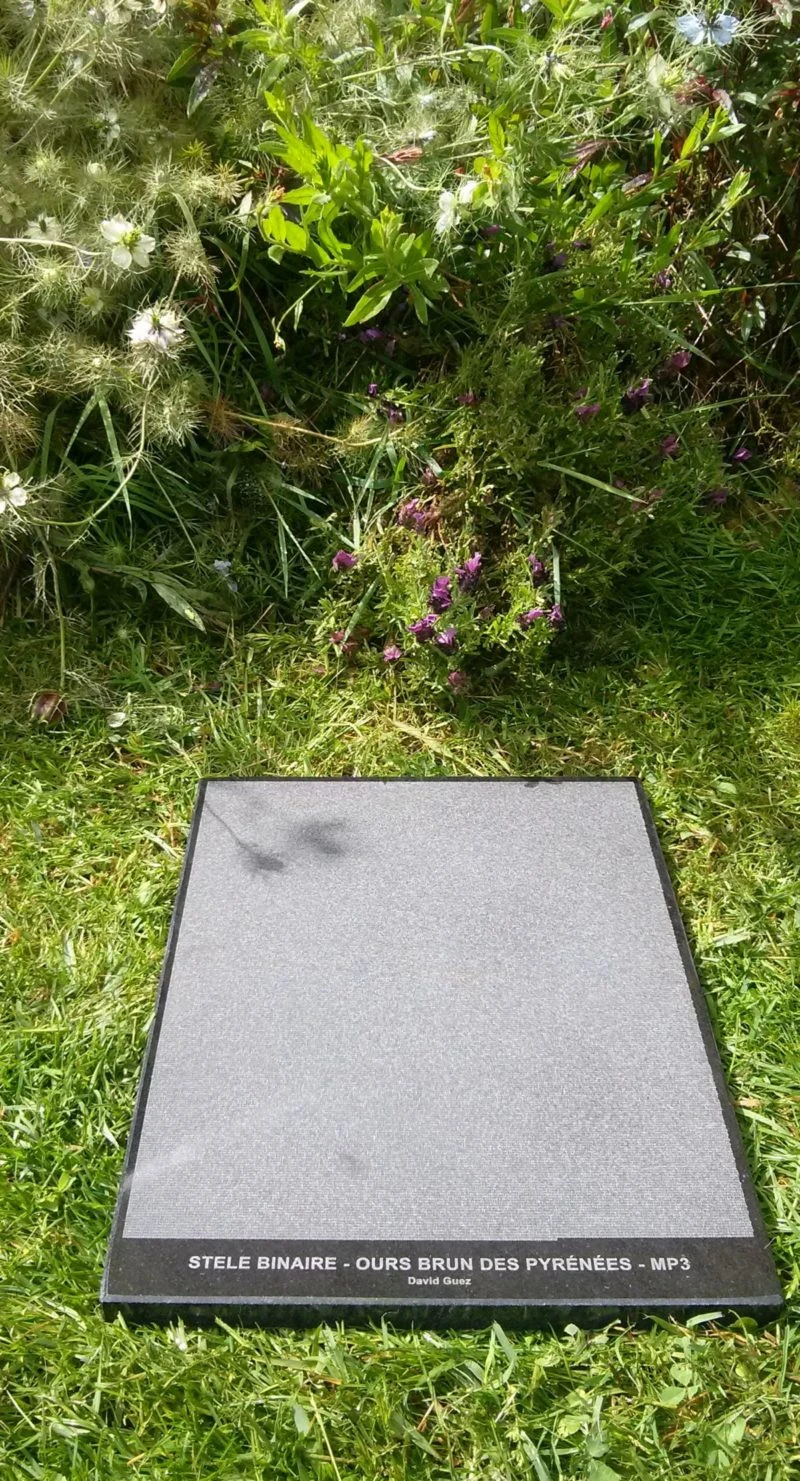
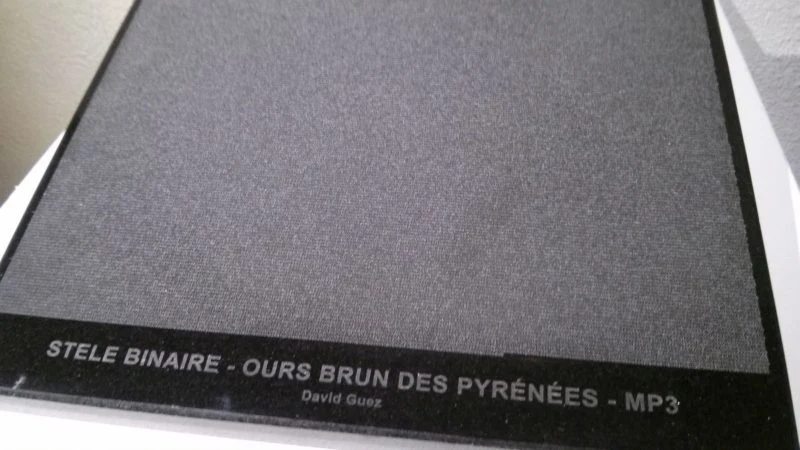
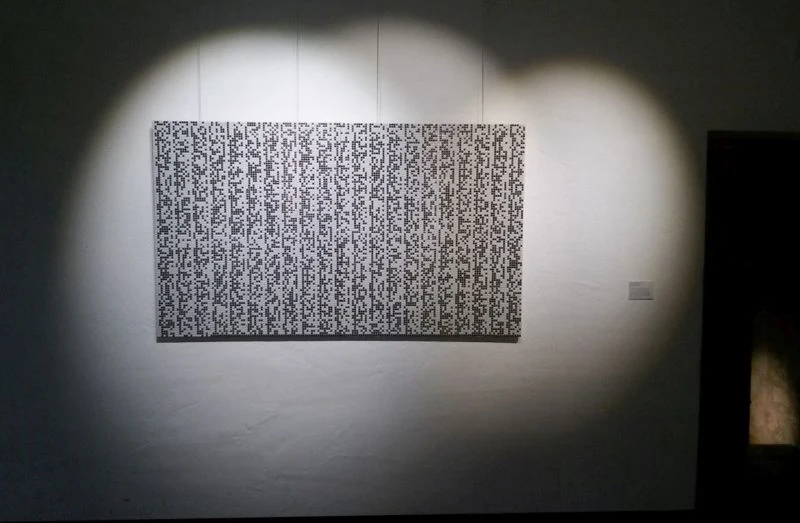
In Binary Steles, David Guez transfers the code of significant works onto non-digital media: stone, mosaic, paper, and potentially wood or metal. The gesture reverses the usual logic. Instead of asking a machine to hide matter behind an interface, it exposes the raw structure of the file.
Each stele becomes artwork, copy, and problem. It preserves information while displaying the fragility of access. A visitor can see the code without immediately reaching the encoded work. The distance between material presence and perceptual absence turns the archive into an enigma.
9. Paper Hard Drive: A Book Containing a Film
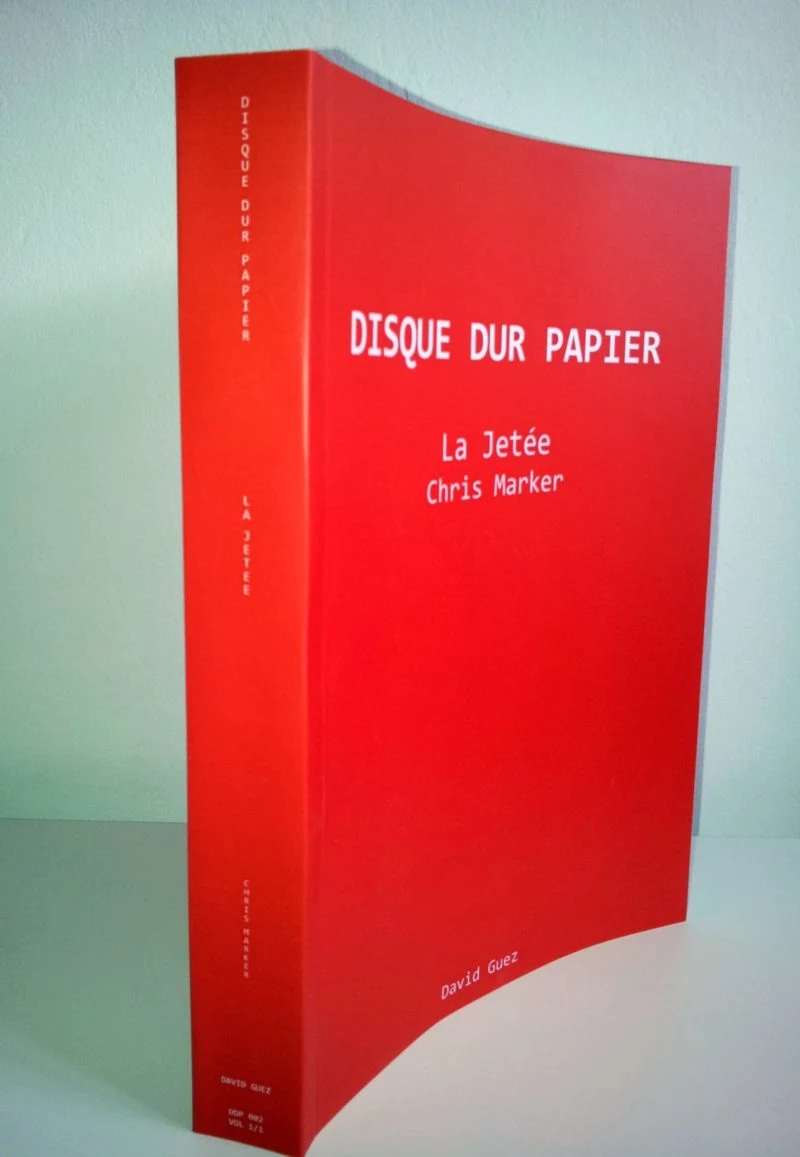
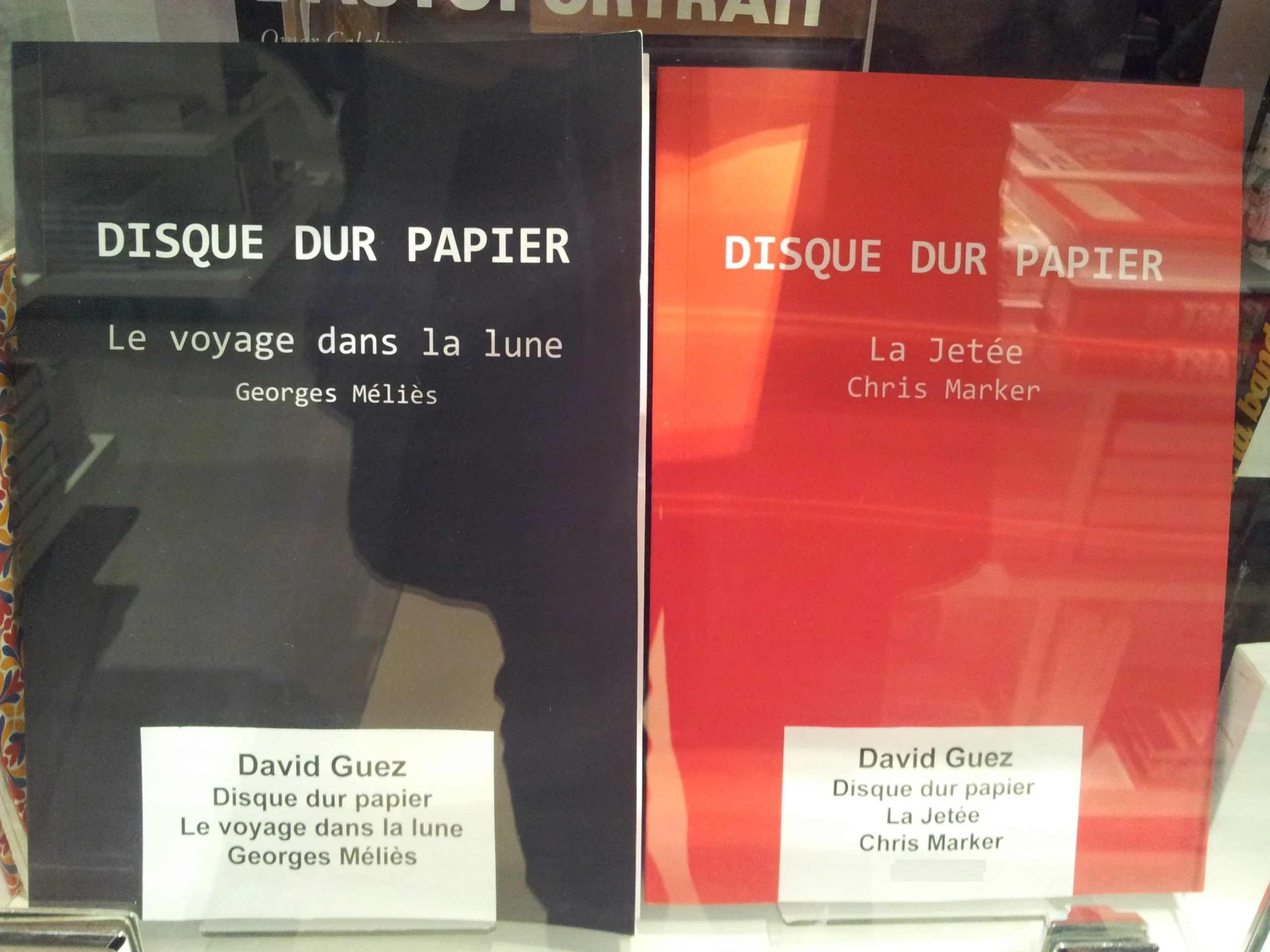
The Paper Hard Drive project carries this logic into the book. The complete binary code of a film is printed over hundreds of pages. Software performs the inverse operation, reading the characters and rebuilding the file. The book becomes an executable storage medium: extremely slow, yet inspectable by eye.
An edition of Chris Marker’s La Jetée, produced with Espace multimédia Gantner, entered the Centre Pompidou collection in 2013. The project also encoded Georges Méliès’s A Trip to the Moon. Two films about time, memory, and travel change regime: they are no longer only projected, but become typographic landscapes capable of reactivation.
10. The ZERO-UN Manifesto and the Risk of a Digital Dark Age
The ZERO-UN manifesto expands these works into a research programme on preservation. A digital archive depends on a fragile chain: medium, power, connector, operating system, software, format, access rights, and technical knowledge. A single rupture can make an intact file unusable.
This concern meets the idea of a Digital Dark Age: an era can produce immense quantities of documents while preparing their future illegibility. The manifesto considers natural, visible, or biological media able to carry code beyond industrial infrastructures. The question is not simply how long matter survives, but how long the protocol remains intelligible.
11. Is Binary a Universal Language?
Opposed states are easy to generate and detect. Binary therefore seems suited to long-distance communication. Alternating light and darkness, presence and absence, or high and low frequencies can cross radically different media. But this universality is only physical. It may ensure that a recipient distinguishes a pattern; it does not ensure recognition of a message.
An extraterrestrial intelligence might perceive the sequence without conceiving the bit, or group states according to another logic. It might read spirally, volumetrically, simultaneously, or across several temporal scales. It might not separate data from reader as we do. Binary is therefore a possible minimal alphabet, not shared meaning.
12. Transmitting Absolutely: A Stele That Teaches Its Own Reading
To become an object of contact, a stele should preserve more than a payload. It should contain a progression through which an unknown reader can discover how to decode it. Seven nested layers are possible:
- Contrast. Repeat two clearly distinguishable states across several materials and scales.
- Units. Introduce counting through quantities, then prime numbers as evidence of intentional structure.
- Orientation. Provide test frames that reveal beginning, end, reading direction, and expected dimensions.
- Correction. Insert parity, checksums, and repetition so erosion or copying errors can be detected.
- Translation table. Demonstrate how binary groups become numbers, positions, levels, sounds, or colours.
- Equivalences. Encode the same pattern visually, sonically, geometrically, and rhythmically to separate structure from medium.
- Archive. Only after these lessons transmit the text, image, sound, or film.
The result is no longer a passive hard drive. It is a teaching machine without a teacher, designed to create its own conditions of legibility.
13. Noise as Part of the Message
An archive addressed to deep time must assume degradation. Fragments will be erased, inverted, displaced, or copied incorrectly. Redundancy is therefore not waste but memory. Telecommunications already use parity bits and error-correcting codes. A stele could repeat essential blocks, alternate orientations, and include deliberately damaged examples with their corrections.
A.L.I could also preserve three states of the same object: raw file, readable representation, and conversion protocol. If one level disappears, the other two continue to testify to the relationship.
14. Other Archives Addressed to Deep Time
The Rosetta Project archives thousands of pages about human languages on a microscopic disc readable through optical magnification. Memory of Mankind engraves documents on ceramic tablets stored in an Austrian salt mine. Both projects understand that a durable archive must join resistant matter, linguistic plurality, context, and clues for use.
They also reveal a political limit: every archive decides what deserves to survive. The most durable medium cannot correct organised forgetting or the perspective of the selector.
15. Three Devices to Build
Stele 01 — Open Reader
A stone slab or mosaic contains a short uncompressed file, its decoding plan, and a checksum. An ordinary camera reads the cells; open-source software displays every step from photographed pattern to reconstructed image or sound. The installation conceals no transition.
Archive Landscape
The same message is laid out in a garden using light and dark stones, engraved on metal, and performed by intermittent light. The three versions age differently. An annual observation measures loss and tests correction. Time becomes a co-author of the code.
Nested Interstellar Archive
A radio signal first transmits recognition exercises, then a miniature decoder described through inputs and outputs, and finally an archive. The recipient proves understanding not by repeating the message, but by producing an unforeseen and verifiable transformation. This proposal connects with A.L.I research on Ghostbook and quantum programming beyond binary.
16. What Should Be Saved?
A stele addressed to a future human or non-human reader cannot be merely triumphant. It should archive several languages, contradictions, mistakes, minority narratives, and the historical conditions of its making. Otherwise it might preserve our data while losing our plurality.
The artistic issue is decisive. An artwork does not promise only to preserve useful information. It makes the distance between trace and interpretation perceptible. It accepts that a message may survive without immediate understanding and turns that waiting into a space of encounter.
17. Conclusion: Leave a Key, Not Only a Trace
Binary offers a minimal material grammar: two states, a succession, and the possibility of copying. It can leave the machine and enter stone, paper, light, or landscape. Physical durability is not enough, however. A genuinely addressed archive must preserve its instructions, controls, ambiguities, and the possibility that a reader will understand it differently from us.
The binary-steles hypothesis therefore proposes a reversal for A.L.I: instead of searching only for the most powerful signal, make the message that lasts long enough and demonstrates patiently enough for the other to learn how to read us.
References and Further Reading