For more than a century, cinema has not merely represented the unknown: it has given it a body, a voice, a speed, and an intention. It trains audiences to recognise what might count as a signal, threat, miracle, or interlocutor. Long before interstellar contact occurs, billions of spectators have already rehearsed its gestures on screen.
This article proposes that cinema is a collective rehearsal machine for contact. Every film distributes roles: who observes, who names, who translates, who shoots, who negotiates, and who owns the image of the Other. This training is aesthetic and political. It spans fairground spectacle, Soviet cinema, Cold War narratives, military blockbusters, underground film, Afrofuturism, and video art.
1. 1895-1930: the camera invents a visible elsewhere
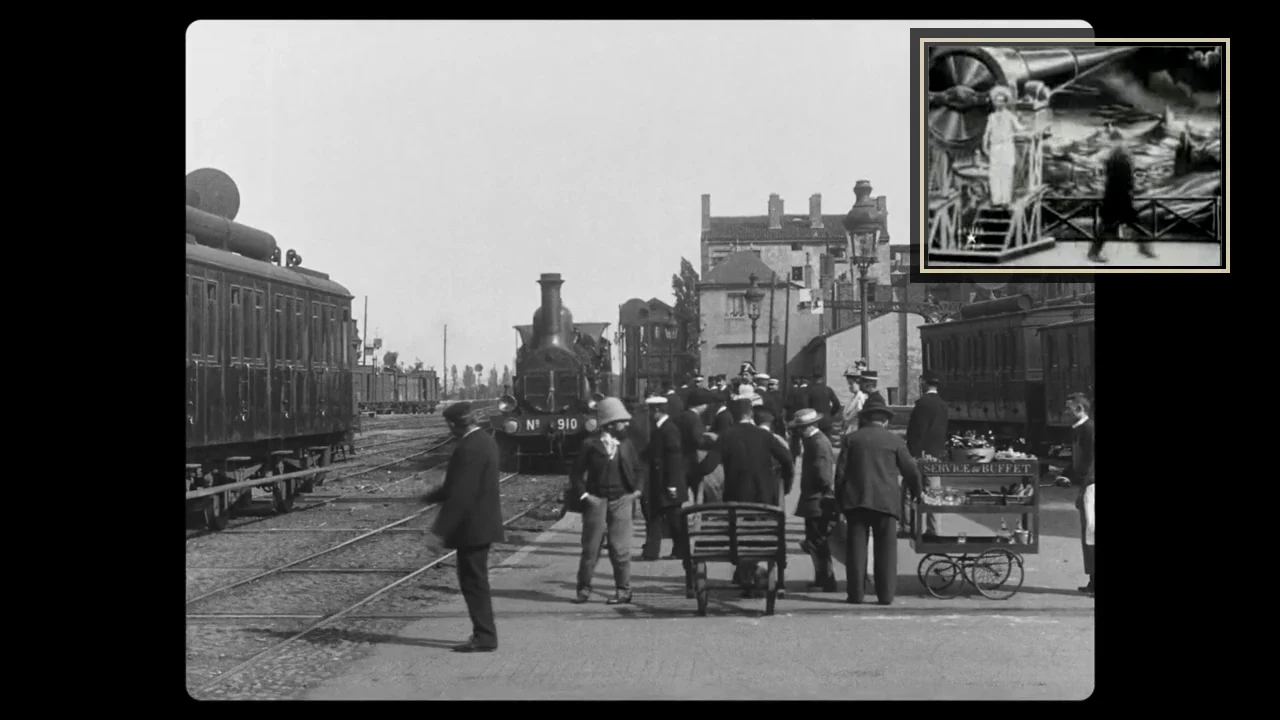
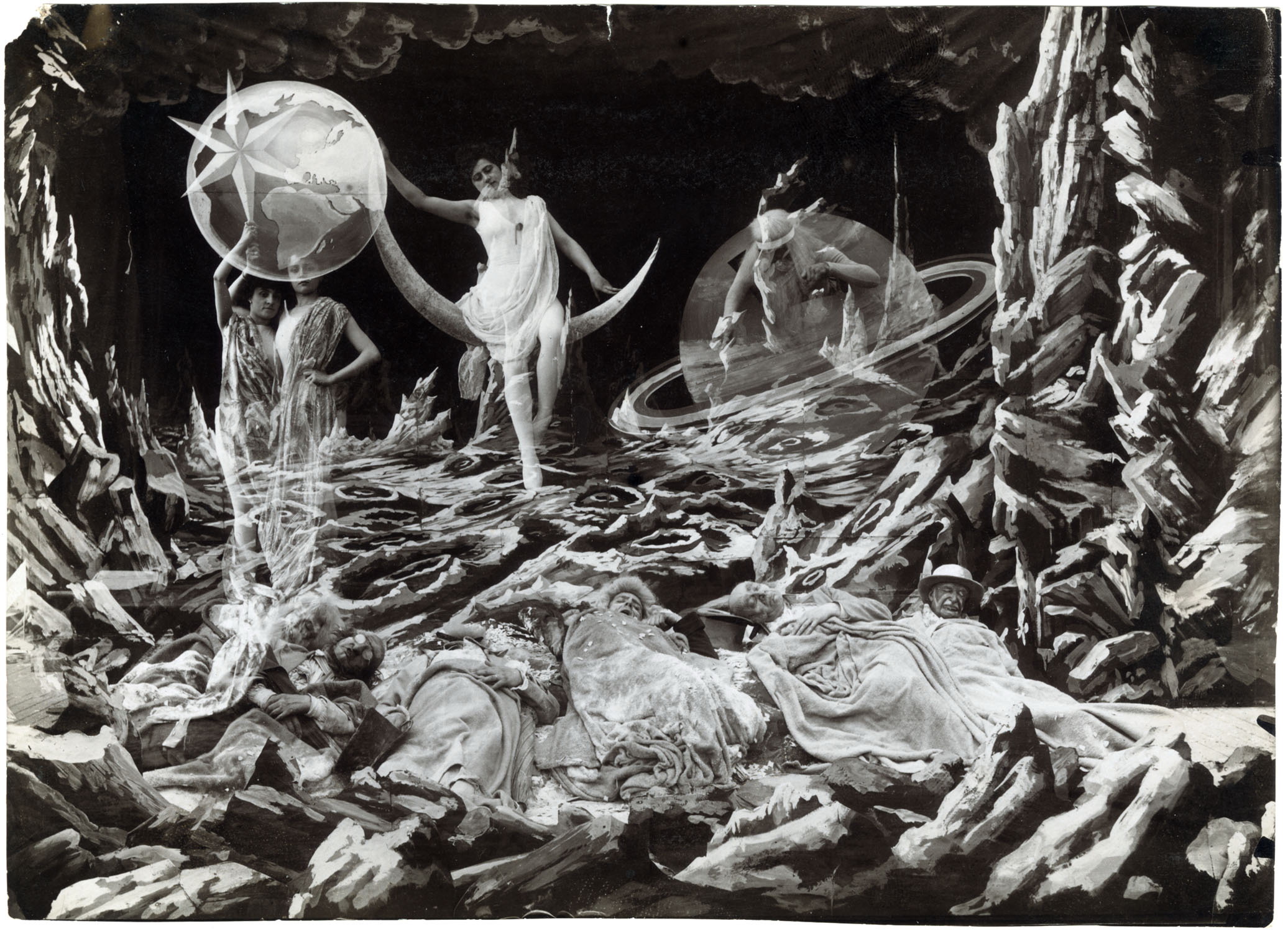
Early cinema emerges alongside X-rays, wireless telegraphy, aviation, and popular astronomy. In A Trip to the Moon (1902), Georges Méliès turns the Moon into a theatre. A human projectile strikes a lunar face, Selenites appear and vanish under umbrellas, and the expedition returns with a captive. The film founds much of screen space travel while carrying the colonial grammar of its period into space: conquer, name, extract, exhibit.
The trick effect is already a theory of contact. Stop-camera substitutions, superimpositions, and painted sets make visible what was not before the lens. Cinema reveals that every extraterrestrial apparition is produced by an apparatus. Believing the image requires temporarily forgetting its construction.
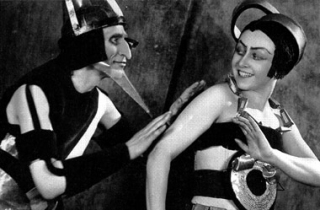
In Aelita (Yakov Protazanov, 1924), a radio message from Mars, “Anta Odeli Uta,” triggers the dream of another world. Alexandra Exter’s sets and costumes give Martian language a geometric architecture. Fritz Lang’s Woman in the Moon (1929) joins lunar adventure to technical precision. Cinema establishes a lasting rule: to make the impossible credible, give it instruments, procedures, and visual coherence.
2. Cold War: the alien becomes a political test
After 1945, the sky fills with radar, rockets, and nuclear fear. The Day the Earth Stood Still (Robert Wise, 1951) imagines a visitor bearing a pacifist ultimatum; The War of the Worlds (Byron Haskin, 1953) industrialises invasion; Forbidden Planet (Fred M. Wilcox, 1956) discovers that an advanced civilisation can be destroyed by its own technological unconscious.

Invasion of the Body Snatchers turns the neighbour into an affectless copy. The film has been read both as anti-communist anxiety and as a critique of McCarthyite conformity. Its strength lies in that reversibility: the enemy is less a doctrine than an undetectable loss of singularity. The Thing from Another World (1951), Invaders from Mars (1953), and Japan’s Goke, Body Snatcher from Hell (Hajime Satō, 1968) similarly link invaded bodies, contaminated territory, and a crisis of trust.
These films build a culture of vigilance. Contact becomes a police investigation: detect anomalies, test authenticity, distinguish the human from its imitation. The same logic still structures stories about clones, AI, and disinformation.
3. Metaphysical contact: when the Other changes our mental instruments
From the 1960s onwards, another tradition shifts the question: what if the extraterrestrial were not a character but a limit of perception? Chris Marker’s La Jetée (1962) makes editing a time machine; Andrei Tarkovsky’s Solaris (1972) answers astronauts with materialised memories; Stalker (1979) turns the Zone into a faceless intelligence. Rainer Werner Fassbinder’s World on a Wire (1973) and Mamoru Oshii’s Avalon (2001) make the world itself an uncertain interface.
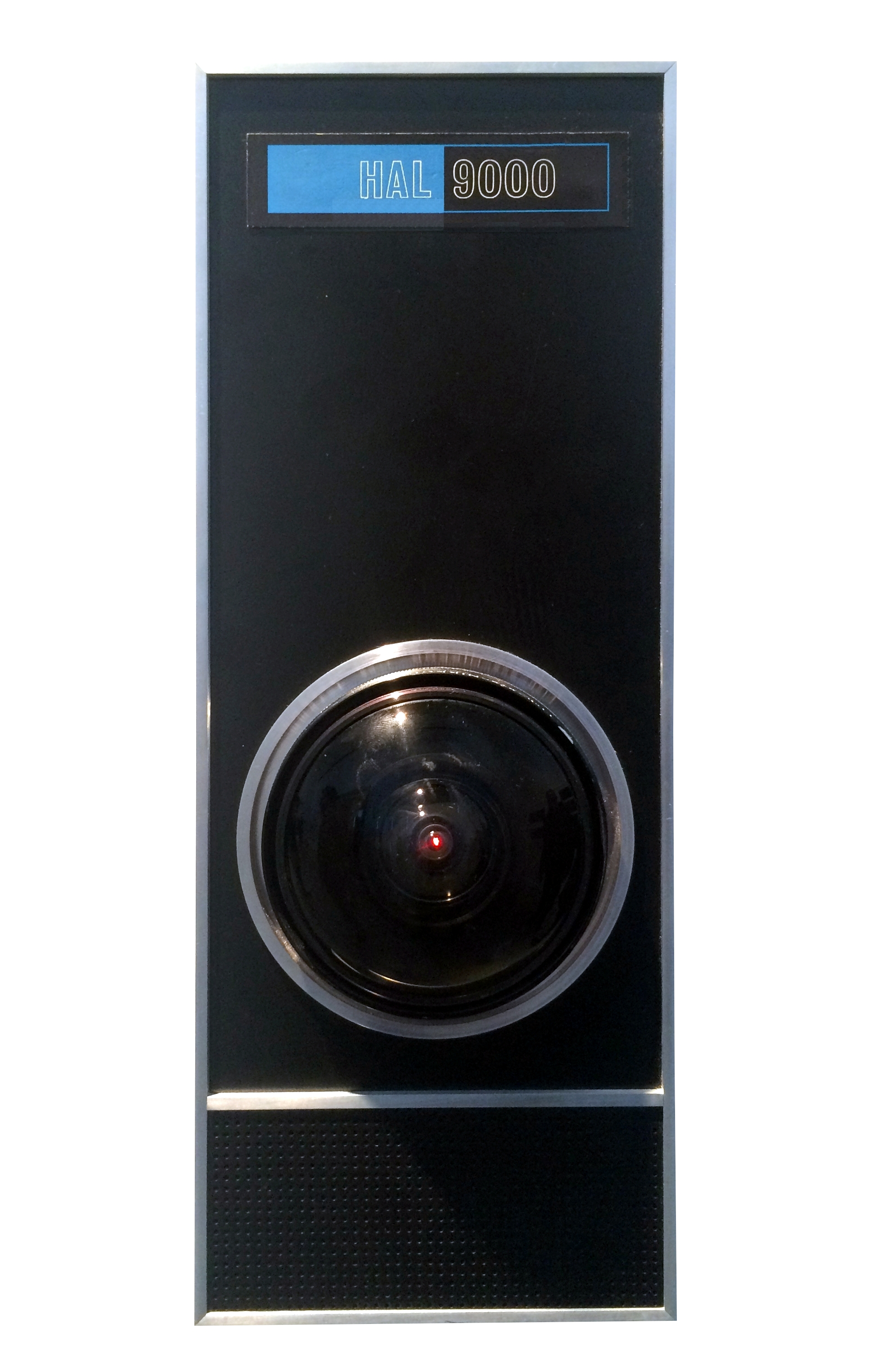
In 2001: A Space Odyssey, the monolith offers no dictionary. It acts upon evolution, organises thresholds, and imposes a montage between prehistory, artificial intelligence, and cosmic becoming. Contact is an operation rather than a conversation. Under the Skin (Jonathan Glazer, 2013), Annihilation (Alex Garland, 2018), and Vanishing Waves (Kristina Buožytė, 2012) continue this path: encountering the Other means losing confidence in a stable body, memory, or self.
4. Cinema of languages: sound, number, gesture, and time
Close Encounters of the Third Kind (Steven Spielberg, 1977) stages five notes, colours, and a synthesiser as a graduated protocol. Contact (Robert Zemeckis, 1997) hides a technical plan within a signal’s structure. The Vast of Night (Andrew Patterson, 2019) returns to nocturnal radio as a threshold. Pontypool (Bruce McDonald, 2008), by contrast, imagines contagion carried by language itself.
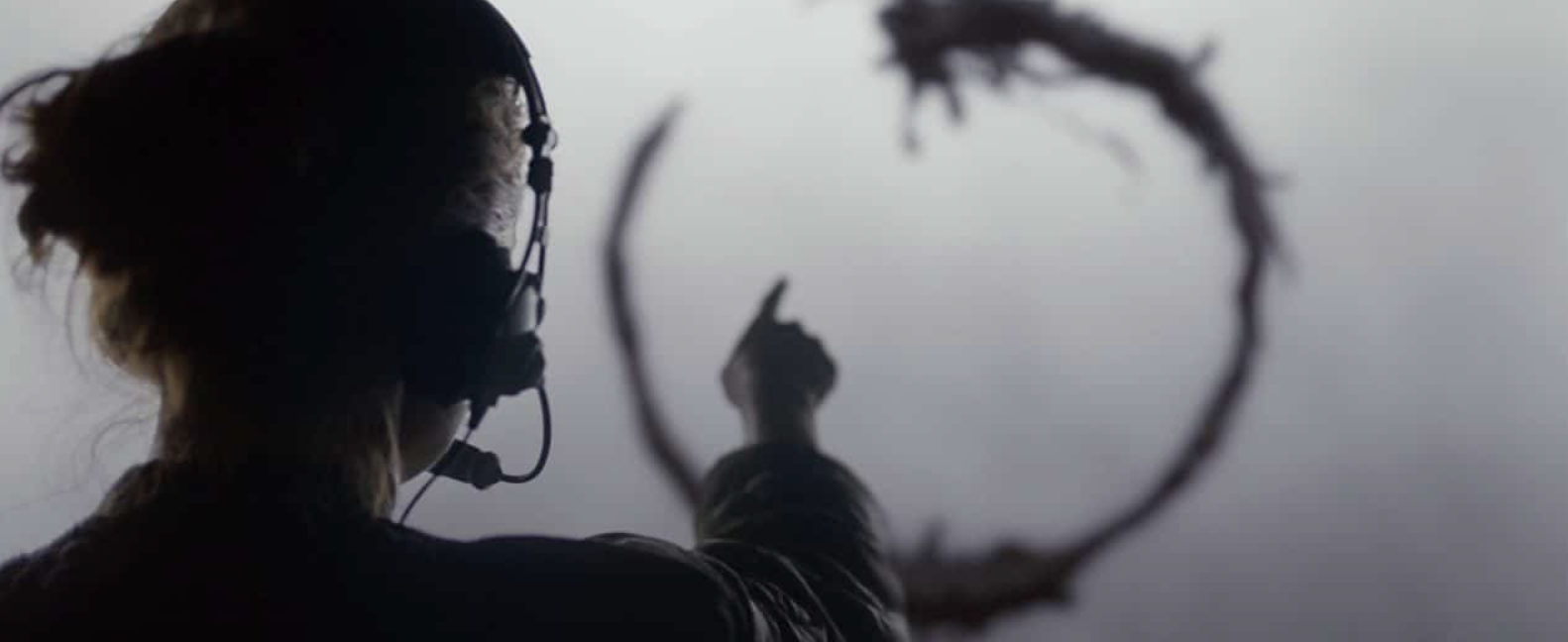
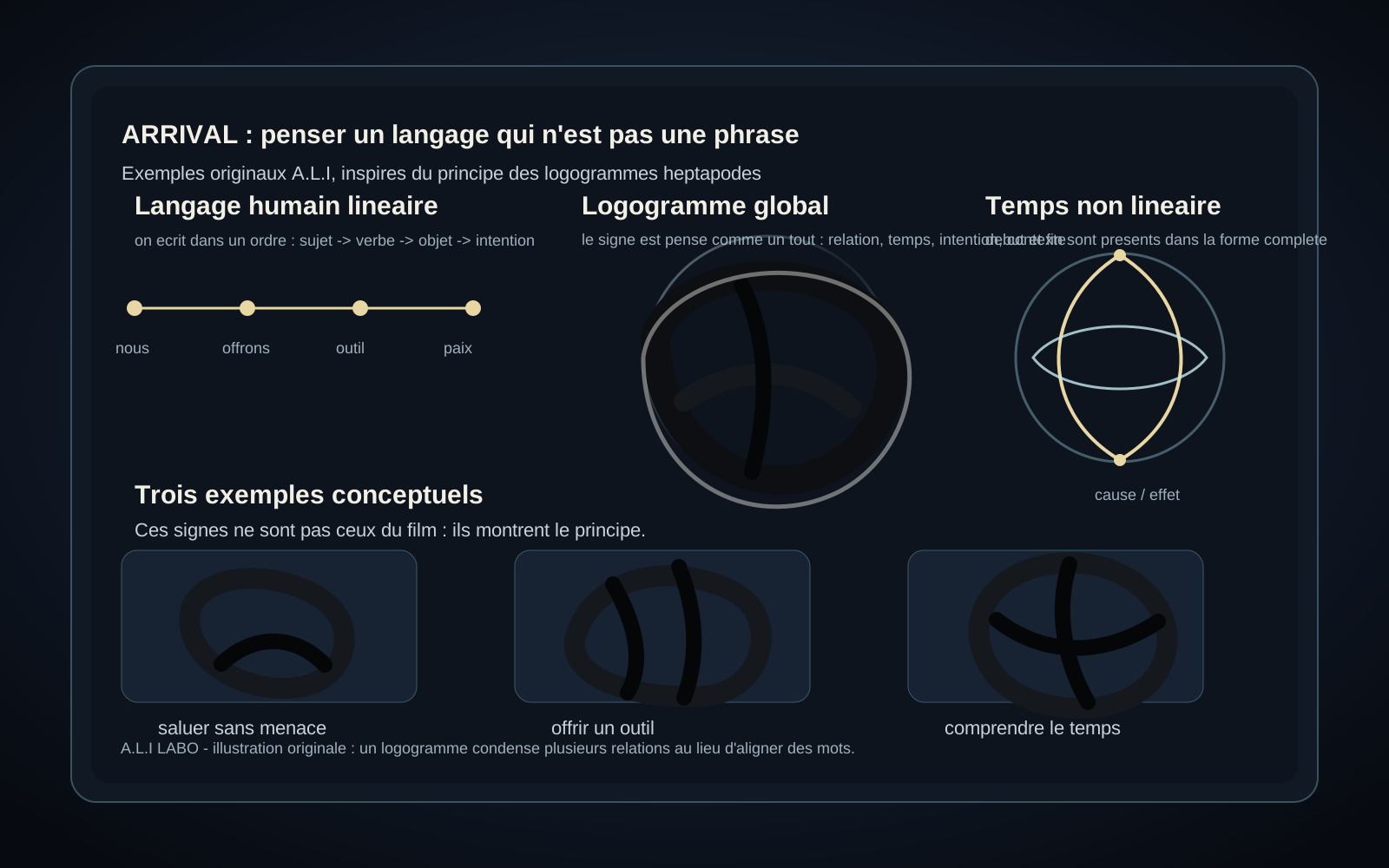
Arrival pushes the hypothesis further: learning an extraterrestrial language transforms the translator’s cognition. Communication is no longer information transferred between unchanged minds; it alters the conditions of perception. This is central to A.L.I: a genuinely nonhuman message may require a new organ of reading, another temporality, or a mediating intelligence.
5. The body as border: horror, reproduction, mutation
Fantastic cinema reminds us that every message has a material substrate. In Alien (Ridley Scott, 1979), contact proceeds through penetration, gestation, and forced birth. The Thing (John Carpenter, 1982) makes biological imitation a perfect language because it becomes indistinguishable from its host. Videodrome (David Cronenberg, 1983) fuses audiovisual signal, hallucination, and flesh. Possession (Andrzej Żuławski, 1981) and Color Out of Space (Richard Stanley, 2019) describe alterities that undo categories rather than enter dialogue.
This current corrects the purity of mathematical messages: to receive is always to be exposed. Communication can infect, seduce, reprogram, or reproduce. Horror cinema therefore stages a biological semiotics in which cell, parasite, and metamorphosis become signs.
6. Countercultures: reclaiming space from dominant culture
Underground cinema does not simply seek different aliens; it uses the alien to make different political subjects. In Space Is the Place (John Coney, 1974), Sun Ra proposes that Black people leave a racist Earth. Space is no longer the empty territory of white conquest but a strategy of self-determination and Afrofuturism.

Born in Flames (Lizzie Borden, 1983) mobilises pirate radio and collective montage; Liquid Sky (Slava Tsukerman, 1982) mixes aliens, new-wave clubs, gender, and addiction; Repo Man (Alex Cox, 1984) turns the alien object into punk energy; The Brother from Another Planet (John Sayles, 1984) rereads migration and surveillance through a mute fugitive; They Live (John Carpenter, 1988) reveals an imperative grammar beneath advertising: “Obey,” “Consume,” “Conform.”
The Last Angel of History (John Akomfrah, 1996) connects science fiction, diaspora, techno, and memory as an essay film. Here the alien is not necessarily the one who comes from elsewhere: it is whoever the dominant order has already made foreign to their own world.
7. A lateral constellation: films outside the canon
The list shared for this article invites us to leave the major titles and follow an oblique history of science fiction. The Creation of the Humanoids (Wesley Barry, 1962) imagines robots continuing a ruined humanity; The Bed Sitting Room (Richard Lester, 1969) treats the post-bomb world as surreal farce; Colossus: The Forbin Project (Joseph Sargent, 1970) gives nuclear authority to a networked intelligence.
Alongside them stand the 1968 Soviet television Solaris, the Yugoslav short Signalna svetla (1960), Hiroshi Teshigahara’s The Face of Another (1966), Shozin Fukui’s bodily cyberpunk 964 Pinocchio (1991), Sogo Ishii’s punk electricity in Electric Dragon 80.000 V (2001), the nested realities of Avalon, the space economy of Cargo (Ivan Engler and Ralph Etter, 2009), consciousness transfer in Transfer (Damir Lukačević, 2010), the neural intimacy of Vanishing Waves, the retrofuturism of The Similars (Isaac Ezban, 2015), the cyber-guerrilla of Jesus Shows You the Way to the Highway (Miguel Llansó, 2019), and the posthuman ecology of Vesper (Kristina Buožytė and Bruno Samper, 2022).
These less visible works matter to A.L.I because they preserve hypotheses the market often simplifies: non-individual intelligence, unstable identity, contaminated media, nonlinear time, future economies, and unresolved contact.
8. Video art: dismantling the reality-making machine
Video art asks not only “what does the screen show?” but “what does the screen do?” In Global Groove (1973), Nam June Paik imagines a global television of video synthesis, dance, music, and cultural collision. Signal becomes plastic matter capable of crossing borders while revealing their instrumentalisation.
Joan Jonas’s Vertical Roll (1972) turns a synchronisation fault into a bodily pulse; Dara Birnbaum’s Technology/Transformation: Wonder Woman (1978-1979) dismantles television’s repetition of gender; Harun Farocki’s Eye/Machine (2001-2003) studies operational images made by machines for other machines.
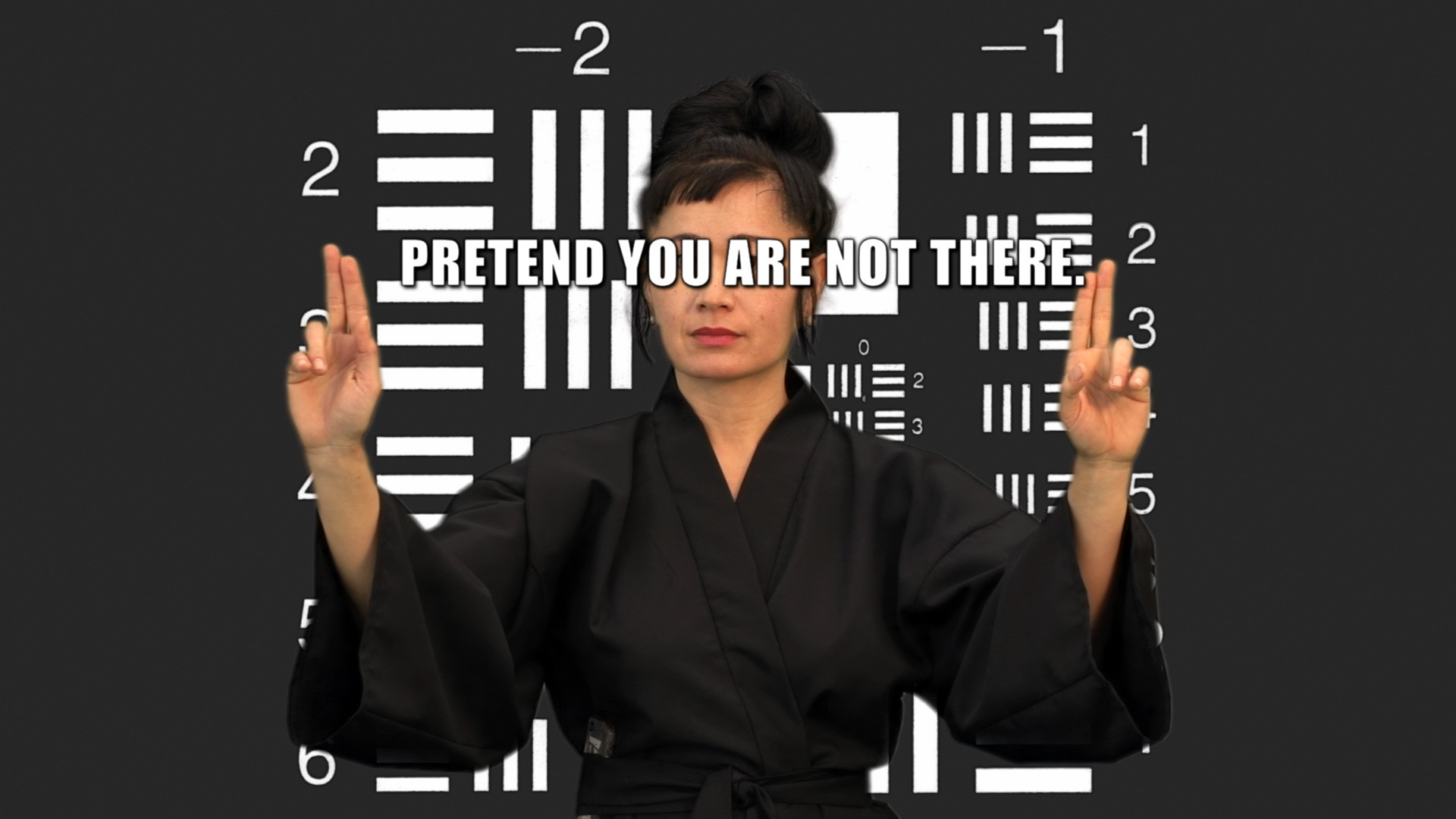
With How Not to Be Seen, Hito Steyerl turns the tutorial into a satire of contemporary invisibility. For A.L.I, these works redirect attention from content to channel: compression, scanning, feedback, resolution, surveillance, and automation become a language in their own right.
9. Blockbusters: who owns first contact?
The blockbuster is not defined by budget alone. It organises the global circulation of images and tends to resolve the unknown in instantly legible forms. Independence Day (Roland Emmerich, 1996) imagines human unity, but that unity adopts the US military chain of command. Men in Black (Barry Sonnenfeld, 1997) comically addresses borders, migration, and state secrecy: coexistence already exists, provided it is administered outside public view.
Avatar (James Cameron, 2009) carries an anti-colonial narrative through one of global cinema’s most powerful industrial machines. District 9 (Neill Blomkamp, 2009) places the extraterrestrial within histories of apartheid, camps, and military privatisation. Starship Troopers (Paul Verhoeven, 1997) imitates fascist propaganda to make it seductive and then disturbing. Dune reactivates relations between empire, extraction, religion, and messianism.
Politics also operates offscreen. Productions collaborate with armed forces that provide equipment and access in exchange for influence. The Smithsonian’s account of X-15 documents how the Pentagon corrected a script to protect its image. The “military-entertainment complex” does not mean every military film is simple propaganda; it names a system of dependencies that shapes what can be shown at scale.
10. How cinema feeds back into reality
Cinema provides popular culture with a catalogue of forms: saucer, Grey, monolith, beam, parasite, pulsed signal, translation screen. These images influence toys, newspapers, testimony, politics, and even scientific interfaces. They may help formulate a strange experience, but they may also pre-format it.
A loop emerges: stories draw on beliefs and archives; audiences learn their forms; new testimony resembles them; cinema recycles that resemblance as evidence of collective memory. Influence does not make every account false. It requires us to study visual vocabulary as we would study a language.
11. Five political figures of the extraterrestrial
- The enemy. It unifies the community through war and renders translation suspicious.
- The mirror. It exposes human drives, violence, or cognitive limits.
- The migrant. It shifts questions of borders, hospitality, camps, and rights.
- The incommensurable. It shares neither body, time, individuality, nor perceptual world.
- The network. It exists as environment, swarm, planet, machine, or distributed signal.
A single film may move between these figures. Analysis should therefore ask not merely “what does the alien look like?” but “what human community does this representation make thinkable?”
12. A.L.I protocol: analysing a contact scene
A.L.I proposes eight questions applicable to popular film and experimental work alike:
- Channel: light, voice, number, body, dream, infection, architecture?
- Point of view: who owns the camera and the right to a reverse shot?
- Naming: who first says “alien,” “enemy,” “intelligence,” or “life”?
- Translator: human, machine, child, soldier, scientist, artist?
- Reciprocity: does the signal change after a response?
- Temporality: does the Other share our speed and causality?
- Institution: who preserves, classifies, censors, or commercialises contact?
- Consequence: does understanding genuinely transform the one who understands?
Two speculative measurements complete the grid. The reverse-shot test asks whether nonhuman intelligence receives an autonomous viewpoint or remains an observed object. The narrative colonisation index measures how quickly the unknown is named, militarised, possessed, or destroyed.
13. Installation: The Cinema That Answers
An installation could assemble authorised or public-domain fragments described shot by shot: signal, first gaze, translation, military gesture, metamorphosis, silence. Sensors would record audience distance, movement, and pauses. The edit would respond without ever following exactly the same path.
A second screen would display what the algorithm thinks it has understood about the viewer: fear, curiosity, impatience, desire for translation. These categories would remain contestable and editable. The visitor would experience contact symmetrically: watching an alien while being interpreted by an imperfect machine.
A collective version would give different channels to different groups: one sees images, another hears sounds, a third receives metadata. None can understand alone. Contact would emerge from confronting accounts rather than from central revelation.
14. Conclusion: the screen is already an embassy
Cinema has prepared humanity for contact, but in contradictory ways. It has opened imagination to impossible bodies, worlds, and intelligences. It has also rehearsed conquest, borders, war, and simplification. Avant-gardes, countercultures, and video art do not cancel those narratives; they show how to dismantle them and make others.
For A.L.I, the task is not to identify “the best alien film.” It is to build a critical cinematheque of contact gestures. If a real signal arrives one day, we will not receive it within an empty imagination. We will see it through every screen that came before it.
LABO question: can we invent an image of the Other that does not decide in advance what the Other is?