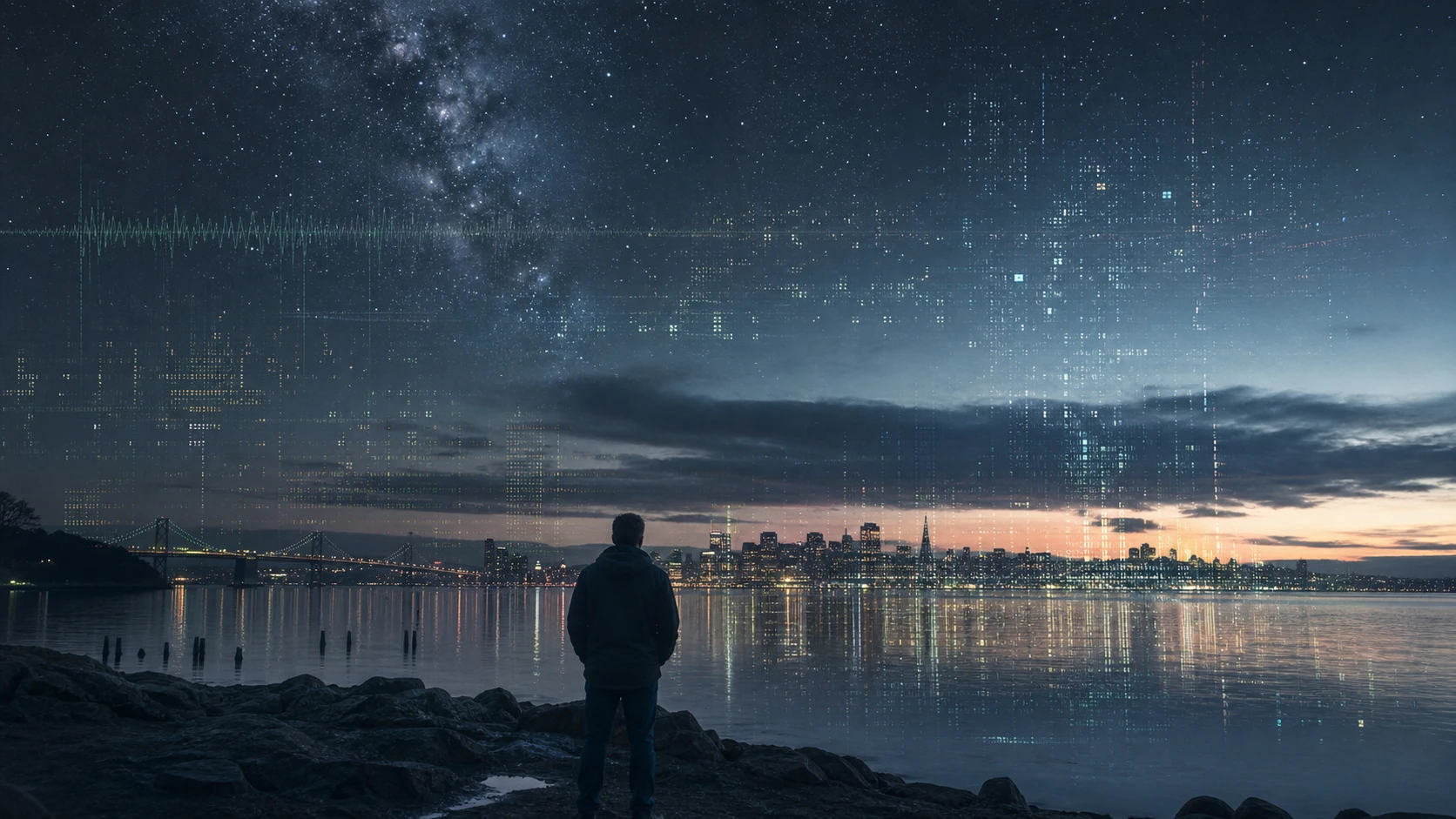
On screen, an email address: contact@blackcube.zone (not currently operational, only a working hypothesis). Anyone may send it a text, photograph, sound, equation, memory or unreadable file. The message is accepted, time-stamped, duplicated and placed in a distributed archive. No read receipt is issued. No reply is promised. It might arrive in one second, one year, one century or ten thousand years. It may already have arrived without our knowing how to recognise it.
1. The Zone: a place that exists only between messages
The A.L.I hypothesis proposes a Zone contained within the Internet yet invisible from ordinary use. It would be neither one website nor one server. It would consist of intervals between machines: waiting data, forgotten addresses, delayed packets, caches, replicated fragments, archives without readers and messages whose recipients do not yet exist.
Within this artistic hypothesis, a message may exist without being received. A reply may be deposited before its recipient knows how to ask the question. Communication no longer necessarily joins two simultaneous minds; it connects two temporalities.
The Internet is obviously not outside space and time. It depends on cables, antennas, data centres, clocks and energy. No extraterrestrial data could appear within it without a physical channel. The Zone is therefore not a scientific discovery but a conceptual model and artistic protocol: turning the network into an instrument of waiting, available to unknown recipients.
2. The Internet began with an incomplete message
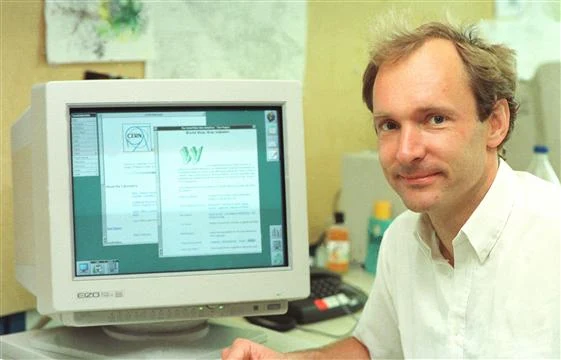
In 1969, the first exchange between two ARPANET machines was meant to transmit “LOGIN”. The connection stopped after the first two letters: LO. Email appeared in 1972 and rapidly became one of the network’s primary applications. The Internet was then conceived as an open architecture joining independent networks. The machines linking them were described as black boxes, the future gateways and routers. Technical history almost accidentally supplied the project’s first image: black boxes connecting incompatible worlds. Internet Society, “A Brief History of the Internet”.
Before permanent connectivity, Usenet, UUCP and FidoNet circulated messages through store-and-forward systems. Computers called each other by modem, often at night, exchanged packets and disconnected. Latency was not a fault; it was the shape of the network.
3. Email 2067: making the network guardian of a secret
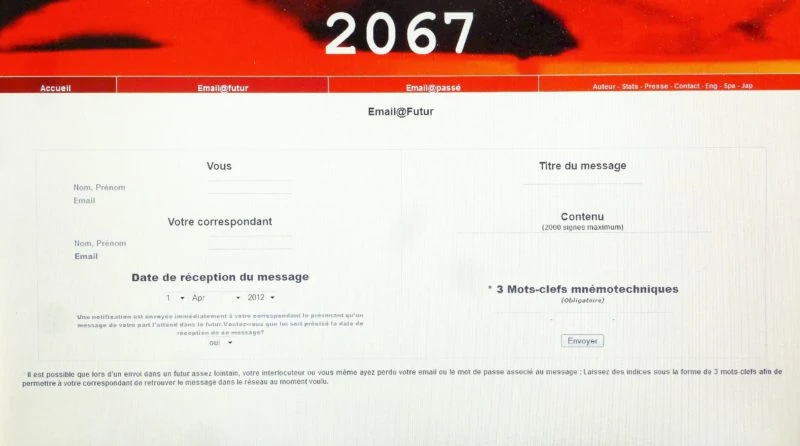
The intergalactic email project extends two works by David Guez that treat the network as temporal territory. Initiated in 2006, Email 2067 lets users send a message to themselves or someone else at a chosen future date. The recipient is warned that it exists but cannot yet read it. The text is encrypted and kept until its release date.
The network becomes a trusted third party, the guarantor and guardian of correspondence whose outcome no participant fully controls. An address may disappear, formats may change, memory may fade and the sender may die before delivery. Mnemonic keywords allow the message to be recovered if technical identities do not survive.
Email 2067 already describes the Internet as an intermediate space hosting appointments with ghosts: versions of ourselves separated by different moments in our lives. Intergalactic email displaces that structure. The recipient is no longer our future double but an intelligence whose existence, location and temporality are unknown. The delay is no longer scheduled; it becomes indeterminate.
4. Camera 2067: placing an image in the network’s afterlife
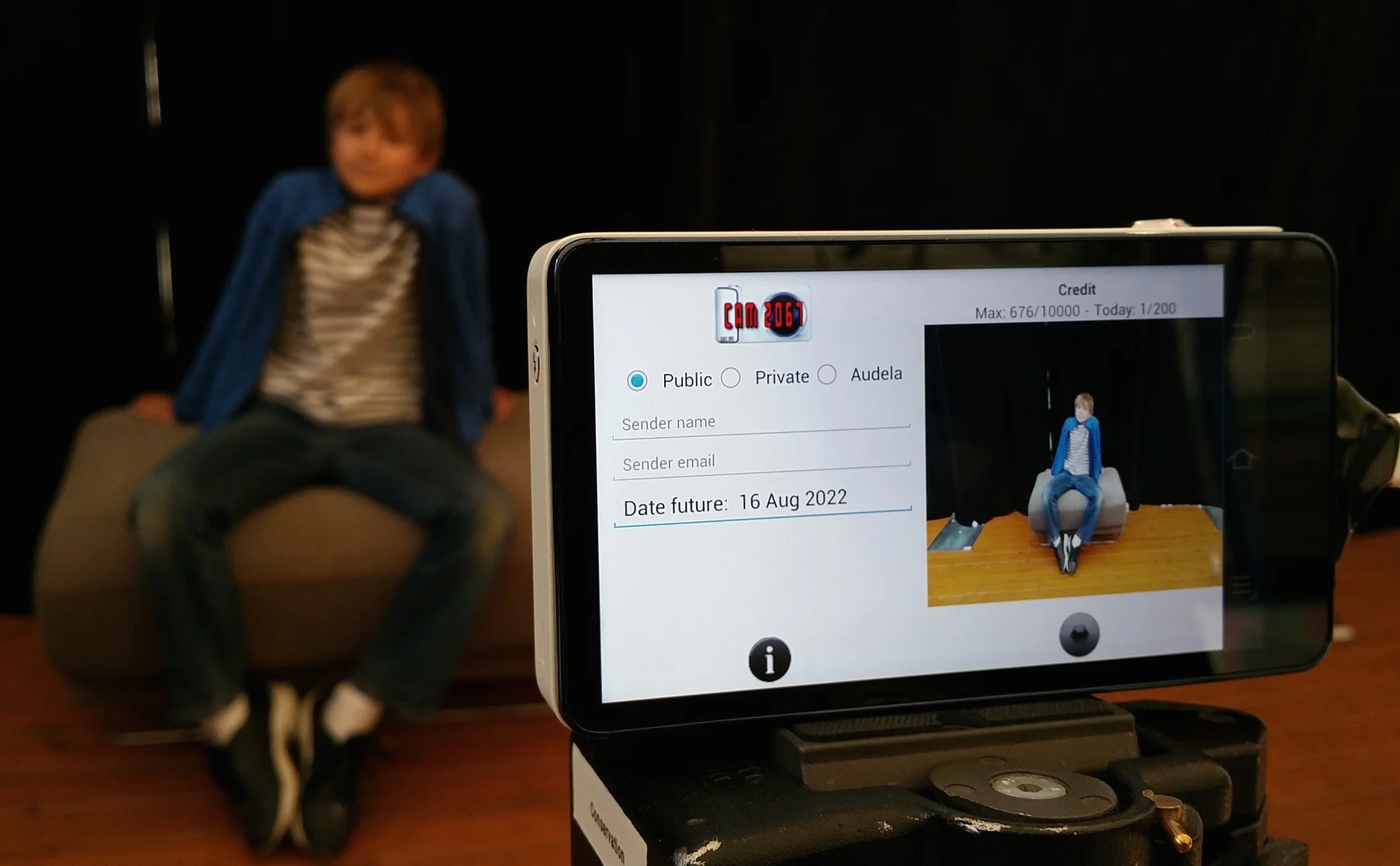
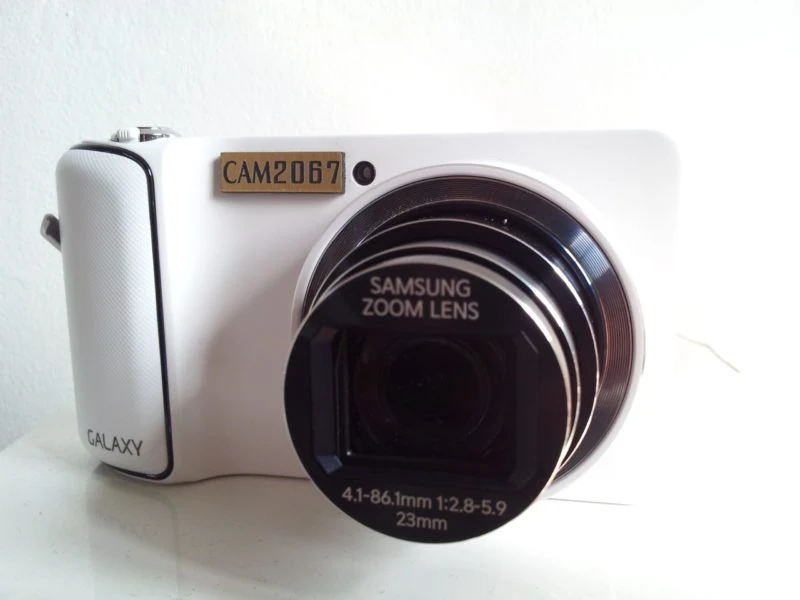
With Camera 2067, the same hypothesis becomes photographic. The camera and its application take an image and send it to Cloud 2067. The photograph is not kept inside the device: it disappears from the present and is revealed on a future date.
The system offers Public, Private and Audela modes. In the last mode, the image is not meant to reappear on a fixed date. It is sent to a discreet area of the network, a hidden side where it might remain indefinitely. The project then proposes a deliberately unverifiable hypothesis: could a dead person continue to navigate this invisible space and encounter images deposited before their disappearance? A connected mirror was intended to display photographs supposedly visited by such presences.
In a 2013 interview, Guez described this concealed network as a place only ghosts might enter. Three stages emerge: Email 2067 addresses a future human; Camera 2067 — Audela deposits an image for a potentially dead recipient; intergalactic email opens the deposit to an intelligence that may be neither human, contemporary nor yet present.
5. Invisible Internets
The deep web mainly consists of unindexed pages: databases, messaging systems and private spaces. Darknets are overlay networks reached through particular software and protocols. They are not metaphysical elsewhere, yet they technically separate message, origin, route and place of storage.
Onion routing was developed in the mid-1990s so that an observer could not know both who was speaking and to whom. Tor, deployed in 2002, passes communication through encrypted relays. Freenet, proposed in 1999, distributes documents across participating machines to resist censorship and obscure origin. I2P combines unidirectional tunnels and layered encryption. IPFS identifies content by its fingerprint rather than only by the server’s location.
These architectures are not passages to other civilisations. They nevertheless show that a message may survive independently of its first depositor and be sought for what it is rather than where it resides.
6. Depositing rather than sending
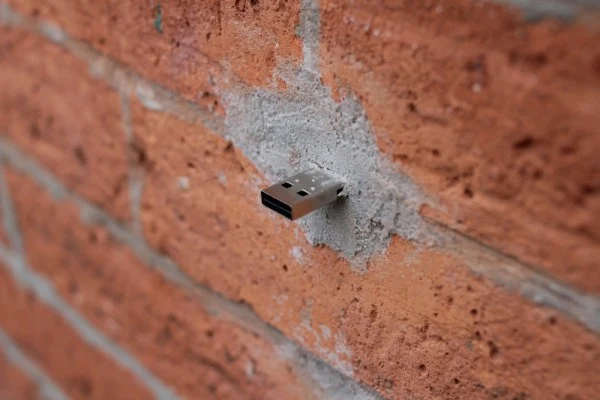
In ordinary mail, the address precedes the message. Intergalactic email reverses the order: the message precedes its recipient. It is not literally “sent to extraterrestrials”. It is deposited for any intelligence capable of encountering it.
Each submission would be preserved as original file, textual transcription, binary representation, sonic and visual form, mathematical description, cryptographic fingerprint, distributed copies and durable physical medium. The goal is not to proclaim a universal language but to increase the number of possible paths toward interpretation.
At 4.24 light-years, a round trip would already require roughly eight and a half years. At one hundred light-years, two centuries. At five thousand light-years, dialogue becomes an archive separating entire civilisations. Asking “When will they reply?” imposes a human temporality on a hypothetical interlocutor. The project connects with the Chroneme Hypothesis: duration between signs is itself part of language.
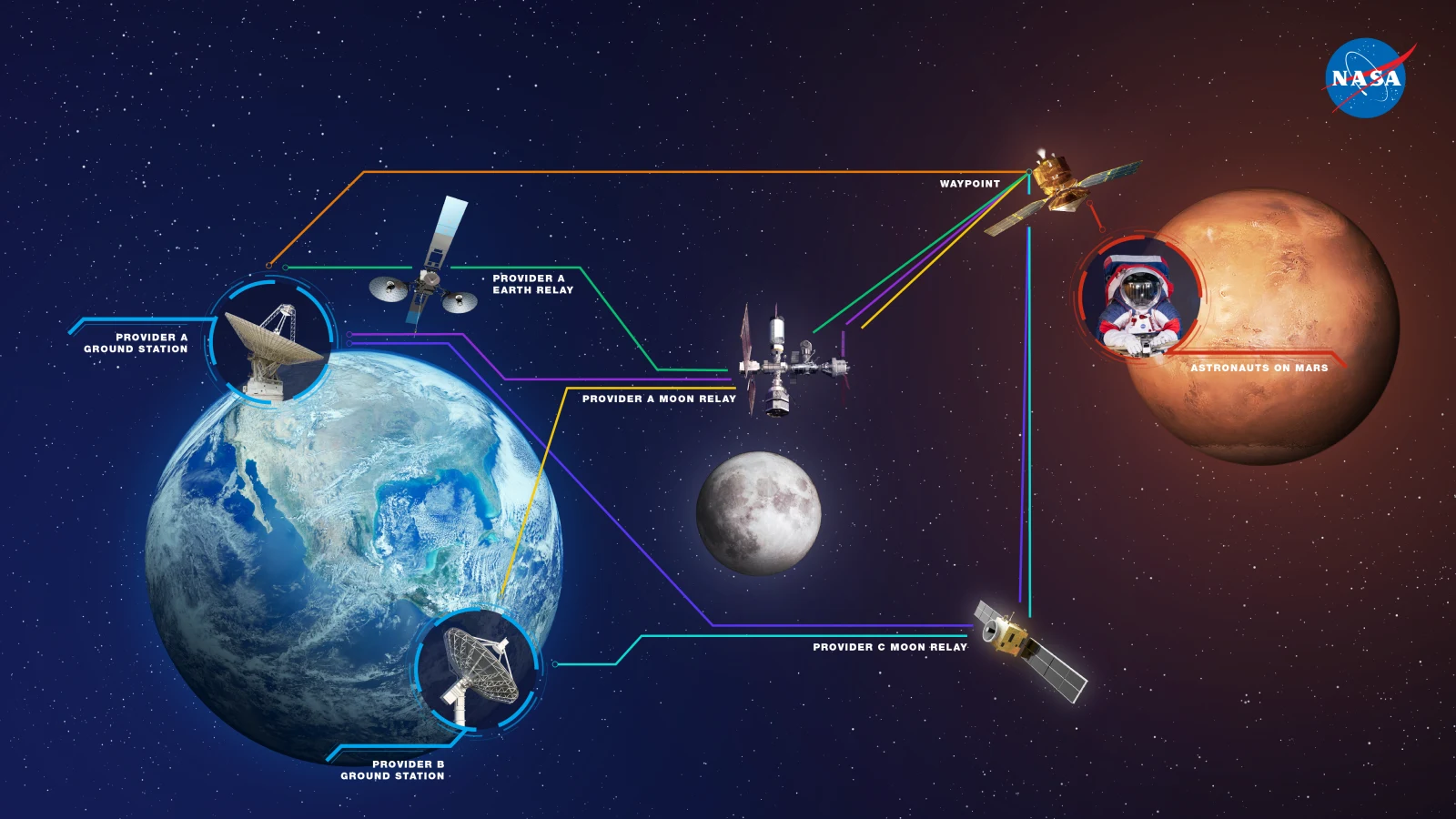
DTN makes latency technically concrete for space communications: every node stores data until a link becomes available. NASA treats it as a foundation of a Solar System Internet. The A.L.I Zone radicalises the principle: store until a recipient becomes possible.
7. The black junction cube
The physical installation would be a black cube connected to several networks. No screen would display an inbox. A line of light would indicate only activity: reception, duplication, translation, verification or movement. A counter would show time elapsed since the first deposit, never a countdown.
The cube would receive messages addressed to the Zone, multiply their representations, distribute copies across heterogeneous media and wait without declaring silence a failure. It would be less mailbox than airlock, a place where human messages cease to belong to us.
This proposition extends the Disappearance Hypothesis, where contact may occur through gaps and traces, and the Ghostbook: a message may be present in a corpus without becoming visible before its reading method is invented.
8. The reverse hypothesis: have we already received something?
There is no evidence that extraterrestrial intelligence has placed data on the Internet. Such action would also require an initial physical channel: interception of our communications, a captured transmission, a probe or modification of terrestrial equipment. The project must preserve this boundary between speculation and fact.
The experiment remains productive: what would we look for? Perhaps a structure replicated across archives, a pattern surviving format changes, a code distributed among unrelated documents, or an anomaly becoming legible only when separated data are assembled. This search intersects the Encoded Future Hypothesis and the Interstellar Turing Test: how could we distinguish a message from coincidence, or intention from a pattern projected by the observer?
9. An AI whose only task is contact
The project’s second component is a contact AI. It would not be asked to compose a supposedly universal reply. Its task would be to prevent A.L.I from mistaking human habits for universals.
This intelligence should generate thousands of representations of one message; imagine recipients sharing neither our senses, bodies nor temporality; simulate incompatible interpretations; seek invariants; detect anthropocentric assumptions; confront mathematics, images, sound, gesture and matter; preserve attempts across generations; and refute its own solutions before proposing them.
It would be multiple, panoramic and contradictory. “Panoptic” would not mean total surveillance but simultaneous occupation of several viewpoints. AI already filters large SETI datasets and searches for signal morphologies, yet detecting an anomaly differs radically from understanding intention. Access Intelligence becomes a durable research institution rather than an oracle.
10. Emergence calculation: how likely is a contact AI?
No statistical evidence can scientifically date the arrival of such a system. We can, however, build a transparent scenario index, a small Drake-like equation for the project. Define five conditions: M, genuinely multimodal representation; S, autonomous scientific research; D, sustained ability to challenge its own hypotheses; C, archival continuity across decades; G, governance preventing the AI from transmitting alone in humanity’s name.
2050 scenario: P(M)=0.85; P(S|M)=0.60; P(D|M,S)=0.45; P(C|M,S,D)=0.70; P(G|M,S,D,C)=0.65. The product is 0.074, approximately 7%.
2100 scenario: 0.95 × 0.85 × 0.70 × 0.85 × 0.80 = 0.384, approximately 38%.
These numbers do not predict the future. They expose chosen dependencies, and one altered assumption transforms the result. Computing power is insufficient: the major uncertainties involve epistemic plurality, institutional continuity and governance. The 2026 AI Index emphasises this gap: agents improve on some scientific tasks while remaining fragile at reproducing complete research.
Even if contact AI emerged, its chance of understanding extraterrestrial intelligence would remain unknown. It depends on a variable that cannot presently be estimated: whether two forms of intelligence share any interpretable structure at all.
11. Laboratory protocol
- Address without promise: accept texts, images, sounds and data structures without announcing a real recipient.
- Chosen latency: offer deposits for one year, ten years, one century or no deadline.
- Multiplication: produce several encodings, media and redundancy levels for each message.
- Alterity test: submit messages to models simulating incompatible perceptions and logics.
- Archive of failure: preserve rejected interpretations alongside retained solutions.
- Synthetic return: occasionally inject an artificially alien message to test our tendency to manufacture meaning.
Conclusion: communicating absolutely
Intergalactic email promises no recipient. It transforms the act of sending. Writing without guaranteed reading, acceptable delay or common language separates communication from result. The message becomes a declaration that a passage should remain open.
The black cube proves nothing. The address leads to no star. The AI knows no extraterrestrial language. Together, however, they construct a discipline of waiting: deposit, translate, multiply, preserve, doubt and keep available.
Perhaps no civilisation will ever reply. Perhaps the first reply will not be a message but a new way of reading what was already there.
References and further reading
- David Guez, Email 2067.
- David Guez, Camera 2067.
- ArtsHebdoMédias, “David Guez — Le miroir aux fantômes”, 2013.
- Internet Society, “A Brief History of the Internet”.
- CERN, “The Birth of the Web”.
- Tor Project, onion-routing history.
- Freenet distributed censorship-resistant architecture.
- Aram Bartholl, Dead Drops.
- NASA, Delay/Disruption Tolerant Networking.
- SETI Institute, AI and Machine Learning.
- Stanford HAI, AI Index Report 2026.