The history of unidentified flying objects is not only a history of objects. It is a history of people who decided what should be watched, preserved, classified, refuted or listened for. A pilot turns an observation into a media event; an officer invents an administrative vocabulary; an astronomer builds a typology; a statistician draws lines on a map; a sceptic searches for error; a radio astronomer replaces testimony with signal. Each figure represents less an answer than a distinct regime of evidence.
Bringing them into a single account requires one essential distinction: Carl Sagan, Frank Drake and Jill Tarter were not ufologists. SETI searches for measurable signs of extraterrestrial intelligence, whereas ufology begins with terrestrial observations that have already occurred and attempts to determine their cause. Yet both traditions share a difficult question: how can technical otherness be recognised when the data are rare, ambiguous and saturated with imagination?
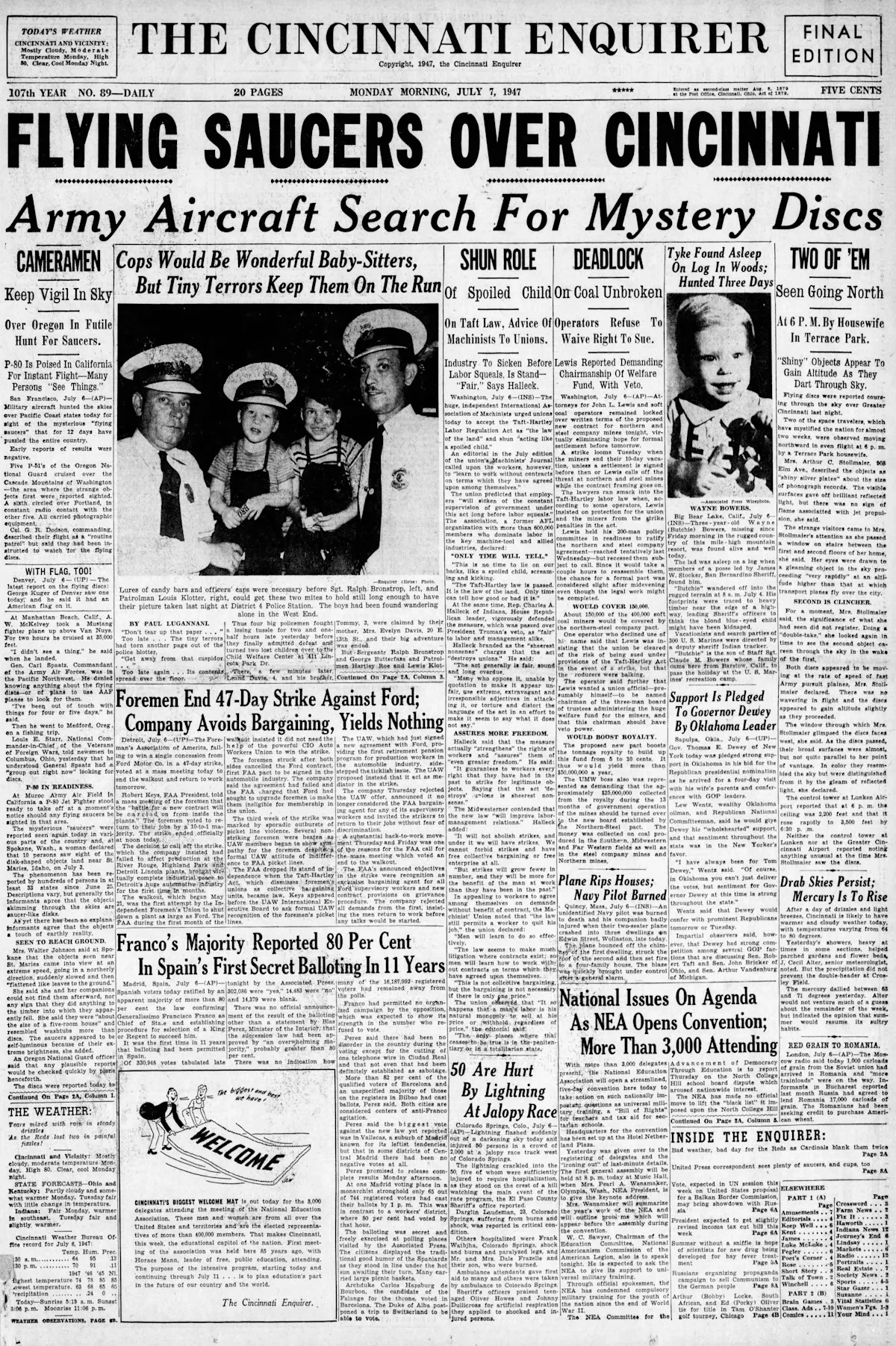
1947: one witness, nine objects, a worldwide phrase
Kenneth Arnold - The media form
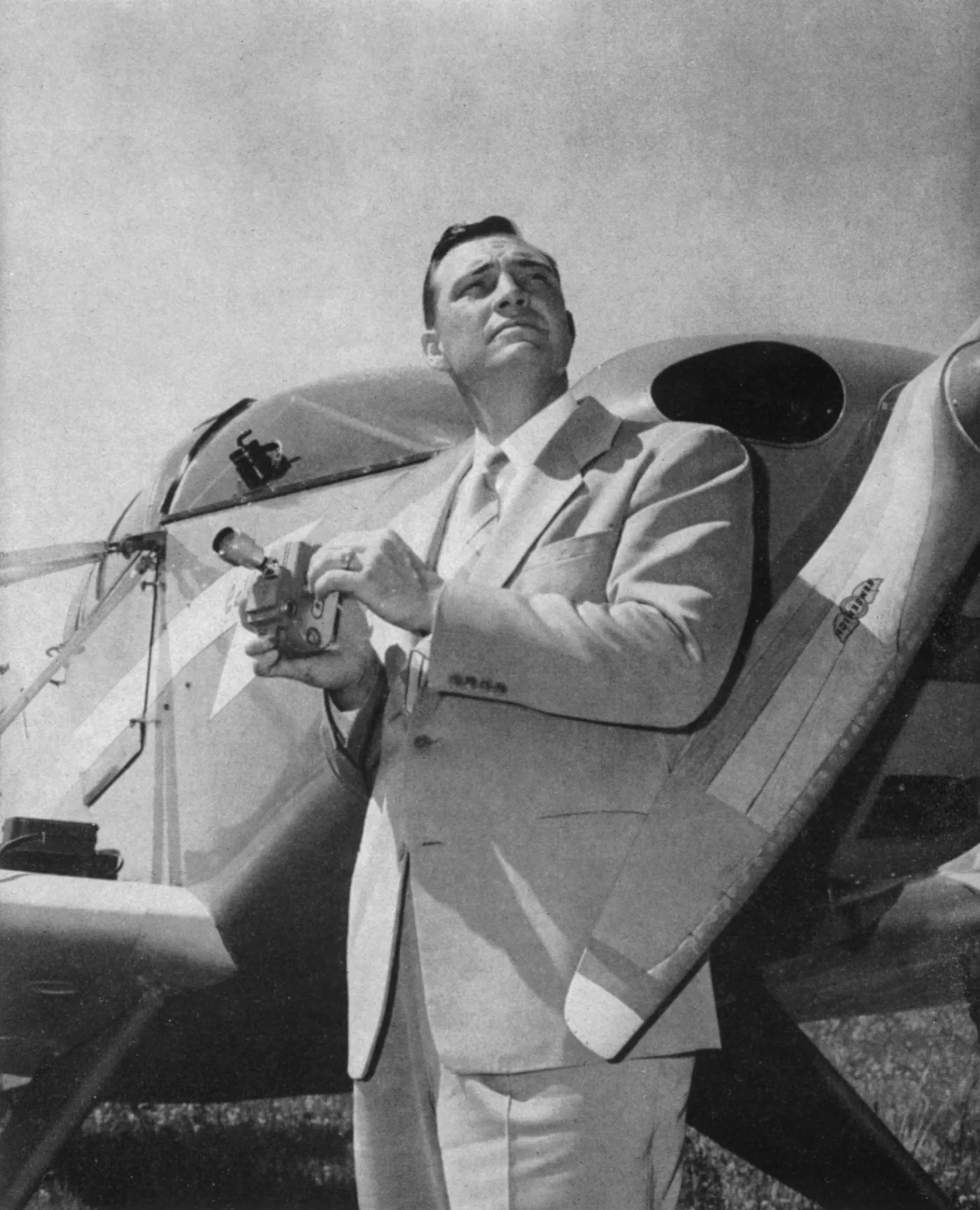
On 24 June 1947, private pilot Kenneth Arnold reported seeing nine bright objects near Mount Rainier. He tried to estimate their speed, described their motion and later drew a shape that did not look exactly like a saucer. Newspaper wires nevertheless retained the expression flying saucer. Whatever the nature of the observation, the story gave millions of people both a name and a mental image.
Arnold reveals a central property of the phenomenon: the observed object and the narrated object never fully coincide. Between them stand memory, the witness’s words, the reporter’s questions, the headline and the representations already available. Modern ufology emerges within that interval.
Donald Keyhoe - The political file
Former US Marine aviator and aviation writer Donald Keyhoe established another model during the 1950s: if the strongest observations received no public explanation, perhaps the military knew more than it admitted. Through NICAP, he organised correspondents, accumulated reports and demanded public hearings. The UFO became a political file, and missing information became evidence of secrecy.
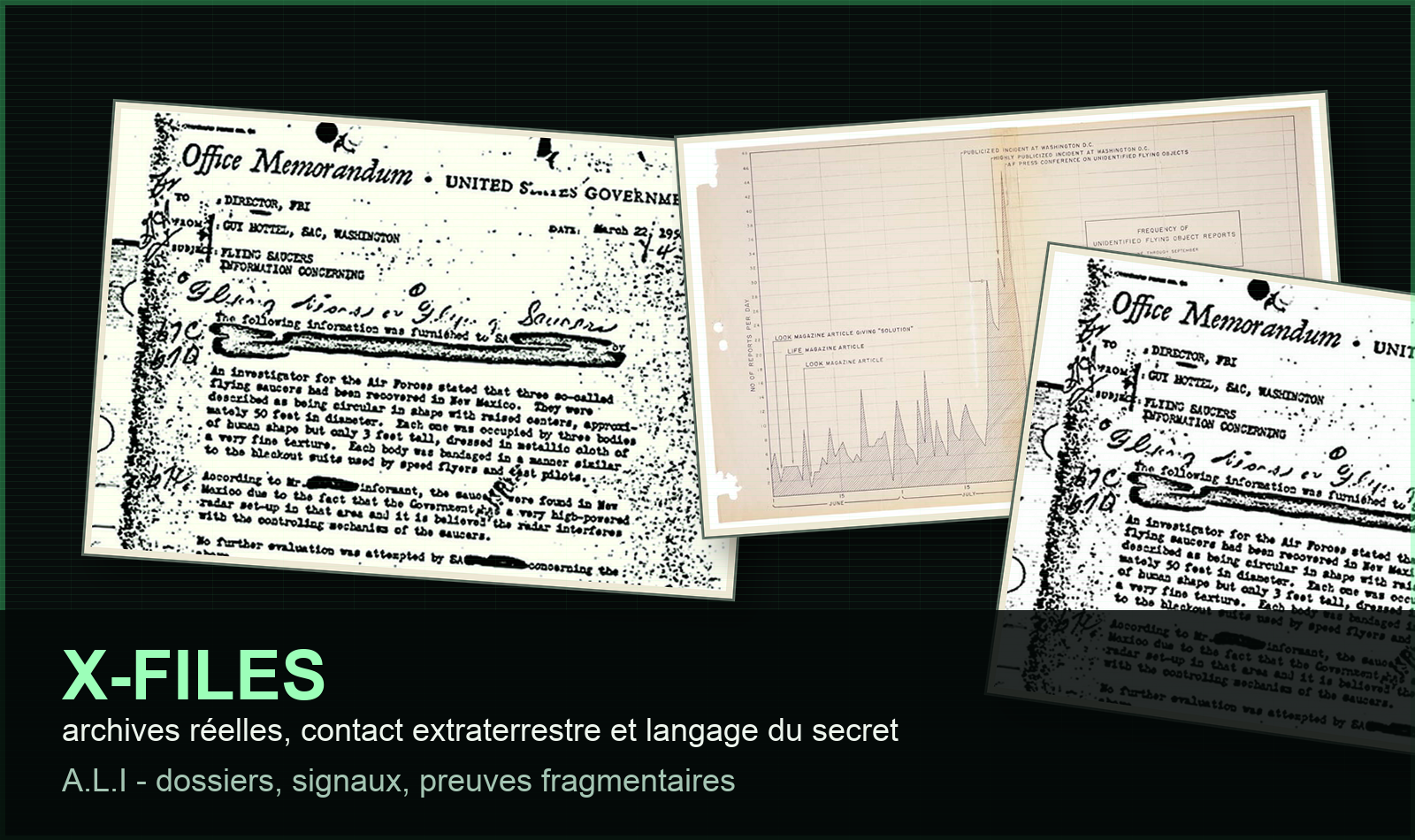
The move remains powerful but logically fragile. Military secrecy is real; it protects tests, sensors and vulnerabilities. It does not by itself prove extraterrestrial origin. A durable feedback loop was established: the more opaque the state remains, the more suspicion grows; the more suspicion grows, the more every denial can be interpreted as confirmation. A.L.I examines this transformation of records into mythology in “The X-Files: Real Archives and the Language of Secrecy”.
Administering the unknown
Edward J. Ruppelt - The military record
Within the US Air Force, Captain Edward J. Ruppelt directed Project Blue Book in the early 1950s and helped stabilise the term UFO, which was more neutral than “flying saucer”. His work turned scattered reports into forms, categories, evaluations and statistics. The phenomenon acquired a bureaucracy.
The US National Archives now hold the records of Projects Sign, Grudge and Blue Book. The Air Force closed Blue Book in 1969, concluding that investigated cases demonstrated neither a national-security threat, technology beyond known science, nor extraterrestrial vehicles. This conclusion must be read precisely: it does not claim that every observation was perfectly explained. It states that the category “unidentified” is not, by itself, evidence of extraterrestrial origin.
J. Allen Hynek - A grammar of encounters
Astronomer J. Allen Hynek, a scientific consultant to the Air Force, was initially associated with conventional explanations. He later criticised the weakness of some investigations and argued that resistant cases should be studied without automatic ridicule. In The UFO Experience (1972), he organised reports by distance and interaction: nocturnal lights, daylight discs, radar-visual cases, and close encounters of the first, second and third kinds.
The classification proves nothing about the nature of the objects. Its importance lies elsewhere: it provides a shared syntax. Hynek gave ufology a method for comparing reports, but the typology also created a powerful narrative form. When Spielberg titled his film Close Encounters of the Third Kind, an investigative category became a cultural genre. The related A.L.I article “Ufological Typology of Extraterrestrials” explores how narratives eventually manufacture families of beings.
Methodological threshold: “Unidentified” describes the condition of a case after a particular investigation. It is not the name of an object, the origin of a vehicle or the designation of an intelligence. A limit of knowledge must not be transformed into a property of the phenomenon.
The scientific dispute
James E. McDonald - The case as scientific anomaly
Atmospheric physicist James E. McDonald accused both the scientific community and public authorities of treating some reports too superficially, including observations involving pilots, radar operators or multiple witnesses. His papers at the University of Arizona contain hundreds of Blue Book cases, interviews and correspondence with military officers and researchers. McDonald defended the extraterrestrial hypothesis, but his most productive question remains broader: at what level of strangeness does an anomaly deserve a research programme?
Edward Condon - The cost of research without return
Physicist Edward Condon directed the University of Colorado study funded by the Air Force. Its 1968 final report judged it unlikely that continued intensive study of UFO reports would advance science. The report became one basis for closing Blue Book. To its defenders, it applied a reasonable standard of scientific return; to critics including McDonald, its broad conclusion did not do justice to some cases described in the report itself.
The controversy exposes a general problem in the science of rare events. Should resources be committed because a small group of cases resists explanation, or withdrawn because decades of inquiry have produced no cumulative proof? Both positions can claim prudence. They place risk in different locations: one fears missing a major phenomenon; the other fears building a field around sterile data.
The French path: maps, databases and networks
Aimé Michel - The map as a seeing machine
In France, science writer Aimé Michel proposed “orthoteny” in the late 1950s: reports from a short period appeared to align along great circles. The map seemed to reveal an invisible order unavailable in isolated testimony. The hypothesis proved extremely sensitive to case selection, location errors and alignments produced by chance, and was eventually abandoned.
The failure remains instructive. Michel anticipated a contemporary temptation: to believe that visualising a correlation has already produced a cause. A line on a map can be a discovery, a statistical artefact or the outcome of a poorly constructed file. The instrument is never innocent.
Claude Poher - The institutional database
With Claude Poher, an engineer at CNES, the phenomenon entered a French public infrastructure. In 1974 he began coding roughly one thousand cases; each report had to fit the eighty characters imposed by a punch card. In 1977, the creation of GEPAN within CNES institutionalised methods of investigation, expertise and archiving that continue through GEIPAN.
The eighty-character constraint is revealing: a luminous event, a trajectory, an emotion, weather conditions and uncertainty had to become computable fields. Poher did not simply collect the strange; he compressed it. Every database of anomalies is therefore also an implicit theory of what deserves to be preserved.
Jacques Vallée - From catalogue to system
Trained in astronomy and computer science, Jacques Vallée brings together case catalogues, computer networks, folklore and the history of religions. He distrusts any rapid equation between an unidentified phenomenon and a visitor from another planet. In his most speculative work, he instead considers a system capable of acting upon representations, beliefs and social structures.
This “control-system hypothesis” is not an established result. Its artistic and philosophical force comes from its displacement: if the phenomenon also acts through the stories it triggers, its possible unity may not lie solely in a physical object. The Vallée papers at Rice University materialise this method, bringing together field notes, correspondence with Hynek and Aimé Michel, technical records and files on social trends.

Carl Sagan: moving the question towards signal
Carl Sagan occupied a more nuanced position than the image of a sceptic closing the file. At the 1969 scientific symposium on UFOs, he argued that the available evidence did not make extraterrestrial origin persuasive, but also did not demonstrate that no case could have such an origin. Above all, he clearly separated two questions: interpreting UFO reports and conducting radio searches for extraterrestrial intelligence.
This shift changes the economy of evidence. Rather than waiting for an ambiguous object to cross the atmosphere, SETI defines frequencies, durations, repetitions and criteria of artificiality in advance. The inquiry no longer begins with a scene already charged with interpretation; it constructs a device intended to produce comparable and reproducible data. The tension runs through A.L.I’s articles on Contact and the Fermi paradox.
The essential difference does not oppose people who “believe” in extraterrestrials to people who do not. It opposes different ways of manufacturing an observation.
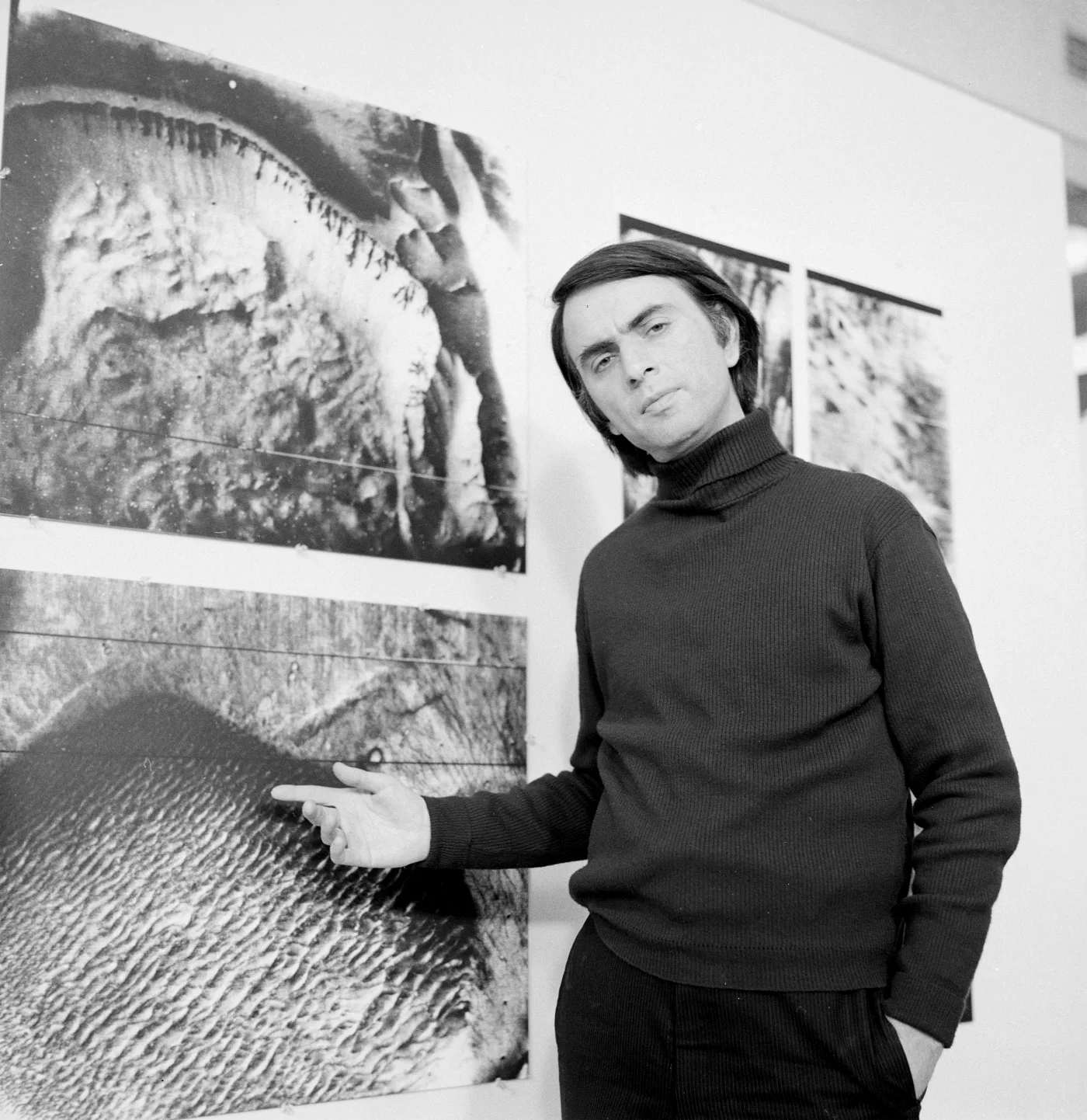
Frank Drake - Turning a hypothesis into a programme
In 1960, Frank Drake conducted Project Ozma with the Green Bank radio telescope. The following year, the equation bearing his name did not really calculate the number of civilisations as one solves a textbook problem. It decomposed enormous ignorance into factors that could be debated, observed or revised. Drake turned a metaphysical question into a scientific agenda. A.L.I offers a contemporary extension in “An Augmented Drake Equation for the Exoplanet Era”.
Jill Tarter - Sustaining the act of listening
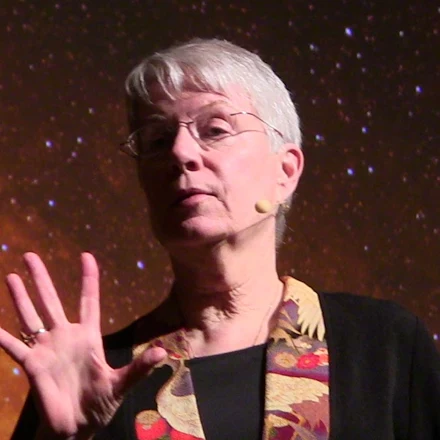
Jill Tarter embodies the institutional continuity of this search. As project scientist for NASA’s High Resolution Microwave Survey and later Project Phoenix, she helped sustain observation after US federal SETI funding was cancelled in 1993 and contributed to the development of the Allen Telescope Array. Whereas ufology often depends on the eruption of an event, Tarter works with duration: more stars, wider frequency bands, longer observations and better elimination of terrestrial interference.
This instrumental culture is developed in “Instruments of the Cosmos”, while the Wow! signal demonstrates what happens when an intriguing datum never repeats.
A gallery of human instruments
These figures do not form a simple progression from belief to science. They compose a conflicted ecology. Arnold shows that the witness is already an instrument. Keyhoe turns the archive into counter-power. Ruppelt and Poher make cases computable. Hynek builds a grammar. Michel reveals the seduction of patterns. McDonald defends anomaly against conformity. Condon insists on the opportunity cost of inquiry. Vallée extends the object into cultural effects. Sagan, Drake and Tarter finally shift attention towards a signal sought through an explicit protocol.
| Figure | Main instrument | What it reveals | Weakness |
|---|---|---|---|
| Kenneth Arnold | Testimony | Event and propagation | Memory and media translation |
| Keyhoe / Ruppelt | The file | Secrecy, recurrence, administration | Confusing opacity with proof |
| Hynek | Classification | Comparability of encounters | Reifying categories |
| Michel / Poher | Map and database | Spatial patterns and series | Selection bias and compression |
| McDonald / Condon | Controversy | Threshold of scientific interest | Overvaluing or dismissing anomaly |
| Vallée | Archival network | Cultural continuity and social effects | A hypothesis difficult to falsify |
| Sagan / Drake / Tarter | Radio telescope | Signals defined in advance | A limited search window |
Consequences for A.L.I: designing proof before contact
For Alien Language Interface, this history suggests that a language of contact cannot be separated from its receiving apparatus. A message does not exist only through its structure. It exists through the protocol that distinguishes it from noise, the archive that preserves its context and the community able to re-examine it.
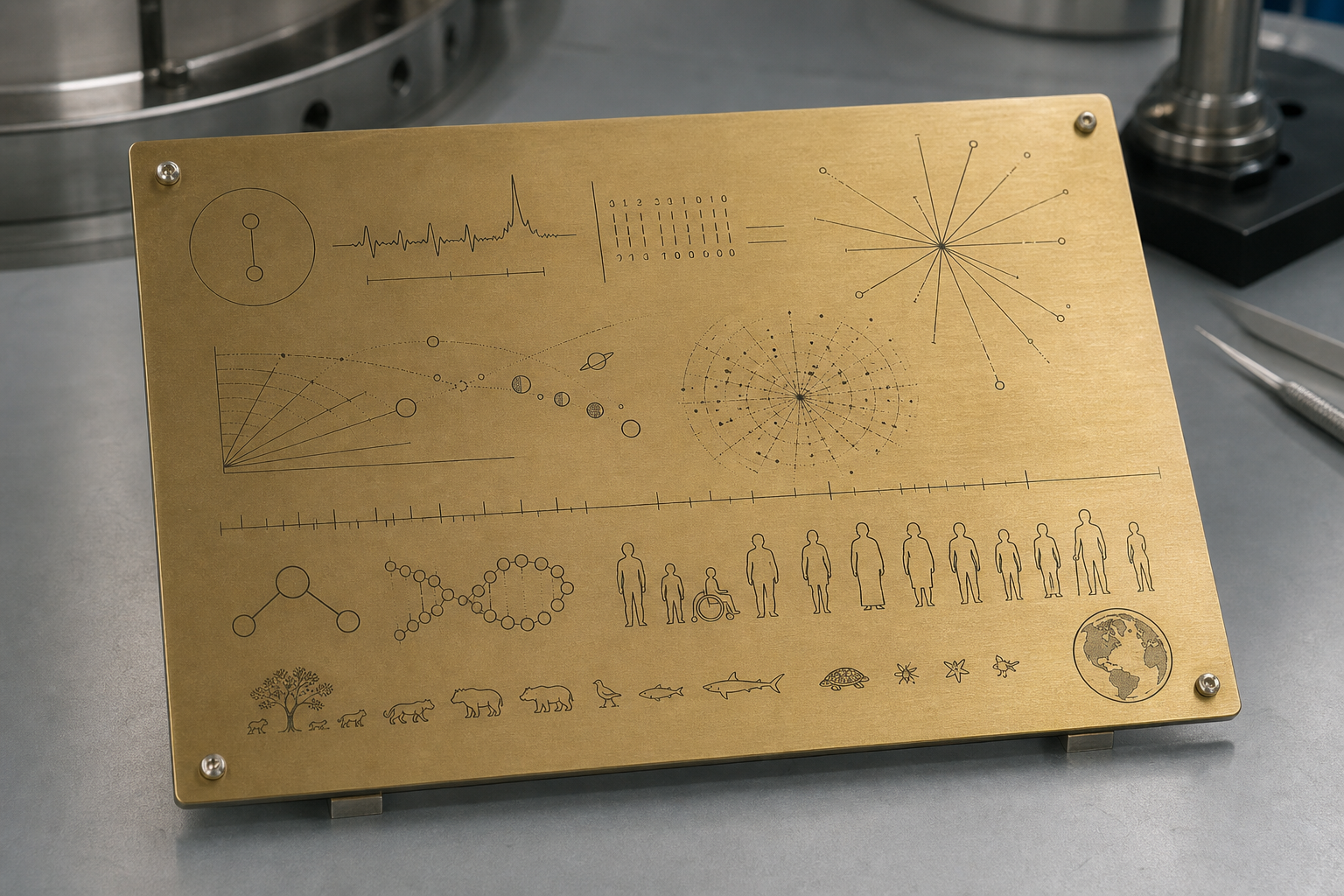
An interstellar signal or binary stele should therefore carry several layers: raw data, applied transformations, uncertainty, instrument state, competing hypotheses and a history of interpretations. We should archive not only what we believe we received, but the complete chain that led us to believe it. This connects “Rosetta Stone, Binary Stele” with the interstellar Turing test hypothesis: transmission and proof are related but distinct problems.
An A.L.I protocol can be stated in four operations: describe before naming; preserve before compressing; compare before explaining; revise without erasing earlier interpretations.
The most interesting speculation may not be to decide which figure “was right”. It is to imagine a non-human intelligence observing our own methods. Would it understand our testimony, military forms, punch cards, disputes and radio telescopes as fragments of one language? Perhaps our first message to the other is already present in the way we organise what we do not understand.
Further reading in A.L.I
See also “The X-Files: Real Archives and the Language of Secrecy”, on the administrative file becoming mythology; “Telepathy, Ufology and Mental Language”, on contact narratives without a physical signal; and “The Contact-Imagination Hypothesis”, on imagination as an active medium of encounter.
References
- Smithsonian National Air and Space Museum, “1947: Year of the Flying Saucer”.
- US National Archives, Project BLUE BOOK.
- Edward J. Ruppelt, The Report on Unidentified Flying Objects.
- Northwestern University Archives, J. Allen Hynek Papers.
- University of Arizona Libraries, James E. McDonald Papers.
- University of Colorado, Scientific Study of Unidentified Flying Objects, 1968.
- GEIPAN/CNES, history of the French case databases.
- Rice University, Jacques Vallée papers.
- Carl Sagan, statement at the 1969 UFO symposium.
- SETI Institute, Carl Sagan.
- SETI Institute, Frank Drake.
- SETI Institute, Jill Tarter.