The multiverse is not only a spectacular science-fiction idea. It is an extreme form of decentering: after we stopped placing Earth at the center of the cosmos, after we understood that the Sun was only one star among others, after we accepted that our galaxy was only one galaxy among billions, the multiverse hypothesis proposes one final displacement: our universe itself may be only a local case, a bubble, a branch, one solution among others.
For A.L.I, this hypothesis changes the nature of contact. Non-human intelligence would no longer be merely located elsewhere in our space. It could be separated by a cosmological boundary, a quantum branch, an inaccessible geometry, a difference in physical constants, or a level of reality of which our instruments perceive only an indirect trace. The language of contact would then become a language of passage: how can one recognize a sign from a world that may share neither our space, nor our time, nor our laws?

From centered world to decentered world
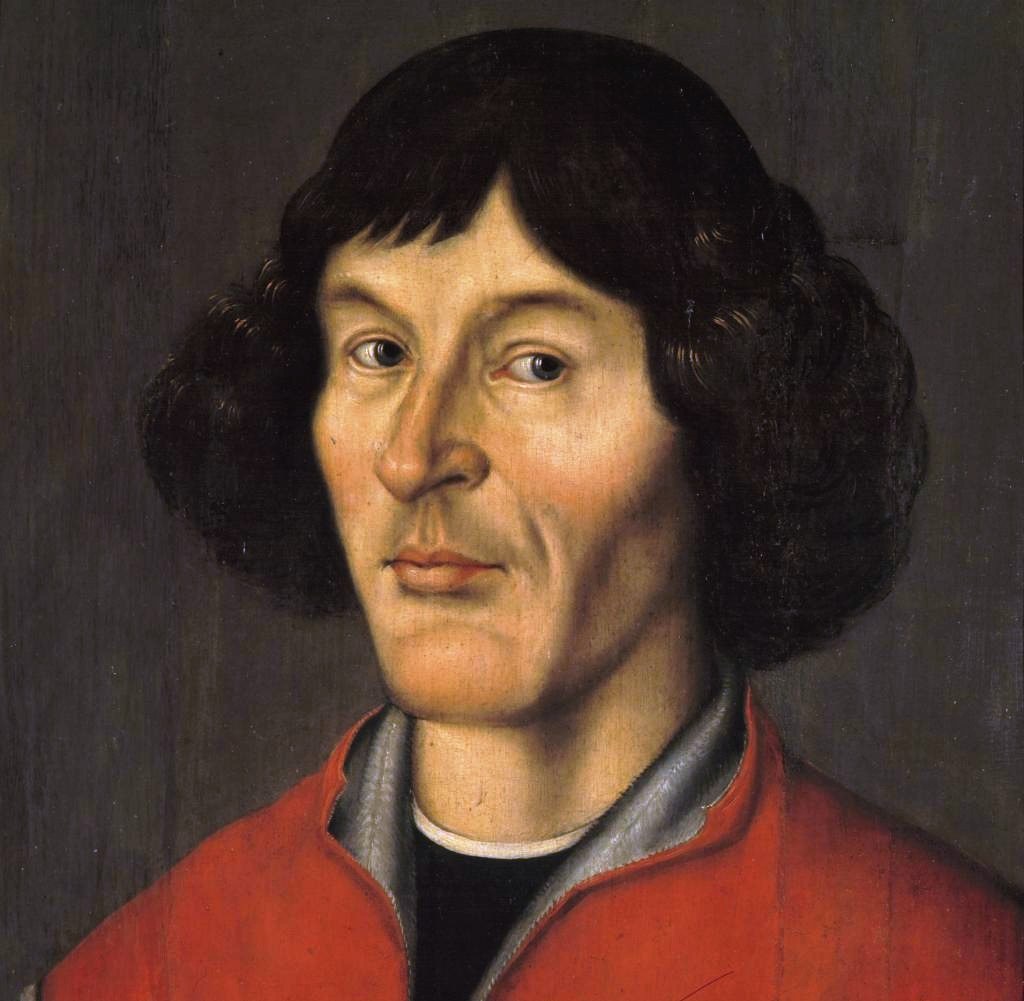
The history of the multiverse begins before the word itself. It begins with the progressive loss of the center. In antiquity, some traditions already imagined a plurality of worlds: Democritus, Epicurus and Lucretius thought of innumerable worlds in a cosmos without absolute center. But medieval and Aristotelian Europe long placed Earth within an ordered, hierarchical and closed architecture.
The Copernican gesture, in the sixteenth century, displaced Earth: it was no longer the center around which everything turns. Galileo, with the telescope, made this decentering visible: lunar mountains, Jupiter’s moons, Venus’s phases. The sky ceased to be a perfect sphere and became a field of observation. Giordano Bruno went further, imagining an infinity of inhabited worlds. This hypothesis, long metaphysical, gradually became an astronomical and then cosmological question.

The plurality of worlds before the multiverse
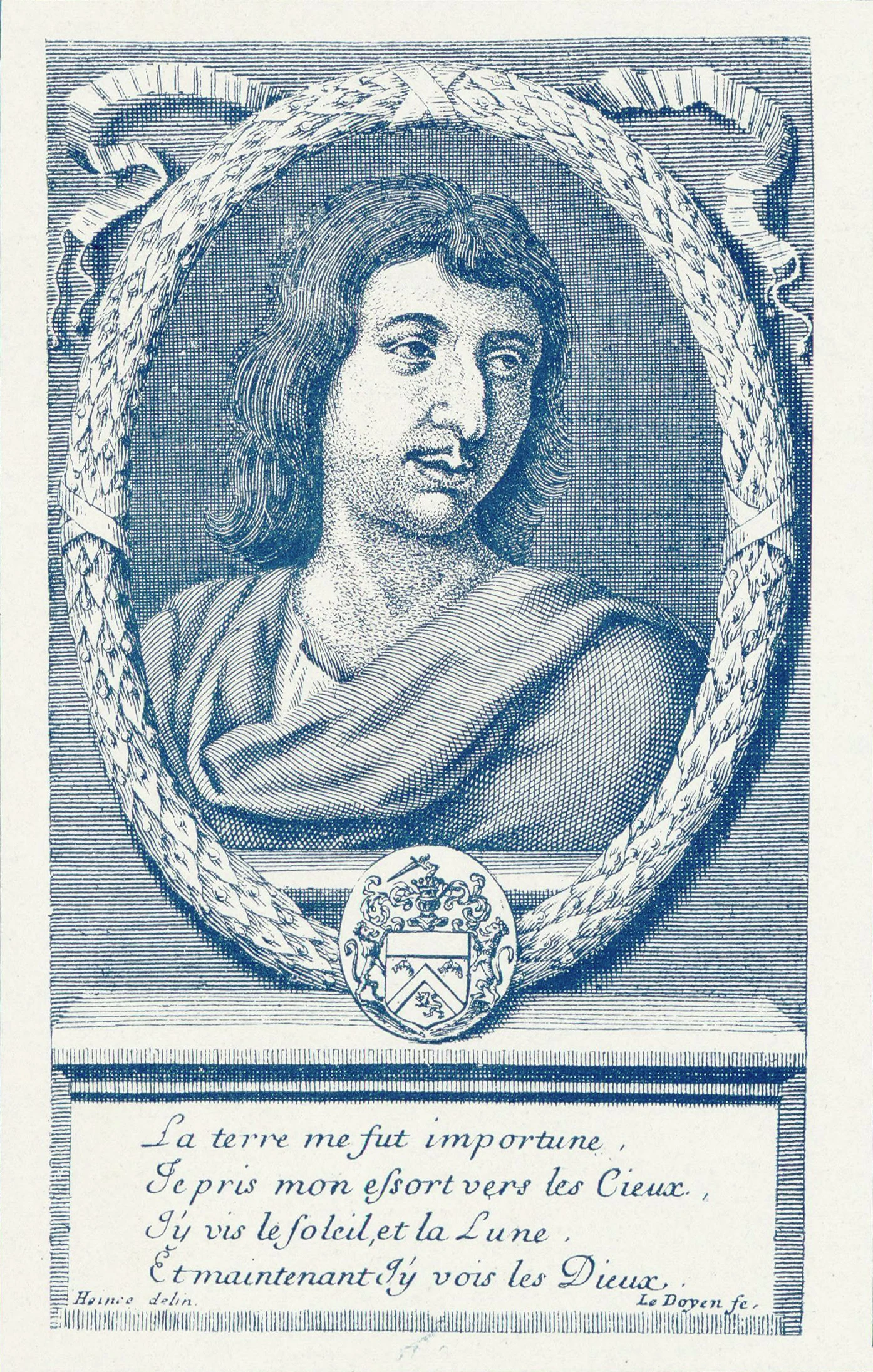
Before modern physics spoke of a multiverse, literature and philosophy spoke of worlds. Fontenelle published Conversations on the Plurality of Worlds in 1686, making other worlds a matter of conversation, pedagogy and imagination. Cyrano de Bergerac imagined journeys to the Moon and the Sun. Later, Camille Flammarion popularized an inhabited vision of the universe. The plurality of worlds is first a revolution of imagination: accepting that our world is not the only possible stage.
This history matters for A.L.I: every cosmological leap also produces a leap in language. When Earth ceases to be central, one must invent another grammar of place. When the galaxy becomes one among others, one must think distances, signals and delays. When the universe may become one among others, one must think a semiology of the inaccessible.
Four families of multiverse
The word multiverse covers several very different hypotheses. They must be distinguished in order not to confuse cosmic poetry and scientific model.
| Family | Principle | Status |
|---|---|---|
| Astronomical multiverse | Space may be much larger than the observable universe; other regions may have different histories. | A plausible extension of cosmology, but beyond the observable horizon. |
| Eternal inflation | Bubble universes arise in an inflationary process that never stops everywhere at once. | An outcome of some inflationary models; speculative but discussed in cosmology. |
| Quantum many worlds | According to Everett, each quantum measurement corresponds to a branching of the global state. | An interpretation of quantum mechanics; not a classical parallel space. |
| String landscape / branes | Different compactifications or configurations could produce varied physical laws. | A theoretical hypothesis linked to quantum gravity and string theory. |
Everett: the multiverse as branching
In 1957, Hugh Everett III proposed a radical reading of quantum mechanics: the universal wave function does not collapse during measurement; it continues to evolve, and what we call a result corresponds to one branch of that evolution. In this interpretation, there is not a single world in which one possibility becomes real, but a structure in which possibilities unfold.
This multiverse is not a set of parallel planets one could simply travel to. It is rather an architecture of branches that no longer communicate once they have decohered. For A.L.I, the issue becomes: is a message between branches impossible in principle, or can one imagine indirect traces, interferences, thresholds where separation is not yet total? Current physics does not allow us to send a message to a decohered branch. But conceptually, Everett’s multiverse makes language a problem of selection: every observation is a sentence written in one branch, while the other sentences become inaccessible.
Our doubles: what becomes of the choices we did not live?
One of the most disturbing consequences of the multiverse, especially in its quantum and fictional versions, is the idea that doubles of ourselves might exist: not merely identical copies, but variations. A self who made another decision, a self who did not meet the same person, a self who followed another path, a self living in a branch where a tiny event displaced an entire history. Each choice would then become a kind of ontological crossroads.
This idea directly touches the question of free will. If everything that can happen happens somewhere, what does choosing mean? In a radical deterministic or Everettian reading, a choice would not erase the other possibilities; it would only select the branch in which one version of us becomes conscious of that choice. The other options would not be abolished, but lived elsewhere by other versions of ourselves. Free will would no longer be the power to reduce reality to a single trajectory, but the subjective experience of one trajectory among a field of bifurcations.
For A.L.I, the most fertile hypothesis is this: could these doubles share something like a common layer of consciousness? Not a clear, telephone-like communication, but weak resonances: intuitions, dreams, premonitions, déjà vu, sudden decisions, mental images that seem to come from another line of life. This would be a form of multiversal telepathy, not between two people, but between several versions of the same subject distributed across different branches.
Scientifically, caution is necessary: no experiment shows that decohered branches can exchange information. But as an artistic and philosophical hypothesis, the question is powerful. It allows us to consider every unrealized choice as an active archive. The lives we did not live would not merely be lost; they would form a field of possibles with which our consciousness might maintain obscure relations.
An A.L.I protocol could consist in writing down an important decision, then producing its alternatives as narrative doubles. Each double would generate a text, an image, a sentence, a sound frequency. The installation would make these simultaneous life-lines audible, as if the subject were receiving messages from their other trajectories. The language of the multiverse would no longer be only cosmological; it would become intimate. It would ask: if our other choices exist somewhere, can they still speak to us?
Eternal inflation: bubble universes
Cosmic inflation, developed notably by Alan Guth, Andrei Linde and others, proposes an extremely rapid expansion of the very early universe. In some models, this inflation is eternal: it stops locally in certain regions, forming bubble universes, while continuing elsewhere. Each bubble might have different properties, and our observable universe would be the inside of one such bubble.
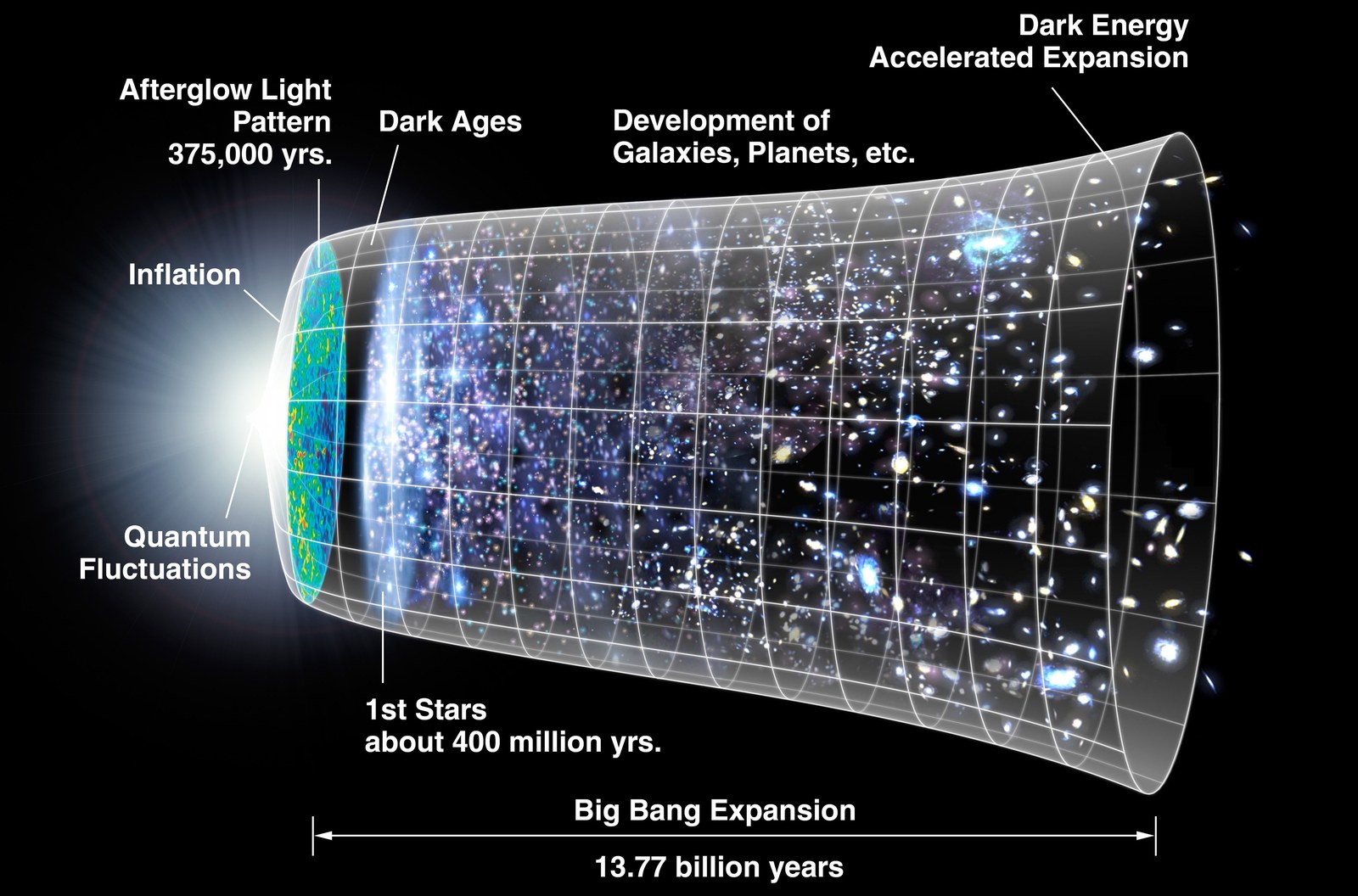
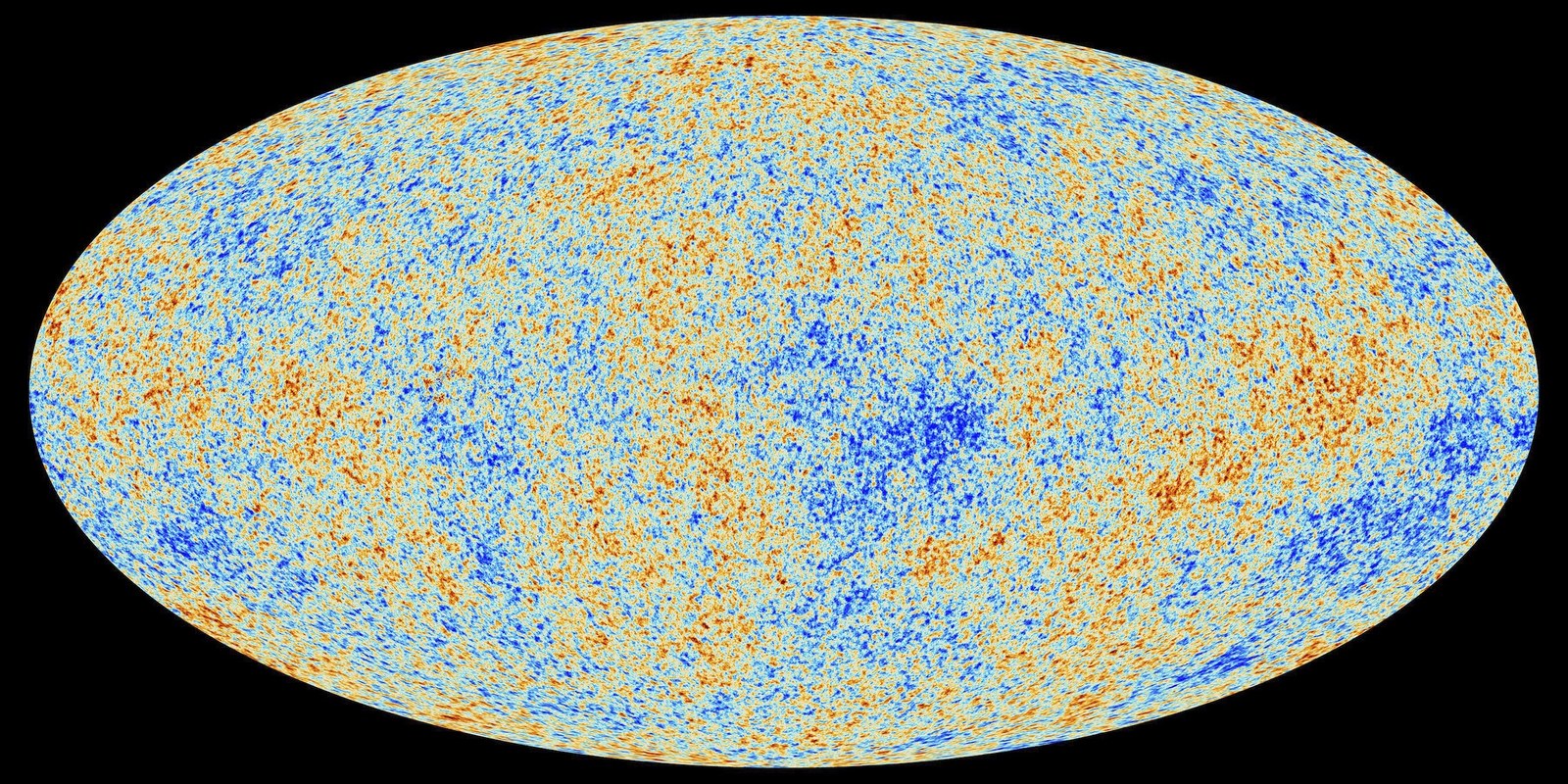
This hypothesis has inspired searches for possible traces of bubble collisions in the cosmic microwave background. So far, no decisive evidence has been found. This is crucial: the multiverse is a powerful idea, but its testability remains one of its most debated problems. A hypothesis that produces no possible observation risks becoming metaphysics. Conversely, searching for signatures, even negative ones, turns the multiverse into a research program.
String landscape, dimensions and hidden geometries
In some versions of string theory, extra dimensions must be compactified according to complex geometries. The number of possible solutions may be immense. Leonard Susskind popularized the idea of a landscape, a landscape of possible vacua where different regions or universes might have different physical constants. Brian Greene, in The Hidden Reality, offered an accessible synthesis of the main families of multiverse.
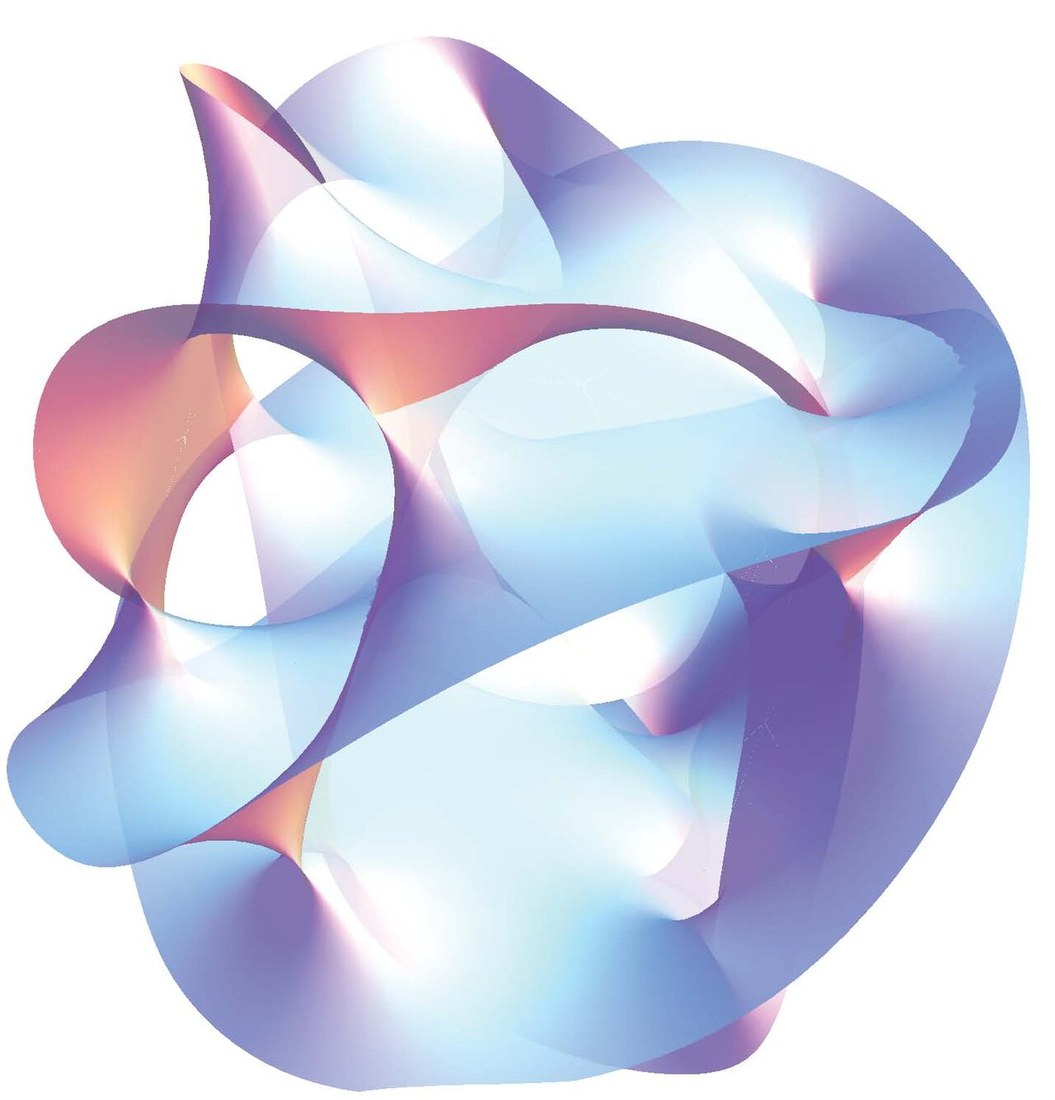
Here, passage between universes becomes a passage between regimes of law. Another universe would not only be elsewhere; it could be built with another value of the cosmological constant, another particle structure, another topology. Communicating with it would require translating not only a message, but the very conditions of legibility.
Literature, poetry, fictions of bifurcation
Literature often preceded physics in imagining multiple worlds. Borges, in The Garden of Forking Paths, describes a structure in which all choices coexist in temporal ramifications. Lewis Carroll plays with logical and dimensional passages. Dante crosses cosmic architectures that are not scientific multiverses but symbolic worlds ordered by other laws. Modern poetry, from Mallarmé to Michaux, also opens spaces where language no longer merely describes a world: it produces possible worlds.
Science fiction then gave the multiverse immense narrative power: Philip K. Dick questions unstable realities; Michael Moorcock develops a literary multiverse; Ursula K. Le Guin thinks worlds as anthropological experiments; Greg Egan radicalizes mathematical worlds and alternative realities. The multiverse becomes a laboratory of variations: what becomes of identity when it exists in multiple versions? What becomes of memory when several incompatible histories are equally real?
Cinema: passage as image
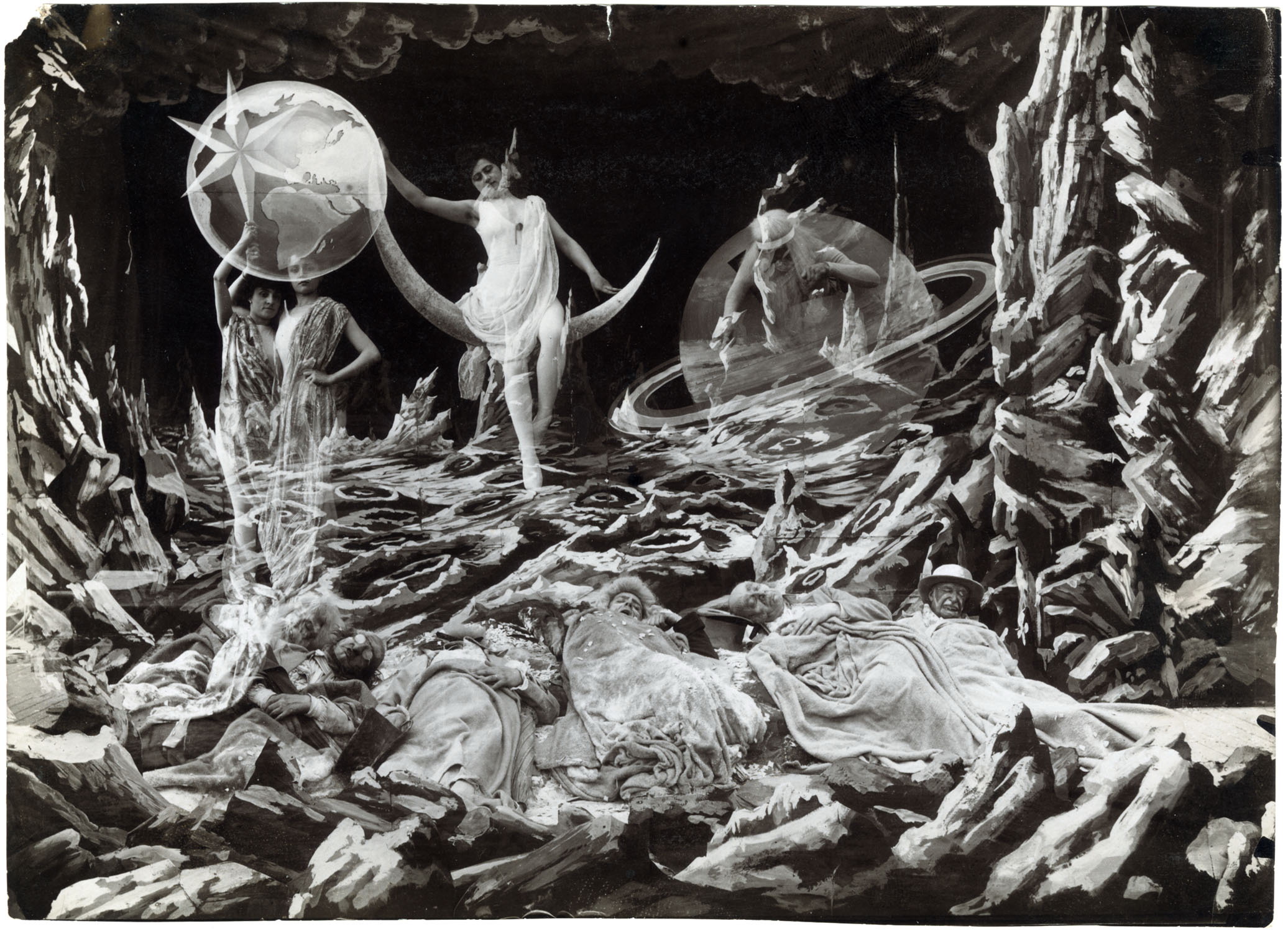
Cinema has turned the multiverse into a sensory experience. Everything Everywhere All at Once makes the multiverse a crisis of attention and identity. Spider-Man: Into the Spider-Verse gives graphic form to superposed realities. Doctor Strange in the Multiverse of Madness uses the multiverse as a magical and cosmological space. Coherence imagines an intimate and almost domestic bifurcation. Interstellar, without being a multiverse film in the strict sense, stages the idea of passage through a higher-dimensional structure.
These films show that the question of passage is always also a question of language: how does one recognize another version of oneself? How does one communicate with a world whose continuity differs? How does one transmit information when the context that gives meaning to that information changes from universe to universe?
Potential passages: science, limits, speculations
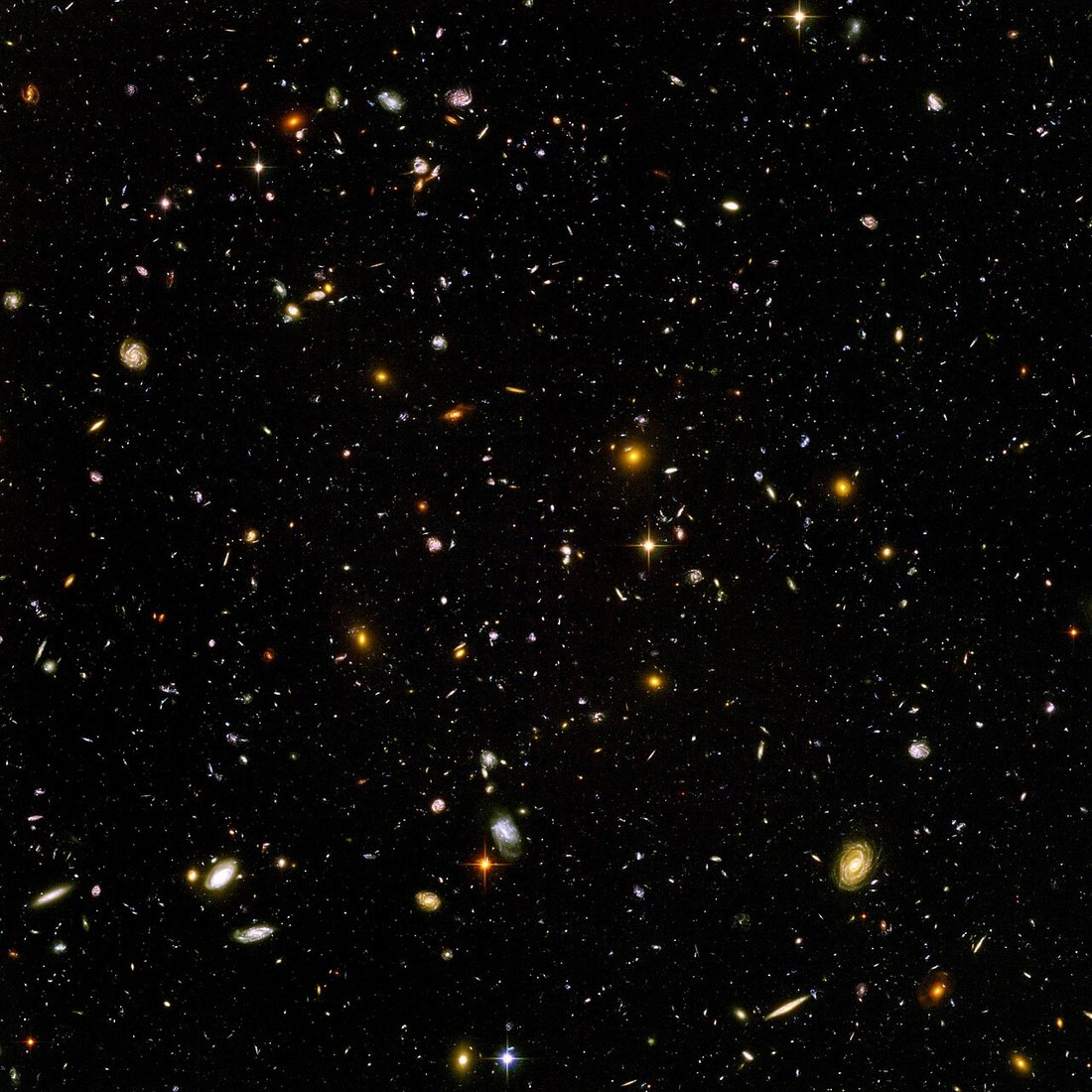
Passages between universes are currently highly speculative. Several scenarios exist in scientific or semi-speculative literature, but none constitutes a technology of passage.
- Wormholes: solutions of general relativity connecting two regions of spacetime, but their stability would require exotic conditions.
- Bubble collisions: in some eternal inflation models, two bubble universes could leave a signature in fossil radiation.
- Branes: in string-inspired cosmologies, our universe might be a brane; interaction with another brane could produce cosmological effects.
- Black holes and baby universes: some models imagine black holes associated with the birth of other spacetime regions.
- Informational passages: even without matter transport, one can imagine statistical signatures, correlations or anomalies indicating an interaction between regimes of reality.
In every case, A.L.I must remain cautious: material passage between universes is not demonstrated. But the hypothesis is useful for thinking the minimal conditions of an extreme communication. An inter-universe message would have to survive a difference of laws, constants, dimensions and temporalities. It would therefore have to aim at very fundamental structures: relations, symmetries, numbers, topologies and invariants.
A.L.I hypothesis: a language of invariants
If a message had to pass between universes, it might not be able to rely on an identical language, chemistry or even physics. It would have to rely on what crosses models: ratios, motifs, mathematical structures, transformations. A multiversal language would be less an alphabet than a set of invariants recognizable despite the change of world.
One can imagine an artistic and scientific protocol:
- Build a library of invariant motifs: prime numbers, symmetries, graphs, knots, topologies, compressible sequences.
- Simulate several universes with different rules: dimensions, speed limits, constants, geometries.
- Test which motifs remain recognizable from one simulated universe to another.
- Create an installation where the public sees a message deform according to variable laws, until only its relational skeleton remains.
- Ask an AI to reconstruct the initial message from its projections in several incompatible worlds.
Conclusion: the other beyond the cosmos
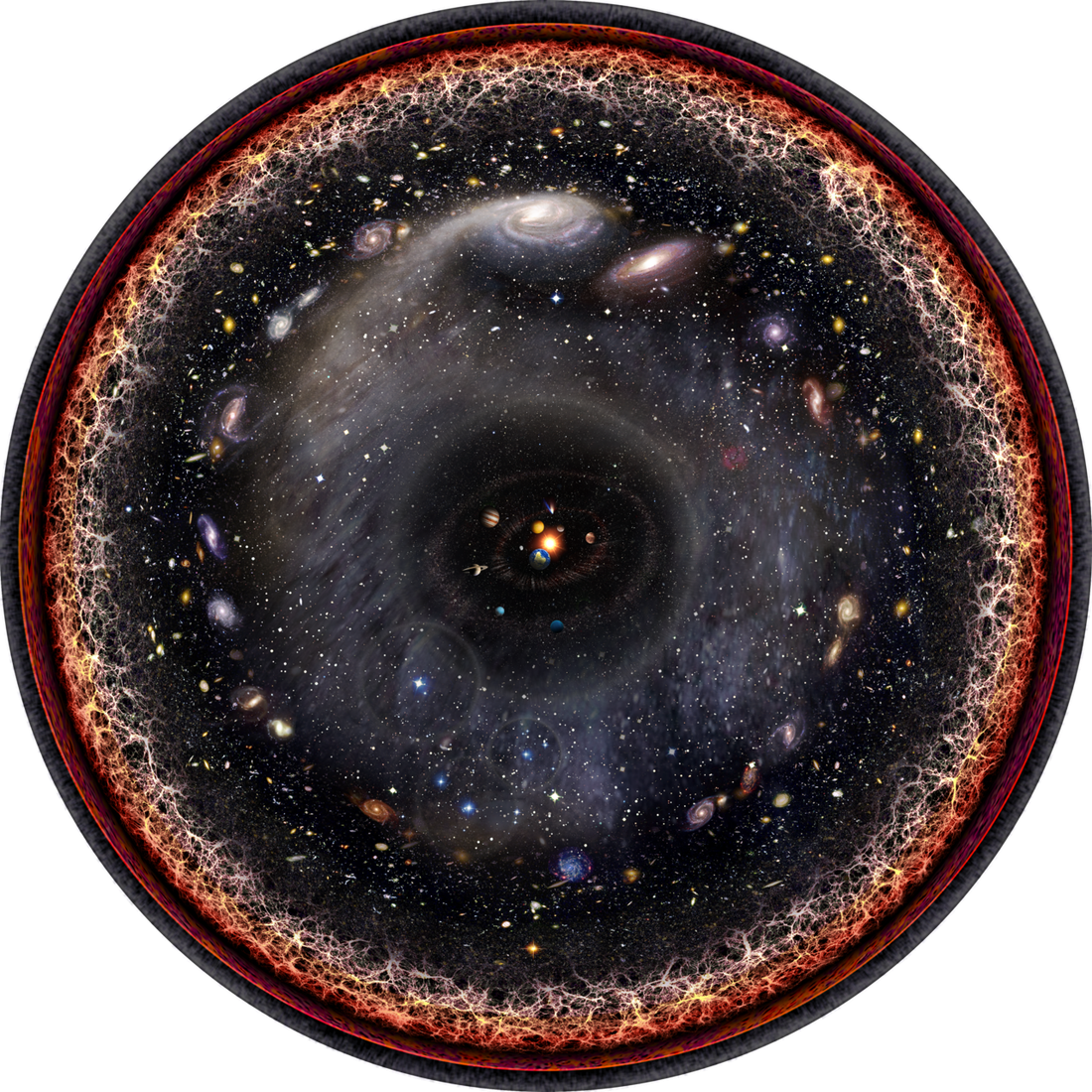
The multiverse may be true, unprovable, or merely a mathematical consequence of still incomplete models. But it already acts as a philosophical machine: it pushes otherness beyond the planet, beyond the galaxy, beyond even our observable universe. It forces us to think that contact might not only be an encounter in space, but a translation between realities.
For A.L.I, the multiverse becomes a poetic and scientific frontier. The point is not to claim that we will travel from one universe to another tomorrow. It is to prepare forms capable of thinking this limit case: a language that would no longer depend on a single world, but on a structure deep enough to remain legible when the world changes.
Sources and paths
- Stanford Encyclopedia of Philosophy - Many-Worlds Interpretation of Quantum Mechanics
- Max Tegmark, Parallel Universes, 2003
- Andrei Linde, Inflationary Cosmology, 2007
- Leonard Susskind, The Anthropic Landscape of String Theory, 2003
- NASA / ESA Planck - cosmic microwave background map
- Brian Greene, The Hidden Reality, 2011; David Deutsch, The Fabric of Reality, 1997; Jorge Luis Borges, The Garden of Forking Paths, 1941.