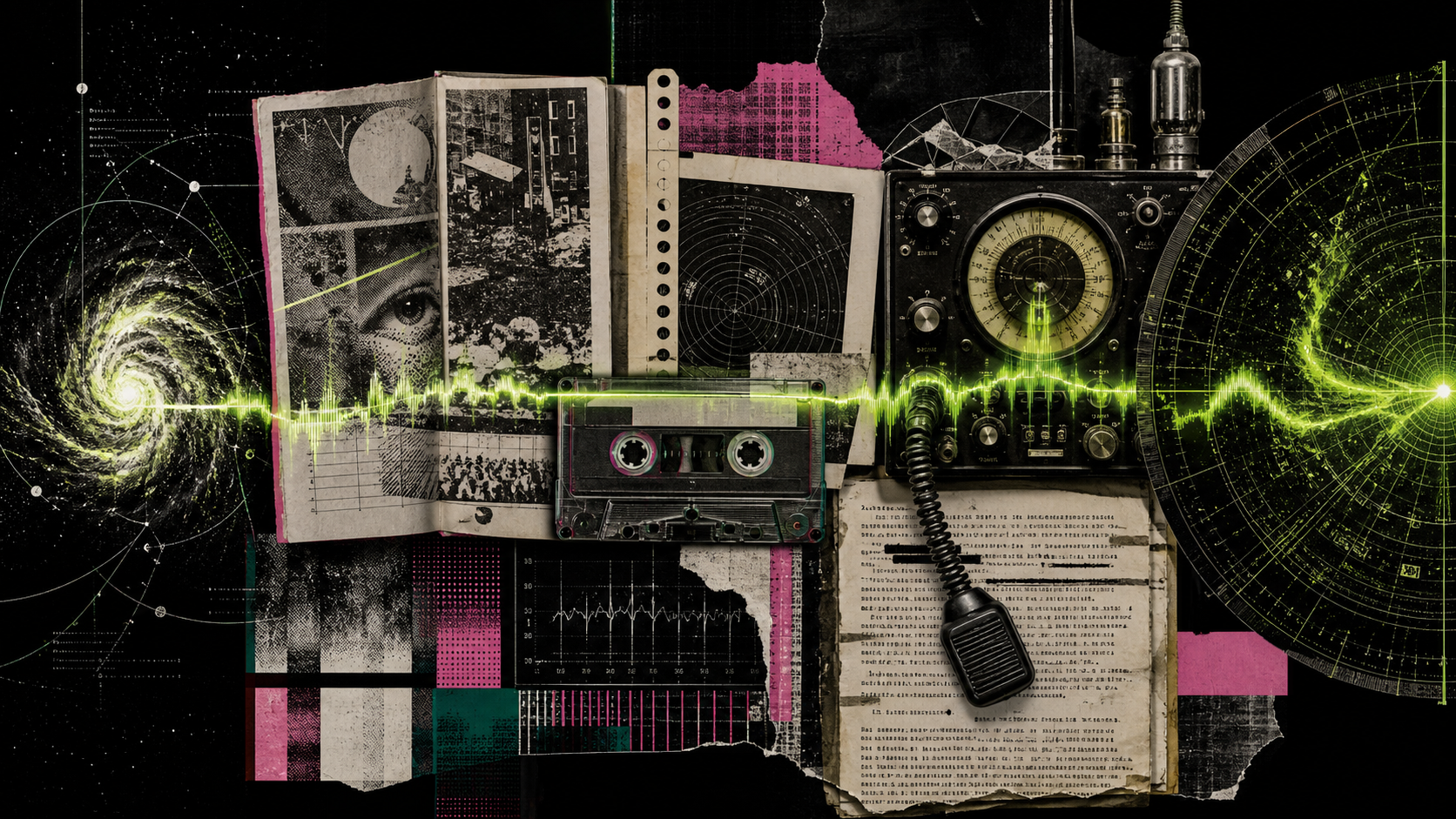
An idea too unstable for official channels does not always disappear. It changes costume. It becomes a fanzine, late-night broadcast, comic book, copied cassette, song, rumour, collaborative wiki, or fiction. This oblique circulation does not prove that the idea is true; it merely keeps it moving until another context can receive it.
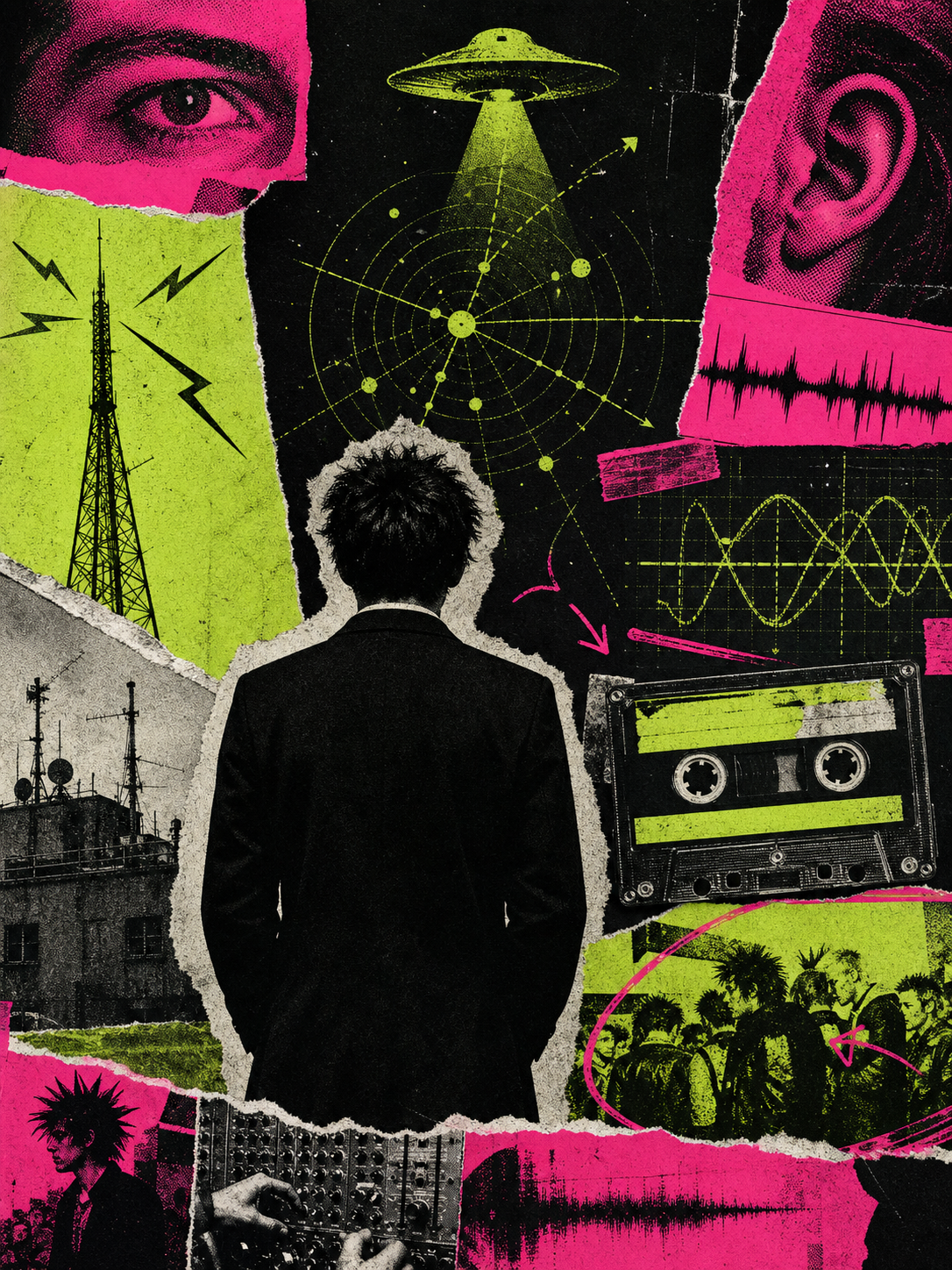
This investigation begins with the Men in Black, underground publishing, and UFO narratives, then places them in a wider history: samizdat, pirate radio, détournement, Afrofuturism, punk culture, and algospeak. For A.L.I, a question emerges: could an interstellar signal already be circulating in a culturally minor form, classified as noise, folklore, or fiction?
1. The side door: a politics of minor forms
Cultural Studies showed that subculture is not merely a collection of tastes. It reuses dominant signs. Stuart Hall and Tony Jefferson’s Resistance Through Rituals reads youth styles as symbolic responses to social contradictions. Dick Hebdige’s Subculture: The Meaning of Style examines how clothes, music, and graphics produce oblique dissent. Michel de Certeau calls such practices tactics: users improvise within systems they do not control.
A minor channel is therefore not simply a smaller pipe. It changes the message’s authority, speed, risk, and acceptable ambiguity. Institutional weakness can become experimental power.
2. Samizdat: the reader becomes infrastructure
In Soviet regimes, samizdat texts were clandestinely reproduced by typewriter, carbon paper, photography, or tape. The object was fragile but the human chain was redundant: reading often meant copying, hiding, carrying, and retransmitting. The Library of Congress now uses the phrase “digital samizdat” for archives of Russian independent media.
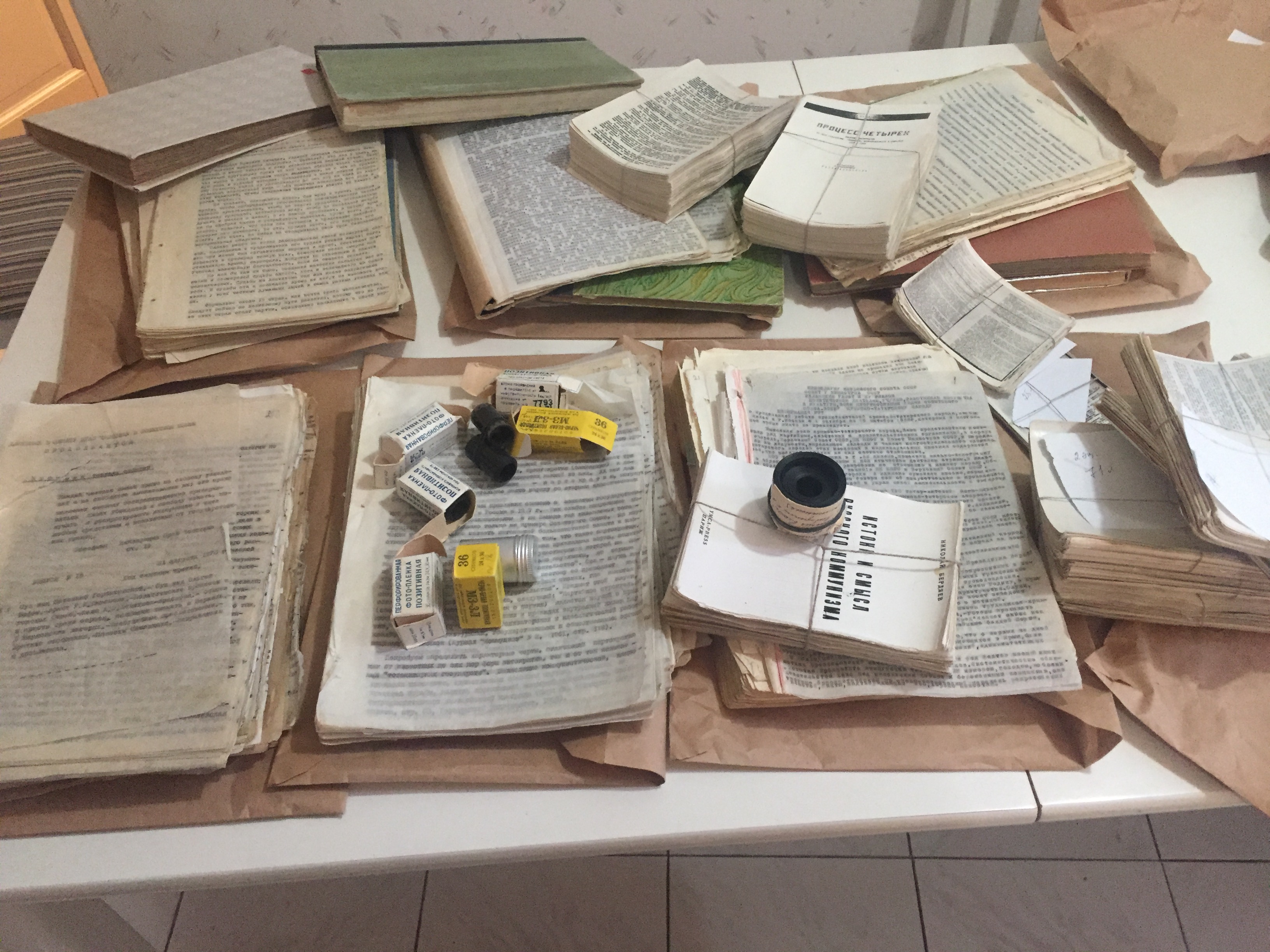
For A.L.I, samizdat reveals that a message may survive through the social protocol it triggers rather than the durability of its carrier. Each recipient becomes a replication station. A distant receiver might similarly have to reconstruct, translate, and retransmit a signal before it fully exists.
3. Fanzines: the photocopier as laboratory
Fanzines gave comics, rock, feminism, ecology, queer politics, and experimental practices a place outside official publishing. Photocopy, collage, offset, and risograph were not merely cheap techniques; they created a syntax of breaks, overlays, and montage. Underground comix bypassed the Comics Code, while ephemeral French publications such as Actuel, L’Écho des savanes, and Métal hurlant reshaped mainstream visual culture.
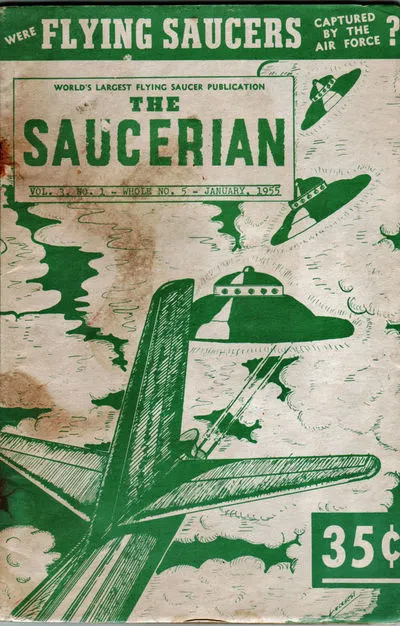
Within UFO culture, The Saucerian, founded by Gray Barker in 1953, offers an especially direct example of this marginal circulation. The periodical relayed contactee accounts, flying saucers, strange phenomena, and early Men in Black stories without adopting the caution of scientific publishing. Its handmade, spectacular graphics turned the extraterrestrial hypothesis into a shareable print culture.
4. Men in Black: from threat to entertainment
The Men in Black figure emerged from 1950s UFO folklore, moved through Gray Barker’s writing, became Lowell Cunningham’s dark Aircel comic in 1990, and reached global audiences as a comedy in 1997. With each transfer, secrecy, covert coexistence, and erased memory gained reach while losing some menace.
Susan Sontag’s The Imagination of Disaster described a related mechanism: popular science fiction gave Cold War nuclear and political anxiety a visible, bearable form. Fiction does not necessarily conceal reality; it can make reality culturally digestible.
5. Pirate radio: displacing the signal
Pirate radio turns the electromagnetic spectrum into political space. It broadcasts from a ship, rooftop, basement, or mobile transmitter outside an official schedule. It does not only transmit different content; it makes another right to speak imaginable.

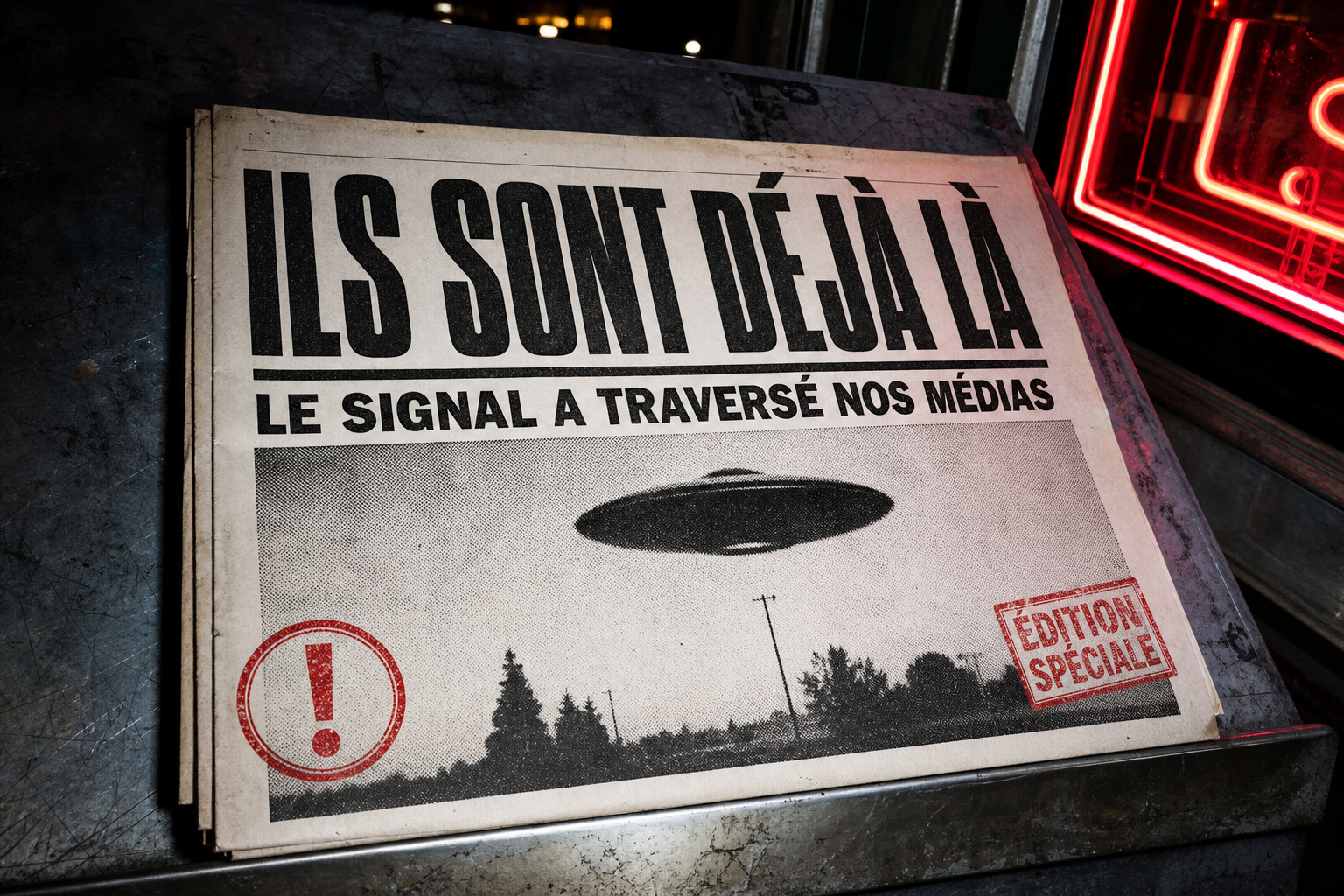
GUDEMON replays this ambiguity: a news bulletin lends fiction the authority of live transmission. The channel supplies a posture of belief.
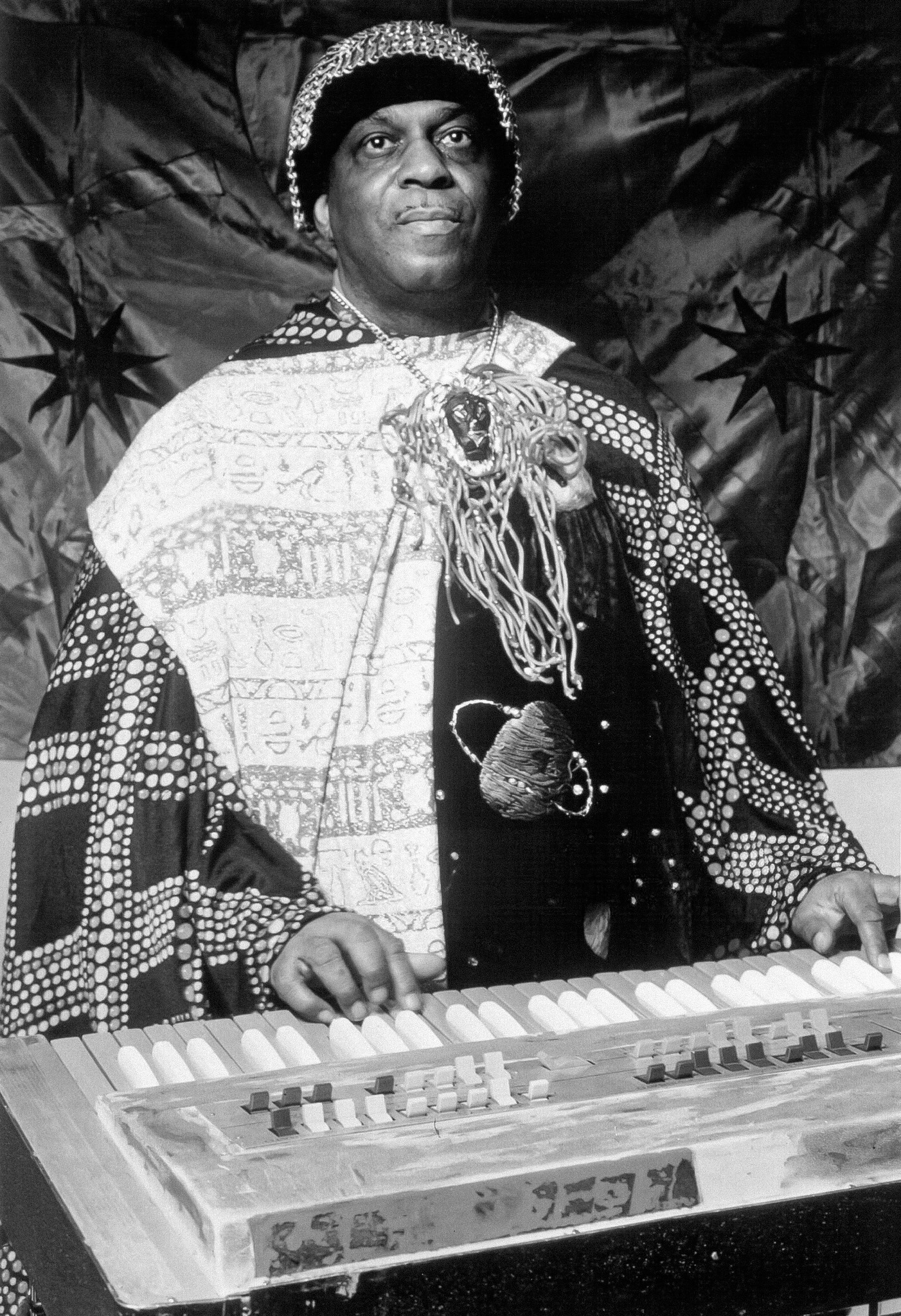
6. Sun Ra: coming from elsewhere to transform here
Afrofuturism does not simply place spaceships in the existing world. It uses the cosmos to reopen history. Sun Ra claimed Saturnian origin and built a mythology, visual language, music, and orchestral community. In Space Is the Place, alien identity becomes a critical position from which a world forbidden by terrestrial racial order can be imagined.
7. From rock to UAP: the pop broker
Tom DeLonge founded To The Stars Academy of Arts & Science in 2017, bringing together entertainment, research, and former US officials. That year, The New York Times reported on AATIP. Authentic military videos entered a public sphere already prepared by decades of popular culture.
The documents must be separated from their interpretation: a military video does not establish extraterrestrial origin. The case demonstrates how celebrity can broker passage among administration, journalism, belief communities, and entertainment.
8. SCP and algospeak: digital auxiliary channels
The SCP Foundation collectively invents a bureaucracy of the anomalous. Reports, classes, protocols, and incidents give documentary coherence to thousands of stories. The fictional form becomes a world-making machine.
Algospeak alters words to evade anticipated platform moderation. Hiding in the Open describes the trade-off between evading a filter and remaining legible to a community. The code must differ enough for the machine yet remain familiar to people: cultural steganography in real time.
9. A.L.I hypothesis: cultural steganography
Steganography hides a message inside another carrier. A.L.I extends this idea to culture: content may persist by migrating among fiction, music, rumour, image, ritual, and archive. Its semantic core is never perfectly preserved; it is recognised through invariants across mutation.
A non-human signal could therefore be present without being recognised as a signal. It might be classified as radio interference, decorative pattern, legend, copying error, collective behaviour, or recurring fiction. The method is not to label every anomaly extraterrestrial, but to search for persistent structures crossing independent media without a single author.
10. Prototype: Ghost Channel
- Core. Design a simple relation, map, sequence, or question.
- Mutations. Encode it independently as zine, radio sound, gesture, textile, meme, and technical report.
- Noise. Degrade each version through copying, compression, translation, cuts, and delay.
- Separated publics. Give each channel to a group unaware of the others.
- Retransmission. Ask every group to reproduce its interpretation in a new medium.
- Convergence. Measure structures that reappear across transformations.
- Control. Add decoy patterns to test projection and coincidence.
The installation would be a listening room and fragmented archive. No visitor sees the whole system; each becomes one relay. Success is not a perfect copy but a shared, testable structure emerging from independent transformations.
11. The limit: minor channels certify nothing
The same systems that protect censored speech accelerate rumour, propaganda, and conspiracy. Secret knowledge has an attractive aesthetic; information can appear true precisely because it is presented as forbidden. Marginality must not be romanticised.
A.L.I must separate three operations: detecting circulation, interpreting content, and establishing reliability. An auxiliary channel can be an excellent propagation laboratory, never proof. Sources, rival hypotheses, and visible errors remain essential.
LABO question: if a genuine message had to cross a culture unable to recognise it, would it choose the most credible channel and risk being blocked, or the most minor one and risk vanishing among a thousand similar fictions?
References