The Rosetta Stone is the dream of every decipherment: one decree, three scripts, and a known language that eventually gives traction to the others. Voynich, Linear A and rongorongo name the inverse experience. Here the key is absent, or too fragmented to be recognised. These writings are not merely puzzles: they are concrete models for thinking about what happens to a message when its world of origin has disappeared.
For A.L.I, their value reaches beyond historical curiosity. A signal from elsewhere would probably come without a parallel translation, a dictionary or a community able to correct our misunderstandings. We would first have to decide whether we were facing writing, language, code, notation, a hoax, or a ritual object whose function was not to say. Undeciphered writings are therefore the negative image of our Rosetta Stone: they require work without any guarantee that the key will ever arrive.
1. A key is a device, not a miracle
Decipherment almost never begins with a lone flash of genius. It depends on an assemblage: a sufficiently large corpus, legible signs, a related or known language, proper names, numbers, pictured objects, contextual archives and, ideally, a bilingual inscription. The Rosetta Stone brought together an exceptional share of these conditions. It made a controlled comparison between Greek, Demotic and hieroglyphs possible.
When one piece disappears, uncertainty changes character. Without the language, one may identify a graphic system without reading its meaning. Without a long corpus, one may observe repetitions without assigning phonetic values. Without reliable provenance, an image of a fish, plant or star may be a word, classifier, unit of account, emblem or decoration. Form can be measured; meaning remains underdetermined.
2. Three absences, three different problems
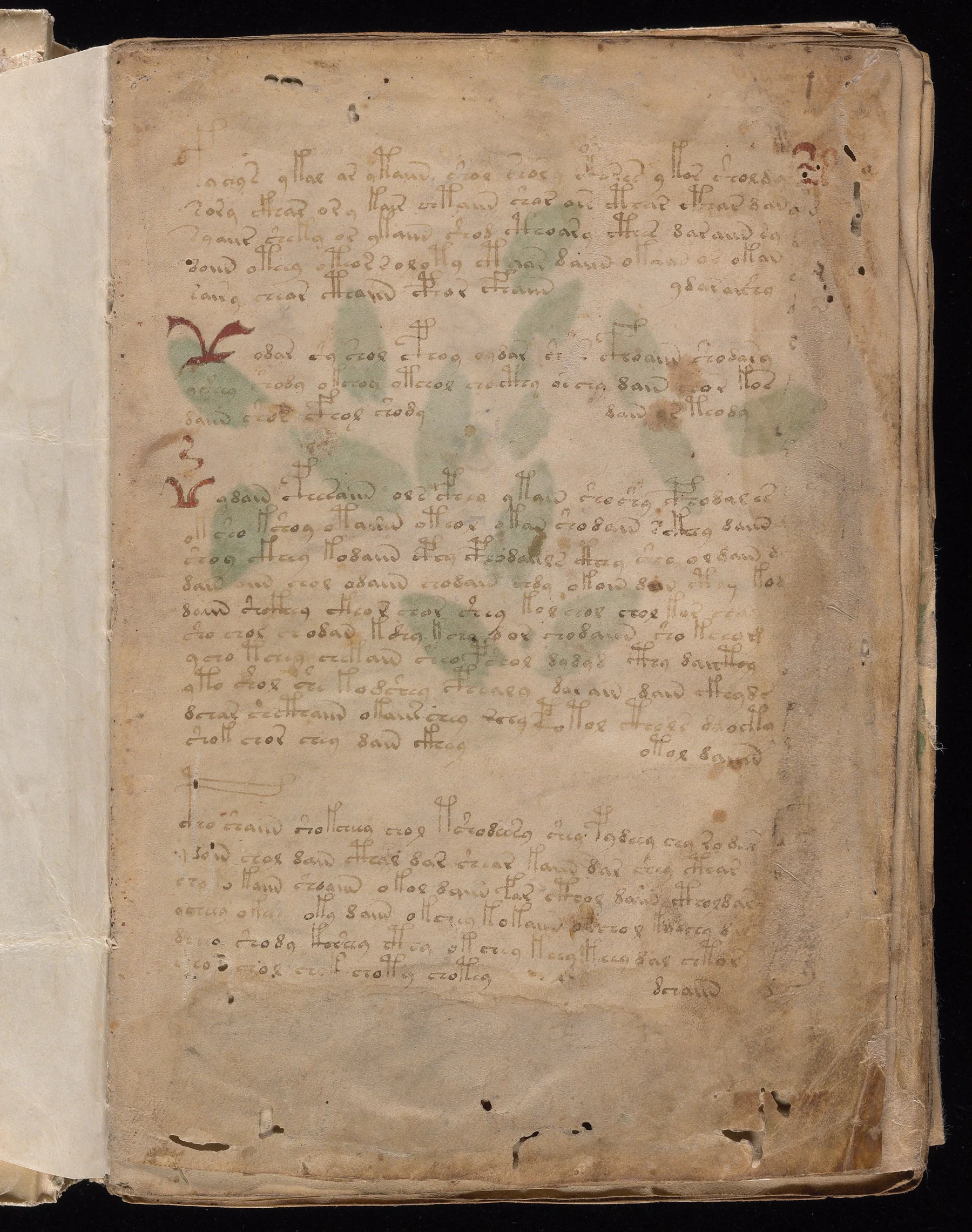
The Voynich manuscript is an illustrated codex held by Yale's Beinecke Library. Its pages combine an unidentified alphabet, improbable plants, astronomical or cosmological diagrams, human figures and recipes. The vellum was radiocarbon-dated to the early fifteenth century; that dates the material, not necessarily the act of writing or the author's intention. No translation is generally accepted. The difficulty is therefore double: the linguistic nature of the text remains debated.
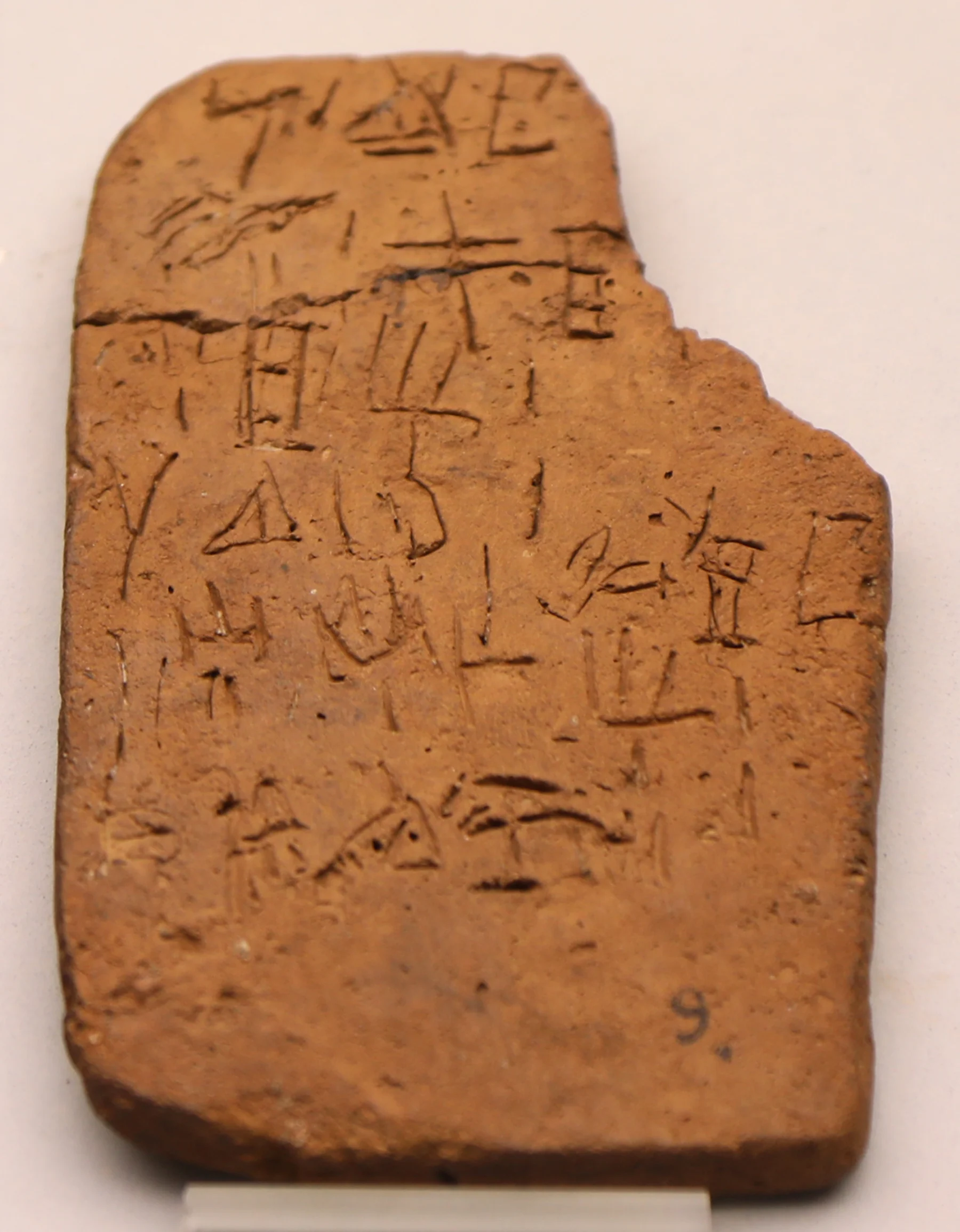
Linear A is a script of Minoan Crete, chiefly attested on Bronze Age tablets and administrative documents. It shares graphic similarities with Linear B, deciphered as an early form of Greek. This relationship offers sign and numeral clues, but it does not supply the language of Linear A. Reading some signs with Linear B values is insufficient: the proposed values rarely yield identifiable words in a known language. A related script can be a false key, useful for classification but insufficient for translation.
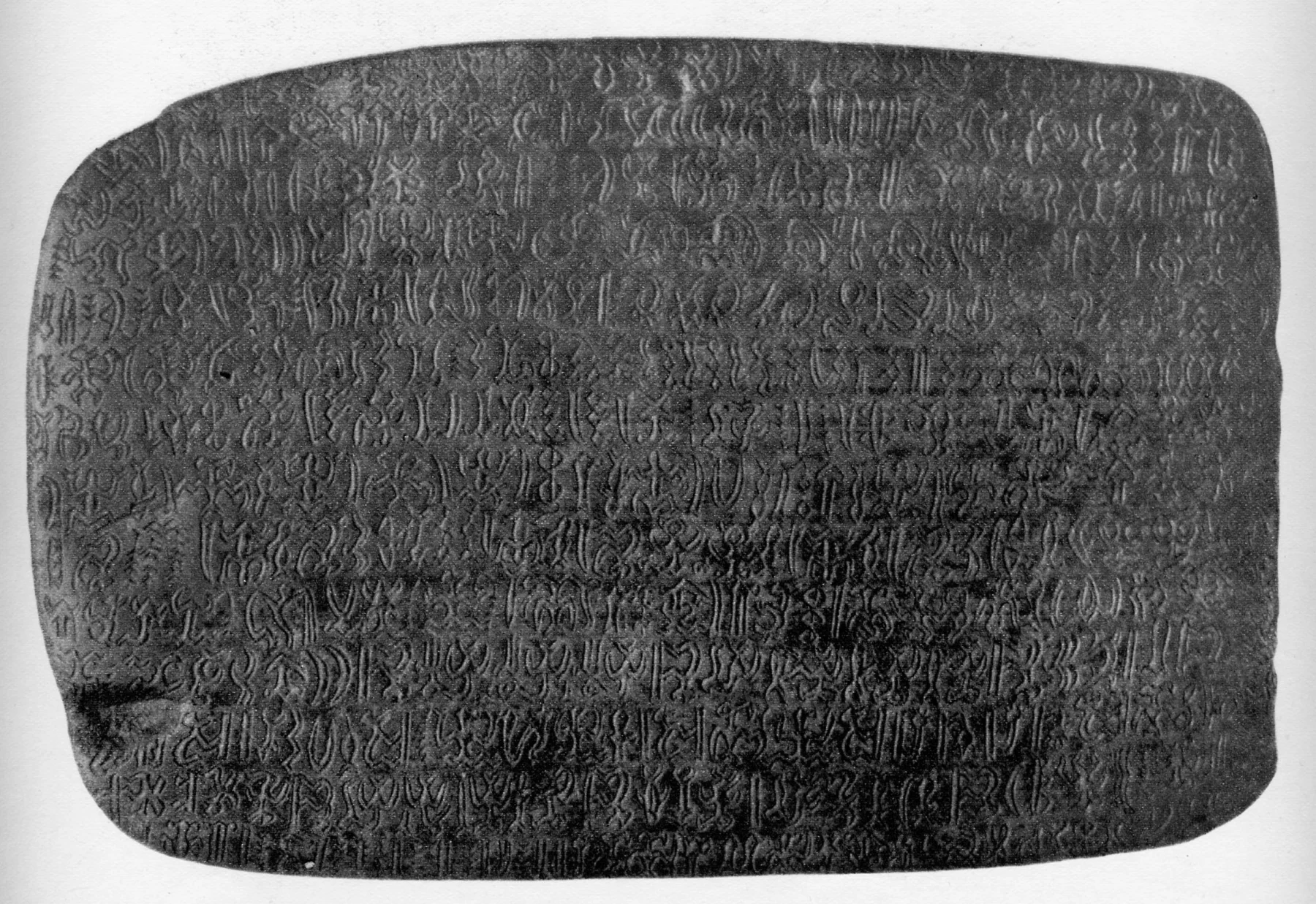
Rongorongo names inscriptions carved on Rapa Nui tablets. The surviving corpus is restricted, dispersed and marked by a colonial history that destroyed conditions of transmission. Sequences, reading orientations and possible calendrical structures have been studied; no complete reading is accepted by scholarship. The issue is not only assigning sounds to glyphs. It involves the loss of a chain of knowledge and requires that a living culture not be turned into a mere box of puzzles.
3. What methods can establish without translating
Not deciphering is not knowing nothing. Palaeography describes hands, corrections, ductus and supports. Statistics measure sign frequency, position, neighbourhoods and sequence length. Codicology follows quires, inks and the material order of pages. Archaeology compares provenance, associated objects and administrative uses. These disciplines should not be treated as inferior preliminaries to translation: they offer positive knowledge about how a document was made.
In Voynich studies, computational analyses have examined grapheme distributions, layout variation and the possibility of several hands. They can indicate regularity, thematic partitioning or scribal action. They do not prove that a word denotes a particular plant, nor that the text encodes a natural language. In Linear A, tablet formats and ideograms can identify accounting practices without restoring every sentence. In rongorongo, repetition and glyph placement can suggest organisation, but caution is even more necessary because the corpus is short.
4. AI and stylometry: good questions, not automatic translation
Machine-learning tools are strong at comparing forms and finding regularities in large sets. They can cluster graphemes, identify hands, search recurrent segments or test whether one segmentation hypothesis describes the data better than another. Stylometry compares habits of distribution rather than meanings: it can bring writing practices together or separate them.
But AI cannot invent missing evidence. A model trained on known languages tends to prefer a familiar explanation, even when that explanation is wrong. On a small corpus, several models may generate attractive and incompatible interpretations. Andrew and Noah Steckley's recent Voynich preprint, for example, examines material signs of scribal intent: it is a methodological lead, not a consensus decipherment. The relevant test is not “the algorithm found a pattern,” but “does the pattern predict new facts, survive unused data and remain open to challenge?”
5. The Voynich debate: hoax, cipher, unknown language, notation?
Voynich concentrates a particular difficulty because its images give the impression of a readable book. Four families of hypotheses remain in tension: text encoding a natural language; a constructed language or alphabet; non-linguistic notation; or deliberate fabrication. None has a demonstration that produces a reproducible translation of the complete manuscript. Dating the material constrains a modern-hoax scenario, but does not decide either the signs' meaning or the codex's function.
The word “hoax” can itself conceal several possibilities. An object may have playful, esoteric, pedagogical, cryptographic or performative functions without being mere nonsense. Conversely, statistical regularity does not prove a language. The methodological lesson is direct: before asking “what does the text say?”, one must ask what counts as a sign, word, space, page and proof.
6. Implications for interstellar messages
The three corpora draw an anti-manual of contact. An isolated message may be too short; a beautiful image may not operate as a caption; formal resemblance may lead to the wrong language; the disappearance of an interpreting community may leave signs permanently suspended. From this perspective, A.L.I's binary stelae must not only be materially robust. They need to embed their own pedagogy: controlled repetitions, verifiable transformations, quantitative relations, redundancy across media and response tests.
A recipient should not have to guess that a message is a message. It must be visible that a sequence changes according to a rule, that a symbol is reused in contrasting contexts, that an image coordinates with a measurement, and that understanding can be tested. This is no guarantee of translation. It is a way to reduce the number of missing keys.
7. An A.L.I hypothesis: build a key that discovers itself
An A.L.I proposal would be a self-critical stele. It would not provide a completed dictionary; it would stage the operations needed to build one. A first layer would show quantities and physical transformations. A second would associate transformations with visual configurations. A third would introduce exchange, error and correction. Finally, an archival layer would show that the stele anticipates being read outside its world: it would identify its media, copying and limits.
This is speculation, not a validated protocol. But it shifts the ambition: rather than projecting a universal language, create conditions for measurable disagreement. A recipient could be wrong, notice that a prediction fails, return to an earlier step and propose another reading. The message would no longer be a stone to solve once and for all, but a machine for organising revisions.
Conclusion: learning from the absent key
Voynich, Linear A and rongorongo are not three versions of the same silence. Each carries a different material, linguistic and political history. Bringing them together does not erase those differences; it makes forms of absence comparable: absence of a known language, sufficient corpus, transmitted context or shared test.
For A.L.I, the decisive question is not only how to write to a non-human intelligence. It is how to write so that an absent key does not turn an archive into a fascinating but mute surface. Undeciphered writings do not promise a solution. They teach us to make messages that anticipate their own strangeness.
References and further reading
- Yale Library - digitised Voynich manuscript, Beinecke MS 408.
- Beinecke Library - codicological description of the Voynich manuscript.
- Andrew and Noah Steckley - Subtle Signs of Scribal Intent in the Voynich Manuscript, preprint, 2024.
- University of Cambridge - Exploring Writing Systems, including Linear A.
- Heraklion Archaeological Museum - Linear A tablet from Hagia Triada.
- British Museum - rongorongo tablet Oc1903-150.
- Journal de la Société des océanistes - lunar calendar in rongorongo texts.